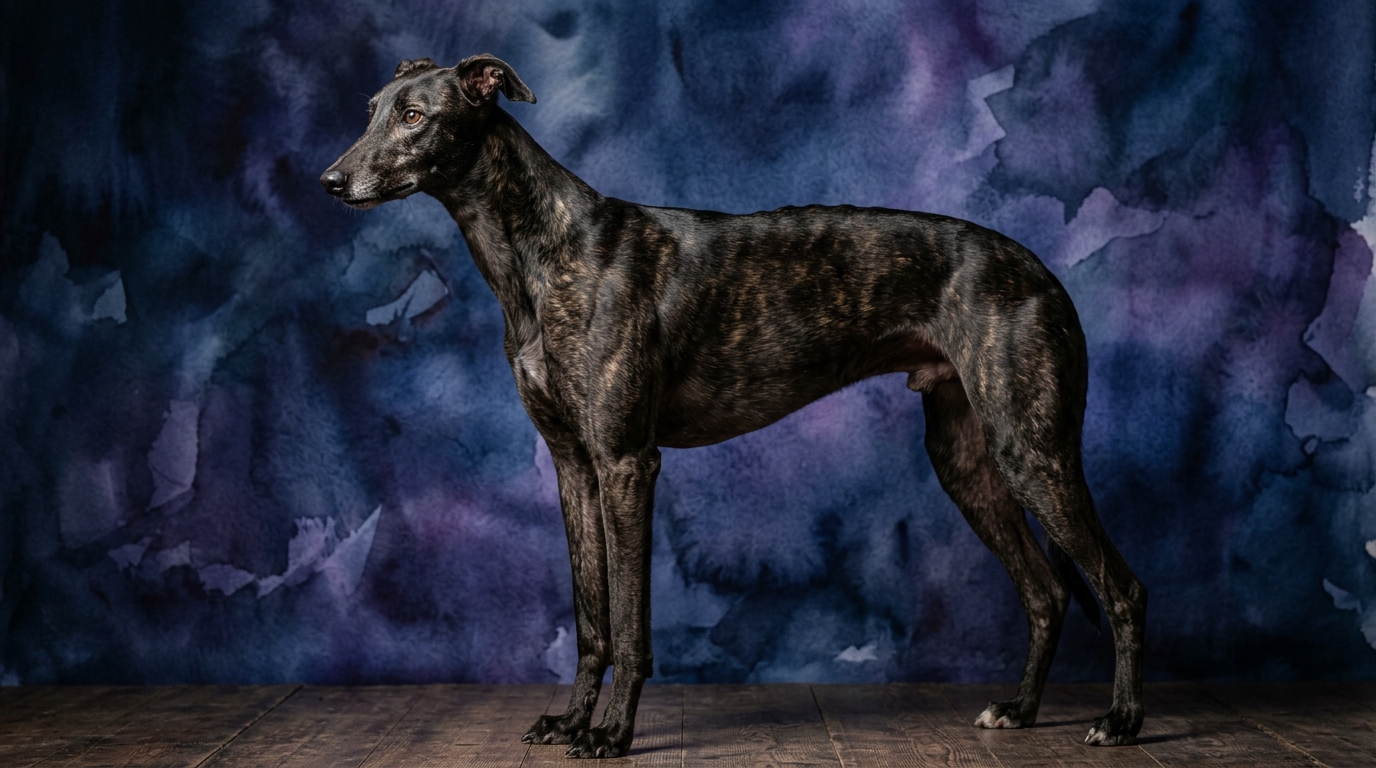
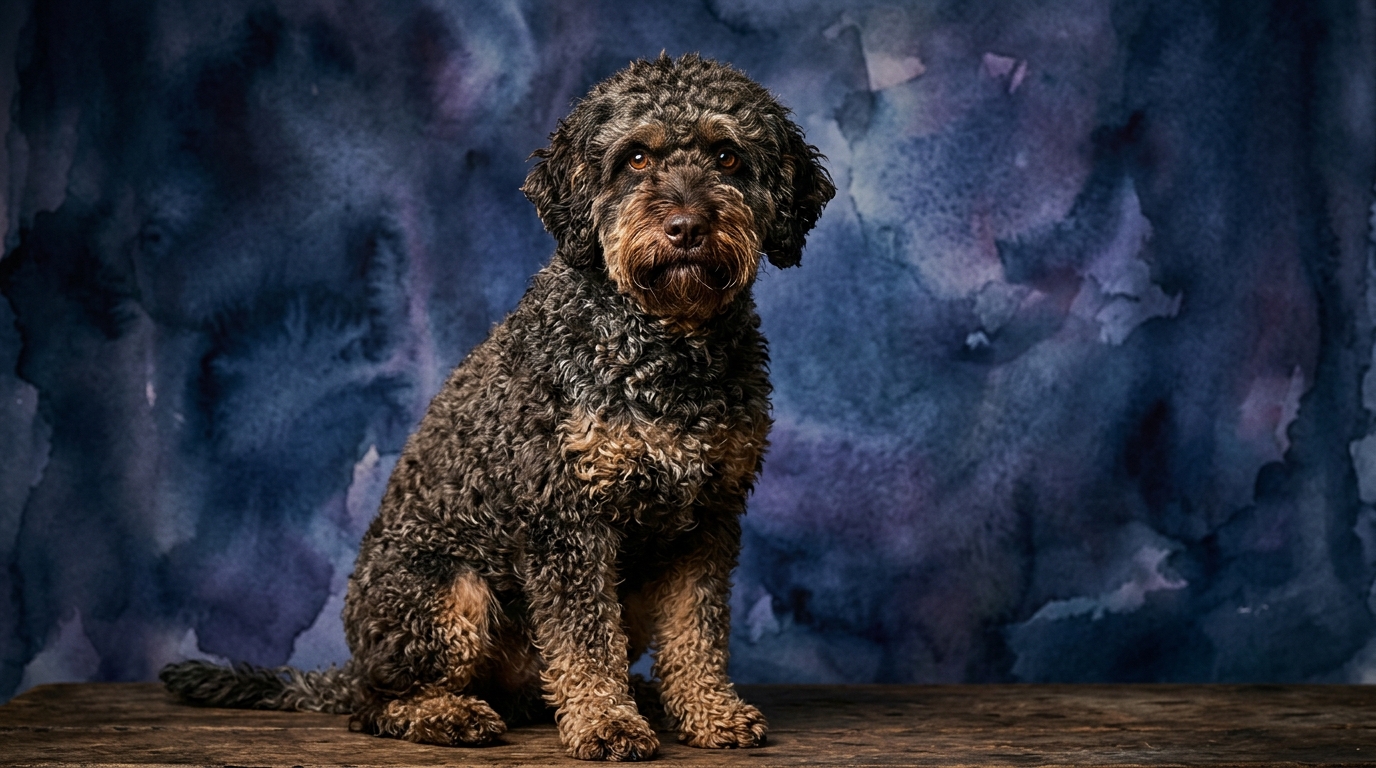
Side-by-Side IQ Profile: Greyhound vs. Spanish Water Dog
The Greyhound, a breed steeped in history as a hunter and racer, scores a Coren rank of #46, placing it squarely in the average working intelligence category. Our IQ metrics for the Greyhound show Problem Solving at 3/5, indicating a capacity to navigate practical challenges but not necessarily complex, abstract puzzles. Training Speed is rated 2/5, suggesting that while they learn, it often requires patience and consistent, positive reinforcement to solidify commands. Social Intelligence stands at 3/5; Greyhounds understand human cues and form deep bonds with their family, though they can be reserved or aloof with strangers. Their Instinctive Drive is a pronounced 5/5, reflecting an intense, hardwired urge to chase and visually track. Memory is assessed at 3/5, meaning they reliably retain learned routines and experiences.
The Spanish Water Dog, a robust and adaptable breed, currently lacks a specific Coren ranking, yet its cognitive profile is distinct. Its Problem Solving ability is also 3/5, demonstrating practical intelligence in varied environments, capable of figuring out moderate challenges. Training Speed is rated 3/5, indicating a quicker grasp of new commands and a more pronounced eagerness to engage in learning activities compared to the Greyhound. Social Intelligence matches at 3/5; they are attentive to their human companions and can be watchful, forming strong attachments within their family unit. Instinctive Drive is 3/5, reflecting their inherent herding and retrieving tendencies, which are present but not as singularly intense as the Greyhound's prey drive. Memory is likewise 3/5, allowing them to recall tasks and routines effectively.
Where the Greyhound Excels Cognitively
The Greyhound's cognitive prowess shines brightest in its unparalleled instinctive drive. Rated 5/5, this isn't just a high score; it represents a highly specialized form of intelligence geared towards visual pursuit and capture. Their brains are wired for speed, not only in physical execution but in processing vast amounts of visual information at exhilarating velocities. This allows them to identify, track, and react to moving objects with an efficiency few other breeds can match. This acute focus means a Greyhound can filter out extraneous stimuli, dedicating its entire cognitive processing power to the chase, a testament to centuries of selective breeding for sighthound work.
Furthermore, their Coren ranking of #46, while not top-tier, signifies a respectable capacity for obedience and working intelligence. This isn't about solving abstract problems, but about their ability to learn and reliably execute specific tasks within a structured environment. Their memory, while 3/5, is more than sufficient for remembering complex race routes or established daily routines, contributing to their calm predictability in a domestic setting once their exercise needs are met. The Greyhound's genius lies in its highly specialized, efficient, and laser-focused predatory cognition.
Where the Spanish Water Dog Shows Greater Cognitive Range
The Spanish Water Dog's cognitive strengths lie in its balanced and adaptable profile, particularly evident in its slightly higher Training Speed (3/5 vs. Greyhound's 2/5). This indicates a greater intrinsic motivation to cooperate and learn from human instruction, a hallmark often seen in herding breeds. Their willingness to engage and quickness to form associations make them more amenable to a wider variety of training methods and tasks. While their Problem Solving score is 3/5, the context of their instinctive drive (3/5) suggests a more versatile application of this skill. Unlike the Greyhound's singular focus on prey, the SWD's instincts for herding, retrieving, and water work require a more dynamic and contextual problem-solving approach. They must assess situations, manage livestock, and retrieve objects from diverse environments, often independently.
This versatility translates into a dog that can adapt its cognitive strategies to different scenarios, whether it's figuring out how to retrieve a toy from a complex environment or understanding the nuances of a new agility course. Their balanced instinctive drive means they are less likely to be overwhelmed by a single, all-consuming urge, making them more receptive to redirection and multi-faceted learning. This cognitive flexibility is a significant advantage for owners looking for a dog capable of excelling in various activities beyond just speed and chase.
Which Is Easier to Train and Why
When it comes to ease of training, the Spanish Water Dog generally presents a more straightforward path for the average owner. Their Training Speed of 3/5, coupled with a typical herding breed's eagerness to work and please, means they tend to pick up new commands more quickly and reliably. Their instinctive drive (3/5) is also more readily channeled into structured activities like obedience, agility, or even trick training. They thrive on mental engagement and respond well to positive reinforcement, often showing a keen interest in what their handler wants them to do. This inherent biddability and desire for purpose make them highly responsive to consistent training efforts.
The Greyhound, with a Training Speed of 2/5, requires a different approach. They can certainly learn, but their independent nature and powerful instinctive drive (5/5) can sometimes make them seem less eager to comply. Training sessions need to be short, highly positive, and engaging, often relying on high-value rewards to maintain focus against the allure of potential movement or chase opportunities. Their sensitivity means harsh methods are counterproductive, leading to shut-down rather than compliance. While capable, training a Greyhound demands greater patience, understanding of their sighthound instincts, and an acceptance that their primary motivation might not always be to please the handler, but rather to follow their own compelling drives.
Suitability for Active vs. Relaxed Owners
The distinction between these two breeds in terms of owner lifestyle suitability is quite pronounced. The Greyhound, often affectionately dubbed a '45 mph couch potato,' is surprisingly well-suited for more relaxed owners or those who appreciate a calm indoor presence. Despite their incredible speed, Greyhounds require short, intense bursts of exercise—think a secure, fenced yard where they can sprint for 15-20 minutes—rather than long, sustained endurance activities. After their sprint, they are typically content to lounge for hours, making them excellent companions for apartment dwellers or individuals who prefer quiet evenings at home. Their exercise needs are specific: unleash their speed safely, then enjoy their serene companionship.
Conversely, the Spanish Water Dog is an ideal match for active owners seeking a constant companion for outdoor adventures and mental stimulation. These dogs possess a robust instinctive drive (3/5) for herding, retrieving, and swimming, requiring consistent physical and mental engagement. They thrive on long walks, runs, hikes, and opportunities to 'work' through dog sports like agility, dock diving, or obedience. An SWD left without sufficient activity can become bored and potentially destructive, channeling its cognitive energy into less desirable outlets. They need an owner who can commit to providing daily challenges that satisfy their intelligent, energetic, and versatile nature, making them true partners in an active lifestyle.
The Verdict
Choose the Greyhound if you appreciate a calm, quiet companion indoors, can provide safe, intense bursts of running exercise, and are prepared to manage a strong prey drive with patient, positive training.
Opt for the Spanish Water Dog if you lead an active lifestyle, desire a versatile and engaged partner for varied outdoor activities and dog sports, and are ready to provide consistent mental and physical challenges.
🧠 Find Your Pet's IQ Score
Our Pet IQ Lab assessment covers 25+ tests across 5 cognitive dimensions — personalized to your breed.
Take the Full IQ Test →Frequently Asked Questions
Are Greyhounds truly 'couch potatoes'?
Yes, despite their athletic build, Greyhounds are famously calm and relaxed indoors, often enjoying long naps on soft surfaces. They only require short, intense bursts of running daily, making them surprisingly suitable for apartment living.
How does the Spanish Water Dog's coat impact its care?
The Spanish Water Dog has a unique curly or corded coat that is low-shedding but requires specific grooming to prevent matting. Regular brushing to prevent cords from fusing or professional shearing a few times a year is essential for coat health.
What's the key difference in their social interactions?
Both breeds score 3/5 in social intelligence, meaning they form strong family bonds. However, Greyhounds tend to be more reserved and sometimes aloof with strangers, while Spanish Water Dogs can be more watchful and assertive, often displaying a strong protective instinct towards their family.