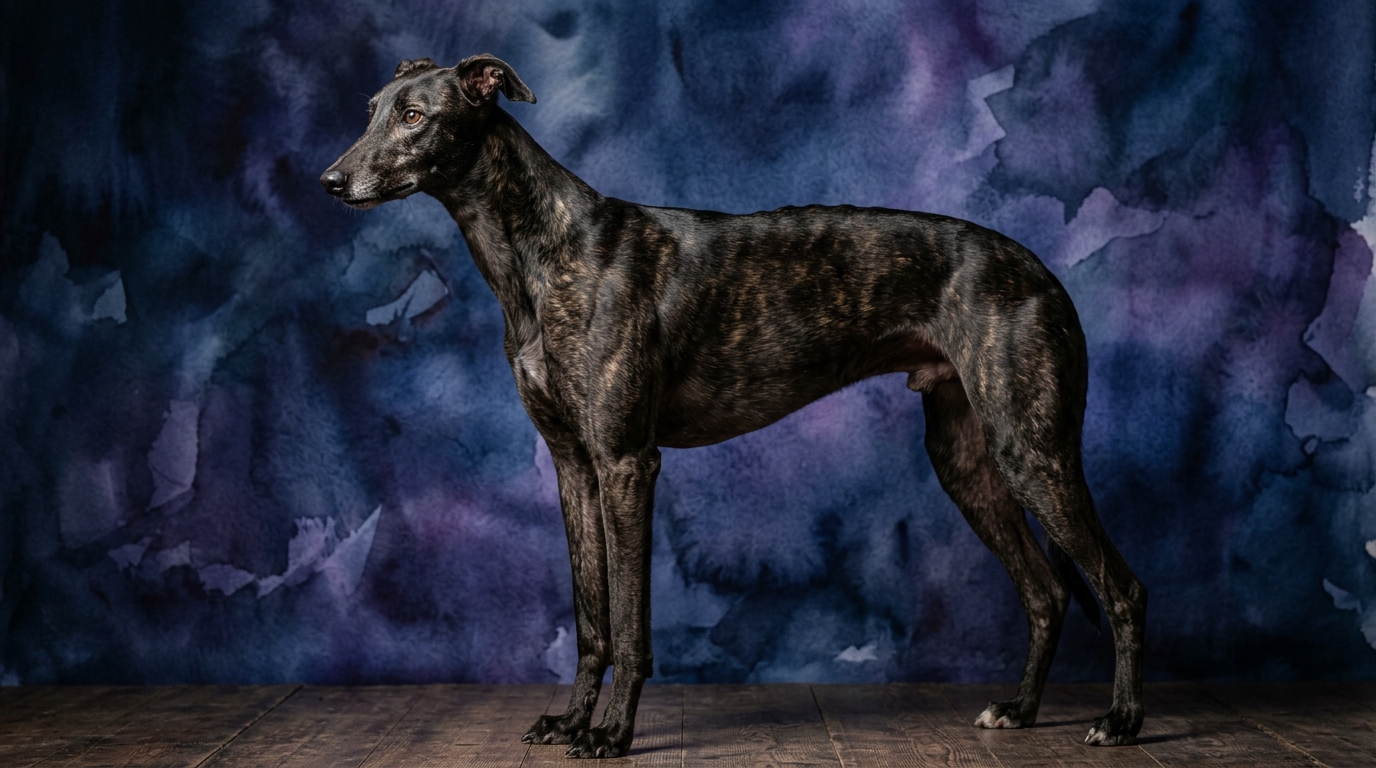
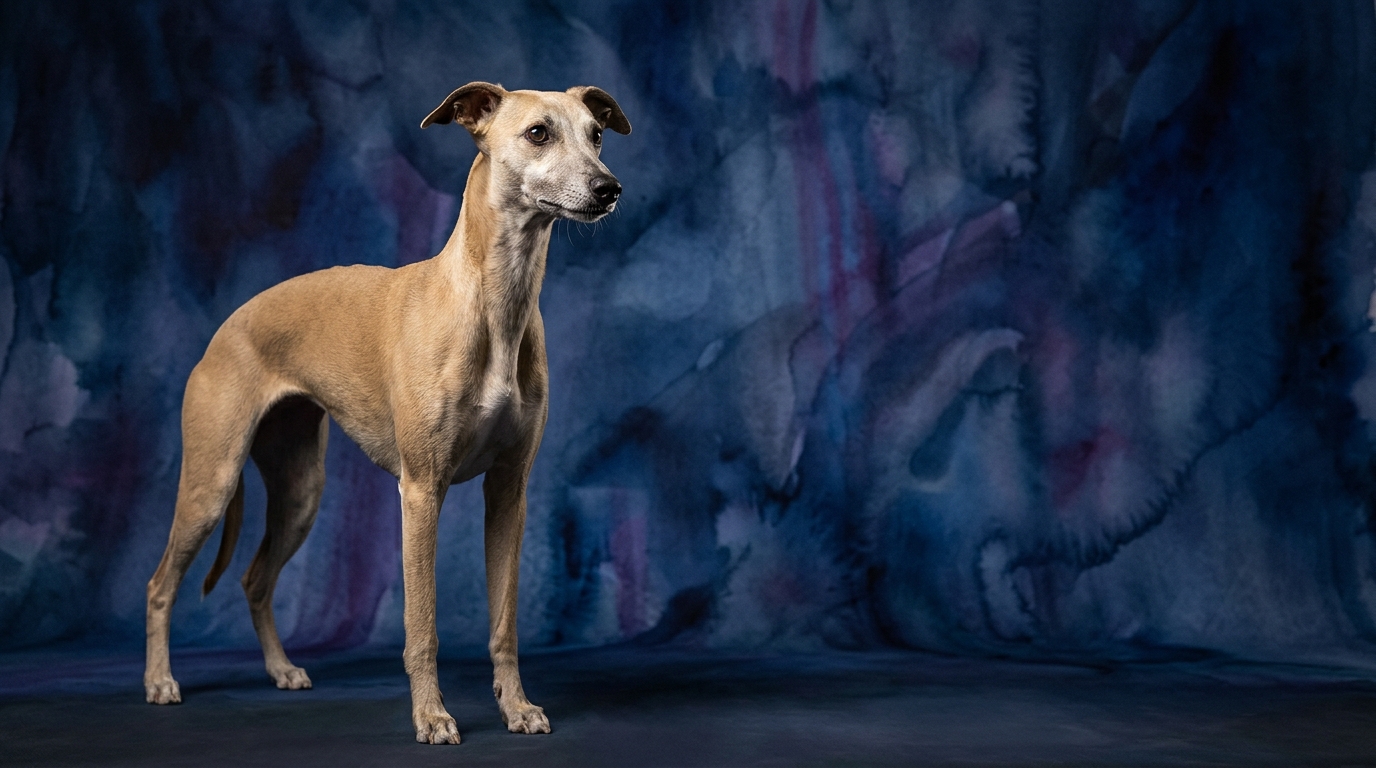
Side-by-Side IQ Profile: Greyhound vs. Whippet
The Cosmic Pet IQ Lab’s assessment delves into five key dimensions of canine cognition, offering a granular view of how Greyhounds and Whippets process their world, revealing both shared traits and distinct aptitudes.
Both breeds score 3/5 in Problem Solving ability. This indicates they possess a functional capacity to navigate challenges and figure out solutions, particularly those related to their environment or achieving a desired outcome, such as finding a comfy nap spot or retrieving a toy. While not typically known for intricate puzzle-solving, their cognitive strength often manifests in practical applications, like efficiently navigating obstacles to reach a goal or strategizing during a chase. Their problem-solving isn't about abstract thought, but rather effective, often instinct-driven, decision-making in real-time scenarios.
For Training Speed, both Greyhounds and Whippets rate 2/5. This lower score reflects a common trait among sighthounds: an independent streak that prioritizes self-interest over rote compliance. They learn, but often at their own pace and when motivated by something truly compelling, such as high-value treats or the promise of a chase. Owners should anticipate that new commands might require numerous repetitions and a creative approach to positive reinforcement, rather than expecting immediate mastery. Their sensitivity also means harsh methods are counterproductive, shutting them down rather than encouraging learning.
Here lies a notable divergence in Social Intelligence. Greyhounds score 3/5, while Whippets achieve a higher 4/5. The Greyhound's social intelligence often manifests as reserved affection; they form deep, loyal bonds with their immediate family but can be aloof or indifferent towards strangers, observing social dynamics rather than actively seeking broad engagement. In contrast, the Whippet's 4/5 indicates a more openly affectionate and socially adaptable nature. Whippets are generally more eager to greet new people, tend to integrate more smoothly into varied social settings, and often display a greater sensitivity to human emotions and subtle cues, making them highly responsive companions.
Both breeds score a maximum 5/5 for Instinctive Drive, a defining characteristic of sighthounds. This dimension primarily refers to their innate, powerful prey drive and the urge to chase anything that moves. This instinct is deeply ingrained, originating from centuries of selective breeding for hunting prowess by sight, meaning a sudden movement from a squirrel, rabbit, or even a blowing leaf can trigger an immediate, unthinking pursuit. While this drive is thrilling to observe in a secure, fenced environment, it also necessitates careful management in uncontrolled settings to ensure safety.
Both Greyhounds and Whippets register 3/5 for Memory. This suggests they have a good capacity for remembering routines, familiar people, and previously learned commands, especially those associated with positive experiences. They can recall the location of preferred napping spots or the sequence of events leading up to a walk or meal. However, their memory typically isn't geared towards complex sequences or abstract concepts; instead, it serves their practical daily needs and reinforces beneficial past experiences, ensuring they retain valuable learned behaviors and social connections.
Where Greyhound Wins Cognitively
While sharing similar scores with the Whippet in problem-solving and memory, the Greyhound's specific cognitive blend, particularly its 3/5 social intelligence within a high instinctive drive context, suggests it might excel in maintaining singular focus. Its slightly more reserved social nature means it can be less distracted by external social overtures when a task, such as observing surroundings or following a scent, requires concentration. This focused independence, honed by centuries of racing and solitary hunting, allows the Greyhound to execute tasks with a certain singularmindedness, making it highly effective when its attention is directed towards a specific, often fast-paced, objective, without being overly swayed by complex social interactions. Their internal world is often more self-contained, enabling a sustained, undiverted pursuit of a perceived goal.
Where Whippet Wins Cognitively
The Whippet's clear cognitive advantage lies in its superior social intelligence, scoring 4/5 compared to the Greyhound's 3/5. This higher score translates into a greater aptitude for reading and responding to human cues, making them generally more attuned to their family's moods and intentions. Whippets often demonstrate a more overt desire for connection and collaboration, readily engaging in social play and interaction. This heightened social awareness contributes to their adaptability in various domestic situations, allowing them to integrate smoothly into different social dynamics and form strong, demonstrative bonds with a wider circle of individuals, making them exceptionally responsive and empathetic companions. Their cognitive processing is more geared towards understanding and interacting with their social environment.
Which is Easier to Train and Why
Given that both breeds share a 2/5 rating for training speed, neither is inherently “easy” to train in the sense of rapid command acquisition. However, the Whippet's higher social intelligence (4/5) can provide a distinct advantage in the *process* of training. Whippets are often more motivated by social praise, connection, and the desire to please their humans, which can make them more willing participants in training sessions. Their responsiveness to emotional cues means an owner's enthusiasm or disappointment can have a greater impact, fostering a more collaborative learning environment. Greyhounds, with their 3/5 social intelligence, may exhibit more independence and require stronger external motivators, like high-value treats or access to a favored activity, to engage consistently. Both breeds thrive on positive reinforcement and patience, but the Whippet's social inclination can make them more receptive to forming a working partnership during training.
Which Makes a Better Family Pet for Active vs. Relaxed Owners
For **active owners** who understand the sighthound’s unique exercise needs, both breeds can be excellent fits. Both require opportunities for short, intense bursts of running in a secure area to satisfy their 5/5 instinctive drive. Greyhounds, being larger, might enjoy longer, more expansive runs, whereas Whippets are content with smaller spaces for their zoomies, making them slightly more adaptable to varied outdoor settings. The larger Greyhound might feel more imposing to some, while the Whippet's more compact size and slightly higher social adaptability (4/5) make it potentially more versatile for varied excursions and interactions with diverse people. Both benefit from owners who understand their need to *run*, not just walk, ensuring their physical and mental stimulation.
For **relaxed owners**, both breeds truly shine as “45 mph couch potatoes.” After their exercise, they are content to lounge and nap for extended periods. The Whippet’s superior social intelligence and generally more demonstrative affection make it an outstanding choice for those seeking a highly cuddly and openly engaging companion in a relaxed setting, often seeking out physical closeness. The Greyhound, while equally calm indoors, might be better suited for owners who appreciate a more reserved, dignified companion who forms deep, quiet bonds without constant overtures, especially if they prefer a pet that isn't overly eager with strangers. Their calm domestic presence is a hallmark of both breeds once their exercise needs are met.
The Verdict
Choose a Greyhound if you appreciate a noble, calm companion with a reserved social nature who thrives on deep, quiet bonds and can maintain focused attention on specific tasks.
Choose a Whippet if you desire a highly affectionate, socially adaptable companion who is more openly responsive to human emotions and integrates easily into varied social settings.
🧠 Find Your Pet's IQ Score
Our Pet IQ Lab assessment covers 25+ tests across 5 cognitive dimensions — personalized to your breed.
Take the Full IQ Test →Frequently Asked Questions
Are sighthounds hard to train?
Neither Greyhounds nor Whippets are 'hard' to train, but their 2/5 training speed means they require patience, positive reinforcement, and high-value rewards. Their independent sighthound nature means they learn best when they perceive a benefit, rather than through forceful methods.
Do Greyhounds and Whippets get along with other pets?
Both breeds possess a 5/5 instinctive drive, meaning a strong prey drive towards small, fast-moving animals is common. While many can live harmoniously with cats and other small pets if introduced carefully and managed, supervision and clear boundaries are always essential to ensure safety.
What's the main cognitive difference between them?
The primary cognitive distinction lies in their social intelligence: Whippets score 4/5, indicating greater openness and responsiveness to human social cues and interaction. Greyhounds score 3/5, often displaying a more reserved and selectively affectionate demeanor, forming deep but quiet bonds.