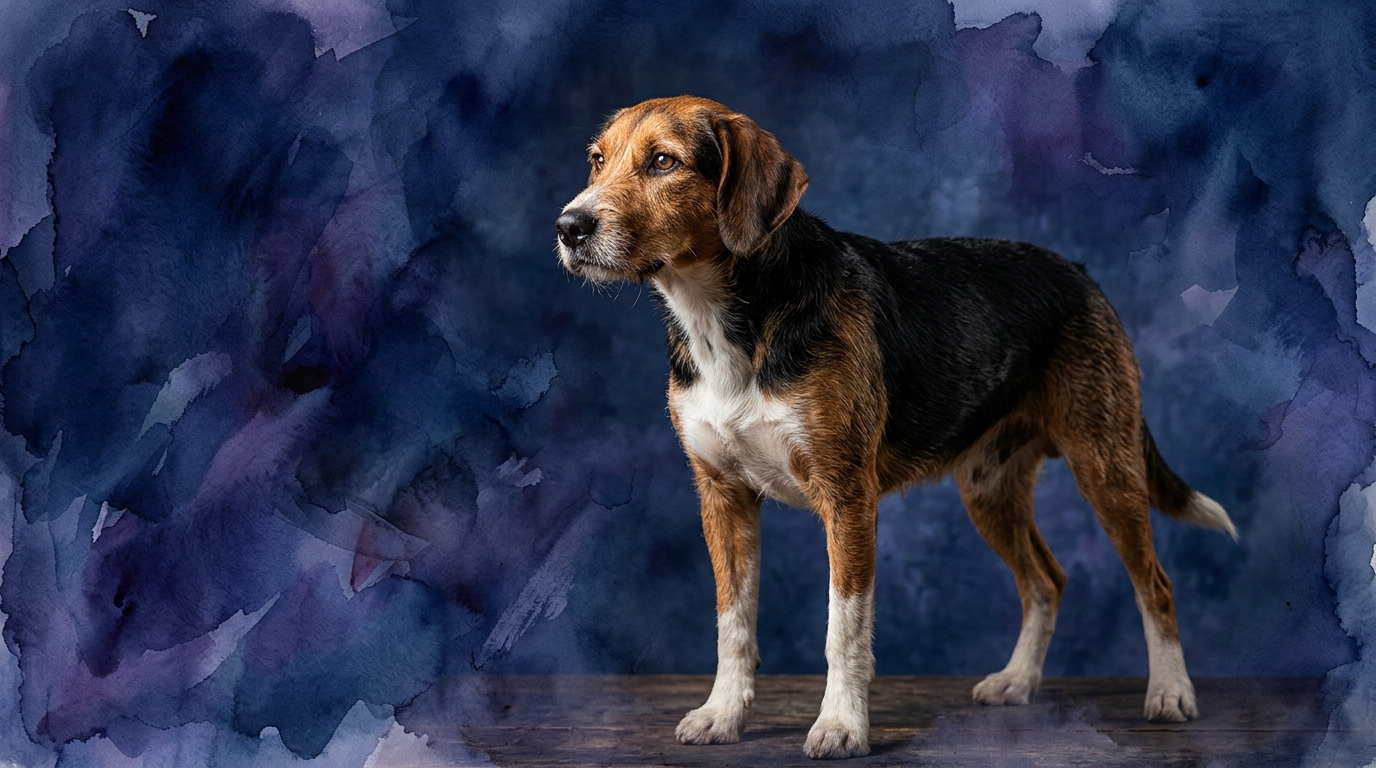
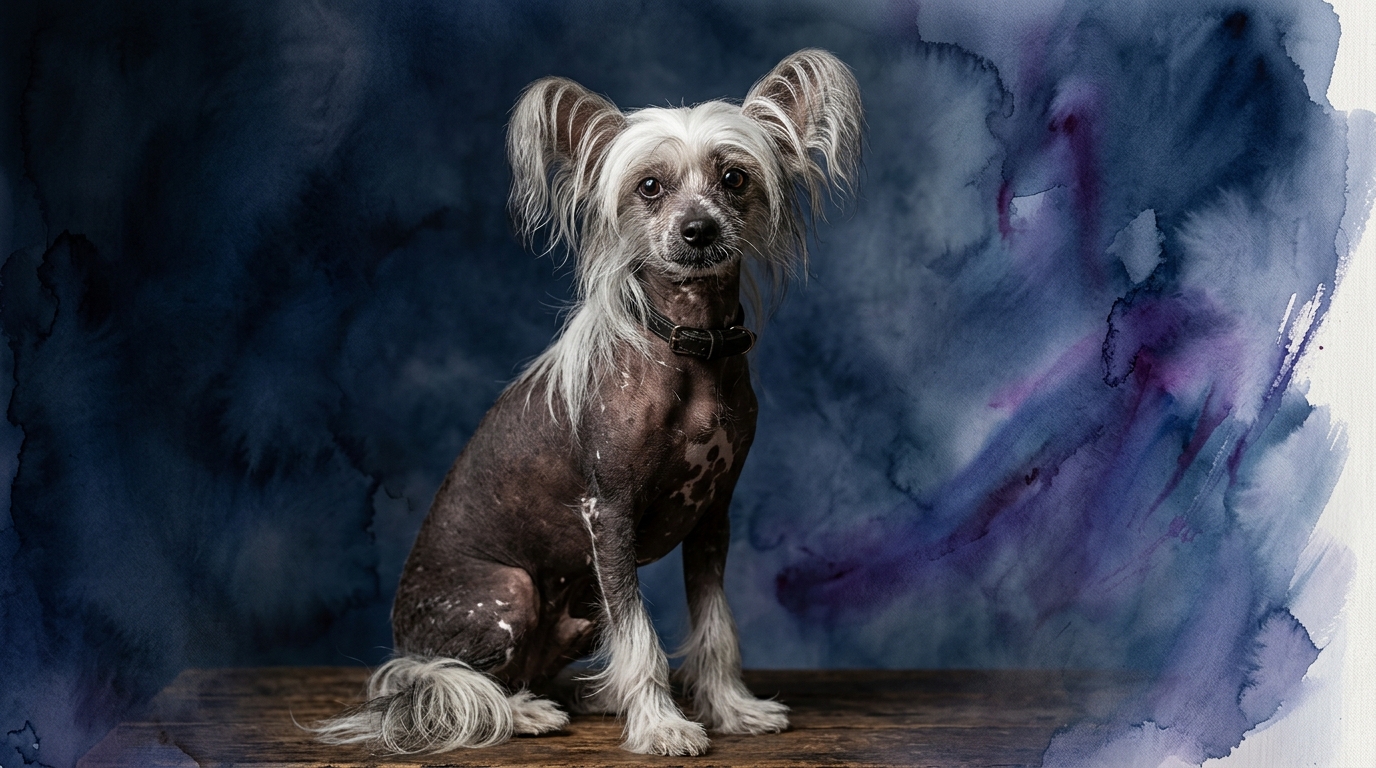
Side-by-Side IQ Profile: Harrier vs. Chinese Crested
The Cosmic Pet Pet IQ Lab assigns both the Harrier and the Chinese Crested a uniform 3 out of 5 across all measured cognitive dimensions. This suggests a baseline of moderate cognitive ability, but the application and expression of these abilities are profoundly shaped by each breed's historical role and inherent temperament. Let's dissect what a '3/5' means for each.
For the Harrier, a scent hound, Problem Solving (3/5) manifests as a practical, goal-oriented approach, often centered around unraveling scent puzzles or navigating complex terrain to locate a quarry. Their thinking is linear and persistent when on a trail, driven by their nose. Training Speed (3/5) indicates they are capable learners, but their independent nature and strong olfactory focus can make training a patient endeavor, requiring consistent and engaging methods to maintain attention. Social Intelligence (3/5) is expressed through an understanding of pack dynamics and effective communication within a canine group, displaying cooperative behaviors essential for coordinated hunting. Instinctive Drive (3/5) is powerfully geared towards tracking and pursuit, where their world is often interpreted through scent, guiding much of their behavior and motivation. Memory (3/5) allows them to retain scent trails, familiar hunting grounds, and established routines within their environment.
The Chinese Crested, a companion toy breed, interprets these same scores through a different lens. Their Problem Solving (3/5) exhibits a more adaptive, often owner-centric approach, figuring out how to gain attention, secure comfort, or manipulate situations to their advantage, sometimes with surprising ingenuity. Training Speed (3/5) means they learn at a moderate pace, but their sensitive nature and desire for comfort mean training must be positive, gentle, and varied to prevent boredom or shutdown. Social Intelligence (3/5) shines in their attunement to human emotions and social cues, excelling at forming deep bonds and adapting their behavior to maintain harmony and affection within their human family. Instinctive Drive (3/5) is primarily focused on companionship and comfort-seeking, often expressed through a strong desire for physical closeness, warmth, and interaction with their chosen people. Memory (3/5) retains recollections of routines, preferred people, comfort spots, and past interactions, often using these to anticipate future events or seek familiar pleasures.
Where the Harrier's Cognition Excels
The Harrier's cognitive strengths truly shine in environments that leverage their hound heritage. Their Problem Solving, while rated 3/5, is particularly adept at sequential reasoning in a sensory context, such as following a complex, broken scent trail through varying landscapes, a feat few other breeds could match. This isn't just about smell; it's about processing a continuous stream of olfactory data, prioritizing relevant information, and making predictive judgments about the quarry's path. Their Instinctive Drive, also 3/5, fuels an unparalleled focus and stamina in pursuit, transforming a cognitive task into a sustained physical endeavor. They demonstrate a specialized memory for terrain and scent patterns that allows them to retrace steps or anticipate where a trail might lead, showcasing a unique form of environmental recall and spatial awareness tied to scent.
Where the Chinese Crested's Cognition Excels
Conversely, the Chinese Crested excels in the nuanced realm of human-canine social dynamics, which their 3/5 Social Intelligence score only begins to articulate. They exhibit a profound capacity for reading subtle human body language, vocal inflections, and emotional states, often preempting their owner's needs or moods with remarkable accuracy. Their Problem Solving (3/5) is frequently applied to navigating human interactions to achieve desired outcomes, whether it’s finding the warmest lap, securing a treat, or initiating play. This isn't about brute force or scent tracking; it's about social cunning and emotional intelligence. Their memory (3/5) is often tied to people and comfort, remembering which family member is most likely to offer a cuddle or which spot on the sofa catches the sun best, demonstrating a strong association between specific individuals and positive experiences.
Training Dynamics: Harrier vs. Chinese Crested
Despite identical 3/5 Training Speed scores, the practical experience of training a Harrier versus a Chinese Crested can differ considerably due to their foundational motivations. The Harrier, with its powerful Instinctive Drive for scent work, can be challenging to train in obedience commands when a compelling scent is present. Their focus shifts entirely to the olfactory world, requiring an owner with immense patience and high-value, scent-based rewards to re-engage their attention. They learn reliably but need consistent reinforcement that competes with their natural urges, often displaying a degree of independence that requires a firm yet fair approach.
The Chinese Crested, while also a 3/5 in Training Speed, is often more sensitive and people-pleasing. They respond well to positive reinforcement, gentle guidance, and short, engaging sessions that prevent boredom or anxiety. While they may not be lightning-fast, their desire for human connection means they are generally more amenable to learning household manners and tricks, provided the training environment is supportive and fun. Their 'what's in it for me' attitude often translates into a quicker understanding of reward systems linked to human interaction, making them less prone to distraction by external stimuli compared to a scent hound.
Lifestyle Match: Active vs. Relaxed Owners
The choice between a Harrier and a Chinese Crested largely hinges on an owner's lifestyle. The Harrier, a robust hound, is an ideal companion for active owners who relish outdoor adventures. Their substantial Instinctive Drive and moderate Problem Solving skills are best channeled through activities like long hikes, scent work, or even participation in canine sports like tracking and agility. They require significant physical and mental stimulation to prevent boredom and destructive behaviors; a relaxed owner might find their persistent energy and vocal nature overwhelming.
In stark contrast, the Chinese Crested thrives with relaxed owners who prioritize companionship and indoor comfort. Their moderate Social Intelligence and Problem Solving are often directed towards forming deep bonds and enjoying quiet moments. While they appreciate short walks and playtime, their needs lean more towards consistent human interaction and a warm, secure home environment. They are perfectly content to be a lap warmer or a quiet presence, making them suitable for individuals or families with a more sedentary lifestyle who can offer abundant affection.
The Verdict
Choose the Harrier if you are an active, outdoors-oriented individual or family seeking a robust companion for adventures, scent work, and consistent physical and mental engagement.
Opt for the Chinese Crested if you desire a devoted, sensitive companion who thrives on close human interaction, quiet comfort, and can adapt to a more relaxed, indoor-focused lifestyle.
🧠 Find Your Pet's IQ Score
Our Pet IQ Lab assessment covers 25+ tests across 5 cognitive dimensions — personalized to your breed.
Take the Full IQ Test →Frequently Asked Questions
Do Harriers and Chinese Crested dogs require the same amount of mental stimulation?
While both breeds score 3/5 in Problem Solving, the type of mental stimulation they need differs. Harriers thrive on complex scent games and problem-solving related to their environment, engaging their hunting instincts. Chinese Crested dogs are stimulated by interactive toys, learning new tricks, and engaging in social games that strengthen their bond with their owners.
How does their social intelligence manifest differently in a home environment?
A Harrier's social intelligence often appears as a cooperative spirit within a 'pack' structure, whether with other dogs or their human family, valuing clear leadership and routine. A Chinese Crested, on the other hand, typically displays their social intelligence through intense devotion and sensitivity to their human family's moods, often seeking to comfort or interact based on emotional cues.
Can a Chinese Crested be as active as a Harrier, or vice versa?
Generally, no. While a Chinese Crested enjoys walks and play, their physical stamina is significantly less than a Harrier's, who is built for sustained activity. Conversely, a Harrier's strong independent drive and need for outdoor activity make them less suited to the constant lap-sitting and quiet companionship that a Chinese Crested often seeks.