Side-by-Side Cognitive Profiles: Harrier vs. Miniature Poodle
The Cosmic Pet Pet IQ Lab employs a five-dimensional framework to assess canine intelligence, offering a nuanced view of how breeds process information and interact with their environment. Here’s how the Harrier and Miniature Poodle stack up.
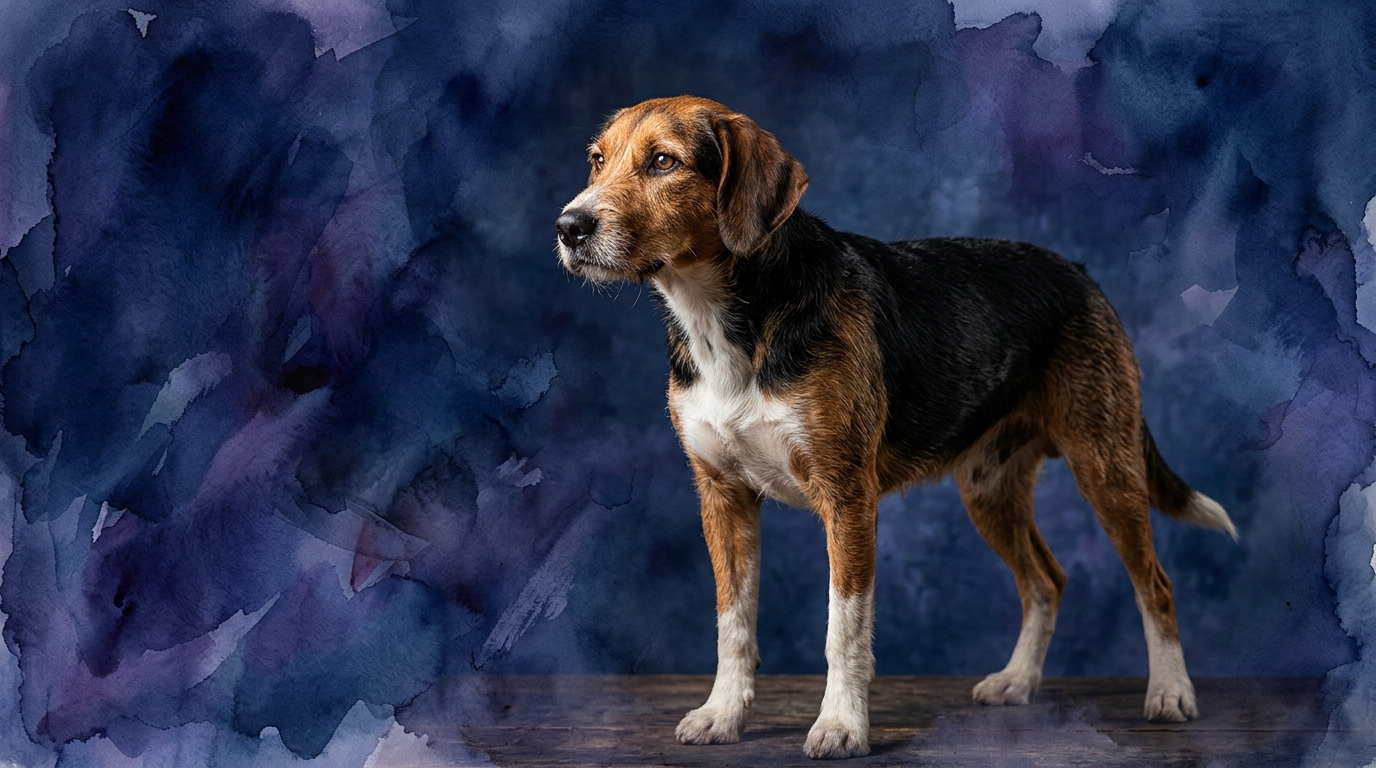
**Harrier (Hound Group):** This breed, not ranked by Coren, exhibits a functional and purpose-driven intelligence.
**Problem Solving (3/5):** Harriers display functional problem-solving, primarily focused on their ancestral hunting tasks, independently navigating complex scent trails and environmental obstacles with persistent focus, often relying on instinctual cues rather than rapid abstract deduction.
**Training Speed (3/5):** Harriers learn at a moderate pace; their independent nature, crucial for field work, means they may prioritize instinct over human directives, requiring consistent reinforcement and patience rather than quick assimilation of new cues.
**Social Intelligence (3/5):** Harriers possess moderate social intelligence, generally amiable with people and other dogs, thriving in pack environments, understanding group dynamics, but easily diverted by environmental stimuli, particularly scents.
**Instinctive Drive (3/5):** Their instinctive drive, precisely calibrated for hunting, manifests as a powerful urge to follow scents, a strong prey drive, and remarkable stamina for sustained activity, profoundly influencing their focus and behavior.
**Memory (3/5):** Harriers exhibit reliable memory for routines, familiar individuals, and established commands, especially those linked to their working life, recalling complex scent patterns and navigating familiar territories effectively, though less engaging tasks may require more repetition.
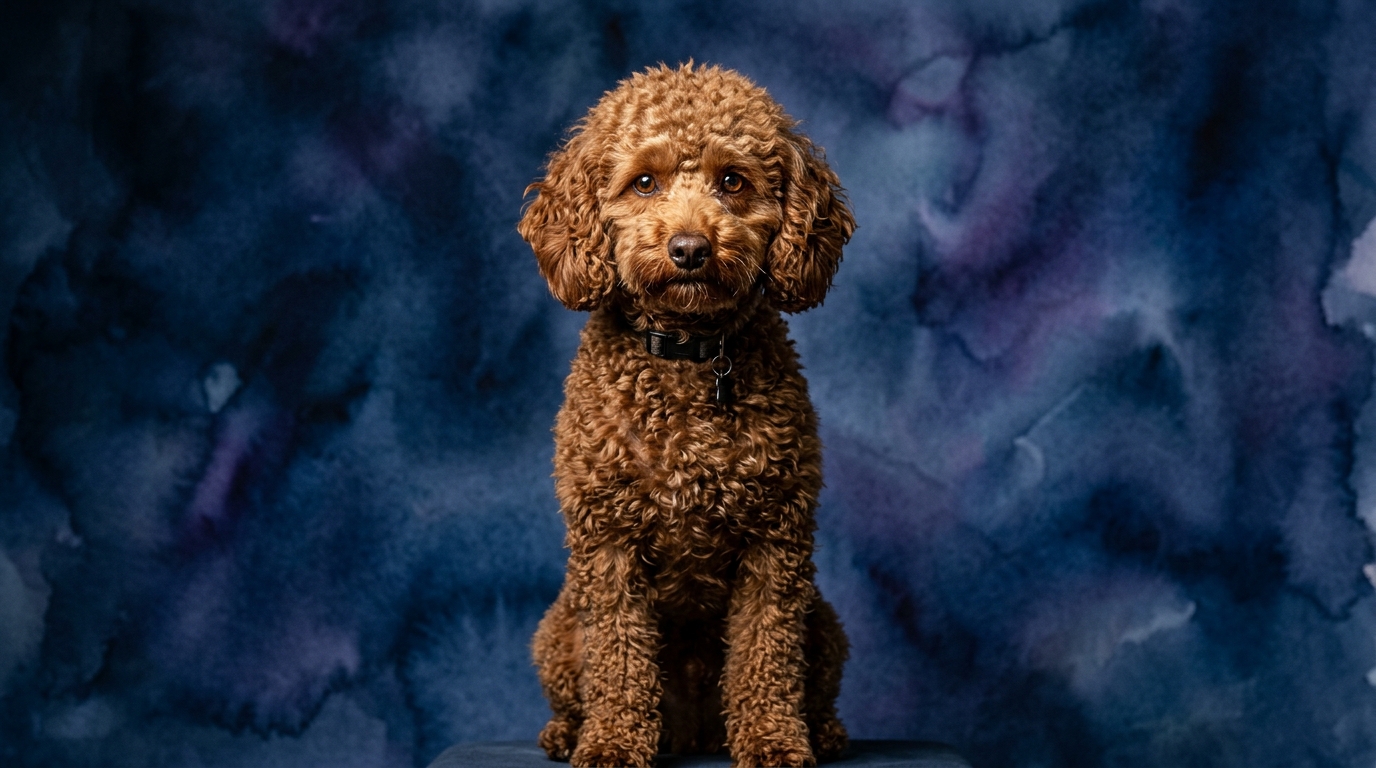
**Miniature Poodle (Non-Sporting Group):** Ranked #2 by Coren, this breed consistently demonstrates advanced cognitive abilities.
**Problem Solving (5/5):** Miniature Poodles excel in problem-solving, exhibiting remarkable capacity for understanding cause and effect, quickly devising strategies to achieve desired outcomes, and adapting rapidly to new situations through cognitive flexibility.
**Training Speed (5/5):** Their training speed is exceptionally swift, grasping new commands and concepts with minimal repetition, often anticipating expectations, making them highly responsive to various training methods and excelling in obedience and agility.
**Social Intelligence (3/5):** Miniature Poodles demonstrate moderate social intelligence, generally responsive to human emotions and cues, forming strong family bonds, and adapting to various social settings, often eager to interact.
**Instinctive Drive (3/5):** While not a scent hound, Miniature Poodles possess an instinctive drive often manifesting as a desire to retrieve, an affinity for water, and a general zest for engaging in activities, providing strong internal motivation for play and interaction.
**Memory (5/5):** Miniature Poodles boast outstanding memory, retaining a vast repertoire of commands, tricks, and learned behaviors over long periods, even with infrequent practice, which contributes significantly to their training prowess and performance in complex sequences.
Where the Harrier Wins Cognitively
While the Miniature Poodle presents a formidable cognitive profile, the Harrier’s strengths lie in a specific, purpose-driven application of its intelligence. A Harrier’s 3/5 in Instinctive Drive, when combined with its 3/5 Problem Solving and Memory, translates into an unparalleled ability to independently track a scent over vast distances, through varied terrain, and despite distractions. This isn't about quickly learning a new trick in a living room; it's about sustained, autonomous cognitive effort in a complex, dynamic environment.
Their problem-solving in this context involves navigating physical obstacles and environmental changes while maintaining focus on a fading scent trail – a nuanced form of cognitive perseverance. They make independent decisions in the field, relying on their internal map and scent memory rather than constant human direction, a strength for their original role that could be misinterpreted as stubbornness in a different context. This self-reliance and deep-seated focus on a specific, sensory task represents a distinct cognitive advantage when compared to the Poodle's more generalized intellectual agility.
Where the Miniature Poodle Wins Cognitively
The Miniature Poodle's cognitive superiority is evident across multiple dimensions, particularly in its capacity for rapid information processing and retention. Their 5/5 in Problem Solving allows them to quickly analyze novel situations, understand abstract concepts, and devise creative solutions, whether it's figuring out how to open a child-proof cabinet or mastering a complex agility course. This contrasts with the Harrier's more practical, instinct-driven problem-solving.
The Poodle's 5/5 Training Speed means they absorb new commands and behaviors with remarkable efficiency, often requiring only a few repetitions to solidify a new skill. This isn't just about obedience; it's about a deep understanding of human language and intent. Coupled with their 5/5 Memory, they can recall a vast array of cues and sequences over extended periods, making them exceptional candidates for advanced training, performance sports, and even service work where a broad, lasting cognitive repertoire is essential. Their cognitive agility allows them to generalize learned behaviors to new contexts with ease, a hallmark of advanced cognition.
Which is Easier to Train and Why
Based on their cognitive profiles, the Miniature Poodle is undeniably easier to train for a wide range of tasks and obedience commands. Their 5/5 Training Speed and 5/5 Memory mean they grasp new concepts almost instantaneously and retain them long-term. They are highly motivated by human interaction and praise, often eager to please, which further accelerates the learning process. You can introduce a new trick to a Miniature Poodle, practice it a few times, and expect them to perform it reliably days or weeks later. This makes them ideal for owners seeking a responsive companion capable of mastering complex routines.
In contrast, the Harrier, with its 3/5 Training Speed and 3/5 Memory, requires a more patient and consistent approach. Their independent nature, a vestige of their hunting heritage, means they may question the necessity of a command or prioritize an enticing scent over a handler's instruction. While perfectly capable of learning, the process is slower and demands greater creativity from the trainer to make lessons engaging and relevant to their innate drives. For instance, teaching a recall to a Harrier amidst compelling outdoor scents will be a significant challenge, whereas a Miniature Poodle would likely master it quickly in various environments. Harriers learn best when training taps into their natural instincts or is presented as a collaborative hunting game, rather than rote obedience.
Which Suits Active Owners vs. Relaxed Owners
For owners seeking a relaxed, low-key companion, neither breed is an ideal fit without significant commitment, but the Miniature Poodle leans slightly more towards adaptability for varying activity levels, provided their mental stimulation needs are met. A Miniature Poodle, while energetic, can often be satisfied with daily walks, engaging play sessions, and plenty of interactive puzzle toys or training exercises indoors. Their cognitive needs are paramount; a bored Poodle will invent its own (often undesirable) entertainment, but a well-exercised and mentally stimulated Poodle can be a calm, affectionate housemate.
The Harrier, however, is unequivocally suited for highly active owners who embrace an outdoor, adventurous lifestyle. Their 3/5 Instinctive Drive for scent work and their background as a pack hound mean they possess immense stamina and a profound need for regular, vigorous exercise that engages both their body and their nose. Daily long runs, hikes, or participation in scent work or tracking sports are not optional but essential for a Harrier's well-being. A Harrier confined to a sedentary lifestyle without sufficient mental and physical outlets will likely become restless, destructive, and vocal, making them a poor choice for relaxed owners. Their independent nature also means they thrive with owners who appreciate a dog that operates with a degree of autonomy, rather than one constantly seeking direction.
The Verdict
Choose the Harrier if you are an active, outdoors-oriented individual or family, passionate about scent work, hiking, or field sports, and appreciate a dog with a strong, independent spirit that operates with a functional, purpose-driven intelligence.
Choose the Miniature Poodle if you seek a highly trainable, cognitively flexible companion eager to learn a vast array of commands and tricks, excel in canine sports, and thrive on consistent mental engagement, making them suitable for active families or individuals who enjoy structured activities and a responsive partner.
🧠 Find Your Pet's IQ Score
Our Pet IQ Lab assessment covers 25+ tests across 5 cognitive dimensions — personalized to your breed.
Take the Full IQ Test →Frequently Asked Questions
Are Harriers difficult to train?
Harriers are not difficult in the sense of being unable to learn, but their training requires significant patience and consistency due to their independent nature and strong scent drive. They learn at a moderate pace (3/5 Training Speed) and respond best to methods that engage their instincts rather than rote obedience.
Do Miniature Poodles need a lot of exercise?
Miniature Poodles are energetic and require regular physical activity, but their cognitive needs are equally important. Daily walks, playtime, and mental stimulation through training or puzzle toys are crucial to keep them content and prevent boredom-induced behaviors.
Which breed is better for first-time dog owners?
The Miniature Poodle is generally a more forgiving and easier breed for first-time dog owners due to their high trainability (5/5 Training Speed) and eagerness to please. Harriers, with their strong independent streak and high exercise demands, typically require more experienced owners who understand hound behavior.