
Side-by-Side IQ Profile: Ibizan Hound vs. American Eskimo Dog
The Cosmic Pet Pet IQ Lab assesses five key cognitive dimensions, and both the Ibizan Hound and the American Eskimo Dog register a consistent 3/5 across the board. However, understanding their ancestral roles illuminates how these scores manifest uniquely for each breed.
The **Ibizan Hound (dog, Hound, Coren rank #53)**, a graceful sighthound originating from ancient Egypt, consistently scores 3/5 in all dimensions. Its **Problem Solving (3/5)** often manifests in its ancestral hunting role: independently navigating complex terrain to pursue quarry, figuring out how to outmaneuver prey, or finding the most efficient path during a chase. Their solutions are often swift and instinct-driven, focused on achieving a specific, often physical, goal. For **Training Speed (3/5)**, while capable of learning new commands, an Ibizan Hound's progress is influenced by its independent nature. They grasp concepts at a moderate pace, but their motivation often stems from their own interests or a strong bond with their handler, rather than an inherent desire to please. **Social Intelligence (3/5)** sees Ibizan Hounds forming deep bonds and being sensitive to their human family's moods, often expressing affection in a reserved manner. Their social understanding extends to subtle body language cues, vital in a hunting pack. Their **Instinctive Drive (3/5)** is primarily focused on prey detection and pursuit, a powerful innate impulse to chase moving objects deeply embedded for hunting purposes. Finally, their **Memory (3/5)** is solid, enabling recall of learned commands, routines, and the layout of familiar territories, paramount for remembering hunting grounds or successful routes.
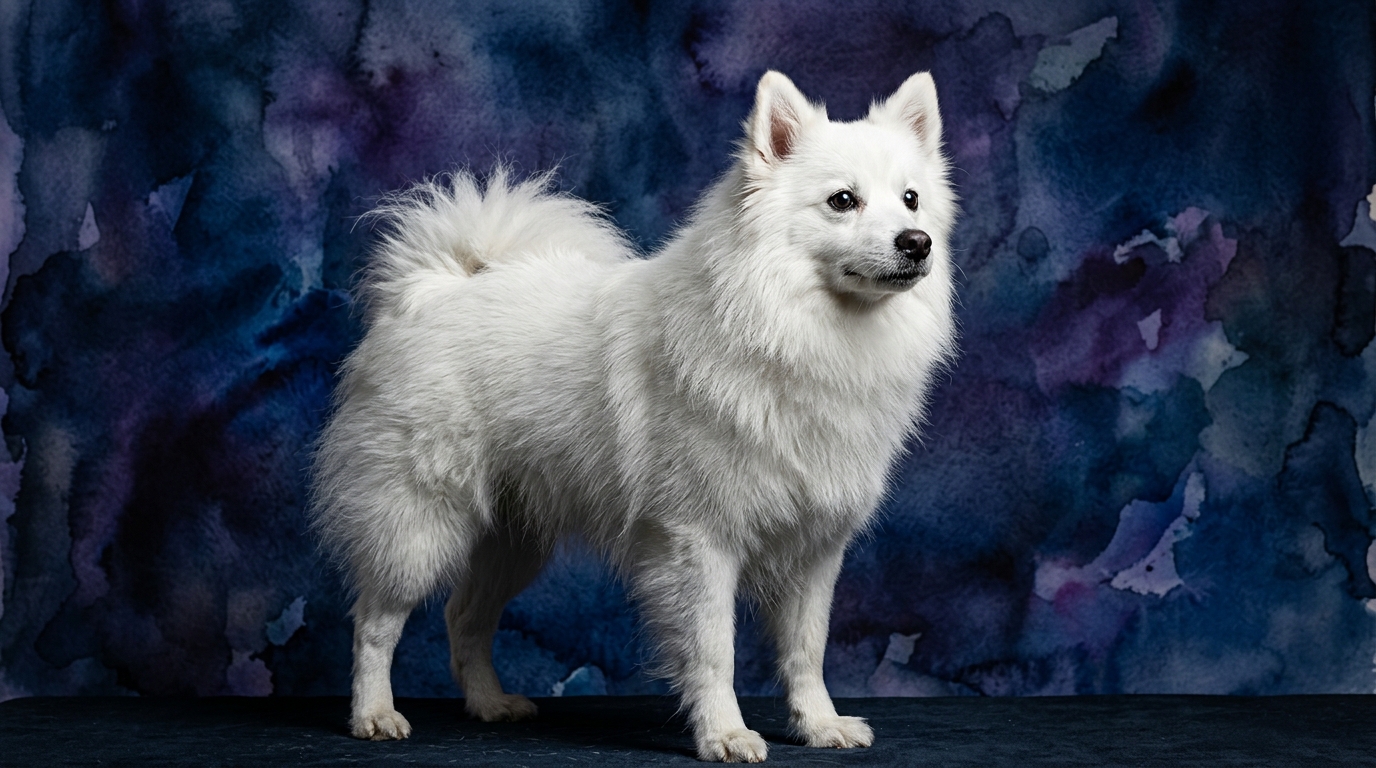
The **American Eskimo Dog (dog, Non-Sporting, Not Coren-ranked)**, a lively Spitz-type dog known for its circus performance history and companionship, also scores a uniform 3/5 across the board. Its **Problem Solving (3/5)** skills often shine in a domestic setting, figuring out how to open cabinets, manipulate puzzle toys to get treats, or devising strategies to gain human attention. Their solutions tend to be clever and often involve observation and trial-and-error to achieve a desired outcome within their environment. For **Training Speed (3/5)**, Eskies are generally eager to learn and respond well to positive reinforcement. They absorb new tricks and commands at a good pace, especially when training is engaging and rewarding, enjoying the mental stimulation. **Social Intelligence (3/5)** is strong, making them adept at reading human emotions and intentions; they thrive on companionship and are skilled at communicating their needs and desires. Their **Instinctive Drive (3/5)** is often channeled into alertness, watchdog duties, and a desire for interaction, reflecting a strong innate tendency towards vocalization, vigilance, and engagement. The Eskie's **Memory (3/5)** is robust, allowing them to retain a wide repertoire of tricks, commands, and household routines, underscoring a strong associative memory crucial for their historical roles as performers.
Where the Ibizan Hound Wins Cognitively
While both breeds register a 3/5 across the board, the Ibizan Hound's cognitive strengths distinctly emerge in scenarios demanding independent action and acute sensory processing. Their problem-solving (3/5) is particularly potent in open, dynamic environments, where they must rapidly assess changing situations, like the unpredictable movements of a lure or distant wildlife, and formulate an immediate, physical response. This isn't about complex, multi-step puzzles but rather instantaneous, efficient decision-making under high-speed conditions. Their memory (3/5) excels in spatial recall, allowing them to navigate familiar territories with precision or remember the location of an observed "prey" even after it's vanished from sight. This practical, environment-focused memory is a hallmark of their sighthound heritage, vital for tracking and hunting across varied landscapes. Furthermore, their social intelligence (3/5), though sometimes perceived as reserved, is highly tuned to subtle cues within a "pack" or during a collaborative chase, facilitating coordinated movement without explicit commands.
Where the American Eskimo Dog Wins Cognitively
The American Eskimo Dog, conversely, demonstrates its cognitive edge in environments centered around human interaction and structured tasks. Their problem-solving (3/5) shines in domestic settings, where they cleverly figure out how to manipulate objects, such as opening child-proof gates or solving intricate puzzle toys, often with a clear understanding of cause and effect. This ingenuity is geared towards achieving comfort, attention, or rewards within a human household. Their training speed (3/5) is particularly strong in mastering complex sequences of tricks or agility courses, where their desire to engage with their handler and earn praise fuels rapid learning and retention. This adaptability makes them excel in performance roles. The Eskie's social intelligence (3/5) is highly refined for interpreting human vocalizations and body language, allowing them to anticipate needs, offer comfort, or even "train" their owners through specific behaviors to elicit desired responses. Their memory (3/5) is exceptional for recalling a vast array of verbal commands and intricate routines, making them superb candidates for advanced obedience and trick work.
Which Is Easier to Train and Why
Determining which breed is "easier" to train requires understanding their inherent motivations and behavioral tendencies. Both breeds hold a 3/5 in training speed, indicating a moderate capacity for learning, but the *approach* to training differs significantly. The American Eskimo Dog often presents as "easier" for many owners due to its strong desire to please and its historical role as a companion and performer. They typically thrive on positive reinforcement, praise, and the mental engagement of learning new commands or tricks. Their social intelligence encourages them to work *with* their handler, making them responsive to cues and eager to participate in structured training sessions. While they can exhibit stubbornness, it's often overcome with consistent, fun, and reward-based methods.
The Ibizan Hound, while equally capable of learning (3/5 training speed), approaches training with more independence. As sighthounds, their instinctive drive (3/5) to chase moving objects is powerful, meaning distractions in an outdoor setting can override learned commands. Training an Ibizan Hound often requires immense patience, creativity, and a deep understanding of their sighthound nature. They learn best when training feels like a game, is highly rewarding, and appeals to their natural inclinations, such as lure coursing or scent work. They may not always feel the same inherent need to "please" as an Eskie, meaning motivation must be carefully cultivated and consistently reinforced. Therefore, for an average owner seeking straightforward obedience, the American Eskimo Dog often presents a less challenging training experience.
Which Suits Active Owners vs. Relaxed Owners
The choice between an Ibizan Hound and an American Eskimo Dog also hinges on an owner's lifestyle regarding activity levels. The Ibizan Hound is undeniably suited for active owners. Their physical prowess and sighthound heritage demand significant outlets for their energy. They need opportunities to run at full speed in a securely fenced area, making activities like lure coursing, long hikes, or extensive jogs ideal. Owners who enjoy regular, vigorous outdoor exercise and can provide safe, expansive spaces for their dog to gallop will find a compatible partner in an Ibizan Hound. While they can be calm indoors *after* sufficient exercise, their daily requirement for physical exertion is non-negotiable for their well-being and to prevent destructive behaviors.
Conversely, the American Eskimo Dog, while energetic, is more adaptable and generally suits owners with a moderately active lifestyle or those who prefer interactive play over long-distance running. They thrive on consistent daily walks, engaging playtime in the yard, and mental stimulation through training sessions or puzzle toys. Their exercise needs can often be met through a combination of physical activity and substantial mental engagement. They are excellent companions for owners who enjoy teaching tricks, participating in agility or obedience classes, or simply having an interactive, playful dog in their home. They can adapt to apartment living if their exercise and mental stimulation needs are consistently met, making them a better fit for owners who might describe themselves as "relaxed" regarding extreme physical demands, but highly engaged in their dog's mental and social life.
The Verdict
Opt for an Ibizan Hound if you lead a very active lifestyle, relish outdoor adventures, and appreciate a graceful, independent companion who thrives on speed and the thrill of the chase. This breed suits owners prepared to provide extensive, safe opportunities for running and understand a sighthound's unique training motivations.
Select an American Eskimo Dog if you desire an engaging, clever, and highly interactive companion dog who excels in training, enjoys mental challenges, and thrives on being an integral part of family life. This breed is ideal for owners who enjoy consistent mental stimulation and moderate physical activity with their pet.
🧠 Find Your Pet's IQ Score
Our Pet IQ Lab assessment covers 25+ tests across 5 cognitive dimensions — personalized to your breed.
Take the Full IQ Test →Frequently Asked Questions
Are Ibizan Hounds suitable for first-time dog owners?
Ibizan Hounds can be a challenge for first-time owners due to their independent nature and strong prey drive, requiring consistent, patient training and secure environments for exercise. Their sighthound instincts mean they need owners who understand their unique behavioral traits and can provide appropriate outlets for their energy.
Do American Eskimo Dogs bark a lot?
American Eskimo Dogs are known for being vocal, often using barking to communicate excitement, alert their owners to new arrivals, or express boredom, reflecting their vigilant nature. Consistent training and mental stimulation can help manage excessive barking, channeling their strong instinctive drive for communication.
How much exercise does an Ibizan Hound need?
Ibizan Hounds require a substantial amount of exercise, ideally at least 60-90 minutes of vigorous activity daily, including opportunities for sprinting in a securely fenced area. Without adequate physical exertion, they can become restless and prone to undesirable behaviors, reflecting their high energy levels and hunting heritage.