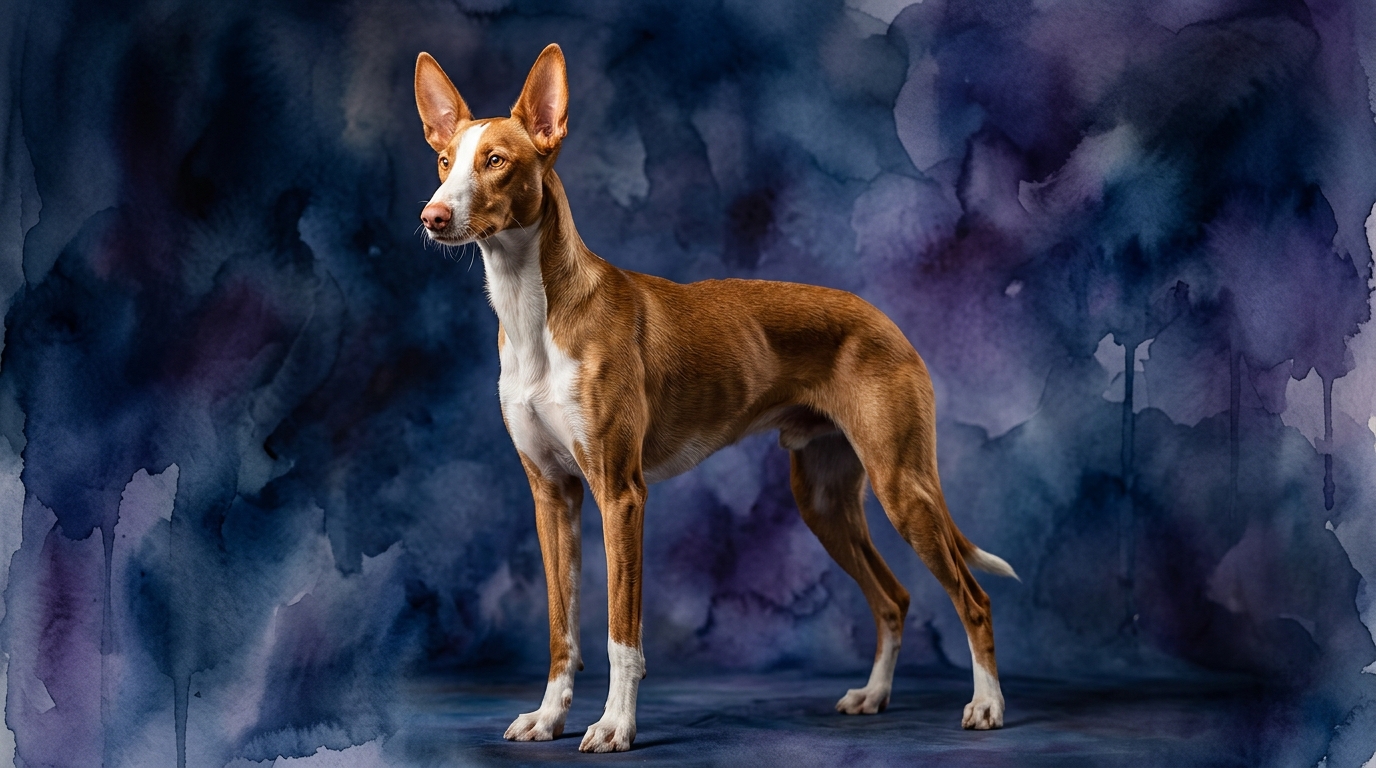
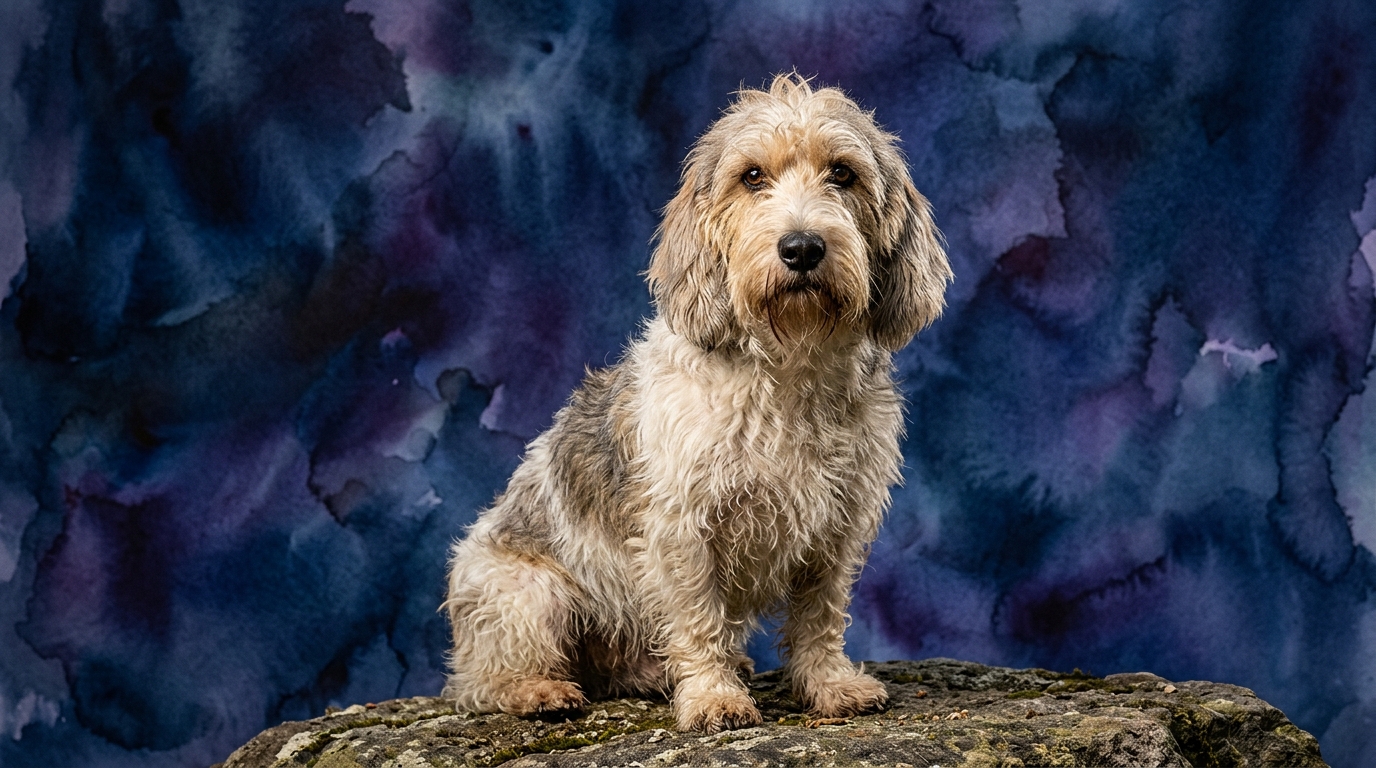
Side-by-Side IQ Profile: Ibizan Hound vs. Petit Basset Griffon Vendéen
While both the Ibizan Hound and the Petit Basset Griffon Vendéen (PBGV) register a consistent 3/5 across all five dimensions of The Cosmic Pet Pet IQ Lab, the *manifestation* of these scores is uniquely tailored to their ancestral roles.
For Problem Solving (3/5), the Ibizan Hound's intelligence shines in cunning pursuit across varied, often challenging terrain, quickly assessing visual cues to predict prey movement and navigate obstacles. Their problem-solving is adaptive, real-time strategic thinking in a dynamic hunting environment, less about complex puzzles and more about efficient, visual interception. The PBGV's 3/5 problem-solving is rooted in their relentless determination to unravel intricate scent trails. This involves differentiating scents, ignoring distractions, and mentally mapping unseen quarry, demonstrating persistent, methodical, scent-driven intelligence in dense undergrowth.
Regarding Training Speed (3/5), the Ibizan Hound is a capable learner, but their independent spirit often means they weigh commands against intrinsic motivations. They grasp concepts with moderate repetition, but consistency and positive reinforcement are crucial to overcome their instinctive tendencies, making training success dependent on engagement and relevance to their natural inclinations. The PBGV also scores 3/5, reflecting a dog that learns commands but whose attention is easily hijacked by the world of scent. While often eager to please, their powerful olfactory instincts mean distractions are ever-present, requiring patience, engaging methods, and recognizing their nose often dictates immediate focus.
The Ibizan Hound's 3/5 Social Intelligence typically means strong bonds with immediate family but reservation with strangers. They observe human moods and routines, adapting well to a stable household, preferring quiet companionship within their trusted circle. Their social understanding is geared towards harmonious living with their chosen human pack. For the PBGV, 3/5 social intelligence manifests as a generally outgoing, convivial nature, enjoying interaction with both family and acquaintances. Their understanding of social cues helps them fit into various family dynamics, thriving on inclusion, and their pack-hunting heritage suggests a dog that understands group dynamics and enjoys cooperative engagement.
A 3/5 Instinctive Drive in the Ibizan Hound points directly to their sighthound heritage: an intense visual focus on movement, explosive speed, and unwavering pursuit. This drive defines their play, interactions with small animals, and need for secure spaces, guiding their physical and mental engagement. The PBGV's 3/5 instinctive drive is overwhelmingly scent-centered. Their world is rich with smells, and their drive is to follow and unravel these narratives with unflagging persistence. This translates into a dog that loves to explore, track, and investigate every odor, often with characteristic vocalization.
Finally, the Ibizan Hound’s 3/5 Memory reflects their ability to recall hunting strategies, familiar routes, and human habits, remembering training cues and boundaries when consistently reinforced. Their practical memory serves their independent nature, allowing efficient navigation and recall of outcomes. For the PBGV, 3/5 memory suggests good recall of scent trails, familiar environments, and household routines. They remember training commands associated with positive experiences and retain complex scent patterns, aiding their investigative nature by building a mental map of their territory.
Where the Ibizan Hound Wins Cognitively
Despite identical IQ scores, the Ibizan Hound demonstrates a distinct cognitive edge in scenarios demanding swift, visual processing and agile, independent decision-making. Their sighthound heritage means they excel at real-time problem-solving that involves spatial reasoning and rapid assessment of moving targets over open terrain. This allows them to quickly formulate and execute chase strategies, adapting instantly to changes in prey direction or environmental obstacles, a capability less pronounced in the scent-focused PBGV.
Their memory, while rated 3/5 like the PBGV, is particularly adept at recalling visual patterns and complex physical landscapes, crucial for navigating vast hunting grounds or remembering the most efficient paths during a pursuit. This specific application of memory enables them to learn and internalize complex routes and visual cues with impressive accuracy, allowing for self-directed navigation and efficient hunting without constant human intervention.
Where the Petit Basset Griffon Vendéen Wins Cognitively
Conversely, the Petit Basset Griffon Vendéen shines cognitively in areas requiring tenacious, methodical investigation and an intricate understanding of olfactory information. Their 3/5 problem-solving is superior when it comes to deciphering elaborate scent puzzles, meticulously following a trail regardless of its age or complexity. This involves a sustained mental focus and an ability to filter out irrelevant sensory data, skills that are paramount for a scenthound.
Their social intelligence, also 3/5, often manifests as a more overtly cooperative and communicative nature compared to the more reserved Ibizan. PBGVs tend to be more vocal and demonstrative, using barks, bays, and body language to convey information, particularly when working a trail or engaging with their human family. This capacity for clear communication and social engagement, stemming from their pack-hunting background, offers a different kind of cognitive strength, fostering strong bonds and collaborative effort.
Which is Easier to Train and Why
Both breeds share a 3/5 training speed, indicating moderate trainability, but their challenges differ. The Ibizan Hound’s independent problem-solving and strong visual prey drive mean they are easily distracted by movement and might question commands misaligned with their instincts. Training an Ibizan requires patience, engaging methods appealing to their intelligence, and understanding their sighthound nature to foster willingness, not just obedience. They respond best to positive reinforcement and clear boundaries, but their self-directed focus means they might 'tune out' if bored or visually stimulated.
The Petit Basset Griffon Vendéen, also 3/5, presents a different training landscape. Their powerful instinctive drive is scent-rooted, making them highly prone to olfactory distractions. A compelling scent often overrides commands, leading them to follow their nose with single-minded determination. This demands diligent leash training and recall, often needing practice in varied environments to build resilience. Their persistent nature, a hunting strength, can appear as stubbornness if not managed with engaging, scent-aware techniques and a consistent, upbeat approach.
Which Suits Active vs. Relaxed Owners
For active owners, both breeds offer robust companionship, but their activity profiles diverge. The Ibizan Hound, with its explosive speed and endurance, is ideal for owners who enjoy running, hiking over varied terrain, or lure coursing. They require regular high-speed sprints in securely fenced areas to satisfy their powerful instinctive drive. While calm indoors, their need for intense physical outlets is non-negotiable, suiting individuals committed to a dynamic, outdoor-centric lifestyle where their visual acuity and agility are fully utilized.
The Petit Basset Griffon Vendéen, while active, thrives on a different engagement. Their instinctive drive for scent work means they excel with owners who enjoy long, sniffing walks, 'nose work' games, or tracking sports. They have good stamina and enjoy exploring, but their activity is more about persistent investigation than sheer speed. PBGVs can adapt to more relaxed indoor living if their mental and olfactory needs are met with consistent outdoor exploration and enrichment. They suit owners appreciating a curious, happy companion eager to investigate the world at a moderate pace.
The Verdict
Choose the Ibizan Hound if you appreciate a discerning, independent companion adept at visual problem-solving and capable of explosive speed, thriving in active outdoor pursuits like lure coursing or running in secure areas.
Opt for the Petit Basset Griffon Vendéen if you seek a tenacious, scent-driven explorer who excels at unraveling olfactory mysteries and enjoys consistent, engaging walks and nose work, bringing a cheerful curiosity to every adventure.
🧠 Find Your Pet's IQ Score
Our Pet IQ Lab assessment covers 25+ tests across 5 cognitive dimensions — personalized to your breed.
Take the Full IQ Test →Frequently Asked Questions
Are Ibizan Hounds good with children and other pets?
Ibizan Hounds can be wonderful family companions, typically gentle and quiet indoors, forming strong bonds with their human family. However, their strong visual prey drive means careful introductions and supervision are necessary with very small pets, though they often coexist peacefully with other dogs if properly socialized.
How much exercise does a Petit Basset Griffon Vendéen need daily?
PBGVs require a good amount of daily exercise, typically 60-90 minutes, which should include opportunities for sniffing and exploring. While they love walks, off-leash time in a securely fenced area or engaging in scent games is crucial to satisfy their powerful instinctive drive and keep them mentally stimulated.
Can both breeds live in apartments?
Both breeds can live in apartments if their significant exercise and mental stimulation needs are consistently met. Ibizan Hounds require daily intense sprints, ideally in a secure yard or park, while PBGVs need daily long walks for sniffing and scent work. Without proper outlets, their drives can lead to undesirable behaviors in smaller spaces.