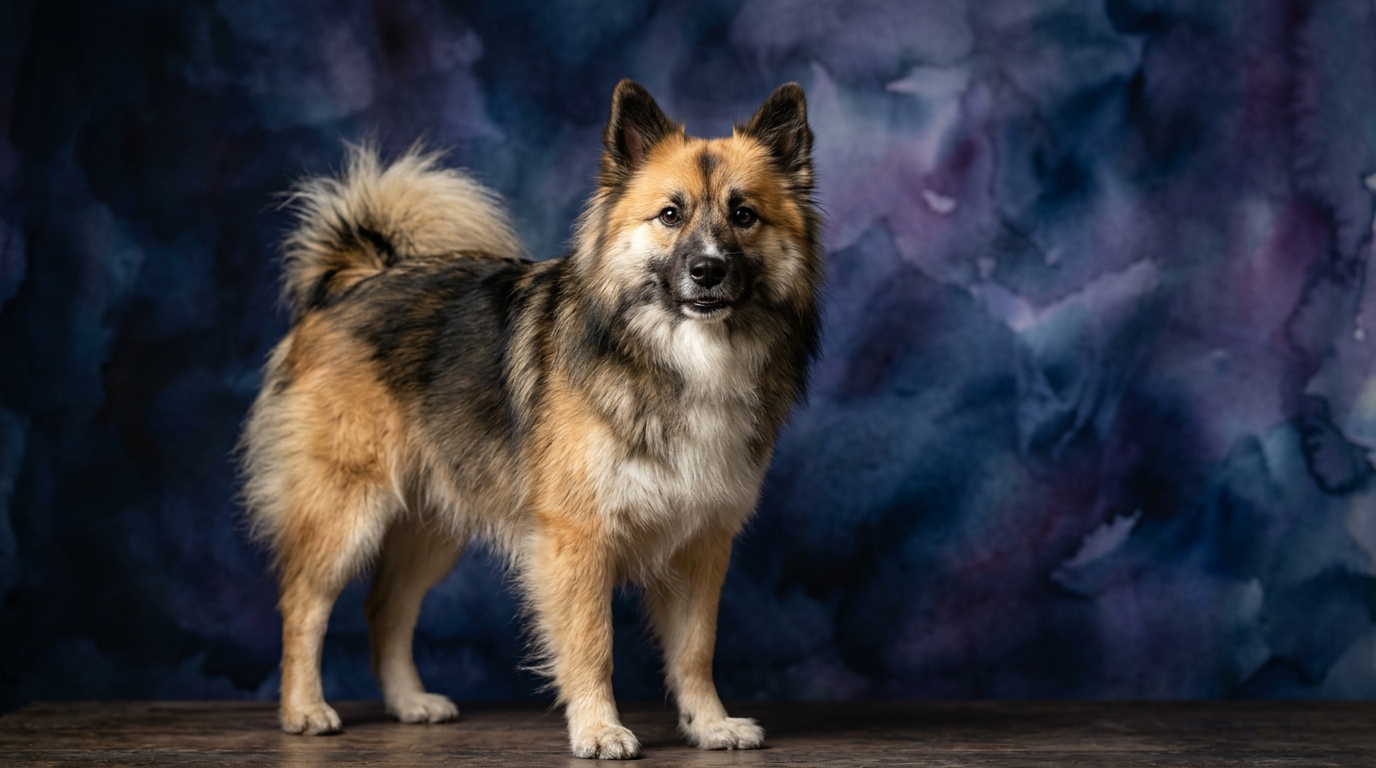
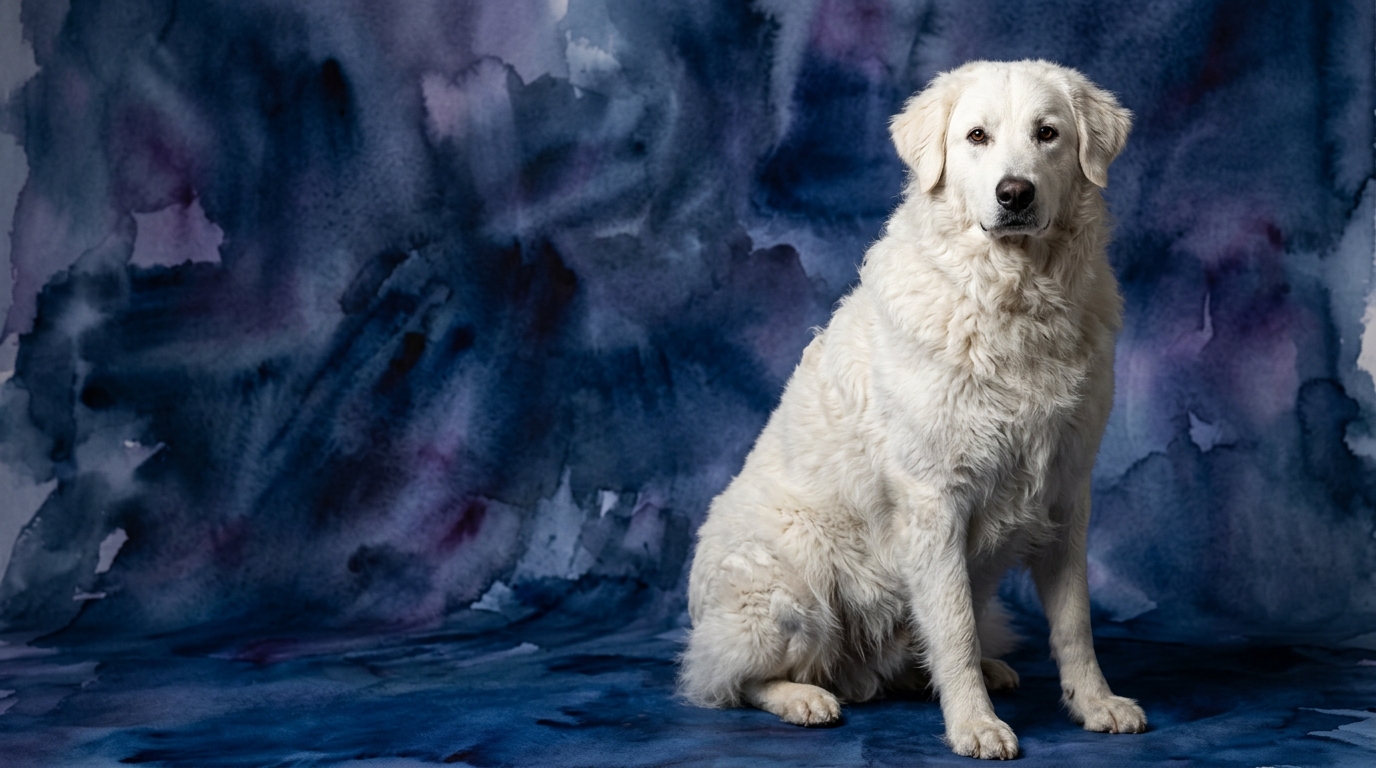
Side-by-Side IQ Profile: Herding Wit vs. Guardian Acuity
The Cosmic Pet Pet IQ Lab employs a five-dimensional framework to assess canine cognition, providing a granular view of each breed's mental faculties. For the Icelandic Sheepdog, a breed rooted in herding, its profile paints a picture of balanced, practical intelligence. Its Problem Solving is rated 3/5, suggesting an ability to navigate its environment and figure out practical challenges, like finding a way around an obstacle to reach a desired object, without extensive human intervention but not necessarily inventing novel solutions to complex, abstract puzzles. Training Speed also sits at 3/5, indicating a moderate pace of learning new commands and routines, requiring consistent and patient repetition for mastery. Social Intelligence, at 3/5, points to a cooperative nature and an understanding of human cues, crucial for its traditional role working alongside shepherds. Its Instinctive Drive, also 3/5, reflects a present but manageable herding instinct, translating to an eagerness to engage in purposeful activities. Finally, its Memory is 3/5, meaning it retains learned information and experiences reasonably well, building on past lessons over time.
The Kuvasz, a formidable working breed primarily known for livestock guarding, presents a slightly different cognitive emphasis. Its Problem Solving is also 3/5, much like the Icelandic Sheepdog, indicating a capacity for assessing situations and making decisions within its domain, such as identifying potential threats or navigating its territory effectively, but not necessarily excelling in abstract intellectual games. Its Training Speed is 3/5, meaning it learns at a similar moderate pace to the Icelandic Sheepdog, requiring clear, consistent methods to solidify new behaviors. Social Intelligence is rated 3/5, reflecting an ability to understand its family unit and differentiate between familiar and unfamiliar individuals, although its independence can sometimes influence its responsiveness. The Kuvasz's Instinctive Drive is also 3/5, manifesting as a strong, inherent desire to protect and survey, which is central to its guarding purpose. Where the Kuvasz distinctively shines is in Memory, earning a 4/5. This higher score suggests a superior capacity for retaining learned commands, environmental details, and past interactions, allowing for more consistent recall of training and a deeper understanding of its world over time.
Where the Icelandic Sheepdog Wins Cognitively
While both breeds share several 3/5 scores, the Icelandic Sheepdog's specific blend of these attributes gives it an edge in cooperative engagement and adaptability to varied social contexts. Its 3/5 Social Intelligence, coupled with its herding background, often translates into a more overtly eager-to-please demeanor and a greater responsiveness to human direction in everyday interactions. This isn't about raw intellectual power, but rather a predisposition for working in partnership, making them more inclined to seek and understand human communication signals. Their 3/5 Instinctive Drive, centered on herding, is generally more easily redirected into family-friendly activities like fetch or agility, compared to the intense protective drive of a guardian breed.
Furthermore, the Icelandic Sheepdog's problem-solving, though rated equally, often manifests in a more flexible and less independent way. They might be quicker to look to their human for guidance when faced with a novel challenge, leveraging their social intelligence to collaborate on a solution. This makes them particularly adept at learning complex routines when guided step-by-step, as their cognitive framework is geared towards understanding and executing tasks within a cooperative team dynamic.
Where the Kuvasz Wins Cognitively
The Kuvasz's primary cognitive advantage lies in its superior Memory, rated 4/5, which directly impacts its ability to retain learned behaviors and recall them consistently. This means that once a Kuvasz has learned a command or an appropriate response to a situation, it is more likely to remember it over longer periods and across different contexts than a breed with a 3/5 memory. This strong memory is vital for its role as a guardian, allowing it to remember who belongs, who doesn't, and what past experiences have taught it about potential threats or safe situations.
Additionally, while its Problem Solving is 3/5, the Kuvasz's Coren rank of #42 suggests a higher "obedience intelligence" than the non-ranked Icelandic Sheepdog. This means that, when properly motivated and trained, the Kuvasz is more likely to respond to a known command on the first or second attempt, even if its independent nature means it might not always *choose* to comply without strong leadership. Their 3/5 Instinctive Drive for guarding also gives them a cognitive edge in discerning and reacting to environmental changes, making them acutely aware of their surroundings and effective at assessing potential security concerns independently.
Which is Easier to Train and Why
Assessing 'easier to train' requires looking beyond raw intelligence to inherent behavioral tendencies. The Kuvasz, with its 4/5 Memory, theoretically has an advantage in the *speed of acquisition* of new commands; it should pick up and retain lessons more quickly than the Icelandic Sheepdog. However, its independent working breed temperament and strong guarding instincts mean that while it learns fast, it often requires a highly consistent, firm, and experienced handler to ensure compliance. A Kuvasz's training journey is less about whether it *can* learn and more about whether it *will* obey, as its problem-solving and social intelligence often lead it to make its own judgments, especially if it perceives a command as unnecessary or conflicting with its protective duties.
The Icelandic Sheepdog, with its 3/5 Training Speed and 3/5 Social Intelligence, might take a bit longer to initially grasp new concepts compared to the Kuvasz's memory advantage. However, its cooperative herding nature often makes it more eager to please and more attuned to human direction. This willingness to work *with* its handler can make the training process feel smoother and more rewarding for novice owners, despite a potentially slower initial learning curve. Its instinctive drive is also more amenable to redirection into positive reinforcement training games, making it generally more responsive and less prone to stubborn independence than the Kuvasz.
Which Suits Active Owners vs. Relaxed Owners
Neither the Icelandic Sheepdog nor the Kuvasz are suitable for genuinely 'relaxed' owners in the sense of a low-energy companion. Both breeds require significant mental and physical engagement. However, the *type* of activity and owner involvement differs. The Icelandic Sheepdog, with its herding background, thrives with active owners who enjoy engaging in interactive games, agility, obedience, or long hikes. Their social intelligence and cooperative nature mean they enjoy being part of family activities and require consistent mental stimulation through training and puzzles to prevent boredom. They are well-suited for owners who want a canine partner for shared adventures and are prepared to dedicate time to channeling their moderate instinctive drive into constructive outlets.
The Kuvasz demands a different kind of 'active' ownership. While they also need physical exercise, their primary mental needs revolve around their guarding instincts and independent problem-solving. Owners must be active in providing consistent leadership, setting clear boundaries, and offering mental challenges that engage their protective drive in appropriate ways. This often means structured training, secure large yards for patrolling, and owners who understand and respect their independent nature. They are not typically suited for owners seeking a highly biddable companion for casual activities but rather for those who appreciate and can manage a strong-willed, dedicated guardian with a profound sense of purpose.
The Verdict
Choose the Icelandic Sheepdog if you seek a cooperative, responsive companion for shared adventures, valuing moderate cognitive challenges and a strong family bond. They are ideal for owners who enjoy consistent, positive reinforcement training and want an engaged partner.
Opt for the Kuvasz if you are an experienced owner prepared for a highly independent, dedicated guardian with a remarkable memory and strong protective instincts. They thrive with consistent leadership and mental engagement that respects their working heritage.
🧠 Find Your Pet's IQ Score
Our Pet IQ Lab assessment covers 25+ tests across 5 cognitive dimensions — personalized to your breed.
Take the Full IQ Test →Frequently Asked Questions
Is the Kuvasz's higher memory score a significant advantage in everyday life?
Yes, the Kuvasz's 4/5 memory means it will likely retain learned commands and household rules more consistently over time, requiring less frequent re-training of established behaviors. This can be a substantial advantage for owners who prioritize long-term retention of good habits.
Which breed is better for a first-time dog owner looking for a trainable companion?
The Icelandic Sheepdog is generally a better fit for first-time owners due to its more cooperative nature and eagerness to please, despite a moderate training speed. The Kuvasz's independence and strong guarding instincts can be challenging for inexperienced handlers, requiring a more nuanced approach to training and socialization.
Do the similar problem-solving scores mean they approach challenges in the same way?
While both breeds score 3/5 in problem-solving, their approach often differs due to their inherent drives. The Icelandic Sheepdog may seek human input more readily, using its social intelligence to solve problems collaboratively, whereas the Kuvasz, with its guardian independence, might rely more on its own assessment and past experiences to find a solution.