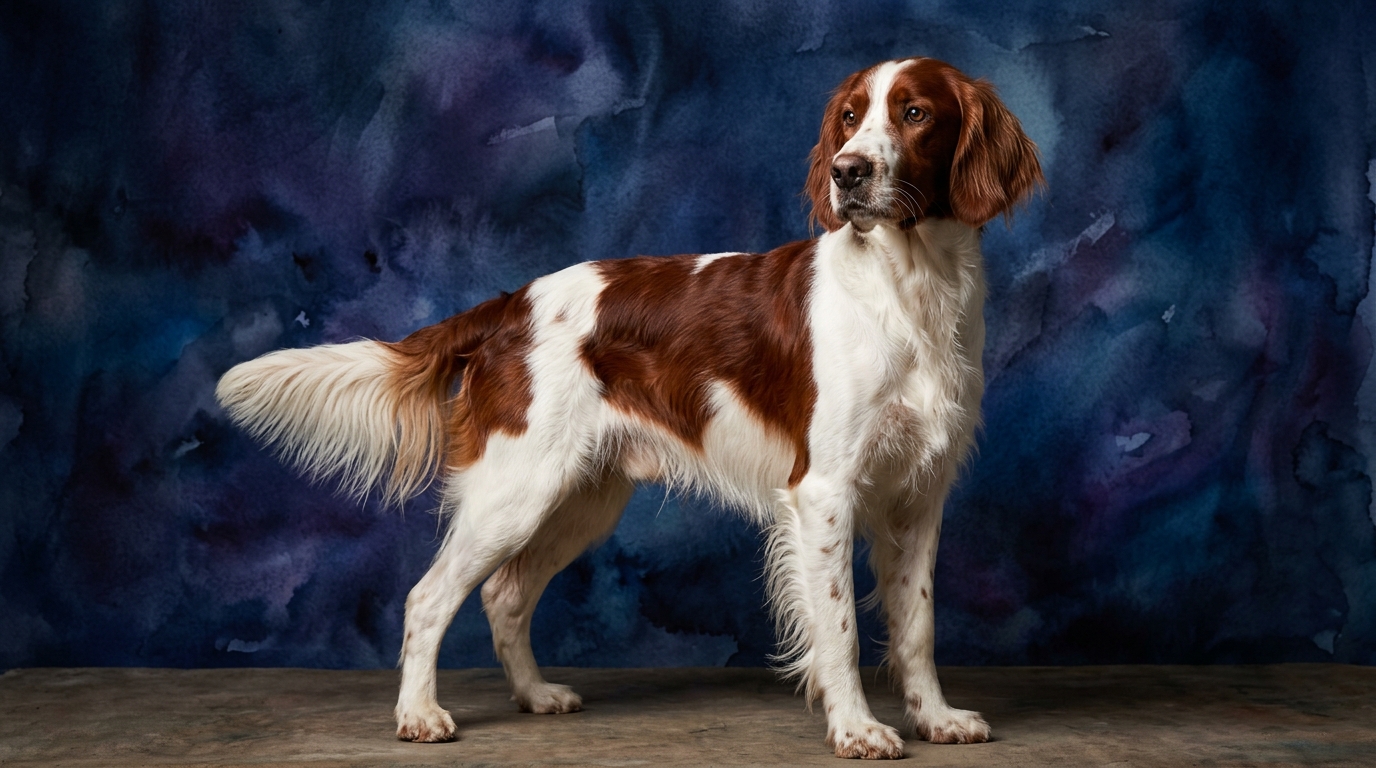
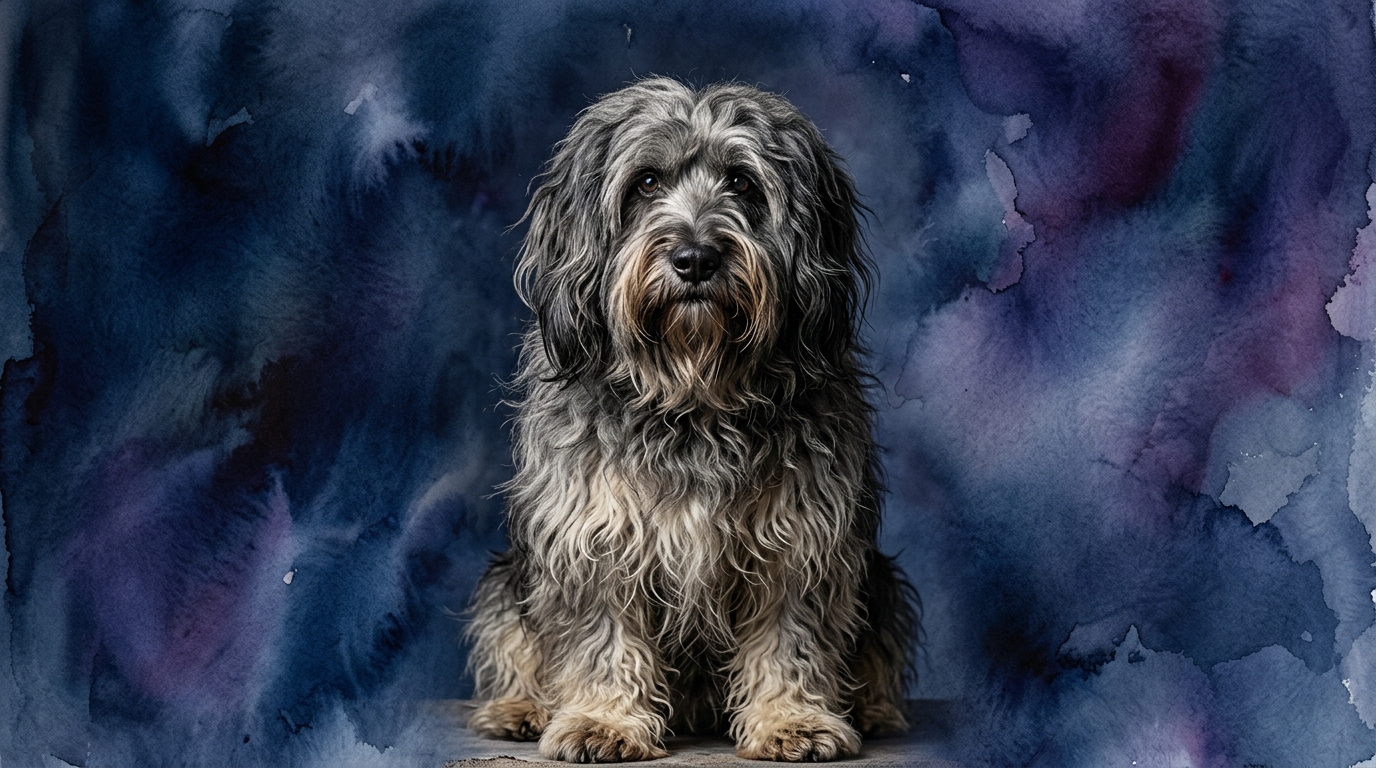
A Side-by-Side Look at Their Cognitive Profiles
The Cosmic Pet Pet IQ Lab assesses canine intelligence across five critical dimensions: Problem Solving, Training Speed, Social Intelligence, Instinctive Drive, and Memory. Both the Irish Red and White Setter and the Polish Lowland Sheepdog achieve a consistent 3 out of 5 in each category, indicating a competent, adaptable, and generally well-rounded cognitive capacity. Yet, the lens through which these scores are interpreted differs significantly due to their ancestral purposes, one a bird dog and the other a livestock guardian and herder.
For the Irish Red and White Setter, a 3/5 in Problem Solving reflects an ability to independently navigate complex terrain during a hunt, locate hidden game, and strategize the most efficient path for retrieval. This isn't about abstract puzzles, but practical, goal-oriented challenges in a dynamic outdoor environment, such as figuring out how to flush a bird from dense cover or retrieve it from water. Their problem-solving is often a blend of instinct and learned experience, fine-tuned for the field.
A 3/5 Training Speed for the Irish Red and White Setter means they absorb commands at a moderate, consistent pace, particularly those related to their sporting duties like 'stay,' 'retrieve,' or 'point.' They are responsive and generally eager to please their handler, but consistent repetition and positive reinforcement are key to solidifying behaviors. They won't pick up intricate sequences instantly, but with patient guidance, they become reliable partners.
The Irish Red and White Setter's 3/5 in Social Intelligence signifies their capacity to read human cues and adapt their behavior within a social structure, particularly with their primary handler. They understand the nuances of body language, tone of voice, and the unspoken expectations of a hunting partnership. This allows for effective communication in the field, where split-second decisions often rely on a shared understanding between dog and human.
Instinctive Drive at 3/5 for the Irish Red and White Setter is strongly rooted in their historical role as a bird dog. This score indicates a robust, yet manageable, drive to hunt, point, and retrieve. It's a persistent focus on scent, movement, and the thrill of the chase, but typically without the overwhelming intensity that might make them difficult to live with in a domestic setting. Their drive is purposeful and directed towards working alongside a human partner.
Finally, a 3/5 in Memory for the Irish Red and White Setter allows them to recall specific locations of game, remember complex scent trails, and retain intricate sequences of commands learned during training. They can remember past successes and failures, using this information to inform future actions in the field, making them efficient and experienced hunting companions over time. This memory is vital for sustained performance.
Turning to the Polish Lowland Sheepdog, their 3/5 in Problem Solving manifests quite differently. This breed excels at autonomously assessing and responding to threats or challenges within their flock or territory. They might problem-solve how to gather errant sheep, block an escape route, or determine if a stranger poses a threat. Their solutions are often immediate and practical, aimed at maintaining order and safety, reflecting a self-reliant and watchful nature.
The Polish Lowland Sheepdog's 3/5 Training Speed indicates they learn commands and routines at a steady pace, particularly those related to herding, boundary setting, and protection. They are receptive to instruction, but their independent nature means they often require a clear 'why' behind a command and consistent, firm guidance. They are not as inherently eager to please as some breeds, preferring to understand the utility of a task.
Social Intelligence at 3/5 for the Polish Lowland Sheepdog means they are adept at reading the behavior of both humans and animals in their charge. They understand flock dynamics, can discern subtle changes in their environment, and are highly attuned to their family's moods and needs. This allows them to act as effective guardians and companions, often anticipating needs or potential issues before they arise, though they can be reserved with strangers.
The Polish Lowland Sheepdog's 3/5 Instinctive Drive is a strong, inherent compulsion to herd and protect. This isn't just about chasing; it's about gathering, controlling, and maintaining order, often extending to their human 'flock.' This drive is a fundamental part of their being, making them alert and watchful, always ready to take charge. It's a persistent, inherent need to have a job and a purpose, which can be intense but also highly valuable.
Lastly, a 3/5 in Memory for the Polish Lowland Sheepdog allows them to retain complex spatial information, such as pasture boundaries and the location of individual sheep, as well as remember specific commands and routines. They can recall past interactions with people and animals, informing their protective and herding decisions. Their memory contributes to their reliability as a guardian and their ability to learn intricate herding patterns.
Where the Irish Red and White Setter Excels Cognitively
The Irish Red and White Setter's cognitive strengths shine brightest in scenarios demanding sustained, focused attention on a single objective, particularly scent work. Their 3/5 problem-solving manifests as an unwavering dedication to tracking and locating game, often requiring them to ignore distractions and follow a scent trail over varied, challenging terrain for extended periods. This singular focus, coupled with their robust memory, allows them to 'map' an area based on olfactory cues, making them highly efficient in their specialized role.
Furthermore, their social intelligence, while rated 3/5, is specifically geared towards collaborative work with a human partner in a dynamic environment. They excel at deciphering subtle hand signals, whistle commands, and the overall mood of their hunter, adjusting their movements and pace accordingly. This partnership-oriented cognition allows for seamless teamwork in the field, where independent action is balanced with responsiveness to human direction. Their memory plays a crucial role here, remembering specific commands for different game scenarios or terrain types, showcasing a nuanced understanding of their working relationship.
Where the Polish Lowland Sheepdog Excels Cognitively
The Polish Lowland Sheepdog's cognitive prowess is best observed in their multi-tasking and spatial reasoning capabilities. Their 3/5 problem-solving is less about a linear pursuit and more about dynamic, real-time management of multiple moving entities. They can simultaneously monitor several sheep, anticipate their movements, and make split-second decisions to prevent strays or direct the flock, often without direct human command. This requires a sophisticated understanding of cause and effect within a fluid environment, a hallmark of their herding intelligence.
Their social intelligence, also rated 3/5, extends beyond human interaction to encompass a deep understanding of animal behavior and flock psychology. They can read the subtle cues of sheep, distinguishing between a calm animal and one about to bolt. This, combined with their strong instinctive drive, allows them to effectively 'manage' their charges, often employing a combination of body language, barks, and strategic positioning. Their memory enables them to recall specific flock members, their personalities, and past behaviors, further enhancing their effectiveness as a guardian and herder.
Which is Easier to Train and Why?
Both breeds achieve a 3/5 in Training Speed, suggesting moderate trainability, but the *nature* of that training and the *ease* of redirecting natural instincts differ. The Irish Red and White Setter, with its strong desire to please its handler and a focused, collaborative instinctive drive, can be easier to train for traditional obedience and field commands. Their drive to retrieve and work alongside a human makes them generally enthusiastic participants in training sessions, especially when activities align with their natural predispositions like scent work or retrieving games. Consistency and positive reinforcement tend to yield steady progress.
The Polish Lowland Sheepdog, while equally trainable at a 3/5 speed, presents a different set of challenges due to its independent and protective herding instincts. Their innate desire to 'manage' can translate into behaviors like nipping at heels, barking at perceived threats, or attempting to control family members. Training a Polish Lowland Sheepdog often requires more creative methods to channel these powerful instincts into acceptable domestic behaviors, such as agility or rally, rather than suppressing them. Owners must be prepared for a dog that thinks for itself and may question commands, requiring a firm, consistent, and understanding approach to establish leadership and trust.
Which Suits Active Owners vs. Relaxed Owners?
Neither the Irish Red and White Setter nor the Polish Lowland Sheepdog are suited for truly 'relaxed' owners in the sense of minimal exercise or mental engagement. Both are working breeds that thrive on activity and purpose, but their ideal forms of activity diverge. The Irish Red and White Setter is a prime choice for active owners who enjoy extensive outdoor adventures, particularly those involving running, hiking, or field sports. They require vast spaces to stretch their legs and satisfy their need for exploration and scent work. An owner who can provide daily, vigorous exercise and opportunities for mental stimulation through scent games or retrieving will find a deeply fulfilled companion.
The Polish Lowland Sheepdog, while also needing physical activity, demands more in terms of mental engagement and a perceived 'job.' They are better suited for active owners who appreciate a dog that needs to think and engage its herding or protective instincts. This might involve structured obedience, agility, rally, or even opportunities to participate in actual herding trials. They thrive when given a role, whether it's 'guarding' the property or learning complex tricks. A relaxed owner who cannot provide consistent mental challenges and a sense of purpose will likely find a Polish Lowland Sheepdog prone to boredom-induced behaviors and anxiety, as their strong instinctive drive needs an appropriate outlet.
The Verdict
Choose the Irish Red and White Setter if you seek a collaborative, energetic partner for outdoor adventures, particularly field sports and long runs, valuing a dog that bonds closely for shared pursuits.
Opt for the Polish Lowland Sheepdog if you're an active owner who can provide consistent mental challenges and a 'job,' appreciating a watchful, independent companion with strong herding and protective instincts.
🧠 Find Your Pet's IQ Score
Our Pet IQ Lab assessment covers 25+ tests across 5 cognitive dimensions — personalized to your breed.
Take the Full IQ Test →Frequently Asked Questions
Do Irish Red and White Setters make good family pets?
Yes, Irish Red and White Setters can be wonderful family pets, known for their affectionate nature and patience with children. They thrive in active households that can provide ample exercise, mental stimulation, and consistent training, integrating well into family life as long as their energy needs are met.
Are Polish Lowland Sheepdogs good with children and other pets?
Polish Lowland Sheepdogs can be excellent with children, often displaying a protective but gentle demeanor, and generally get along with other pets, especially if raised together. Early socialization is crucial to temper their herding instincts, ensuring they learn appropriate interactions and do not try to 'herd' family members or other animals.
What kind of grooming do these breeds require?
The Irish Red and White Setter requires regular brushing, typically several times a week, to prevent mats and keep their silky coat healthy, along with occasional trimming. The Polish Lowland Sheepdog, with its thick double coat, needs more intensive grooming, including daily brushing to prevent matting and regular trimming to manage its length and keep it clean.