Side-by-Side Cognitive Profile
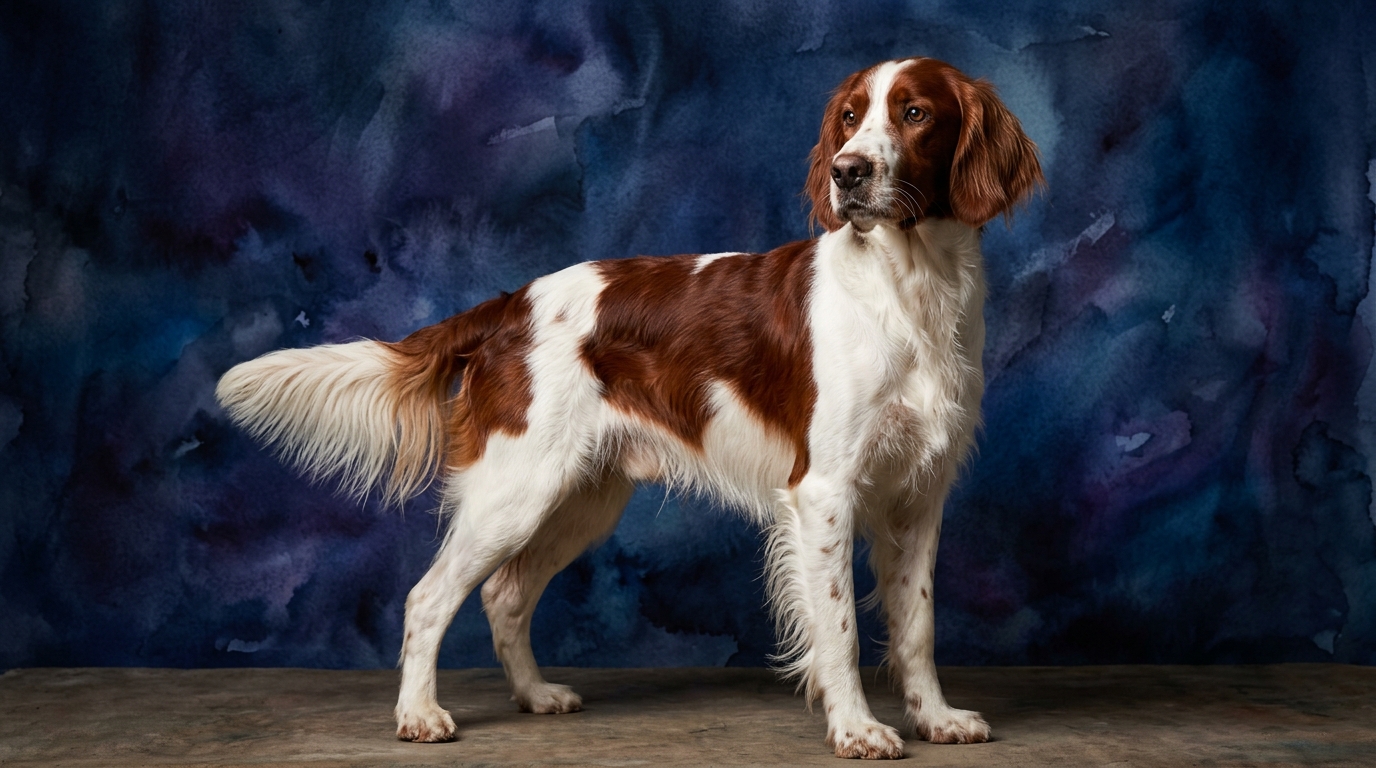
The Cosmic Pet Pet IQ Lab provides a nuanced look at canine cognition across five critical dimensions. For the Irish Red and White Setter, we observe a balanced cognitive makeup. Their Problem Solving is rated 3/5, indicating a practical, methodical approach to challenges, often relying on learned patterns rather than spontaneous innovation. Training Speed also stands at 3/5, suggesting they absorb information steadily, benefiting from consistent, patient repetition. Social Intelligence is 3/5, reflecting a balanced capacity to read human cues and interact within family structures, forming strong bonds. Their Instinctive Drive is a moderate 3/5, manifesting as a persistent desire for work or tracking activities without being overwhelming. Finally, Memory is 3/5, indicating reliable retention of routines, commands, and familiar experiences over time.
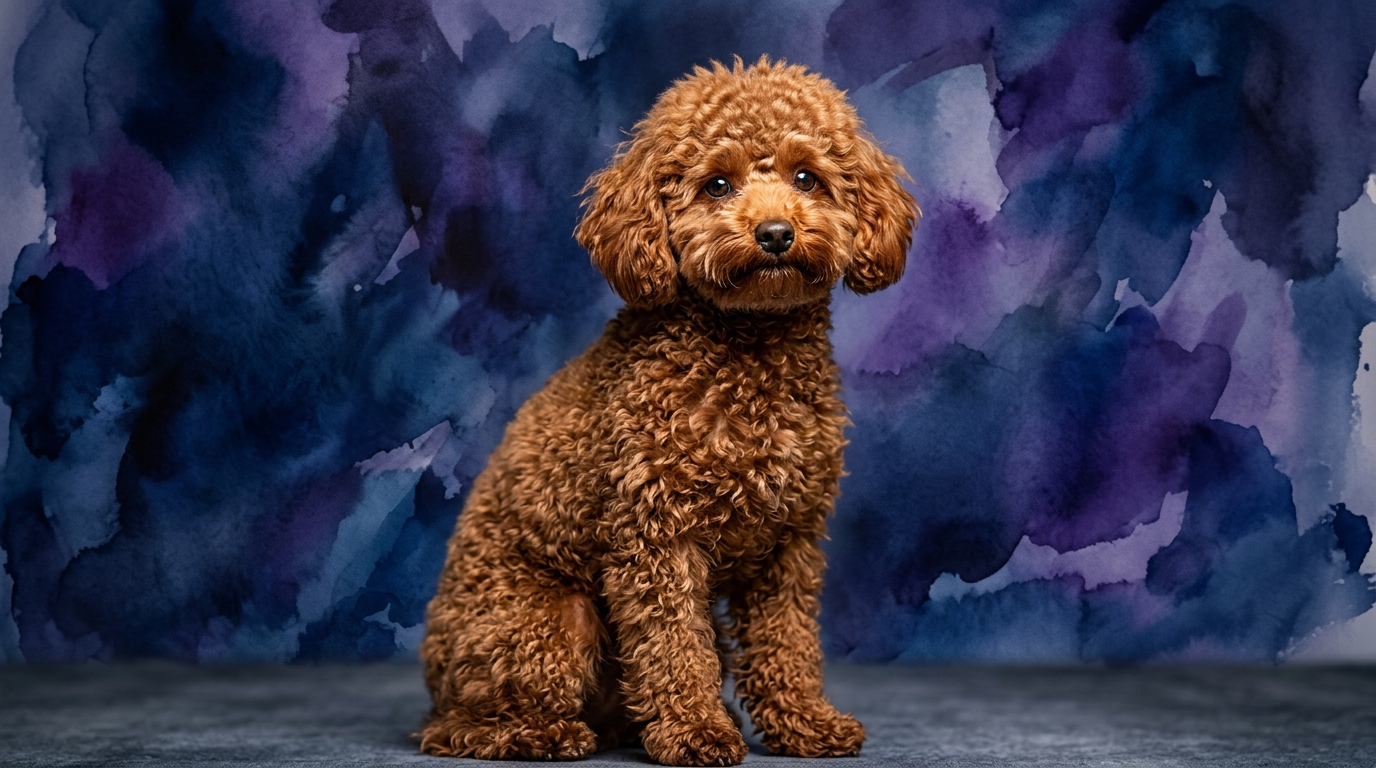
In contrast, the Toy Poodle presents a profile marked by exceptional cognitive agility. Their Problem Solving capability is a remarkable 5/5, demonstrating a flair for creative solutions to novel situations and quick analysis of complex environments. Training Speed is also a top-tier 5/5, meaning they grasp new concepts and commands with remarkable swiftness, often requiring minimal repetitions. Social Intelligence is rated 3/5, similar to the Setter, showing a solid understanding of social dynamics and adaptability to household rules. Their Instinctive Drive is also 3/5, rooted in their larger Poodle ancestors' retrieving heritage, but generally channeled easily into constructive activities. Memory is an outstanding 5/5, allowing them to recall a vast repertoire of commands and experiences with precision, supporting their rapid training speed and ability to perform complex sequences.
Where the Irish Red and White Setter Wins Cognitively
The Irish Red and White Setter's cognitive strengths lie in their consistent and enduring mental application, particularly in scenarios demanding sustained focus rather than immediate, abstract problem-solving. While their Problem Solving score of 3/5 is lower than the Toy Poodle's, this often translates to a practical, persistent approach. For tasks requiring continuous application of a learned behavior, such as tracking a scent over varied terrain or methodically searching an area, their steady mental processing can be a distinct asset. They are less prone to overthinking or attempting overly complex solutions when a simpler, more direct method suffices, favoring reliability in established tasks.
Their 3/5 Instinctive Drive, though matched by the Toy Poodle, is often expressed through a more traditional working dog lens, lending itself effectively to field activities. This drive is coupled with their moderate Training Speed and Memory, making them reliable partners for established, repetitive tasks. They excel when given a clear objective that aligns with their innate desire to work alongside a human, finding satisfaction in the process itself rather than solely the outcome. This consistent application of their cognitive resources in a focused manner is a specific advantage in roles where steadiness and endurance are paramount.
Where the Toy Poodle Wins Cognitively
The Toy Poodle truly shines in areas demanding rapid cognitive processing and innovative thought, evidenced by their 5/5 scores in Problem Solving, Training Speed, and Memory. Their capacity to quickly analyze novel situations and formulate creative solutions means they are often the first to figure out how to manipulate objects or navigate complex environments. This quick-wittedness allows them to excel in learning intricate tricks, participating in dog sports like agility, or even performing service tasks that require adaptive thinking. They absorb new information with remarkable efficiency, making them exceptionally responsive to varied and challenging mental exercises.
Their superior Memory complements their Training Speed, allowing them to retain a vast lexicon of commands and complex sequences over long periods. This means less refresher training and a greater capacity for building upon previously learned skills. While both breeds score 3/5 in Social Intelligence and Instinctive Drive, the Toy Poodle's overall cognitive agility means they can often channel their inherent drives into more sophisticated, human-directed tasks. They demonstrate a remarkable mental plasticity, adapting quickly to new learning paradigms and thriving on intellectual engagement and complex problem-solving.
Training Dynamics: Ease and Behavioral Differences
When evaluating ease of training, the Toy Poodle holds a clear advantage due to its exceptional Training Speed (5/5) and Memory (5/5). These cognitive traits mean they can quickly associate commands with actions, often understanding new cues after only a few repetitions. Their rapid learning curve makes them highly receptive to advanced obedience, intricate trick training, and participation in competitive dog sports. They thrive on mental challenges and are often eager to engage in learning sessions, displaying a consistent readiness to process and retain new information, making the training process feel fluid and rewarding.
The Irish Red and White Setter, with a 3/5 Training Speed and Memory, requires a more patient and consistent approach. While certainly capable of learning, they may need more repetitions to solidify commands and routines. Their behavioral differences often stem from their sporting background; they can be enthusiastic and sometimes easily distracted by environmental stimuli, which demands a trainer who can maintain focus and provide clear, consistent motivation. Training with an Irish Red and White Setter is a rewarding process that builds on steady progress and reinforced positive experiences, often requiring a bit more time and dedication to achieve mastery.
Matching Breeds to Lifestyles: Active vs. Relaxed Owners
For active owners seeking a companion for outdoor adventures and structured activities, the Irish Red and White Setter is an excellent match. Their moderate Instinctive Drive (3/5) combined with their sporting heritage means they thrive on regular exercise, scent work, and opportunities to explore varied environments. They enjoy being active participants in family outings, whether hiking, long walks, or field training, requiring consistent physical and mental engagement to prevent boredom. An owner who can provide consistent physical and mental engagement, channeling their natural inclinations into productive outlets, will find a deeply satisfied and cooperative companion.
The Toy Poodle, while adaptable, also benefits from an owner who can provide consistent mental stimulation, though their physical exercise needs are generally less demanding than a Setter's. Their high Problem Solving and Memory scores mean they excel with owners who enjoy teaching new tricks, engaging in puzzle toys, or participating in agility or obedience trials. They are well-suited for owners who can provide daily mental challenges and structured play, even if physical activity is limited to shorter bursts. They can also adapt well to more relaxed owners who prioritize indoor engagement, as long as their sharp minds are kept busy with varied activities and consistent interaction.
The Verdict
Choose an Irish Red and White Setter if you value a practical, persistent cognitive style and seek a companion for steady outdoor activities and consistent, structured work. They thrive with owners who appreciate a methodical learning pace and can channel their balanced instinctive drive into rewarding endeavors.
Opt for a Toy Poodle if you are drawn to a companion with rapid learning abilities, exceptional problem-solving, and a keen memory, ideal for advanced training and intricate mental challenges. They suit owners who enjoy engaging a sharp mind with varied activities and appreciate a quick grasp of complex concepts.
🧠 Find Your Pet's IQ Score
Our Pet IQ Lab assessment covers 25+ tests across 5 cognitive dimensions — personalized to your breed.
Take the Full IQ Test →Frequently Asked Questions
Do Irish Red and White Setters make good family pets?
Yes, Irish Red and White Setters generally make affectionate and loyal family pets. Their balanced social intelligence (3/5) allows them to integrate well into family dynamics, forming strong bonds with their human companions, especially when provided with consistent training and sufficient activity.
Are Toy Poodles prone to behavioral issues due to their intelligence?
Toy Poodles, with their high problem-solving and memory, can become bored or develop undesirable behaviors if not mentally stimulated. Owners should provide ample cognitive challenges, such as puzzle toys or training sessions, to channel their mental energy constructively and prevent boredom-related issues.
How do the instinctive drives of these two breeds compare practically?
Both breeds score 3/5 in instinctive drive, but it manifests differently due to their heritage. The Irish Red and White Setter's drive often relates to field work and scent, while the Toy Poodle's, though also rooted in retrieving, is generally more adaptable to human-directed games and less intense in a hunting context.