
Side-by-Side Cognitive Profiles
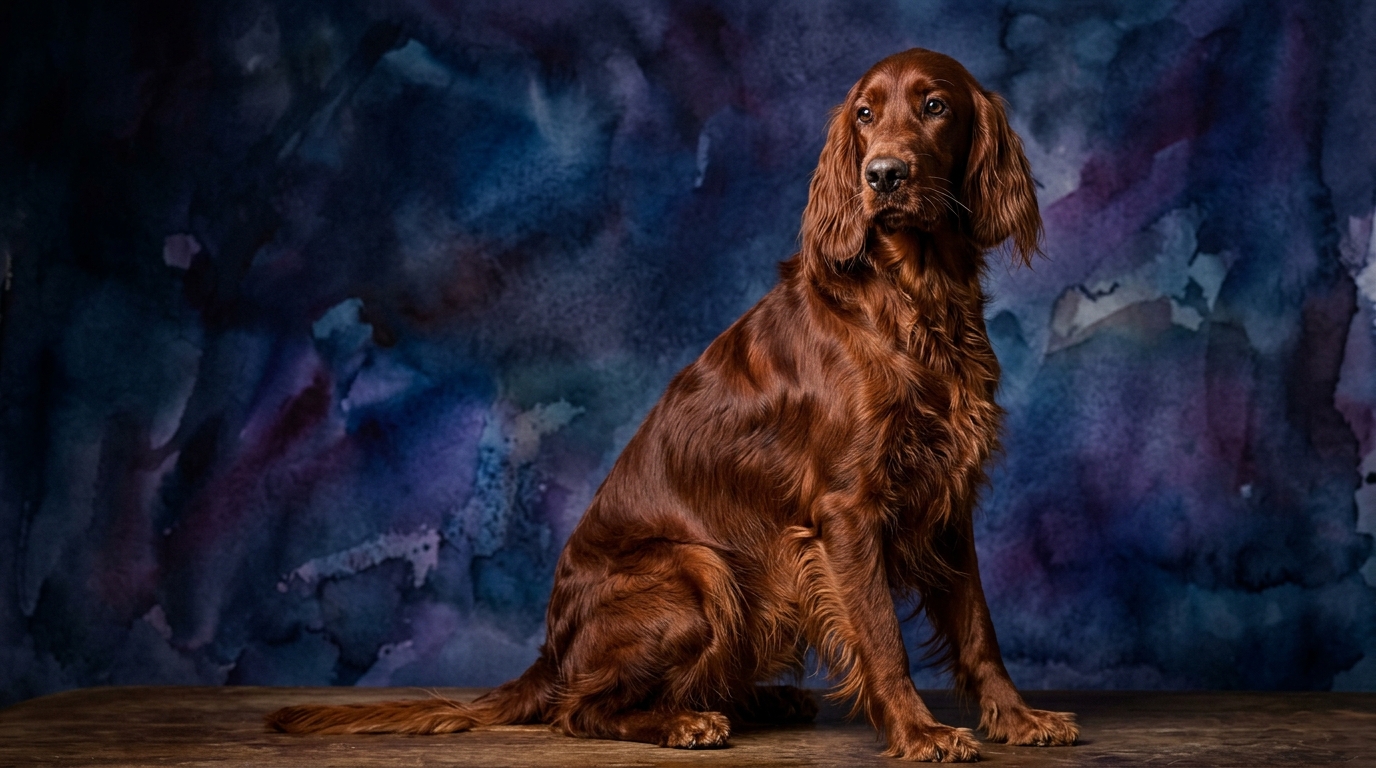
The Irish Setter, recognized by Stanley Coren as ranking #35 in working intelligence, exhibits a nuanced cognitive profile. Their problem-solving ability scores a robust 4 out of 5, indicating a capacity for independent thought and creative solutions when faced with novel challenges, like figuring out how to manipulate a puzzle toy or navigate an unfamiliar obstacle course. Training speed is also rated 4 out of 5, suggesting a quick grasp of new commands and sequences, often requiring fewer repetitions to achieve mastery. Social intelligence stands at 3 out of 5, meaning they are generally attuned to human cues and bond well, but might also display an independent streak. Their instinctive drive is a balanced 3 out of 5, reflecting a keen interest in scent work and field activities without being overwhelmingly intense, while their memory shines at 4 out of 5, allowing them to retain complex information and learned behaviors over extended periods.
In contrast, the Nova Scotia Duck Tolling Retriever, while not specifically ranked by Coren, presents a consistent and focused intellectual makeup. Their problem-solving ability scores 3 out of 5, indicating they can learn through experience and solve straightforward tasks, often relying on established patterns rather than inventing entirely new methods. Training speed is also a solid 3 out of 5; Tollers learn reliably with consistent, positive reinforcement, steadily building their repertoire of commands. Social intelligence registers at 3 out of 5, highlighting their deep bond with family members and their ability to read familiar human emotions, though they may be more reserved with strangers. Their instinctive drive, rated 3 out of 5, is highly specialized for their luring and retrieving work, showcasing a focused persistence in their core tasks. Finally, their memory is also a 3 out of 5, providing good retention of commands and routines, ensuring dependable performance once a skill is acquired.
Where the Irish Setter Excels Cognitively
The Irish Setter's cognitive strengths distinctly position it as a more versatile problem-solver and a quicker study in complex obedience. With a 4/5 rating in problem-solving, an Irish Setter is more likely to independently assess a situation and devise a solution, whether it's navigating a complex agility course or figuring out how to access a desired item. This translates into a dog that can adapt rapidly to new training scenarios and often anticipates its handler's next move in a dynamic environment. Their superior memory (4/5) further enhances this, allowing them to recall intricate sequences of commands or past experiences with greater detail and for longer durations. This means that once an Irish Setter learns a multi-step routine, they are more likely to retain it without constant refreshing, making them excellent candidates for advanced dog sports or service roles requiring a broad range of remembered tasks. The combination of faster training speed and higher problem-solving means they can progress through training levels at an accelerated pace, often mastering concepts that might take other breeds more time and repetition.
Where the Nova Scotia Duck Tolling Retriever's Cognition Shines
While the Irish Setter demonstrates a broader cognitive aptitude, the Nova Scotia Duck Tolling Retriever's cognitive profile, particularly its focused instinctive drive, offers distinct advantages for specific roles. The Toller's 3/5 instinctive drive is not just a general capacity; it's a highly channeled and persistent application of their intellect towards their specialized tasks of luring and retrieving. This means that while they might not invent novel solutions as readily as a Setter, their dedication to a learned task, particularly one involving their natural retrieving instincts, can be unparalleled. Their cognitive focus is on executing a job with precise, unwavering attention, making them incredibly reliable in repetitive field work. For owners who value a dog that adheres steadfastly to a learned pattern and maintains intense focus on a specific objective, the Toller's steady 3/5 problem-solving and memory, combined with its specialized drive, translates into a predictable and diligent working partner. They excel where consistent application of learned skills is paramount, rather than constant improvisation.
Training Dynamics: Which Breed is Easier?
When it comes to ease of training, the Irish Setter generally presents a more straightforward path for handlers seeking rapid progress in diverse disciplines. Their 4/5 training speed means they pick up new commands with impressive swiftness, often making initial obedience training feel very rewarding. They tend to enjoy the learning process and thrive on mental engagement, which can translate into enthusiastic participation in training sessions. However, their higher problem-solving might also mean they can outsmart their handlers if training isn't consistent and engaging enough, potentially leading to them finding 'alternative' solutions to commands or getting bored if not sufficiently challenged. An Irish Setter might require more novelty in training to maintain focus.
The Nova Scotia Duck Tolling Retriever, with a 3/5 training speed, learns at a steady, reliable pace. They may require more repetitions to solidify a command, but once learned, their performance is typically very dependable. Tollers respond best to clear, consistent, positive reinforcement methods. While they might not grasp concepts as quickly as a Setter, their methodical approach means they are less likely to deviate once a behavior is ingrained. Their focused instinctive drive means that training related to retrieving or 'tolling' behaviors often comes very naturally, leveraging their innate predispositions. For owners who prefer a steady, predictable training progression and value consistency over rapid-fire learning, the Toller can be a highly rewarding student, less prone to independent 'creative' interpretations of commands.
Matching Breeds to Lifestyles: Active vs. Relaxed Owners
Both the Irish Setter and the Nova Scotia Duck Tolling Retriever are sporting breeds, meaning they inherently possess significant energy and a need for activity. However, their specific cognitive profiles suggest different nuances for owner lifestyles. The Irish Setter, with its 4/5 problem-solving and memory, demands a more varied and intellectually stimulating regimen. This breed thrives with active owners who can provide not just physical exercise, but also consistent mental challenges like advanced obedience, agility, tracking, or complex puzzle toys. A relaxed owner who cannot commit to daily engagement and mental enrichment might find an Irish Setter becoming bored, which could manifest as inventive but undesirable behaviors. Their independent thinking requires an owner who can channel that intellect proactively.
The Nova Scotia Duck Tolling Retriever also requires an active owner, but perhaps one who appreciates a more focused, consistent type of engagement. Their balanced 3/5 scores across cognitive dimensions suggest they thrive on routine, consistent training, and activities related to their retrieving heritage. Owners who enjoy field work, retrieve games, or consistent obedience training will find a Toller to be a dedicated and focused partner. While they need exercise, their problem-solving isn't as prone to inventing complex mischief if under-stimulated as the Setter's might be. A relaxed owner would still struggle with a Toller's energy levels, but an owner who is active in a more structured, repetitive way might find the Toller a better fit than the Setter, who craves more intellectual novelty and varied challenges.
The Verdict
Choose the Irish Setter if you are an owner who thrives on engaging a dog in complex mental challenges, enjoys rapid training progress, and can provide a wide variety of intellectual and physical stimulation daily.
Opt for the Nova Scotia Duck Tolling Retriever if you seek a dedicated, focused working companion who excels in consistent routines, specialized retrieving tasks, and offers dependable performance once skills are learned.
🧠 Find Your Pet's IQ Score
Our Pet IQ Lab assessment covers 25+ tests across 5 cognitive dimensions — personalized to your breed.
Take the Full IQ Test →Frequently Asked Questions
Are Irish Setters prone to specific behavioral issues?
Irish Setters, if not adequately stimulated mentally and physically, can become bored and express that through digging, excessive barking, or destructive chewing. Their high problem-solving means they are quite capable of inventing their own entertainment if not provided with appropriate outlets.
Do Nova Scotia Duck Tolling Retrievers make good first-time dog owner pets?
Tollers can be good for first-time owners who are committed to consistent training and socialization. Their intelligence is steady, not overwhelming, but their energy and need for purpose require a dedicated owner prepared for an active lifestyle and clear guidance.
What is the 'tolling' behavior specific to the Nova Scotia Duck Tolling Retriever?
Tolling is a unique hunting method where the dog lures ducks by playing along the shoreline, resembling a fox. Their playful antics pique the ducks' curiosity, drawing them closer to the shore within range of a hunter's blind, a fascinating display of their specialized instinctive intelligence.