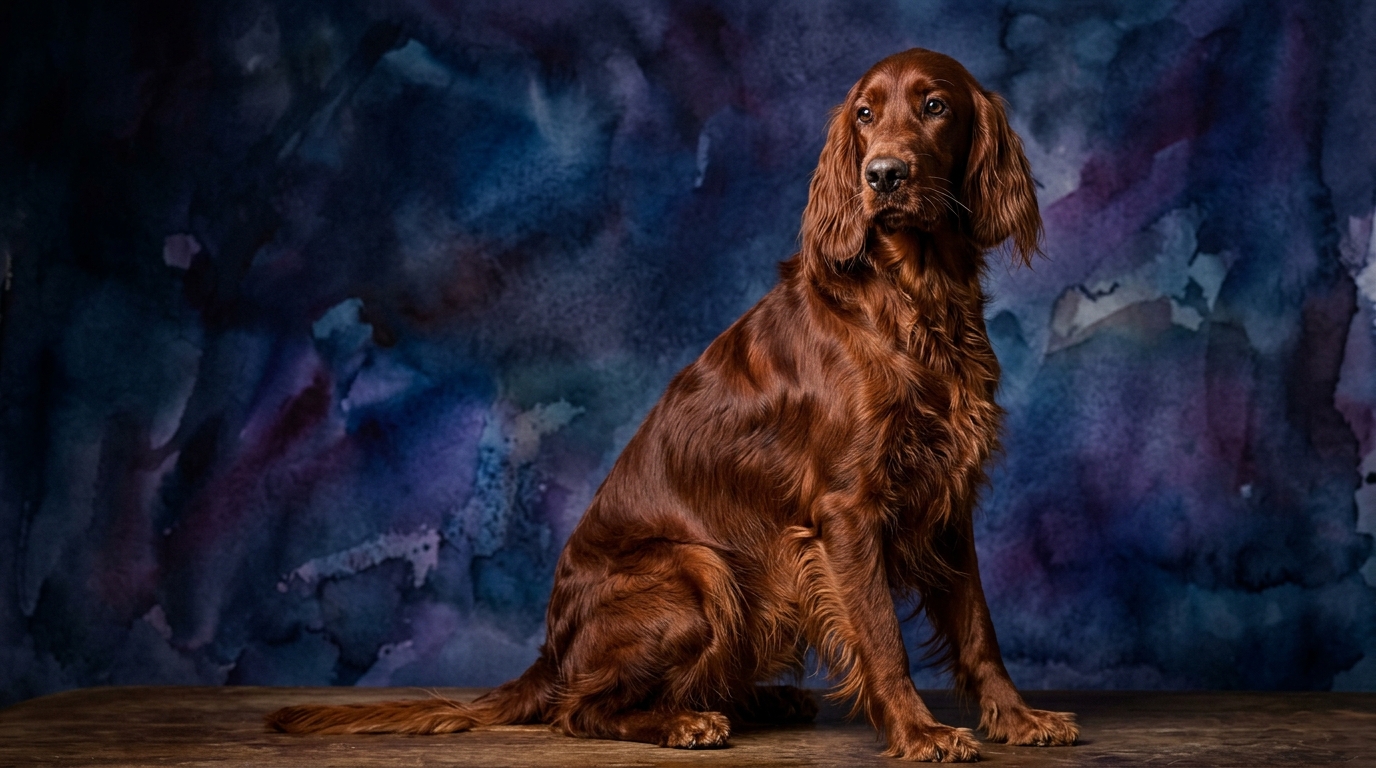
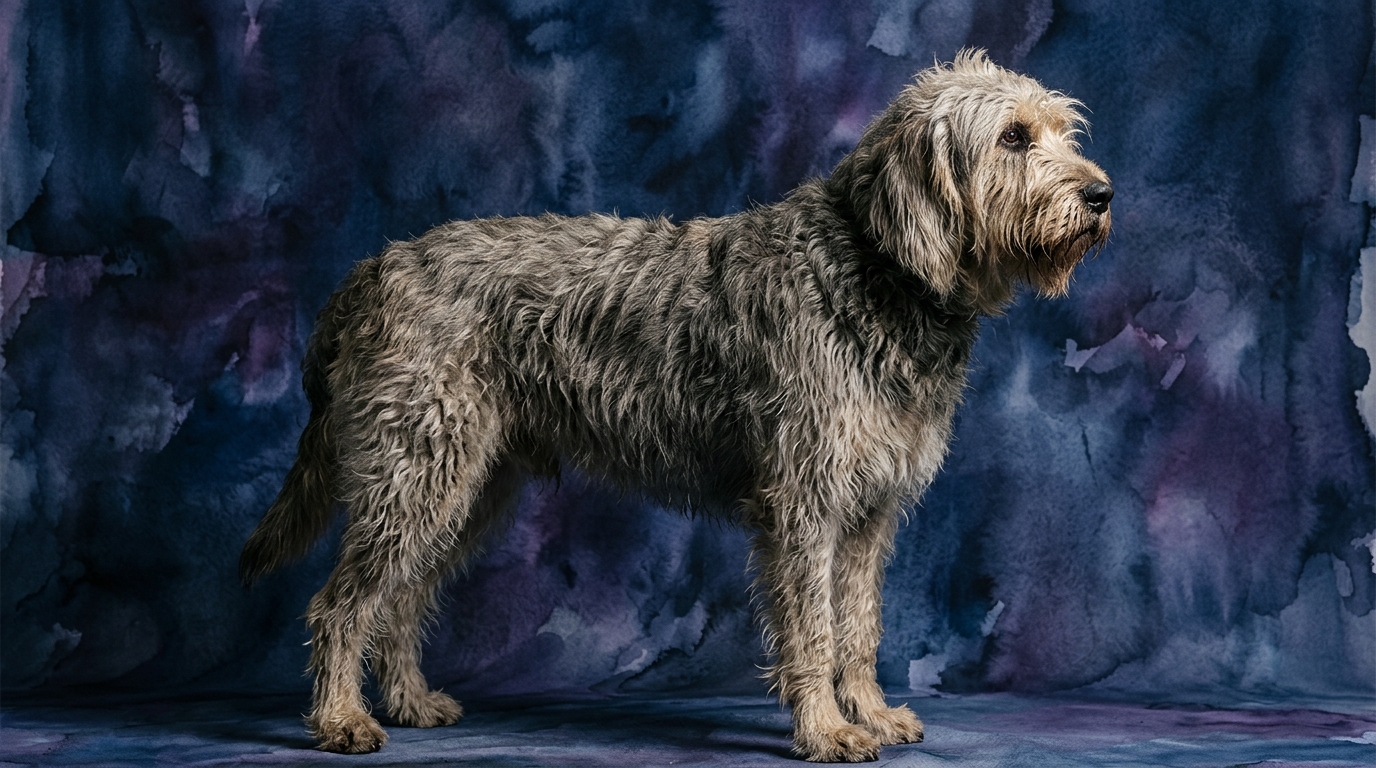
Side-by-Side IQ Profile: Irish Setter vs. Otterhound
The Irish Setter, a striking Sporting Group member, exhibits a cognitive profile tailored for dynamic partnership. Its Problem Solving score of 4/5 indicates a capacity for figuring out novel situations and adapting strategies, perhaps when retrieving game from challenging terrain or navigating complex agility courses. A Training Speed of 4/5 suggests they grasp new commands and routines with relative swiftness, making them responsive learners in structured environments.
Social Intelligence, rated at 3/5, implies a moderate ability to interpret human cues and navigate pack dynamics, allowing for harmonious integration into family life without extreme sensitivity or detachment. Their Instinctive Drive, also 3/5, points to a balanced but present urge for activities like chasing and retrieving, reflecting their heritage but typically manageable. Finally, a Memory score of 4/5 means they retain learned behaviors and experiences over extended periods, remembering specific commands or the layout of frequently visited places.
In contrast, the Otterhound, a distinctive member of the Hound Group, presents a cognitive makeup optimized for independent, scent-driven work. Its Problem Solving at 3/5 suggests a practical, focused approach to challenges, primarily those related to tracking, rather than complex abstract reasoning. A Training Speed of 3/5 indicates they can learn, but might require more repetition and motivation compared to breeds eager to please.
The Otterhound's Social Intelligence, rated 3/5, shows they are capable of forming bonds and understanding social structures, yet they often maintain an independent streak, not constantly seeking human interaction. Their Instinctive Drive of 3/5 is strongly tied to their incredible scenting ability, meaning they are driven to follow interesting odors, often overriding other directives. A Memory score of 3/5 suggests they remember pertinent information for their primary task, like tracking a specific scent, but might not retain a vast repertoire of unrelated commands with the same precision as a Setter.
Where the Irish Setter Wins Cognitively
The Irish Setter clearly demonstrates an advantage in rapid cognitive processing and retention. Their superior Problem Solving score of 4/5 versus the Otterhound's 3/5 means they are more likely to independently devise solutions to novel obstacles, such as figuring out how to open a gate or retrieve a toy stuck under furniture without constant human guidance. This adaptability extends beyond simple tasks, enabling them to excel in complex dog sports like agility or obedience trials where quick, on-the-fly decisions are crucial.
Furthermore, the Irish Setter's Training Speed of 4/5 significantly outpaces the Otterhound's 3/5. This difference translates into a dog that picks up new commands and routines with fewer repetitions, making initial training sessions more efficient and less prone to frustration. Their higher Memory score (4/5 vs. 3/5) complements this, ensuring that once a behavior is learned, it is retained for longer, requiring less frequent refreshers. This cognitive pairing makes the Irish Setter a more straightforward candidate for advanced training or learning a wide array of tricks and commands.
Where the Otterhound Wins Cognitively
While the Otterhound's numerical scores might not surpass the Irish Setter's in any dimension, its cognitive strengths lie in the specialized application of its abilities, particularly its profound instinctive drive for scent work. The Otterhound's 3/5 Instinctive Drive is singularly focused on olfaction, allowing it to dedicate immense mental resources to tracking and scent discrimination. This isn't just about detecting a smell; it involves complex cognitive mapping, memory of scent trails, and an unwavering determination to follow a specific odor through various environmental distractions.
This intense, focused drive means that while an Irish Setter might solve a puzzle box by trial and error, an Otterhound would methodically follow a scent trail, ignoring visual distractions, demonstrating a specialized form of problem-solving deeply rooted in its olfactory prowess. Their moderate Problem Solving and Memory scores (both 3/5) are perfectly adequate for their historical role, enabling them to retain complex scent patterns and navigate challenging terrains while tracking, showcasing a functional, resilient intelligence geared towards persistence rather than rapid, varied learning.
Which is Easier to Train and Why
Considering their respective cognitive profiles, the Irish Setter is generally easier to train for a broad range of commands and behaviors. Their higher Training Speed (4/5) means they form associations between commands and actions more quickly, absorbing new information efficiently. This is coupled with a superior Memory (4/5), ensuring that once a lesson is learned, it tends to stick. Furthermore, their Problem Solving ability (4/5) allows them to generalize learned behaviors to new situations with greater ease, making them adaptable students.
The Otterhound, with a Training Speed of 3/5 and Memory of 3/5, will require more patience and consistency. Their training is often characterized by an independent nature, a hallmark of many scent hounds. While they are capable of learning, their potent Instinctive Drive (3/5) for scent often acts as a significant distraction. A captivating smell can easily override a command, demanding a trainer who understands how to harness this drive or manage it effectively through structured environments and highly rewarding incentives. This means Otterhounds often excel in specialized scent-based training but can be more challenging for general obedience compared to the eager-to-please Setter.
Which Suits Active Owners vs. Relaxed Owners
For active owners seeking a highly engaged and responsive companion, the Irish Setter is often a more fitting choice. Their cognitive scores, particularly in Problem Solving (4/5) and Training Speed (4/5), mean they thrive on mental challenges, advanced training, and interactive activities like dog sports, agility, or competitive obedience. They enjoy working in partnership with their human, channeling their moderate Instinctive Drive (3/5) into structured tasks. An owner who can provide consistent mental stimulation alongside vigorous physical exercise will find the Irish Setter to be a joyful and fulfilling partner, eager to learn and participate in adventures.
Relaxed owners, however, might find the Irish Setter's need for engagement overwhelming if not adequately met, potentially leading to boredom-induced behaviors. For owners who prefer a more independent companion, perhaps with a focus on specific outdoor pursuits, the Otterhound could be a unique match. While not a couch potato, their activity is often directed by their powerful scenting drive. They require owners who appreciate long, meandering walks where their nose can lead, rather than strict heel work or complex routines. Their moderate social intelligence (3/5) means they are affectionate but not constantly demanding attention, making them suitable for owners who value a dog's self-directed exploration and a less intense, though still active, companionship.
An Otterhound owner must be prepared for their dog's robust nature and independent streak, understanding that 'relaxed' for an Otterhound still means substantial outdoor time where they can engage their primary cognitive strength: scent tracking. This is not a dog that will be content with a quick walk around the block; it needs opportunities to 'work' its nose. Therefore, 'relaxed' refers more to the type of interaction rather than the amount of activity.
The Verdict
Choose an Irish Setter if you desire a highly responsive, trainable partner for diverse activities like dog sports or advanced obedience, thriving on mental challenges and collaborative engagement.
Opt for an Otterhound if you appreciate an independent, scent-driven companion, valuing robust outdoor exploration and a dog whose unique cognitive strength lies in unwavering olfactory pursuit.
🧠 Find Your Pet's IQ Score
Our Pet IQ Lab assessment covers 25+ tests across 5 cognitive dimensions — personalized to your breed.
Take the Full IQ Test →Frequently Asked Questions
Are Irish Setters good at adapting to new environments?
Yes, with a Problem Solving score of 4/5, Irish Setters generally adapt well to new surroundings and routines. Their ability to quickly assess and interpret novel situations helps them settle in efficiently and confidently.
How does an Otterhound's scent drive affect its daily life?
An Otterhound's strong instinctive drive for scent means their nose often dictates their interests and behaviors, particularly outdoors. This requires secure leashes and yards, as they can easily become engrossed in a trail and wander off.
Which breed is better for a first-time dog owner?
Given its higher Training Speed and Problem Solving scores, the Irish Setter is generally more forgiving and adaptable for first-time owners willing to provide consistent training and ample activity. The Otterhound's independence and strong scent drive can be more challenging for novices.