
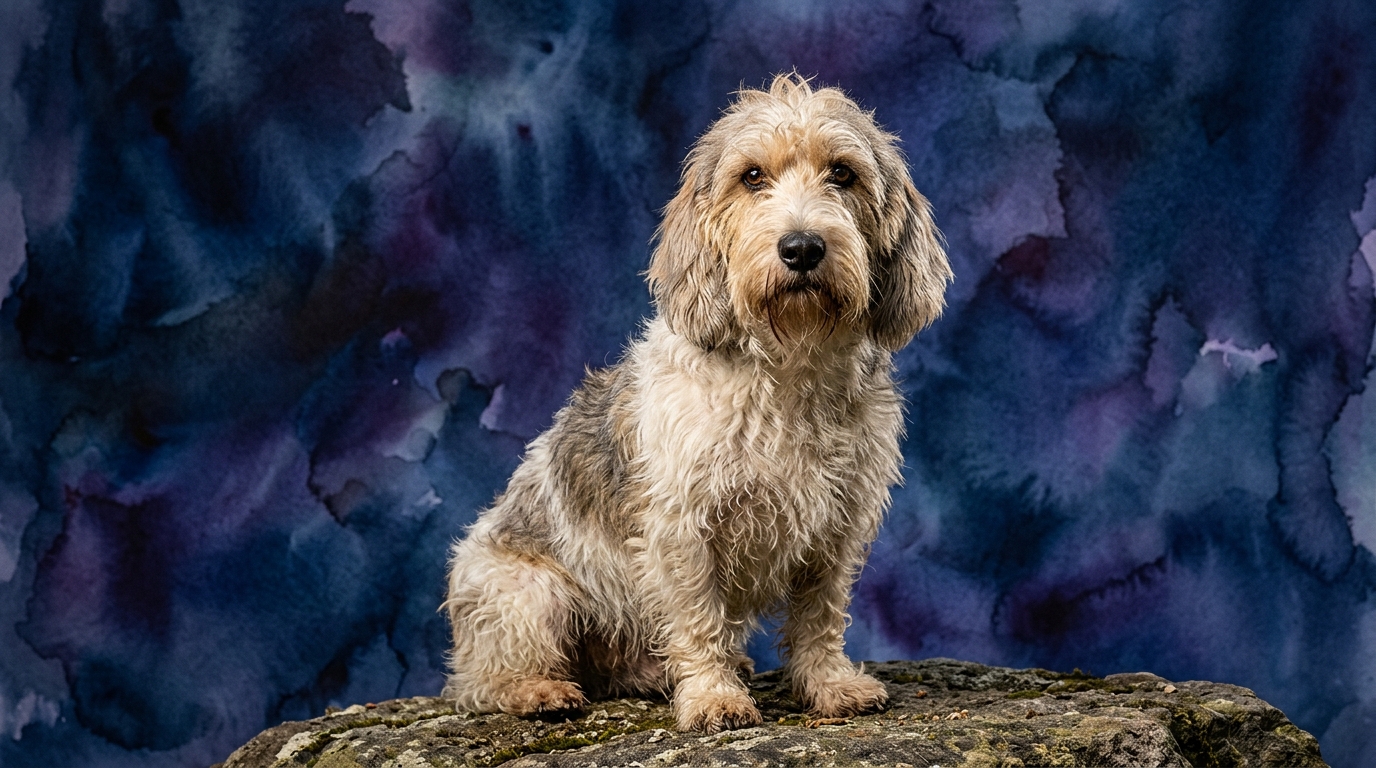
Side-by-Side IQ Profile: Irish Setter vs. PBGV
The Irish Setter’s Problem Solving at 4/5 indicates a capacity for navigating complex scenarios, figuring out new puzzles, or adapting to varied environments with relative ease. Training Speed at 4/5 suggests they grasp new commands and routines quickly, often requiring fewer repetitions than many other breeds. Social Intelligence at 3/5 means they are generally receptive to human interaction and can read cues, though perhaps not with the nuanced sensitivity of some companion breeds. Their Instinctive Drive, also 3/5, points to a moderate but present inclination for their original hunting tasks, like flushing birds. Memory at 4/5 highlights their ability to retain learned behaviors and recall locations or sequences over time.
The Petit Basset Griffon Vendéen (PBGV) presents with Problem Solving 3/5, implying they can handle straightforward challenges but might require more guidance or trial-and-error for intricate tasks. Training Speed at 3/5 suggests they learn at a moderate pace, needing consistent, patient reinforcement to solidify new commands. Social Intelligence at 3/5 reflects a generally friendly and interactive nature, capable of forming strong bonds and understanding basic human communication. Their Instinctive Drive, also 3/5, is strongly geared towards scent work, making them highly motivated by a compelling trail. Memory at 3/5 indicates they can remember routines and basic commands, but might not recall complex sequences or less frequently practiced behaviors with the same precision as the Setter.
Where the Irish Setter Wins Cognitively
The Irish Setter's superior scores in Problem Solving (4/5 vs 3/5), Training Speed (4/5 vs 3/5), and Memory (4/5 vs 3/5) give them a clear advantage in tasks requiring rapid acquisition of new skills and flexible application of knowledge. Their background as a bird dog necessitates quick thinking to locate and flush game, and the ability to remember complex field patterns and handler signals. This cognitive profile means they typically excel in structured obedience, agility, and other dog sports where precision, speed, and retention of intricate routines are paramount. For owners seeking a canine partner capable of mastering advanced commands and adapting swiftly to diverse training challenges, the Setter’s mental agility offers a more direct path to success. Their capacity to independently assess situations and recall previous solutions also makes them adept at navigating new environments or solving novel puzzles presented by their human companions.
Where the Petit Basset Griffon Vendéen Wins Cognitively
While the PBGV's overall scores might appear lower in universal metrics, their cognitive profile is perfectly tailored to their ancestral purpose, making them excel within their breed-specific roles. Their Instinctive Drive, rated 3/5, is singularly focused on scent, providing an unwavering determination to follow a trail, a trait absolutely critical for a successful scenthound. This isn't just about raw drive, but about a specific cognitive channeling – their problem-solving and memory, while rated 3/5, are exceptionally applied to interpreting complex scent data and remembering the nuances of a trail. Their moderate Social Intelligence (3/5) allows them to work independently yet still appreciate their human partners, a balance essential for hounds that must range but eventually return. For an owner who values a dog’s natural aptitude for tracking, exploration, and applying their intellect to olfactory challenges, the PBGV's specialized cognitive toolkit is precisely what makes them shine. Their persistence, driven by instinct, can often overcome challenges where a more "trainable" dog might give up if not explicitly directed.
Which is Easier to Train and Why
Based on their IQ profiles, the Irish Setter generally presents as the easier breed to train. Their Training Speed of 4/5 indicates a quicker grasp of commands and a lower need for repetition compared to the PBGV's 3/5. This is further supported by the Setter's Problem Solving and Memory scores (both 4/5), which allow them to understand the "why" behind tasks and retain learned information more effectively. Setters often exhibit a strong desire to please, making them highly responsive to positive reinforcement and eager to engage in cooperative learning. In contrast, the PBGV, with its 3/5 scores across Problem Solving, Training Speed, and Memory, coupled with its strong instinctive drive for scent work, can be more independently minded. While they are capable of learning, their attention might be easily diverted by interesting smells, requiring more patience, consistency, and creative training methods to maintain focus and achieve reliable obedience. A PBGV's training journey often involves navigating their innate inclination to follow their nose, which can sometimes override human instruction, demanding a trainer who understands and respects their hound nature.
Which Suits Active Owners vs. Relaxed Owners
The Irish Setter, with its sporting dog heritage, is undeniably better suited for active owners. Their combination of physical stamina and a keen intellect (Problem Solving 4/5, Training Speed 4/5) means they thrive on structured activities that engage both body and mind, such as long runs, field trials, agility, or competitive obedience. They require consistent vigorous exercise and mental stimulation to prevent boredom and channel their energy constructively. A more relaxed owner might find it challenging to meet the Setter's needs for daily activity and intellectual engagement. The Petit Basset Griffon Vendéen also requires an active owner, but their activity profile leans more towards exploratory rather than purely athletic pursuits. While they possess good stamina and need daily walks or opportunities to run, their strong Instinctive Drive (3/5) means they are most fulfilled when allowed to engage their powerful sense of smell. This translates to enjoying long, meandering sniff-walks, scent work games, or even tracking. While not a 'relaxed' dog, their energy might be expressed through persistent sniffing and exploring rather than constant high-speed running, making them suitable for owners who enjoy purposeful outdoor adventures rather than just high-intensity workouts.
The Verdict
Choose the Irish Setter if you seek a highly cooperative companion eager to learn complex tasks quickly, excels in structured training, and thrives on vigorous, mentally stimulating activities alongside their human partner.
Opt for the Petit Basset Griffon Vendéen if you appreciate an independent, charming hound whose intellect is keenly focused on scent work, and you are prepared for patient, consistent training that respects their natural exploratory drive.
🧠 Find Your Pet's IQ Score
Our Pet IQ Lab assessment covers 25+ tests across 5 cognitive dimensions — personalized to your breed.
Take the Full IQ Test →Frequently Asked Questions
Is the Irish Setter a good choice for first-time dog owners?
The Irish Setter can be a good choice for active first-time owners who are committed to consistent training and providing ample physical and mental stimulation. Their quick training speed and desire to please can make learning together rewarding, but their energy levels and need for engagement require dedication.
How much exercise does a Petit Basset Griffon Vendéen need daily?
A Petit Basset Griffon Vendéen requires at least an hour of daily exercise, preferably including opportunities for off-leash exploration in a secure area where they can indulge their strong scent drive. Structured walks and scent games are ideal for their cognitive and physical needs, fulfilling their exploratory instincts.
Can a PBGV be trained for competitive obedience despite their independent nature?
Yes, a PBGV can be trained for competitive obedience, but it will likely require more patience, consistency, and creative motivation than for a breed with higher training speed scores. Their independent nature and strong scent drive mean trainers must work diligently to capture and maintain their focus effectively amidst distractions.