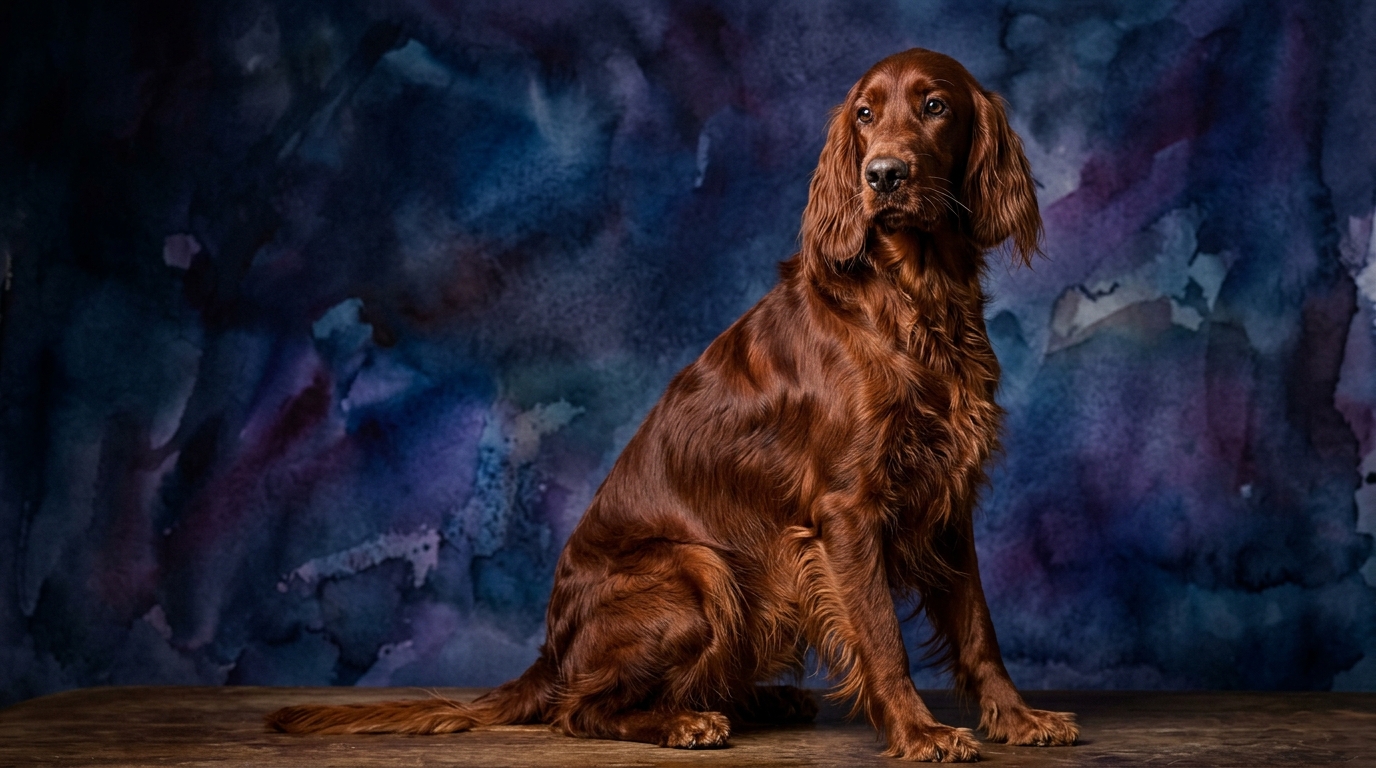
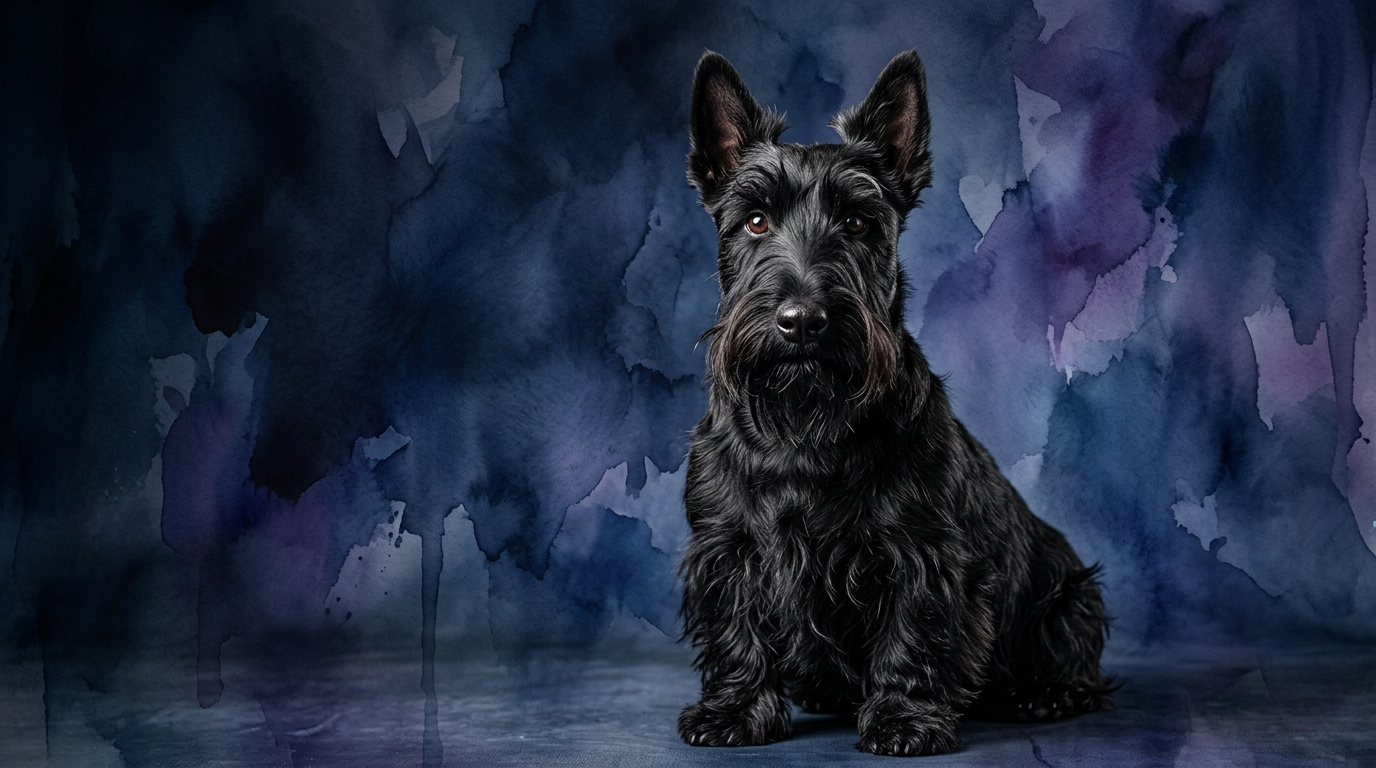
Side-by-Side Cognitive Profiles
At The Cosmic Pet Pet IQ Lab, we evaluate canine cognition across five key dimensions, offering a nuanced understanding of each breed's mental framework. The Irish Setter, a Sporting group member, holds a Coren rank of #35, indicating a strong capacity for working intelligence. In contrast, the Scottish Terrier, from the Terrier group, ranks at #65, suggesting a different, often more independent, cognitive approach.
For the Irish Setter, their Problem Solving is rated at 4/5. This reflects a quick-thinking nature, allowing them to adapt to new situations and figure out puzzles with relative ease. Their Training Speed also scores 4/5, highlighting their responsiveness and eagerness to absorb new commands and routines efficiently. Social Intelligence stands at 3/5, meaning they are generally good-natured and friendly, though perhaps not overly complex in their social interactions. Instinctive Drive, at 3/5, speaks to their inherent desire to hunt and retrieve, particularly birds, but in a manner that is often manageable and responsive to direction. Finally, their Memory is strong at 4/5, enabling them to retain learned behaviors and past experiences over time.
The Scottish Terrier presents a distinct profile. Their Problem Solving is rated 3/5, indicating they can certainly solve challenges, but often through persistence and independent thought rather than immediate, collaborative insight. Training Speed also scores 3/5, suggesting they are capable of learning, but require more patience, consistency, and perhaps a stronger motivational incentive. Their Social Intelligence is 3/5, much like the Setter, but often manifests as a discerning loyalty to their family, while being more reserved with strangers. Instinctive Drive is also 3/5, reflecting a powerful, tenacious urge to dig and pursue vermin, a drive that is deeply ingrained. Their Memory, at 3/5, means they remember well, but might require more frequent reinforcement for long-term retention compared to the Setter.
Where the Irish Setter Excels Cognitively
The Irish Setter clearly demonstrates an advantage in several key cognitive areas, making them a particularly adaptable and collaborative companion. Their Problem Solving score of 4/5, compared to the Scottie's 3/5, means they are often quicker to grasp novel concepts or navigate complex environments. For instance, an Irish Setter might more rapidly understand how to open a childproof gate or figure out a new interactive puzzle toy with less trial and error, often looking to their owner for cues and collaboration.
A standout strength is their Training Speed, rated at 4/5 against the Scottish Terrier's 3/5. This indicates a more rapid absorption of commands and a greater willingness to respond to instruction. Owners will likely find that Irish Setters pick up basic obedience, advanced tricks, or even complex sporting routines with notable efficiency, often driven by an intrinsic desire to engage with their human companions. This responsiveness contributes significantly to their higher Coren rank.
Furthermore, the Irish Setter's Memory, also at 4/5, provides a substantial cognitive edge. This superior recall means they retain learned behaviors, routines, and past experiences with greater longevity. An Irish Setter can often build upon previous training sessions without needing extensive re-teaching, making the learning process cumulative and progress more consistent. They are less likely to 'forget' a command or a household rule, contributing to a more predictable and harmonious living situation.
Where the Scottish Terrier's Cognition Shines
While the Scottish Terrier's scores might appear numerically lower in some dimensions, their cognitive profile is uniquely tailored to their historical role and presents distinct strengths for the right owner. Their Problem Solving, rated at 3/5, often manifests as a tenacious, independent approach. Unlike the Setter who might seek human collaboration, a Scottie is adept at figuring things out on their own terms, particularly when driven by an intrinsic motivation. This self-reliance can be a powerful asset when tackling challenges where human interference is not desired or practical, fostering a dog with strong character.
The Scottish Terrier's Instinctive Drive, also at 3/5, combined with their problem-solving style, results in a remarkable focused tenacity. While the Irish Setter's drive is often directed towards cooperative hunting, the Scottie's drive is geared towards persistent pursuit and digging. This isn't just a physical trait; it's a cognitive one. They possess an unwavering mental focus to accomplish a task they deem important, like investigating a scent or attempting to unearth something. This single-minded determination, while requiring patience from trainers, is a testament to their deep-seated cognitive resilience.
Their Social Intelligence, at 3/5, while matching the Setter's score, often translates into a discerning affection. Scottish Terriers are not typically effusive with strangers, but they form incredibly deep, loyal bonds with their chosen family. This isn't a deficiency in social awareness, but rather a selective application of it, which many owners cherish. They observe and understand their immediate social circle acutely, offering a companionship built on profound, if sometimes reserved, devotion and an understanding of their family's nuances.
Trainability: A Tale of Two Temperaments
When it comes to trainability, the differences between the Irish Setter and Scottish Terrier are quite pronounced, stemming directly from their distinct cognitive profiles and breed purposes. The Irish Setter, with a Training Speed of 4/5 and a Problem Solving score of 4/5, generally proves to be a more straightforward and responsive student. Their Sporting group heritage means they were bred to work cooperatively with humans, often taking direction from a distance. This translates into an eagerness to please and a quick grasp of commands, making early obedience and advanced training a relatively smooth and rewarding experience. They thrive on positive reinforcement and enjoy the mental engagement that training provides.
The Scottish Terrier, however, presents a different training journey. Their Training Speed of 3/5, combined with a Problem Solving score of 3/5 that leans towards independence, means they require a more patient and consistent approach. Terriers, by nature, were bred to work independently, often out of sight of their human companions, making their own decisions when pursuing quarry. This ingrained self-reliance can sometimes be perceived as stubbornness in a training context. A Scottish Terrier will often weigh whether a command is worth their effort or if they have a better, more interesting agenda. Successful training with a Scottie relies heavily on understanding their strong motivational drives, using high-value rewards, and maintaining unwavering consistency. They are capable of learning, but the process often takes longer and demands more creative engagement from the trainer, respecting their distinct independent spirit rather than trying to overpower it.
Lifestyle Match: Active Engagement vs. Distinct Companionship
Choosing between an Irish Setter and a Scottish Terrier also involves aligning their cognitive and physical needs with an owner's lifestyle. The Irish Setter, with its higher scores in Problem Solving (4/5), Training Speed (4/5), and Instinctive Drive (3/5, but directed), is an excellent match for active owners. These are individuals or families who enjoy outdoor activities like hiking, jogging, or engaging in dog sports such as agility or obedience. Their cognitive profile makes them highly receptive to learning new skills and participating in varied mental challenges, thriving on consistent engagement and a 'job' to do. An Irish Setter will flourish in a home where their mental and physical energy is channeled into productive activities, preventing boredom and potential mischief.
Conversely, the Scottish Terrier's cognitive makeup, characterized by independent Problem Solving (3/5) and a tenacious Instinctive Drive (3/5), suits owners who appreciate a dog with a strong, distinct personality and a more self-reliant companionship. While not couch potatoes, Scotties typically require moderate exercise, enjoying walks and exploring their immediate environment. They are not as intensely driven by cooperative tasks as the Setter, making them a better fit for owners who might not pursue competitive dog sports but still provide consistent physical activity and mental enrichment through puzzle toys or scent games. A Scottish Terrier thrives with owners who respect their independent nature, offer consistent, patient guidance, and enjoy a loyal, discerning companion who often has their own agenda, providing a unique and steadfast presence in the home.
The Verdict
Choose the Irish Setter if you seek an eager, responsive companion for active pursuits, enjoy collaborative training, and desire a dog that adapts quickly to new challenges and routines.
Opt for the Scottish Terrier if you appreciate an independent, tenacious spirit, are patient with training, and value a discerning, loyal companion with a strong, distinct personality.
🧠 Find Your Pet's IQ Score
Our Pet IQ Lab assessment covers 25+ tests across 5 cognitive dimensions — personalized to your breed.
Take the Full IQ Test →Frequently Asked Questions
What are the main cognitive differences between Irish Setters and Scottish Terriers?
Irish Setters generally exhibit quicker problem-solving, faster training acquisition, and better memory retention, making them highly responsive. Scottish Terriers, while capable, demonstrate a more independent approach to problem-solving and require greater patience in training due to their tenacious nature and self-reliant instincts.
Does the Scottish Terrier's lower IQ score mean they are not intelligent?
Absolutely not. Their scores reflect a different cognitive style, emphasizing independence, tenacity, and discerning loyalty rather than quick, collaborative learning. Scottish Terriers are adept at tasks aligned with their terrier instincts and possess a sharp, often singular, mental focus.
Which breed requires more mental stimulation?
Both breeds benefit from mental stimulation, but the Irish Setter's higher problem-solving and training speed scores suggest they thrive on varied, complex tasks and learning new skills regularly. The Scottish Terrier enjoys challenges that tap into their instinctive drives, like scent work or puzzle toys requiring persistence, rather than constant human-directed activities.