Side-by-Side Cognitive Profile
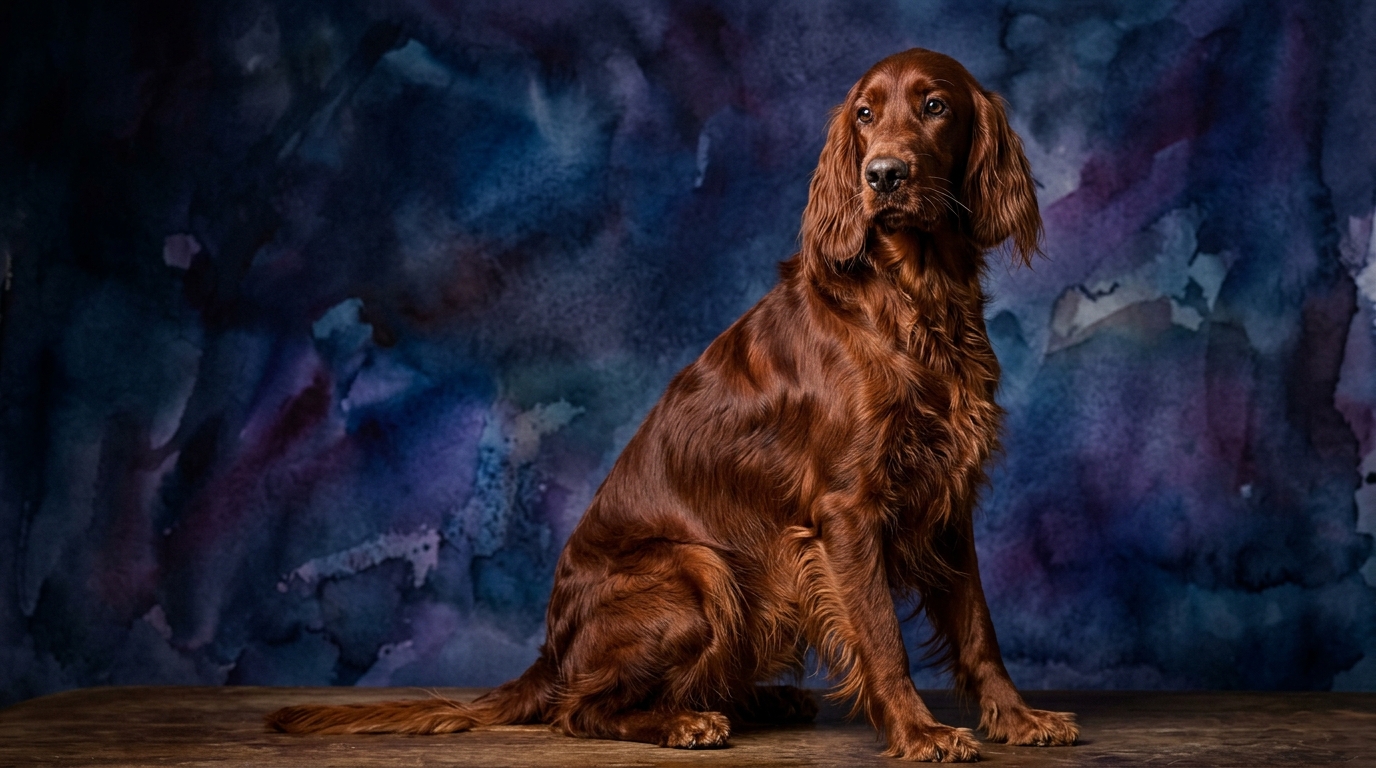
The Irish Setter, a Sporting group member, registers a Coren rank of #35, indicating a strong capacity for working and obedience. Its cognitive scores include Problem Solving 4/5, Training Speed 4/5, Social Intelligence 3/5, Instinctive Drive 3/5, and Memory 4/5. This profile suggests a resourceful, quick learner with a good recall.
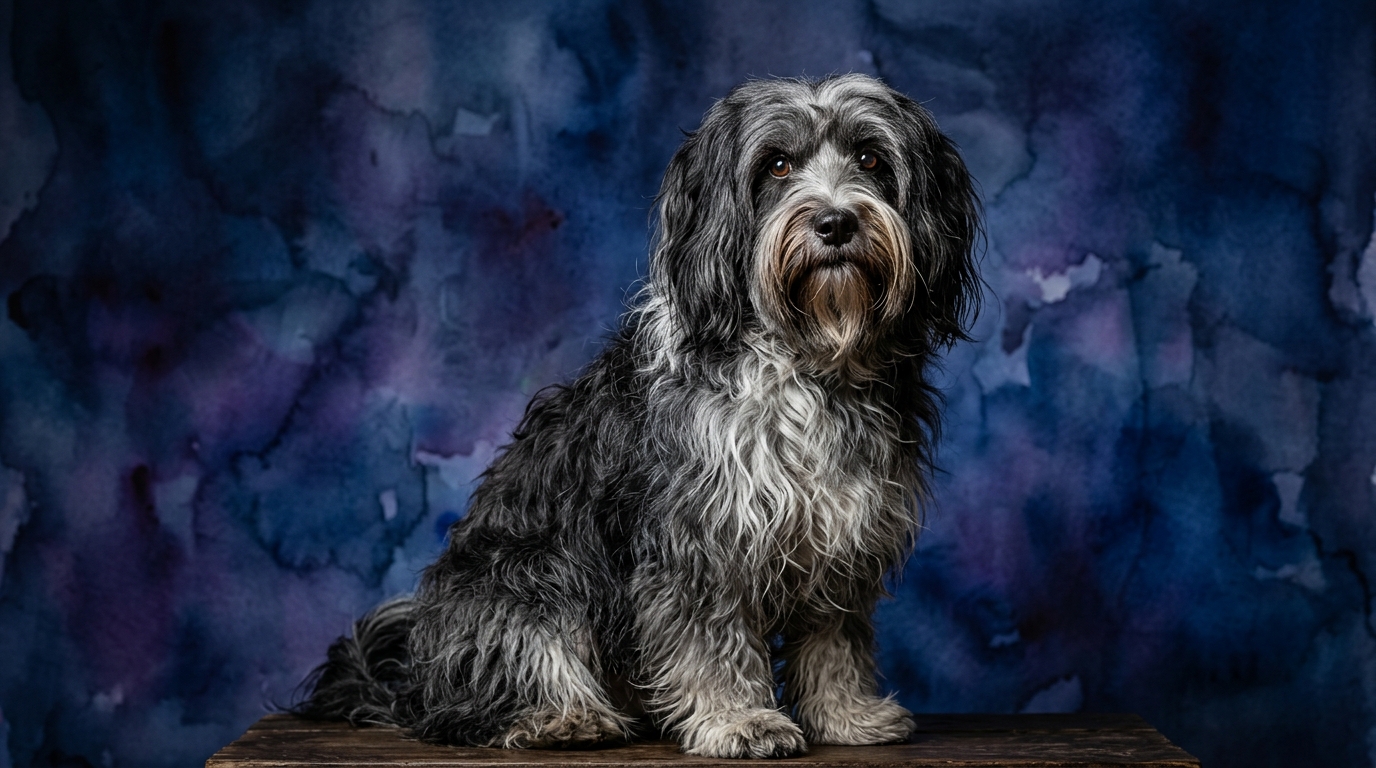
Conversely, the Tibetan Terrier, from the Non-Sporting group, holds a Coren rank of #63. Its cognitive breakdown shows Problem Solving 3/5, Training Speed 3/5, Social Intelligence 3/5, Instinctive Drive 3/5, and Memory 3/5. This breed presents a more balanced, perhaps less intensely driven, cognitive approach.
Regarding Problem Solving, the Irish Setter's 4/5 score suggests a dog capable of independently figuring out complex tasks or navigating novel situations. The Tibetan Terrier's 3/5 indicates they will solve problems, but often prefer a more guided or observational approach rather than immediate self-initiation.
In Training Speed, the Irish Setter’s 4/5 highlights their aptitude for rapid skill acquisition, picking up new commands and routines with fewer repetitions. The Tibetan Terrier’s 3/5 means they learn steadily, requiring more consistent reinforcement and patience to solidify new behaviors.
Both breeds share a 3/5 in Social Intelligence and Instinctive Drive. This suggests a moderate ability to interpret social cues and a balanced level of innate drives, neither being overly intense nor completely disengaged. The Irish Setter's instinctive drive might lean towards scent work, while the Tibetan Terrier's could manifest as alert guardianship.
Finally, for Memory, the Irish Setter's 4/5 indicates a robust ability to retain complex sequences and past experiences over time. The Tibetan Terrier's 3/5 memory means they recall information reliably, but might benefit from occasional refreshers for less frequently practiced skills.
Where the Irish Setter Wins Cognitively
The Irish Setter's superior Problem Solving (4/5) is a clear cognitive advantage. They exhibit a remarkable capacity for independent thought and strategic action, often devising their own solutions to environmental puzzles or challenges. This resourcefulness makes them adept at navigating complex scenarios without constant human intervention, from figuring out how to retrieve a toy stuck under furniture to understanding multi-step tasks in a training regimen.
Their elevated Training Speed (4/5) signifies an exceptional ability to grasp new concepts and commands swiftly. This trait, deeply rooted in their sporting heritage, allows them to absorb and integrate new information efficiently, making them highly responsive to instruction. Owners can progress through training levels more rapidly, introducing advanced skills and nuanced behaviors with greater ease.
The Irish Setter’s strong Memory (4/5) complements their quick learning, enabling them to retain vast amounts of information and learned behaviors over extended periods. This robust recall ensures consistency in performance and reduces the need for frequent re-teaching, allowing for the building of an extensive repertoire of skills and a deep understanding of household routines.
Where the Tibetan Terrier Wins Cognitively
The Tibetan Terrier's balanced Instinctive Drive (3/5) offers a cognitive advantage for specific lifestyles. Unlike breeds with intensely specialized drives, their moderate impulses mean they are generally less prone to overwhelming prey drives or a powerful urge to roam, making them more manageable in varied home environments and less likely to act solely on instinct. This allows for a more cooperative cognitive engagement with their surroundings.
Their 3/5 Problem Solving score, while not as high as the Setter's, often translates into a cooperative problem-solving style. Instead of independently devising solutions, Tibetan Terriers frequently observe and engage their human companions, preferring to work with their owners to overcome obstacles. This fosters a unique bond and makes them excellent partners for interactive challenges rather than solitary endeavors.
The Tibetan Terrier’s steady Training Speed (3/5) can be a cognitive benefit for owners who appreciate a more deliberate and consistent learning journey. This pace encourages thorough understanding and retention, particularly when training is approached with patience and positive reinforcement. It allows for a deeper, more ingrained comprehension of commands, rather than superficial learning that might quickly fade.
Which is Easier to Train and Why
Based on their cognitive profiles, the Irish Setter is generally easier to train. Their 4/5 Training Speed and 4/5 Memory, combined with a 4/5 Problem Solving aptitude, mean they quickly understand and retain commands, often eager to please and engage in structured learning. Their Sporting group background predisposes them to working collaboratively with humans, thriving on mental challenges and intricate sequences. For example, teaching an Irish Setter a complex retrieve involving multiple steps and obstacles would likely see them excel due to their capacity for rapid acquisition and robust recall, responding well to consistent, positive reinforcement.
The Tibetan Terrier, with 3/5 in Training Speed and Memory, requires more patience and consistency in training. They possess a more independent streak, a legacy from their historical role as guardians in challenging terrain, which means they might initially question the necessity of a command rather than immediately complying. While capable of learning a wide array of behaviors, they often need more repetitions and highly motivating rewards to solidify understanding. Owners might find that a Tibetan Terrier learns best through play-based training and short, engaging sessions that prevent boredom and maintain their focus, fostering cooperation rather than demanding submission.
Suitability for Active vs. Relaxed Owners
The Irish Setter is an ideal match for active owners. Their Sporting group heritage means they possess considerable stamina and a cognitive need for consistent engagement. They thrive in environments where they can utilize their problem-solving skills and energetic memory, whether through long hikes, running, fetching, or participating in dog sports like agility, obedience, or field trials. An owner seeking a canine partner for extensive outdoor adventures and ongoing mental challenges will find an Irish Setter an enthusiastic and capable companion. A relaxed owner might find an Irish Setter's unmet cognitive and physical needs lead to restless behaviors or destructive habits.
The Tibetan Terrier suits owners who appreciate a balanced activity level. While not sedentary, their Non-Sporting background implies they don't require the same intensity or duration of exercise as the Setter. They enjoy daily walks, playtime in a securely fenced yard, and engaging puzzle toys, but are also content to relax indoors with their family. A relaxed owner who can provide consistent, moderate physical and mental stimulation, coupled with companionship, will find a Tibetan Terrier a contented partner. They are adaptable, fitting into various lifestyles as long as their need for connection and routine activity is met, valuing quality time over constant high-octane pursuits.
The Verdict
Choose the Irish Setter if you seek a highly engaged canine partner eager for complex training, consistent mental challenges, and vigorous physical activity. Their rapid learning and robust memory make them excel in structured environments and dog sports.
Opt for the Tibetan Terrier if you desire a steadfast companion with a balanced temperament, who learns at a steady pace and offers cooperative problem-solving, fitting well into a moderately active household. Their adaptability and loyal nature shine with patient, consistent guidance.
🧠 Find Your Pet's IQ Score
Our Pet IQ Lab assessment covers 25+ tests across 5 cognitive dimensions — personalized to your breed.
Take the Full IQ Test →Frequently Asked Questions
Do Irish Setters need more mental stimulation than Tibetan Terriers?
Yes, the Irish Setter's 4/5 problem-solving and memory scores indicate a higher cognitive demand for consistent mental engagement. They thrive on puzzle toys, advanced training, and varied activities to prevent boredom, whereas the Tibetan Terrier's 3/5 scores suggest a moderate, but still important, need for mental exercise.
Are Tibetan Terriers difficult to train because of their lower training speed score?
The Tibetan Terrier's 3/5 training speed means they require more patience and consistency than an Irish Setter, but they are certainly trainable. Their independent nature means training sessions should be engaging, positive, and consistent, focusing on building a strong bond and making learning enjoyable.
How do their social intelligence scores (both 3/5) impact their family life?
Both breeds share a 3/5 social intelligence score, indicating they are generally adept at navigating typical family dynamics and canine interactions. They are not overly demonstrative nor exceptionally aloof, suggesting they integrate well into households but might not be the first to seek out extensive social engagements outside their immediate circle.