
Side-by-Side IQ Profile: Sporting Dog vs. Scent Hound
The Irish Setter, a Sporting group member, holds a respectable Coren rank of #35, indicating a capacity for understanding new commands quickly. Our IQ assessment scores this breed with a 4/5 in Problem Solving, reflecting an aptitude for navigating novel situations and figuring out solutions independently, a useful trait when locating downed game or adapting to unexpected environmental changes during a hunt. This means they often excel at tasks requiring strategic thinking, such as retrieving a toy from a complex obstacle or understanding multi-step requests. Training Speed also registers at 4/5, suggesting a remarkable readiness to absorb and execute new commands efficiently and with fewer repetitions, crucial for a responsive bird dog that needs to work in close cooperation with a handler. Social Intelligence at 3/5 means they are generally friendly and adaptable in various social settings, capable of forming strong bonds while maintaining a degree of independence. Their Instinctive Drive, also 3/5, is primarily focused on their prey drive for birds, manifesting as a keen desire to find, flush, and retrieve, but in a controlled manner guided by the handler. Their Memory, rated 4/5, underpins their ability to recall complex sequences of commands, handler expectations, and even specific locations of game over extended periods, essential for consistent field performance and advanced training.
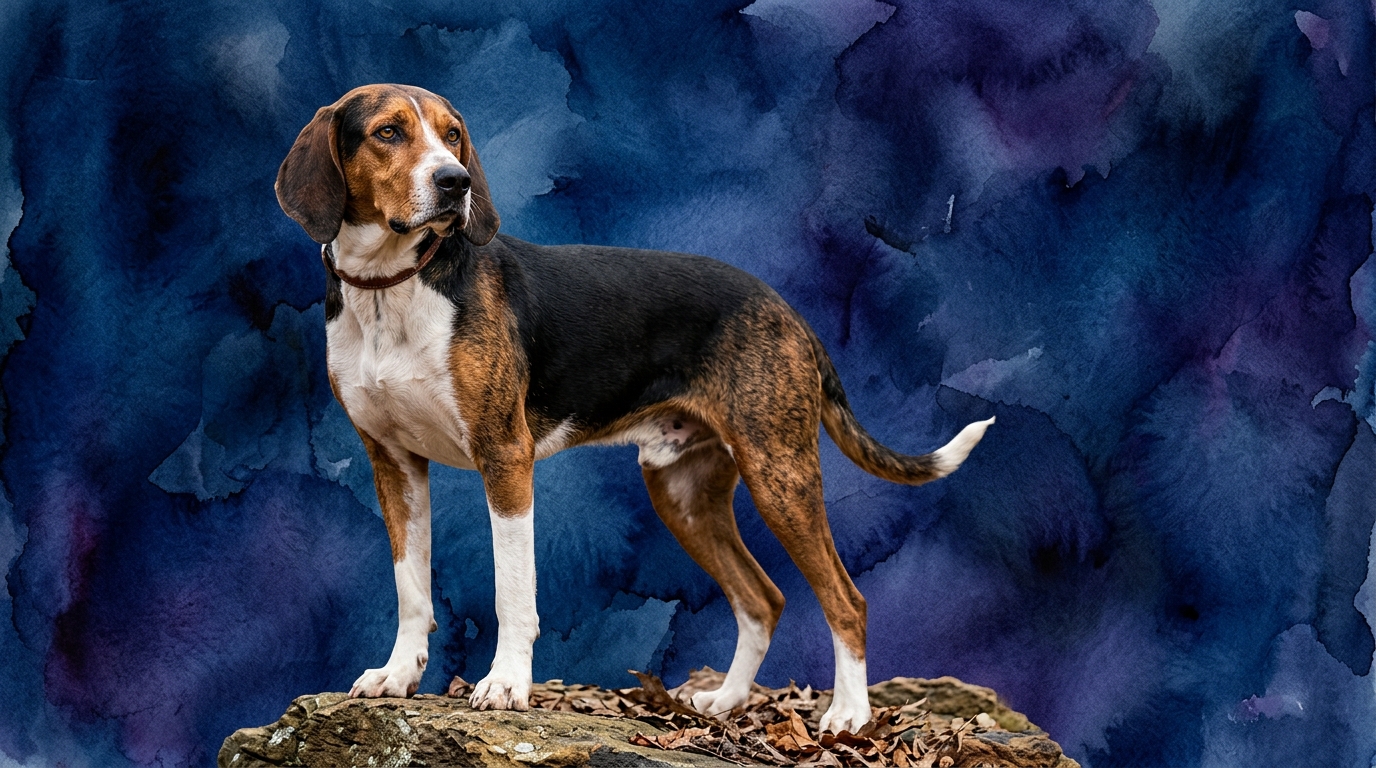
The Treeing Walker Coonhound, a member of the Hound group, is not Coren-ranked, but our metrics paint a clear picture of its cognitive strengths. This breed scores 3/5 in Problem Solving, indicating an ability to navigate challenges, particularly those related to tracking, such as finding a way through dense brush or across a stream while maintaining a scent trail. However, this problem-solving is less about abstract human puzzles and more about practical, environmental navigation in pursuit of their goal. Training Speed is also 3/5; while capable of learning basic commands, their independent nature and deep-seated focus on scent mean training often requires immense persistence, creativity, and an understanding of their powerful intrinsic motivations. Like the Setter, their Social Intelligence is 3/5, suggesting a generally amiable disposition, often thriving in a pack environment and forming strong, though sometimes less overtly demonstrative, bonds with their human family. Their Instinctive Drive, also 3/5, is intensely focused on scent work – an unwavering, single-minded pursuit of a trail, culminating in 'treeing' quarry. Finally, their Memory is 3/5, sufficient for recalling complex scent patterns, familiar territories, and the success rates of various hunting routes, but perhaps not as adept at remembering complex, arbitrary human commands or long sequences as quickly or eagerly as a Setter.
Where the Irish Setter Wins Cognitively
The Irish Setter's cognitive profile demonstrates clear advantages in areas requiring quick comprehension, adaptable learning, and responsive cooperation. With a Problem Solving score of 4/5, they exhibit a superior capacity for understanding cause-and-effect relationships and devising novel strategies to achieve goals, whether it's figuring out how to open a specific latch, adapting to new terrain in a field trial, or understanding complex multi-part commands. This translates into a dog that can often anticipate a handler's next move, independently navigate an unfamiliar field to locate a hidden object, or even learn to perform intricate routines in performance sports. Their Training Speed, also 4/5, means they generally grasp new commands and routines with fewer repetitions than many other breeds, making them highly efficient learners. This responsiveness is invaluable for complex field work where precision, immediate obedience, and nuanced communication are paramount. Furthermore, their 4/5 Memory score allows them to retain a vast repertoire of commands, routines, and experiences, building a strong foundation for advanced training and consistent performance over time. This makes them particularly adept at tasks requiring sequential actions, remembering specific bird locations, or recalling handler expectations even after a long break from training.
Where the Treeing Walker Coonhound Wins Cognitively
While the Treeing Walker Coonhound's scores might appear numerically lower in some areas, its cognitive strengths lie in its profound specialization and unwavering focus, making it uniquely matched for its chosen domain. Their Instinctive Drive, rated 3/5, is not just a score but a deep, pervasive cognitive force that defines their being. This drive manifests as an extraordinary ability to process and follow complex scent trails, a form of problem-solving (3/5) uniquely tailored to their purpose. They excel at deciphering faint or 'cold' scents, interpreting environmental cues like wind direction and terrain changes, and maintaining focus over vast distances and varied terrain for extended periods, even when faced with distractions. This persistence, combined with a memory (3/5) that excels at retaining intricate scent information, remembering successful hunting grounds, and recalling the specific 'signature' of quarry, constitutes a highly specialized and effective intelligence. Their social intelligence (3/5) also shines brightly in a pack context; they are adept at cooperative hunting, communicating effectively through vocalizations, and understanding their role within a group hierarchy, showcasing a sophisticated form of social cognition vital for their traditional work that often goes unrecognized in standard obedience metrics.
Training Dynamics: Responsiveness vs. Independent Drive
Given their respective cognitive profiles, the Irish Setter generally proves to be the easier breed to train for a broad range of tasks. Their higher scores in Training Speed (4/5) and Problem Solving (4/5) mean they typically pick up new commands and concepts more rapidly and require fewer repetitions to solidify learning. Irish Setters often display an eagerness to please their handler, which, when combined with their strong memory (4/5), makes them highly receptive to positive reinforcement training methods and enthusiastic participants in structured learning. They thrive on the mental stimulation of mastering new skills in areas like obedience, agility, or competitive field events. In contrast, the Treeing Walker Coonhound, with 3/5 in both Training Speed and Problem Solving, often presents a greater training challenge for conventional obedience due to its highly independent nature and singular, intense focus on scent. While they are certainly capable of learning, their primary motivation is often the pursuit of a trail, making them less inclined to comply with commands that divert them from this powerful instinctive drive. Training a Coonhound requires immense patience, consistency, and an understanding that their specialized cognitive strengths are best channeled rather than suppressed; they might excel in scent work competitions, but require a different approach than a Setter for general household manners or off-leash reliability in distracting environments.
Matching Breeds to Owner Lifestyles
Both breeds require active engagement, but the *nature* of that activity differs significantly, influencing their suitability for various owners. The Irish Setter, with its Sporting background, suits owners who enjoy varied, structured activities that engage both body and mind. They need ample physical exercise, but their higher problem-solving and memory scores mean they also thrive on consistent mental stimulation through activities like advanced obedience, agility, rally, or regular field trials. An owner who enjoys teaching new tricks, engaging in interactive puzzle games, or participating in dog sports will find the Setter a rewarding and engaged companion. For a more relaxed owner, or one unable to provide consistent mental enrichment alongside physical activity, the Setter might become bored, restless, and potentially destructive or vocal if their cognitive needs are unmet. The Treeing Walker Coonhound, conversely, demands an owner who can provide extensive opportunities for their instinctive drive to be fulfilled, primarily through rigorous scent work, long, exploratory hikes, or participation in coonhound field events. While they are generally calm and affectionate indoors after sufficient exercise, a 'relaxed owner' who cannot commit to hours of physical activity or specialized scent games will find a Coonhound frustrated, leading to excessive baying, destructive chewing, or attempts to escape. Their need isn't for complex mental puzzles in the human sense, but for fulfilling their primal tracking instincts outdoors, which for them, is the ultimate cognitive and physical workout.
The Verdict
Choose an Irish Setter if you desire a responsive, mentally agile companion eager to learn and participate in varied activities, from obedience to field work, and are prepared to provide consistent mental and physical stimulation.
Opt for a Treeing Walker Coonhound if you are an active individual or family passionate about scent work, hiking, or providing extensive opportunities for a dog to follow its nose, appreciating a companion with a deep, specialized drive.
🧠 Find Your Pet's IQ Score
Our Pet IQ Lab assessment covers 25+ tests across 5 cognitive dimensions — personalized to your breed.
Take the Full IQ Test →Frequently Asked Questions
Are Treeing Walker Coonhounds difficult to live with due to their independent nature?
Treeing Walker Coonhounds are generally amiable companions, but their independence and strong scent drive mean they require secure fencing and consistent training. They can be vocal, especially when on a trail, and need significant outlets for their natural instincts to be content family members.
Do Irish Setters require a lot of grooming?
Yes, Irish Setters have a beautiful, flowing coat that requires regular grooming to prevent tangles and mats. Daily brushing is often recommended, along with periodic trimming, to maintain their coat's health and appearance.
Can a Treeing Walker Coonhound be a good family pet?
Absolutely, Treeing Walker Coonhounds can be wonderful family pets, known for being good with children and other dogs when properly socialized. They are affectionate and loyal indoors, provided their substantial exercise and scenting needs are consistently met outdoors.