
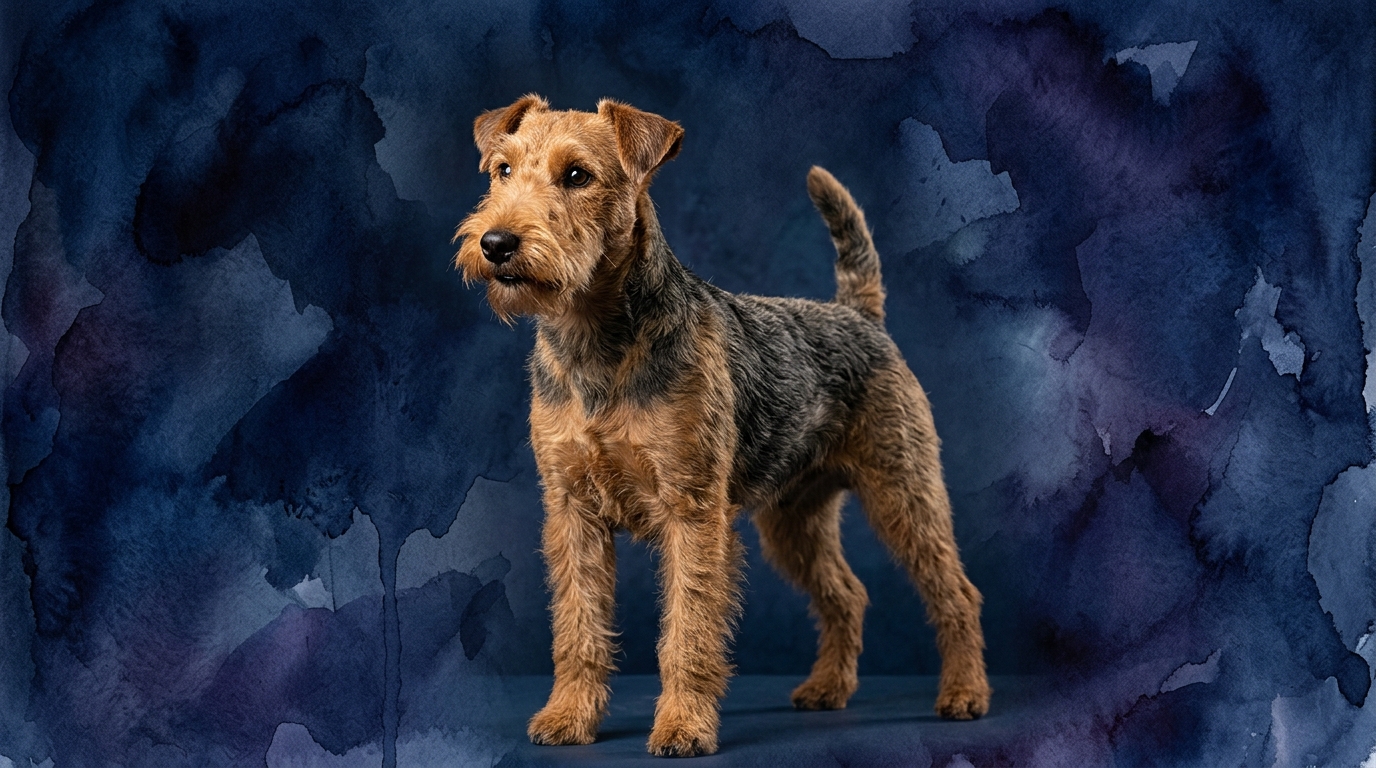
Side-by-Side IQ Profile: Sporting Grace vs. Terrier Grit
The Irish Setter, ranked #35 by Coren, displays a strong cognitive aptitude. Their Problem Solving is rated 4/5, indicating an ability to navigate complex situations and learn from environmental cues with relative ease. Training Speed also stands at 4/5, suggesting they grasp new commands and routines quickly, often with fewer repetitions than many other breeds. Social Intelligence is 3/5, meaning they can read human cues and interact appropriately, though perhaps not with the nuanced understanding of a truly people-focused breed. Their Instinctive Drive is 3/5, reflecting their heritage as bird dogs with a moderate prey drive and an inherent desire to work. Memory is a robust 4/5, allowing them to retain learned behaviors and recall experiences effectively over time.
The Welsh Terrier, though not Coren-ranked, presents a distinct cognitive profile reflecting its terrier lineage. Their Problem Solving is 3/5, showing they can figure things out but might require more persistence or trial-and-error compared to their Setter counterpart. Training Speed is also 3/5, meaning they are capable of learning, but their independent nature often means training requires more patience and creative motivation. Social Intelligence is 3/5, indicating they can form strong bonds and understand human signals, though their interactions might be characterized by a certain independence. Their Instinctive Drive is 3/5, rooted in their history as vermin hunters, giving them a persistent and focused drive for chasing and digging. Memory is 3/5, allowing them to remember commands and routines, but perhaps with less long-term recall for intricate sequences compared to the Setter.
Where the Irish Setter Excels Cognitively
The Irish Setter’s cognitive strengths are particularly evident in areas requiring quick apprehension and retention of information. Their 4/5 rating in both Problem Solving and Training Speed suggests they are adept at understanding and executing multi-step tasks. For instance, an Irish Setter might more readily learn a complex agility course, remembering the sequence of obstacles after fewer repetitions. Their superior memory (4/5) further solidifies this, enabling them to recall intricate commands or retrieve specific items with greater accuracy over time. This breed demonstrates a facility for pattern recognition and adapting to new instructions that streamlines their learning process, making them highly receptive to advanced obedience work or specialized roles requiring a broad behavioral repertoire. They show a pronounced ability to connect cause and effect in structured environments.
Where the Welsh Terrier Shines Cognitively
The Welsh Terrier's cognitive profile, while different, highlights a distinct set of strengths, particularly in areas demanding tenacity and independent thought. While their Problem Solving is rated 3/5, this often manifests as a persistent, resourceful approach rather than immediate comprehension. A Welsh Terrier might not grasp a new puzzle toy as quickly as a Setter, but it will likely dedicate more focused energy to figuring it out through repeated attempts. Their instinctive drive (3/5), deeply tied to their working heritage, gives them an unwavering focus when pursuing a perceived “prey” or task, making them exceptional at scent work or activities that tap into their natural hunting instincts. This drive, combined with their moderate memory (3/5), means they can sustain engagement in tasks that require repetitive, independent exploration, such as tracing a scent trail or persistently digging at a target. Their cognitive resilience allows them to overcome obstacles through sheer determination.
Training Dynamics: Setter's Receptiveness vs. Terrier's Resolve
When it comes to training, the core differences between these breeds become apparent. The Irish Setter, with a Training Speed of 4/5, generally proves more eager to please and quicker to pick up new commands. They respond well to positive reinforcement and consistency, often motivated by praise and the desire for interaction. Their higher memory and problem-solving skills allow them to generalize learned behaviors more readily across different environments and contexts. This often translates to a smoother, more fluid training experience where new concepts are integrated relatively quickly.
The Welsh Terrier, conversely, with a Training Speed of 3/5, often requires a more nuanced approach. Their independent nature, a hallmark of many terriers, means they might not always see the immediate benefit in complying with a command if it conflicts with their own priorities. Training a Welsh Terrier demands patience, creativity, and a strong understanding of what truly motivates them, often involving high-value rewards and making training sessions feel like engaging games. While they can certainly learn a wide array of commands, their learning curve might be longer, and their adherence to commands might be more selective, especially if there are competing environmental distractions. Their persistence, however, means they can master complex tasks with sufficient motivation and consistent, engaging methods.
Lifestyle Match: Active Companionship vs. Focused Engagement
Matching these breeds to owner lifestyles requires considering their inherent drives and cognitive leanings. The Irish Setter, with its moderate instinctive drive (3/5) and strong social intelligence (3/5), often thrives with active owners who enjoy incorporating their dog into family activities like long hikes, running, or even participating in dog sports such as agility or obedience trials. Their receptiveness to training and desire for companionship make them excellent partners for owners who appreciate a dog that is eager to learn and participate. They generally adapt well to a structured routine that includes regular mental stimulation and physical exercise, making them suitable for individuals or families who want a highly engaged and trainable companion for shared adventures.
The Welsh Terrier, with its equally moderate instinctive drive (3/5) but more independent cognitive style, often suits owners who appreciate a dog with a strong personality and a need for focused engagement. While they are active and enjoy physical exercise, their mental stimulation often benefits from tasks that tap into their terrier instincts, such as earthdog trials, scent work, or puzzle toys that challenge their problem-solving in a persistent way. They can be wonderful companions for active owners who are prepared to channel their dog's tenacious energy into constructive outlets. Owners who prefer a more relaxed, hands-off approach might find the Welsh Terrier's independent streak challenging, as they thrive on purpose-driven activities that satisfy their innate drives, rather than simply passive companionship.
The Verdict
Opt for an Irish Setter if you seek a highly trainable, receptive companion eager to learn new commands and participate in structured activities, valuing a dog that readily integrates into family life with a graceful, energetic presence.
Select a Welsh Terrier if you appreciate a tenacious, independent spirit that thrives on focused tasks, enjoying owners who can channel their persistent problem-solving and instinctive drives into engaging, purposeful activities.
🧠 Find Your Pet's IQ Score
Our Pet IQ Lab assessment covers 25+ tests across 5 cognitive dimensions — personalized to your breed.
Take the Full IQ Test →Frequently Asked Questions
Are Irish Setters difficult to train?
Irish Setters are generally considered quite receptive to training, with a 4/5 rating for training speed. They respond well to consistent positive reinforcement and typically enjoy the process of learning new commands and participating in activities with their owners. Their strong memory helps them retain what they learn effectively.
Do Welsh Terriers need a lot of mental stimulation?
Yes, Welsh Terriers benefit significantly from mental stimulation due to their inherent problem-solving abilities and instinctive drive (both rated 3/5). Activities like puzzle toys, scent work, and training that taps into their persistent nature are crucial to keep them engaged and prevent boredom-related behaviors.
Which breed is better for first-time dog owners?
For first-time dog owners, the Irish Setter might be a more straightforward choice due to their higher training speed and general eagerness to please. The Welsh Terrier's independent nature and strong terrier drive can be more challenging for those new to dog ownership, requiring more experience in consistent and creative training methods.