
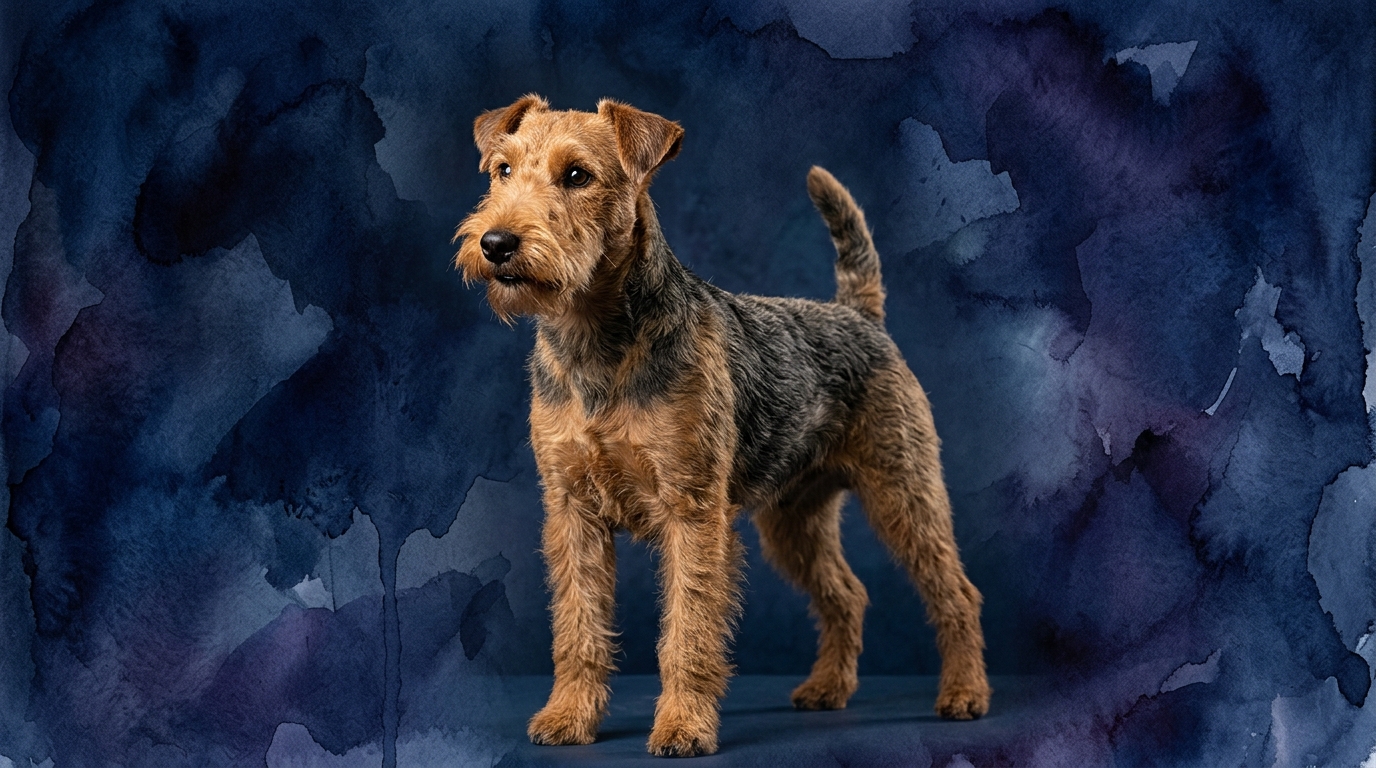
Side-by-Side IQ Profile: Poodle (Standard) vs. Welsh Terrier
The Poodle (Standard), a member of the Non-Sporting Group, consistently demonstrates a profound capacity for learning and adaptation, often placed at Coren rank #2 for working and obedience intelligence. Its Pet IQ Lab scores reflect this: Problem Solving 5/5, Training Speed 5/5, Social Intelligence 5/5, Instinctive Drive 4/5, and Memory 5/5. This profile describes a dog capable of intricate thought and rapid acquisition of new skills, deeply attuned to its human companions.
In contrast, the Welsh Terrier, from the Terrier Group, presents a different cognitive blueprint, reflecting its heritage as a determined hunter. While not Coren-ranked, its Pet IQ Lab scores are Problem Solving 3/5, Training Speed 3/5, Social Intelligence 3/5, Instinctive Drive 3/5, and Memory 3/5. These scores indicate a breed with focused, persistent cognitive abilities tailored for specific tasks, often exhibiting a more independent approach to engagement and learning.
Where Poodle (Standard) Wins Cognitively
The Poodle (Standard)'s cognitive strengths lie in its exceptional versatility and capacity for abstract thought. With a 5/5 in Problem Solving, they excel at deciphering complex sequences, understanding multi-step commands, and adapting strategies on the fly, making them adept at advanced dog sports like agility, obedience, and even service work where novel situations demand quick mental processing. Their 5/5 Training Speed means they absorb new information with minimal repetition, often seeming to anticipate commands or grasp concepts after only a few demonstrations.
Their Social Intelligence, also rated 5/5, means Standard Poodles are remarkably perceptive to human emotions and subtle cues, fostering a highly collaborative partnership. They often seek to understand and engage, making them intuitive companions who can adjust their behavior based on the mood or needs of their people. Coupled with a 5/5 Memory, they retain vast repertoires of learned behaviors and social understandings over long periods, making them consistently reliable in their responses and interactions.
Where Welsh Terrier Wins Cognitively
While the Welsh Terrier's IQ scores are generally lower than the Standard Poodle's, their cognitive profile offers distinct advantages for specific roles and owner preferences. Their Problem Solving at 3/5 manifests as a focused, tenacious approach to challenges, particularly those related to their instinctive drives. For instance, once a Welsh Terrier identifies a 'problem' like a burrowing creature or a hidden toy, their cognitive persistence allows them to work independently and methodically to achieve their goal, undeterred by distractions that might cause a less driven breed to disengage.
Their Instinctive Drive, rated 3/5, is a significant cognitive win for owners who appreciate a dog with a strong, purposeful drive. This isn't about general biddability but about the specific, unyielding determination to follow a scent, dig, or chase, which are critical for their original purpose as vermin hunters. This cognitive trait allows them to excel in activities like earthdog trials or scent work, where independent decision-making and unwavering focus on a task are paramount, rather than constant human direction. Their 3/5 Social Intelligence can also be seen as a 'win' for owners seeking a companion that, while affectionate, maintains a certain self-sufficient demeanor, engaging on its own terms rather than constantly seeking affirmation.
Which is Easier to Train and Why
The Poodle (Standard) is unequivocally easier to train, primarily due to its 5/5 Training Speed and 5/5 Social Intelligence. They possess an inherent eagerness to cooperate and a rapid comprehension of new commands, often requiring only a few repetitions to solidify a behavior. Their strong memory (5/5) ensures commands are retained consistently, and their social awareness means they actively seek to understand and please their human partners, making training a highly rewarding and efficient process. They thrive on positive reinforcement and mental challenges, quickly progressing through various levels of obedience and trick training.
The Welsh Terrier, with its 3/5 Training Speed and 3/5 Social Intelligence, presents a different training dynamic. While capable of learning, they require more consistent, patient, and engaging methods. Their independent nature and focused instinctive drive mean they might choose to prioritize a scent or an interesting sound over a command, necessitating a trainer who understands how to make learning highly motivating and fun, often through high-value rewards and varied short sessions. Their problem-solving approach is more direct and less generalized, meaning they might take longer to grasp new concepts and require more repetition to solidify behaviors, but once learned, their memory (3/5) helps maintain those skills with occasional refreshers.
Which Suits Active Owners vs. Relaxed Owners
For active owners who enjoy engaging their dog in various sports, advanced obedience, or complex activities, the Poodle (Standard) is an exceptional match. Their cognitive profile demands consistent mental stimulation alongside physical exercise. Owners who thrive on teaching new skills, participating in dog agility, rally obedience, or even service dog training will find the Poodle's 5/5 Problem Solving and Training Speed incredibly rewarding. They are not content with mere physical exertion; their minds need to be challenged and engaged regularly to prevent boredom and channel their considerable cognitive energy constructively.
Relaxed owners, or those seeking a companion with a more independent streak, might find the Welsh Terrier a suitable, albeit distinctive, choice. While they certainly need activity to satisfy their 3/5 Instinctive Drive, this often translates into focused bursts of energy for specific tasks like exploring a new trail, digging in a designated area, or engaging in scent games, rather than constant, generalized mental work. Owners who appreciate a dog that is content to observe or engage on its own terms, perhaps joining for a purposeful walk or a backyard adventure, and then settling down, will find their match here. Their independence means they don't constantly demand intricate mental games, but their physical and instinctive needs must be met to ensure a well-adjusted companion.
The Verdict
Choose a Poodle (Standard) if you seek a highly versatile, collaborative companion eager to learn advanced tasks, thrive on complex mental engagement, and form an intuitive partnership.
Opt for a Welsh Terrier if you appreciate a spirited, independent dog with a tenacious problem-solving approach for specific tasks, and you are prepared to channel their instinctive drives through consistent, engaging training.
🧠 Find Your Pet's IQ Score
Our Pet IQ Lab assessment covers 25+ tests across 5 cognitive dimensions — personalized to your breed.
Take the Full IQ Test →Frequently Asked Questions
Can Welsh Terriers learn advanced tricks?
Yes, Welsh Terriers can learn advanced tricks, but it requires more patience, consistency, and highly motivating rewards compared to a Poodle. Their 3/5 training speed means breaking tasks into smaller steps and celebrating every success to maintain their engagement.
Are Poodles only good for complex activities?
While Poodles excel at complex activities due to their 5/5 Problem Solving and Training Speed, they also thrive on general companionship and family life. Their cognitive capacity makes them adaptable to various lifestyles, as long as their mental needs for engagement and learning are met through interactive play, puzzle toys, or regular training sessions.
How can I best fulfill a Welsh Terrier's instinctive drives?
To fulfill a Welsh Terrier's 3/5 Instinctive Drive, engage them in activities like earthdog trials, scent work, or provide a designated digging pit in your yard. Regular, stimulating walks where they can explore and follow scents are also crucial for their mental and physical well-being.