
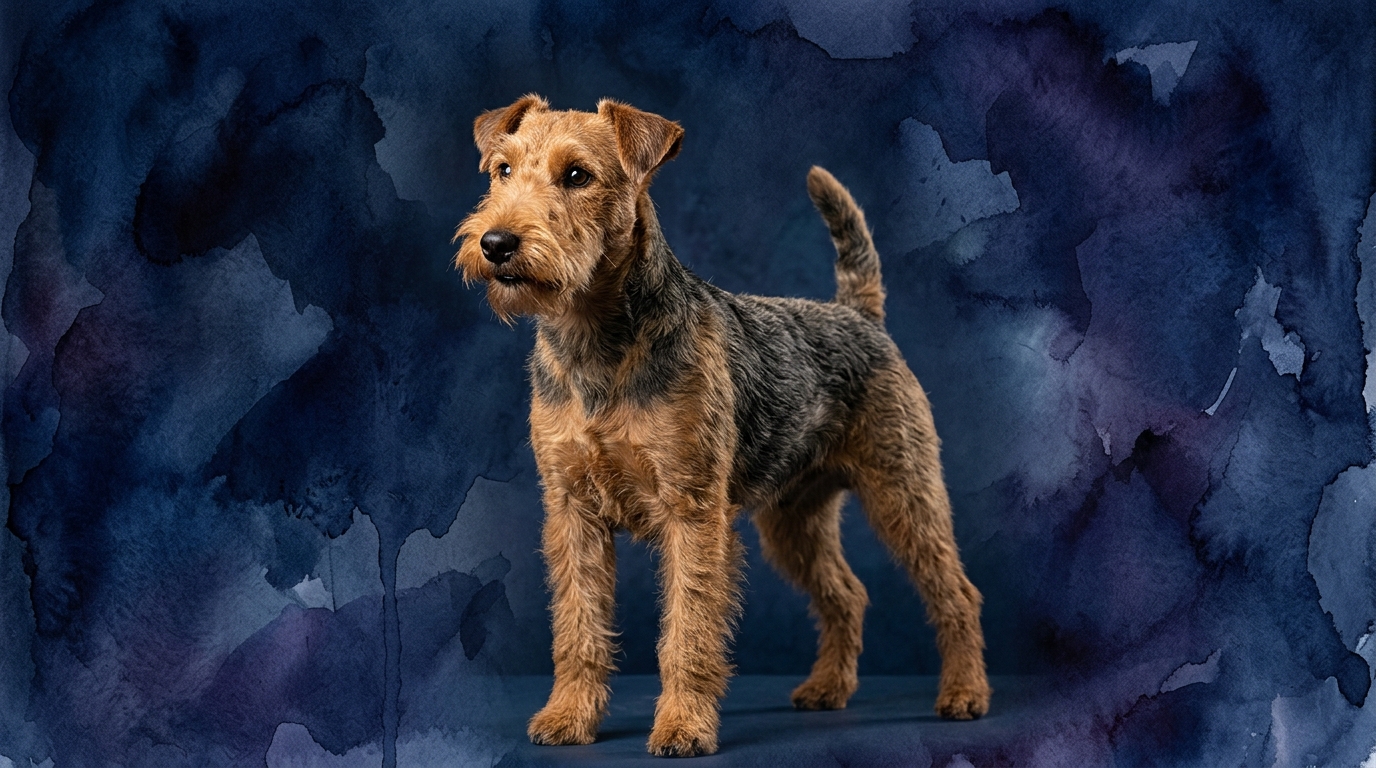
Side-by-Side IQ Profile: German Shepherd vs. Welsh Terrier
The Cosmic Pet Pet IQ Lab employs five key dimensions to evaluate canine intelligence, offering a nuanced understanding beyond simple obedience. For the German Shepherd, a breed frequently seen in demanding roles, its cognitive scores reflect a history of cooperative work. Conversely, the Welsh Terrier, a spirited member of the terrier group, showcases a different set of mental strengths, often characterized by independence.
German Shepherd (Herding Group): This breed consistently ranks among the most capable, reflected in its Coren rank of #3. Its IQ scores are uniformly high across the board:
Problem Solving (5/5): German Shepherds exhibit a remarkable capacity to analyze complex situations and devise effective solutions, navigating intricate environments and performing multi-step tasks with sophisticated cognitive flexibility. They adapt strategies readily when faced with new obstacles.
Training Speed (5/5): Their rapid assimilation of new information and strong desire to cooperate allows them to master commands and routines with impressive swiftness, responding efficiently to diverse training methodologies from an early age.
Social Intelligence (5/5): This breed possesses a profound understanding of human cues, intentions, and social hierarchies, enabling them to form deep bonds, anticipate needs, and operate effectively within a family unit or professional team. They read subtle body language and vocal tones with precision.
Instinctive Drive (5/5): Driven by powerful herding, guarding, and protective instincts, German Shepherds show a focused determination to fulfill their perceived roles. This drive translates into unwavering commitment to tasks, whether managing livestock, protecting territory, or performing specific duties.
Memory (5/5): Their ability to retain complex sequences, commands, and learned associations over extended periods is a cornerstone of their working capabilities, allowing them to build upon past experiences and maintain a vast repertoire of learned behaviors.
Welsh Terrier (Terrier Group): While not appearing on Coren's list, this reflects a different manifestation of intelligence, often characterized by self-directed problem-solving and independence, rather than a lack of mental capacity. Its IQ scores are:
Problem Solving (3/5): Welsh Terriers demonstrate a practical, often independent, approach to problem-solving, particularly when it involves their natural terrier instincts like hunting or investigating. They can figure out how to access desired objects or areas, though their methods might be less about human-directed logic and more about instinctual trial-and-error.
Training Speed (3/5): Their training speed is moderate, requiring consistent, engaging methods. They learn commands, but their independent streak means they might choose when and if to comply, often needing more repetitions and motivation than breeds with higher compliance drives.
Social Intelligence (3/5): Welsh Terriers connect well with their immediate family, showing affection and understanding of household routines. However, their social interactions can be more selective, and they might be less inclined to interpret nuanced human emotions or cooperate in group dynamics compared to highly social working breeds.
Instinctive Drive (3/5): Possessing a strong prey drive and an urge to explore and dig, their instincts are geared towards independent hunting and investigation. This drive, while powerful, is less about cooperative work and more about self-directed activity, sometimes manifesting as a persistent pursuit of a scent or a burrow.
Memory (3/5): They retain learned behaviors and routines, especially those that are reinforced consistently and are personally rewarding. While they might not recall complex sequences with the same precision as a German Shepherd, they remember important boundaries, family members, and enjoyable activities.
Where the German Shepherd Excels Cognitively
The German Shepherd's cognitive architecture presents clear advantages in scenarios demanding structured learning, complex task execution, and deep partnership. Their 5/5 Problem Solving allows them to excel at intricate tasks like search and rescue, where they must autonomously navigate challenging environments and apply learned protocols. The perfect 5/5 Training Speed means they absorb and internalize new commands with minimal repetition, making them exceptionally adaptable to diverse roles, from service work to competitive obedience.
Furthermore, their 5/5 Social Intelligence ensures they are acutely attuned to human direction and emotional states, fostering an unparalleled cooperative bond. This capacity for nuanced understanding and rapid response makes them formidable partners in any endeavor requiring precise execution and collaborative effort. Their 5/5 Instinctive Drive isn't just about raw energy; it's a focused, directed determination, allowing them to maintain concentration on a task over long periods, while their 5/5 Memory ensures they build upon a vast library of experiences and commands, rarely forgetting a learned lesson.
Where the Welsh Terrier Shows Unique Cognitive Strengths
While the Welsh Terrier's cognitive profile might appear less 'structured' than the German Shepherd's, their distinct mental strengths lie in areas demanding independent thought, resilience, and self-sufficiency. Their Problem Solving at 3/5, though numerically lower, manifests as a tenacious ability to overcome obstacles using their own wit and instinct, particularly in scenarios related to their terrier heritage, such as locating hidden objects or navigating tight spaces. This isn't about following a human-prescribed solution but devising their own, often creative, methods.
Their Instinctive Drive, also 3/5, translates into a determined focus on tasks that appeal to their inherent prey drive, making them exceptionally persistent in pursuits like scent work or digging. This self-directed motivation means they don't necessarily need constant human prompting to engage; they find their own 'work.' Their moderate Social Intelligence (3/5) allows them to be charming and engaging within their close circle, fostering strong, though perhaps less overtly cooperative, bonds. They bring a robust independence that can be a cognitive asset for owners who appreciate a dog capable of entertaining itself and making its own choices in certain situations, rather than constantly seeking direction.
Training Ease: German Shepherd vs. Welsh Terrier
The German Shepherd is unequivocally easier to train, a fact deeply rooted in their superior scores across several key cognitive dimensions. Their 5/5 Training Speed means they grasp new commands in very few repetitions, often showing understanding after just one or two tries. This rapid assimilation is coupled with a profound 5/5 Social Intelligence, making them highly receptive to human communication, eager to please, and acutely aware of their handler's expectations. They actively seek to understand and comply, viewing training as a collaborative effort. Their 5/5 Memory ensures that once a lesson is learned, it's retained, building a robust foundation of behaviors.
In contrast, the Welsh Terrier's 3/5 Training Speed indicates a need for more patience and repetition. Their independent Problem Solving (3/5) and less pronounced Social Intelligence (3/5) mean they are often more self-motivated and less inclined to automatically defer to human instruction. Training a Welsh Terrier requires creative engagement, positive reinforcement, and a willingness to work with their strong, independent spirit, rather than against it. They will learn, but often on their own terms and timeline, needing to be convinced that the task is rewarding for them.
Matching Breeds to Owner Lifestyles
Matching a dog's cognitive needs and energy to an owner's lifestyle is paramount. The German Shepherd, with its uniformly high IQ scores and intense instinctive drive, is best suited for active owners. These dogs thrive on consistent mental stimulation and physical activity, requiring daily engagement that challenges their problem-solving abilities and channels their powerful working instincts. Owners who enjoy structured training, dog sports, or have a specific 'job' for their dog will find the German Shepherd a fulfilling companion. A relaxed owner might struggle to meet the breed's substantial cognitive and physical demands, potentially leading to boredom-induced behaviors.
The Welsh Terrier, while certainly active and playful, can be a better fit for owners who appreciate a more independent companion but are still prepared for regular exercise and engaging play. Their 3/5 instinctive drive is expressed through bursts of activity and a need for exploration, but they can also be content with periods of self-amusement or quiet companionship once their physical needs are met. While they need stimulation to prevent boredom, their cognitive profile allows for a lifestyle that might be less rigidly structured than that required by a German Shepherd. They suit owners who appreciate a dog with personality and a mind of its own, prepared for daily walks and interactive games but perhaps not a full-time working partnership.
The Verdict
Opt for a German Shepherd if you are an experienced, active owner seeking a highly trainable, deeply cooperative partner for advanced training, dog sports, or dedicated working roles. This breed thrives on consistent mental and physical challenges and forms an exceptionally strong, communicative bond with its handler.
Select a Welsh Terrier if you appreciate an independent, spirited companion that offers bursts of playful energy and self-directed problem-solving. This breed suits owners who enjoy consistent, positive training and can provide regular exercise and engaging activities for a dog with a distinct personality.
🧠 Find Your Pet's IQ Score
Our Pet IQ Lab assessment covers 25+ tests across 5 cognitive dimensions — personalized to your breed.
Take the Full IQ Test →Frequently Asked Questions
Does a lower IQ score mean a dog isn't trainable?
No, a lower IQ score doesn't mean a dog isn't trainable; it simply indicates that their learning style or speed may differ. Breeds like the Welsh Terrier might require more patience, consistent positive reinforcement, and engaging methods tailored to their specific drives and independence. All dogs are capable of learning, but some require a more creative approach from their handlers.
Can a Welsh Terrier perform complex tasks like a German Shepherd?
While a Welsh Terrier can learn tasks, their cognitive profile suggests they may not excel at the same breadth or complexity of tasks as a German Shepherd, particularly those requiring sustained cooperation and nuanced understanding of human directives. Their problem-solving is often more independent and instinct-driven, making them better suited for tasks aligning with their terrier heritage, like scent work or agility.
How does a dog's 'instinctive drive' impact its behavior?
A dog's instinctive drive profoundly shapes its behavior, influencing everything from play to problem-solving. A high drive, like the German Shepherd's 5/5, means a powerful, focused urge towards specific behaviors (herding, protection), which can be channeled into training. A moderate drive, like the Welsh Terrier's 3/5, still means a strong urge (prey drive, digging), but it might be more self-directed and less amenable to human redirection, requiring owners to understand and manage these innate tendencies.