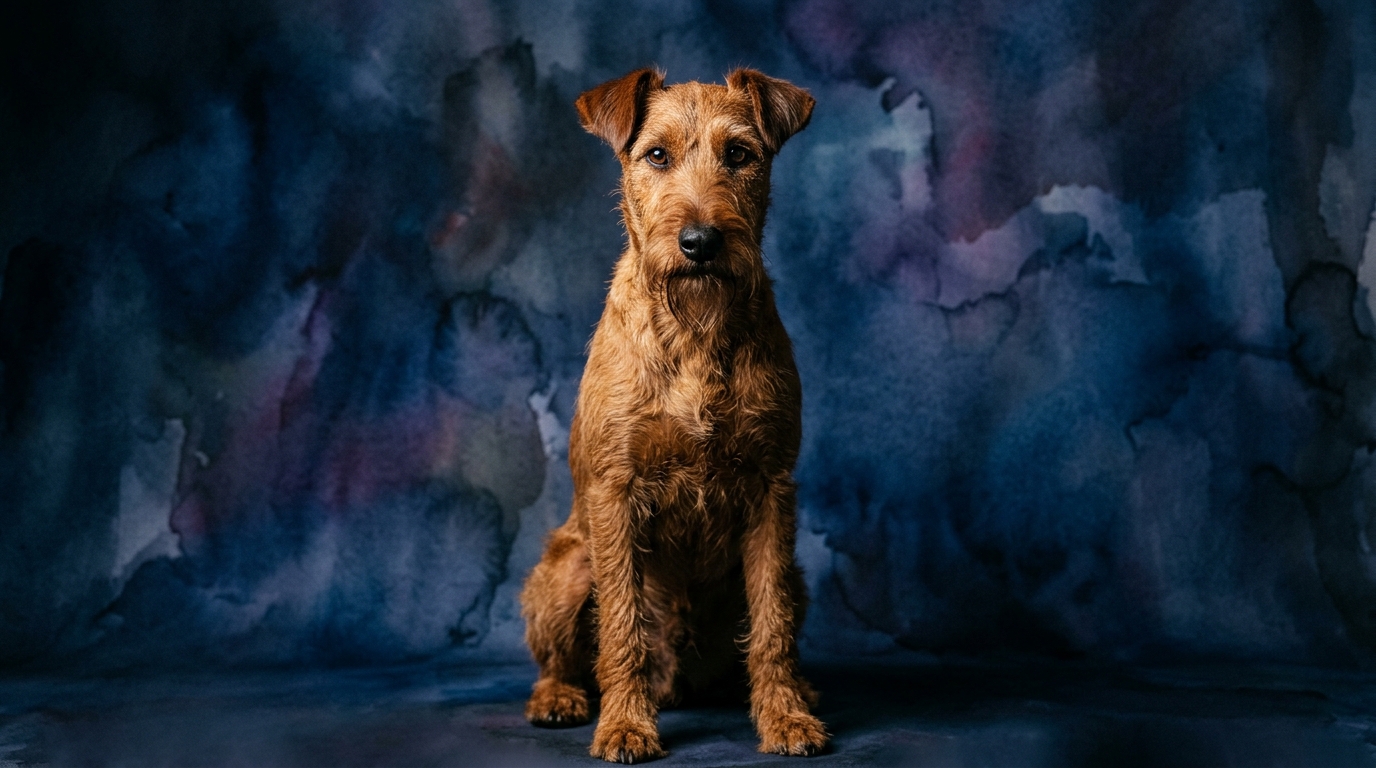

Side-by-Side Cognitive Profiles
At first glance, both the Irish Terrier and the Russian Toy present an intriguing uniformity in their cognitive assessments, each scoring a consistent 3 out of 5 across all five dimensions: Problem Solving, Training Speed, Social Intelligence, Instinctive Drive, and Memory. Yet, these identical scores belie the very different ways these breeds interact with their world, shaped by their historical roles and physical attributes.
The **Irish Terrier**, a robust member of the Terrier group, demonstrates its 3/5 Problem Solving through a tenacious and often independent approach to challenges. Faced with an obstacle, this breed is less likely to wait for instruction and more prone to experiment with various solutions until a path forward is discovered, sometimes resorting to clever but unconventional means. Their 3/5 Training Speed reflects a capable learner who, while quick to grasp concepts, often requires consistency and a compelling reason to comply, a trait common in breeds bred for independent work. Social Intelligence at 3/5 means they are observant of their human companions and other animals, capable of understanding social hierarchies and moods, though they might assert their own personality within these dynamics. Their Instinctive Drive, also 3/5, is a powerful force, manifesting as a strong prey drive, a desire to dig, and a watchful nature, all rooted in their vermin-hunting heritage. Memory at 3/5 indicates they retain learned behaviors, routines, and experiences effectively, making them reliable companions once boundaries are established.
The **Russian Toy**, a delicate companion breed, interprets its 3/5 Problem Solving score through resourcefulness in navigating its human environment. This might involve figuring out how to get attention, manipulate toys, or find comfortable resting spots, often using their small size to their advantage. Their 3/5 Training Speed is characterized by a responsiveness to gentle, positive reinforcement, often eager to please their primary human, though they can be sensitive to harsh methods. Social Intelligence at 3/5 highlights their deep attunement to human emotions and household routines, making them excellent barometers of their owner's mood and quick to adapt to family dynamics. The 3/5 for Instinctive Drive in a Russian Toy typically translates not into hunting prowess, but into an alert, watchful demeanor, often expressed through enthusiastic alarm barking at perceived threats or novelties, and a strong desire for companionship. Their Memory, also 3/5, ensures they quickly learn household rules, command sequences, and the habits of their human family, contributing to their adaptability as house pets.
Where the Irish Terrier Excels Cognitively
While both breeds share identical numerical scores, the Irish Terrier’s cognitive strengths shine in scenarios demanding persistence and physical engagement. Their 3/5 Problem Solving often translates into a superior ability to overcome physical barriers or figure out complex sequences of actions in a dynamic environment, like navigating an agility course or outsmarting a puzzle toy designed for larger, more robust breeds. This isn’t just about raw processing power, but about the sheer tenacity and physical courage to keep trying. Their 3/5 Instinctive Drive, when channeled appropriately, gives them an edge in tasks requiring sustained focus on a target, whether it’s scent work, retrieving, or even just a vigorous game of fetch, demonstrating a deep-seated drive to pursue and complete tasks. This breed’s cognitive profile is particularly well-suited for owners who appreciate a dog with a strong will and the mental fortitude to see a challenge through, even if it means some independent 'thinking outside the box' on the dog's part.
Where the Russian Toy Excels Cognitively
The Russian Toy, conversely, demonstrates its cognitive advantages in the nuances of social interaction and adaptability within a human-centric world. Their 3/5 Social Intelligence is particularly acute in discerning subtle shifts in human mood and intention, often responding with comforting gestures or attention-seeking behaviors that align with their owner's emotional state. This makes them remarkably empathetic companions, finely tuned to the emotional landscape of their home. Their Problem Solving, while rated similarly, manifests as a cleverness in navigating tight spaces, finding the warmest lap, or communicating their desires through refined body language and vocalizations. They are adept at 'training' their owners to meet their needs, using their charm and sensitivity. The Russian Toy's cognitive strengths lie in their ability to integrate seamlessly into a domestic setting, understanding complex household routines and anticipating their human's actions, making them highly intuitive and responsive companions for those seeking close emotional bonds.
Training Dynamics: Irish Terrier vs. Russian Toy
When it comes to training, the identical 3/5 Training Speed scores for both breeds play out in very different ways due to their inherent temperaments and motivations. The Irish Terrier, with its independent streak and strong instinctive drives, requires a trainer who is patient, consistent, and uses positive reinforcement to make training feel like a partnership rather than a command. They respond best to engaging, varied sessions that appeal to their problem-solving nature, but can become stubborn or bored if methods are repetitive or perceived as unfair. Their inherent tenacity means they might test boundaries, requiring a firm but gentle hand to guide their learning.
The Russian Toy, on the other hand, while equally capable of learning with its 3/5 Training Speed, thrives on a different approach. Being more sensitive and eager to please their primary human, they respond exceptionally well to gentle, encouraging methods and can be easily discouraged by harsh tones or corrections. They are highly motivated by praise, treats, and the opportunity for close interaction. Their training might focus more on refining social manners and indoor behaviors, where their attentiveness to human cues makes them quick studies, provided the environment is low-stress and positive. Understanding these behavioral nuances is key to successful training for either breed.
Matching Breeds to Lifestyles: Active vs. Relaxed Owners
Choosing between an Irish Terrier and a Russian Toy often comes down to an owner's lifestyle and their capacity to meet a dog's distinct needs. The Irish Terrier, with its robust build, strong instinctive drives (3/5), and independent problem-solving (3/5), is an ideal match for active owners. They thrive in environments where they can engage in regular, vigorous exercise, participate in dog sports like agility or earthdog trials, and receive consistent mental stimulation through training and puzzle toys. Their zest for life and adventurous spirit mean they are excellent companions for hiking, running, or exploring, requiring an owner who can commit to fulfilling their physical and mental energy requirements daily.
In contrast, the Russian Toy, while possessing a lively personality, is generally better suited for more relaxed owners or those living in smaller spaces. Their exercise needs can often be met with indoor play sessions, short walks, and mental games that engage their social intelligence (3/5) and memory (3/5). They flourish in homes where they receive abundant companionship and interaction, often content to snuggle on a lap or follow their human from room to room. Their primary need is close human connection, making them perfect for individuals or families who can offer consistent affection and integrate them fully into their daily lives without requiring extensive outdoor adventures.
The Verdict
Choose the Irish Terrier if you seek a tenacious, physically engaged companion who thrives on adventure and independent problem-solving alongside an active lifestyle. They offer a rewarding challenge for those ready to embrace their spirited nature.
Opt for the Russian Toy if you desire a sensitive, highly social companion who excels in close human interaction and adapts gracefully to a more relaxed, indoor-centric lifestyle. They offer deep emotional connection and intuitive companionship.
🧠 Find Your Pet's IQ Score
Our Pet IQ Lab assessment covers 25+ tests across 5 cognitive dimensions — personalized to your breed.
Take the Full IQ Test →Frequently Asked Questions
Do Irish Terriers and Russian Toys have similar intelligence levels?
Based on their Cosmic Pet Pet IQ Lab scores, both breeds rate identically at 3/5 across problem solving, training speed, social intelligence, instinctive drive, and memory. However, these scores manifest differently, with the Irish Terrier showing more physical tenacity and the Russian Toy demonstrating social astuteness.
Which breed is easier to house train?
Both breeds have a 3/5 training speed, but their approaches differ. The Russian Toy, being smaller and more sensitive, may require consistent, gentle reinforcement for house training, while the Irish Terrier's independent nature means patience and engaging methods are crucial to prevent stubbornness.
Are these breeds suitable for first-time dog owners?
Both breeds can be suitable for first-time owners who are prepared to understand their specific needs. Irish Terriers require consistent training and ample activity, while Russian Toys need significant companionship and gentle handling due to their sensitivity.