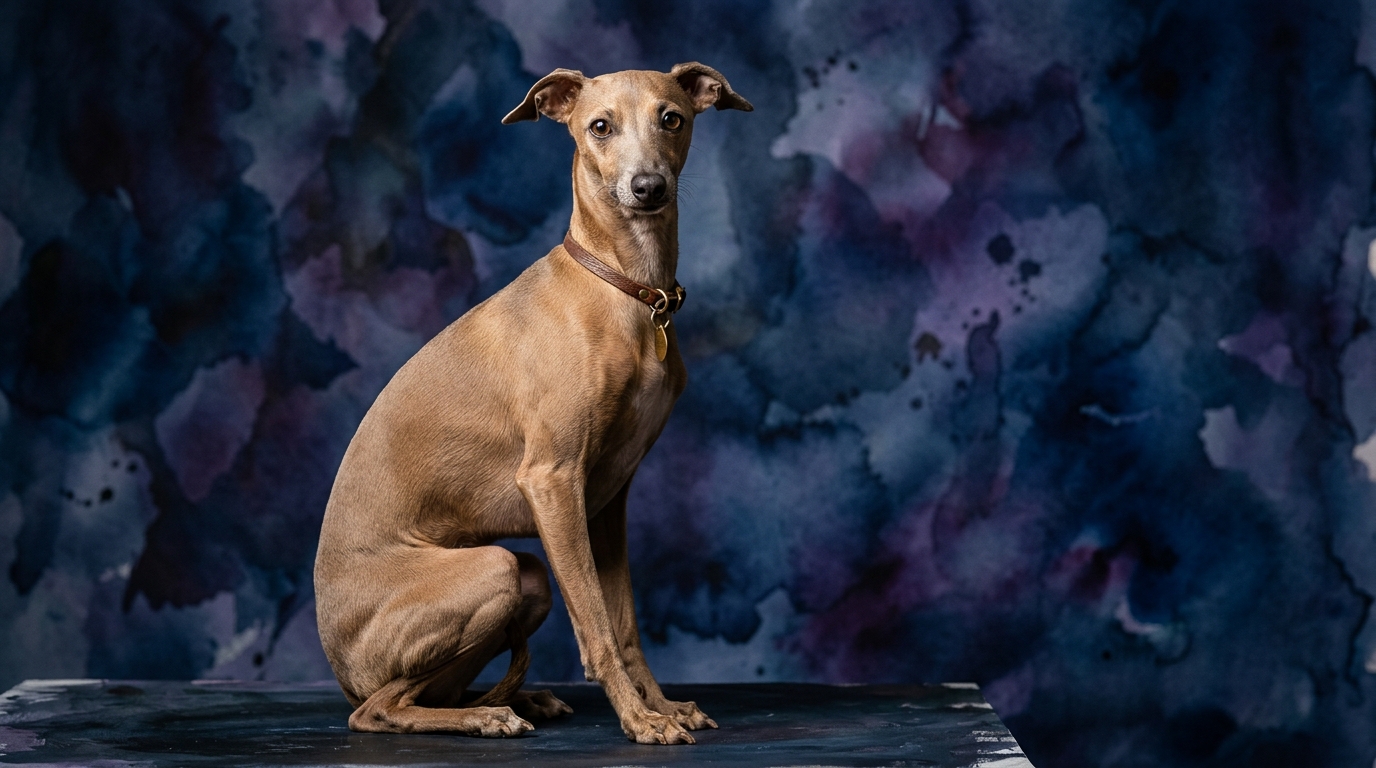
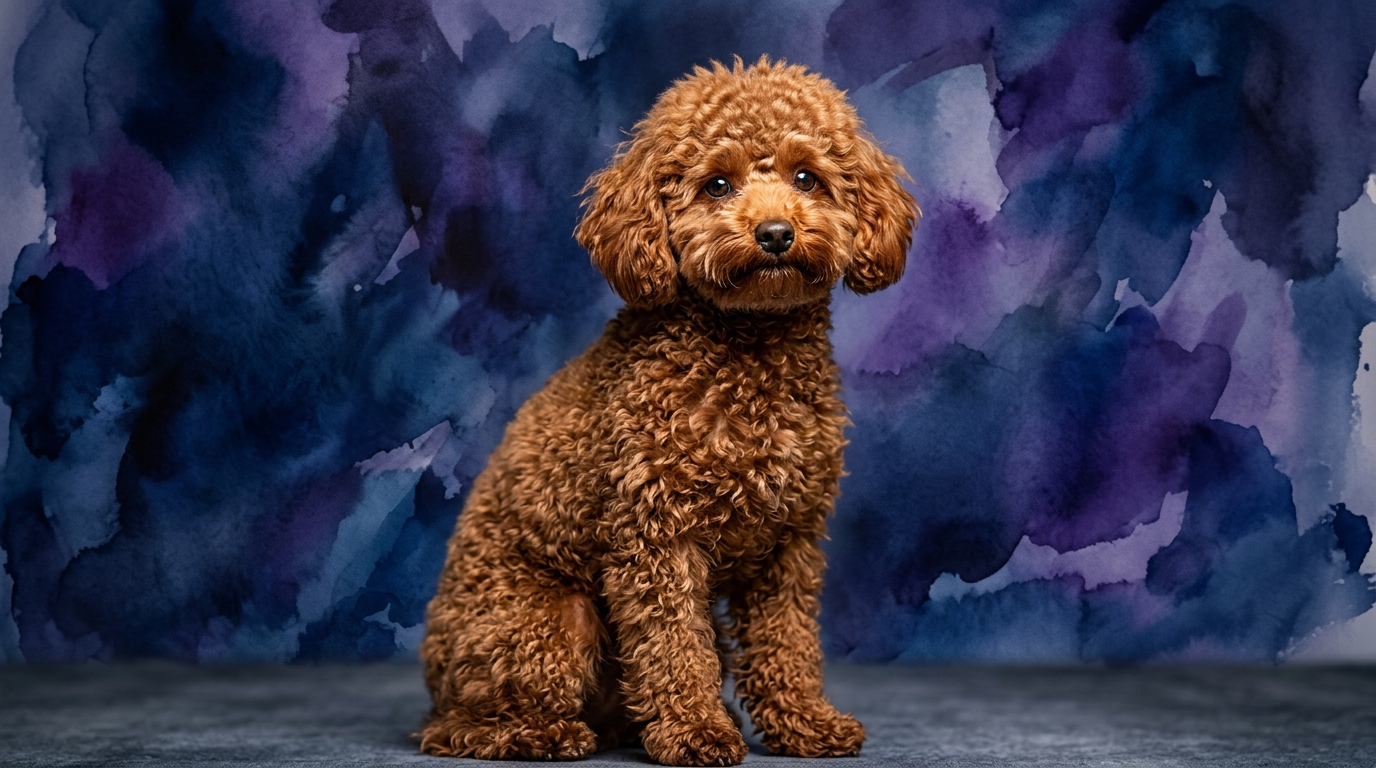
Side-by-Side IQ Profiles: Italian Greyhound vs. Toy Poodle
The Cosmic Pet Pet IQ Lab evaluates canine intelligence across five key dimensions: problem-solving, training speed, social intelligence, instinctive drive, and memory. While both the Italian Greyhound and Toy Poodle are members of the toy group, their cognitive blueprints present a study in contrasts, particularly when examining their individual scores.
The Italian Greyhound registers a consistent 3/5 across all five dimensions. This balanced cognitive profile indicates they are capable learners but typically require clear, consistent instruction for problem-solving and training. Their social intelligence fosters strong bonds, and their instinctive drive is present but not overwhelming, with memory sufficient for retaining routines and learned behaviors.
In contrast, the Toy Poodle presents a more varied and often higher-scoring profile. They achieve an impressive 5/5 in problem-solving, training speed, and memory, signifying a breed that quickly grasps new concepts, adapts to novel situations, and retains information effectively. Their social intelligence and instinctive drive, like the Italian Greyhound, are rated at 3/5, with their Coren rank of #2 further underscoring their operational learning capabilities.
Where the Italian Greyhound's Cognition Shines
While the Italian Greyhound may not boast peak scores in specific cognitive areas, their consistent 3/5 across the board offers a unique cognitive advantage for certain households. This balanced profile means they are generally less prone to the intense cognitive demands or potential anxieties that can sometimes accompany breeds who constantly seek mental challenges. Their moderate problem-solving and memory scores translate to a dog that learns what is needed without overthinking.
An Italian Greyhound's steady cognitive pace makes them wonderfully adaptable to a more relaxed home environment. They are not perpetually searching for the next puzzle to solve or new command to master, which can be a “win” for owners who prefer a companion less inclined to test boundaries through complex problem-solving. Their social intelligence, matching the Toy Poodle at 3/5, means they are equally capable of forming deep, affectionate bonds without exhibiting excessive social demands.
The Italian Greyhound's 3/5 instinctive drive provides another specific benefit; while they possess a sighthound's innate urge to chase, this drive is typically manageable and less intense than in many other breeds. This means their natural instincts are less likely to manifest in highly disruptive ways that require constant vigilance or advanced redirection, offering a comparatively calmer cognitive experience for their owners.
Where the Toy Poodle's Cognition Excels
The Toy Poodle's standout 5/5 scores in problem-solving, training speed, and memory position them as exceptionally capable learners. Their problem-solving acumen means they often understand underlying concepts, enabling them to generalize skills and apply them in new situations. This cognitive flexibility allows them to quickly figure out how to open gates, manipulate objects, or devise strategies to achieve their desires, making them adept at navigating a human-centric world.
The 5/5 in training speed signifies that Toy Poodles absorb new commands and behaviors with remarkable alacrity, often requiring only a few repetitions to master a skill. Coupled with their 5/5 memory, this means once a lesson is learned, it is retained long-term. This combination makes them highly responsive to positive reinforcement and allows for rapid progression through complex training regimens, from basic obedience to intricate tricks or even canine sports.
These elevated cognitive abilities mean Toy Poodles thrive on consistent mental engagement. Their minds are wired to process and learn, and without sufficient intellectual outlets, they can become bored, potentially leading to self-directed problem-solving that owners might find undesirable. Their cognitive strengths are a clear advantage for those seeking a dog capable of advanced learning and who enjoy providing varied mental challenges.
Training Effectiveness: Italian Greyhound vs. Toy Poodle
When it comes to training, the distinction between these two breeds is pronounced, largely due to their differing training speed and problem-solving scores. The Toy Poodle, with a 5/5 in training speed, will typically pick up new commands and routines with impressive speed. They process information quickly, make associations rapidly, and are often eager to engage in learning activities, allowing for faster progression through obedience and tricks.
The Italian Greyhound, with a 3/5 in training speed, requires a more patient and consistent approach. While they are certainly capable of learning, they may need more repetitions to solidify a command, and their attention span might be shorter for prolonged training sessions. Their problem-solving score of 3/5 means clear, step-by-step guidance is paramount, with owners finding success via positive reinforcement and short, engaging sessions.
These cognitive differences manifest in real behavioral scenarios. A Toy Poodle might quickly learn complex sequences like “fetch the red ball from the basket,” whereas an Italian Greyhound might require more time to master even basic recall, especially in distracting environments, due to their sighthound instincts overriding learned behavior. The Toy Poodle's inherent cognitive wiring often makes the training journey feel more fluid and less demanding on the owner's patience, allowing for a wider range of activities.
Matching Lifestyles: Active Engagement vs. Relaxed Companionship
The Italian Greyhound, with its balanced 3/5 cognitive profile across the board, often aligns well with owners seeking a more relaxed, yet still engaging, canine companion. While they have bursts of energy characteristic of sighthounds, their moderate problem-solving and memory scores mean they are content with established routines and do not constantly demand novel intellectual challenges. They are perfectly happy to curl up on a soft blanket for hours, thriving on affection and comfort rather than constant mental stimulation.
The Toy Poodle, conversely, is an ideal match for active owners who enjoy providing consistent mental and physical engagement. Their 5/5 scores in problem-solving, training speed, and memory mean their minds are always “on,” seeking opportunities to learn, explore, and interact. These dogs excel in homes where they receive regular training sessions, participate in puzzle games, or even engage in canine sports like agility, obedience, or scent work.
Both breeds share a 3/5 social intelligence score, indicating they form strong bonds with their human families. However, the Toy Poodle's higher general cognitive drive means they often seek more interactive forms of companionship, enjoying collaborative activities. The Italian Greyhound, while affectionate, might be more content with passive companionship, happy to simply share space and receive gentle attention, making them suitable for individuals who appreciate a quieter, less demanding cognitive presence in their home.
The Verdict
Choose an Italian Greyhound if you seek a gentle, affectionate companion content with a consistent routine, moderate exercise, and a balanced cognitive profile that doesn't demand constant mental problem-solving. They are well-suited for owners who appreciate quiet companionship and are patient with training.
Choose a Toy Poodle if you are an active owner eager to engage a highly capable dog in consistent training, puzzle games, and potentially canine sports, valuing their rapid learning and impressive memory for complex tasks. They thrive with abundant mental stimulation and collaborative activities.
🧠 Find Your Pet's IQ Score
Our Pet IQ Lab assessment covers 25+ tests across 5 cognitive dimensions — personalized to your breed.
Take the Full IQ Test →Frequently Asked Questions
Are Italian Greyhounds difficult to train because their scores are lower than a Toy Poodle's?
Italian Greyhounds are not difficult to train, but their 3/5 training speed means they require more patience and consistency than a Toy Poodle. They respond well to positive reinforcement and short, engaging sessions, and are capable of mastering all basic obedience commands with dedicated effort.
Do Toy Poodles need a lot of exercise given their high intelligence scores?
Toy Poodles primarily need significant mental exercise, though physical activity is also important. Their high problem-solving and memory scores mean they thrive on training, puzzle toys, and interactive games, which are crucial for their overall well-being and to prevent boredom.
How do the social intelligence scores of both breeds compare?
Both the Italian Greyhound and Toy Poodle score 3/5 in social intelligence, indicating they are equally capable of forming strong, affectionate bonds with their human families. They are generally responsive to social cues within their familiar circle, though the Toy Poodle's higher overall cognitive drive might lead to more interactive social engagement.