
The Cosmic Pet Pet IQ Lab: Side-by-Side Profile
At The Cosmic Pet Pet IQ Lab, we assess canine intelligence across five key dimensions. Understanding these specific scores helps illuminate the unique cognitive landscape of each breed, moving beyond general perceptions to reveal distinct mental aptitudes.
For the Jack Russell Terrier, we observe a remarkable Problem Solving score of 5/5. This reflects their exceptional capacity to independently strategize and overcome obstacles, a direct result of their historical role requiring them to outwit and pursue quarry in complex environments. Their Training Speed is rated 3/5; while capable of grasping concepts quickly, their strong independent streak means compliance can be selective, requiring consistent and engaging methods. Social Intelligence stands at 3/5, indicating they can navigate social interactions, but their assertive nature often requires careful management and early socialization. Their Instinctive Drive is a perfect 5/5, highlighting an intense, unwavering focus on tasks like hunting, digging, and pursuit. Finally, their Memory is strong at 4/5, allowing them to retain learned behaviors, spatial layouts, and problem-solving strategies effectively.
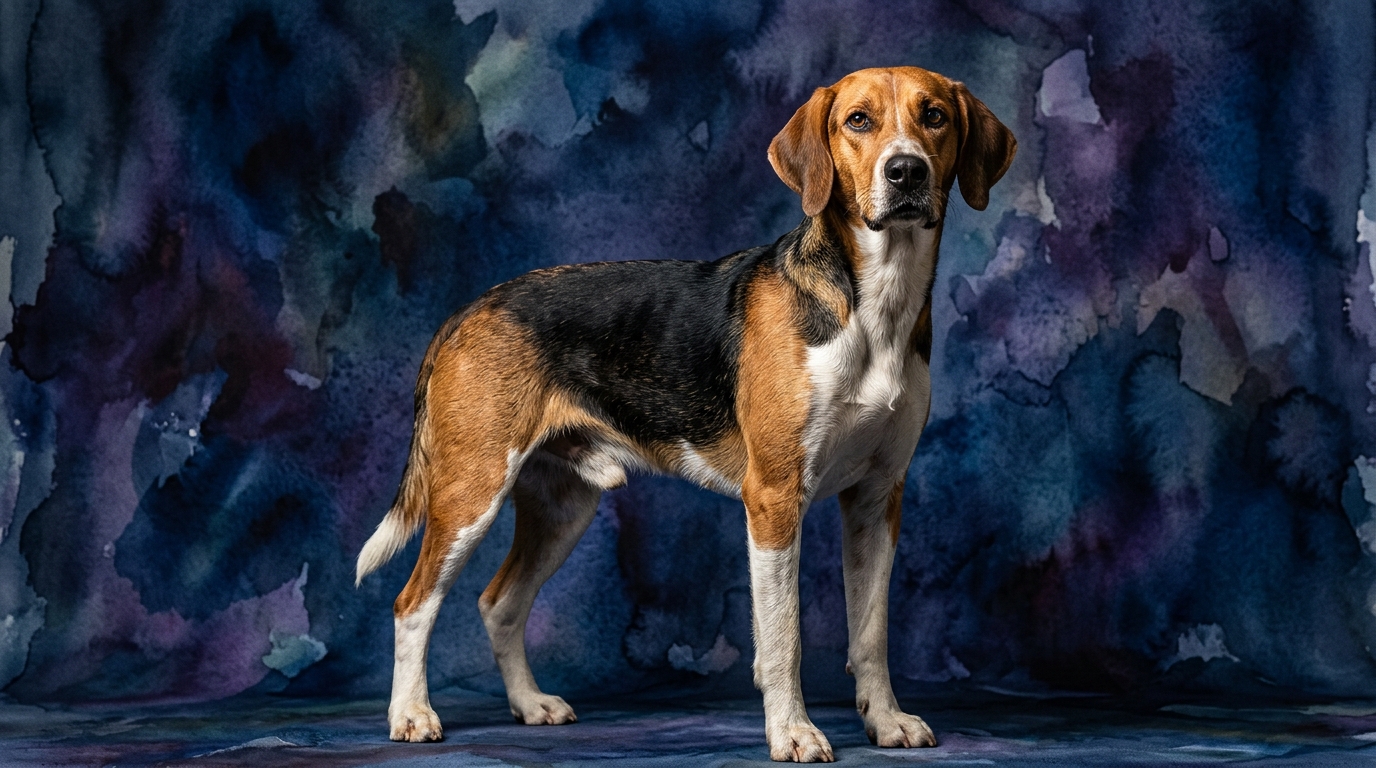
The English Foxhound presents a different cognitive blueprint. Their Problem Solving score is 3/5, demonstrating practical intelligence primarily focused on navigating terrain and tracking by scent, rather than intricate manipulation or abstract thought. Training Speed is also 3/5; Foxhounds learn steadily, but their profound focus on olfactory stimuli can sometimes make redirection challenging, demanding patience and repetition. Social Intelligence is 3/5, reflecting their heritage as pack animals capable of cooperative interaction within their own kind, though they may be less attuned to subtle human social cues. Their Instinctive Drive is rated 3/5, specifically channeled into sustained scent-tracking and pursuit over long distances, a powerful but singular motivation. Their Memory is 3/5, effectively serving their purpose by recalling scent trails, established routes, and routines crucial for the hunt.
Where Jack Russell Terrier Wins Cognitively
The Jack Russell Terrier demonstrates clear cognitive advantages in problem-solving and general persistence. Their Problem Solving score of 5/5 is not just about raw intellect, but about applying diverse strategies to overcome physical and mental hurdles. For instance, a JRT might meticulously work to open a cabinet door, dismantle a puzzle toy, or devise an escape route from a confined space, often trying multiple approaches until successful. This isn't random trial and error; it's a persistent, often clever, application of tactics fueled by their intense 5/5 Instinctive Drive. This drive makes them relentless in their pursuits, whether it's hunting vermin or mastering an agility course. Their 4/5 Memory further enhances this, allowing them to recall successful strategies and adapt their approach based on past experiences, making them formidable independent thinkers capable of learning from their environment and refining their actions over time. They thrive on challenges that require ingenuity and sustained effort.
Where English Foxhound Wins Cognitively
While the English Foxhound’s individual scores might appear lower, their cognitive strengths are profoundly specialized and highly effective within their intended domain. Their primary cognitive 'win' lies in their unparalleled olfactory intelligence and the endurance required to leverage it. The 3/5 Instinctive Drive of a Foxhound is overwhelmingly directed towards tracking, a complex cognitive task involving intricate scent discrimination, memory of specific scent profiles, and the ability to construct a mental map of a trail over vast distances. They excel at sustained, collaborative effort in a pack, a form of collective problem-solving and social intelligence that goes beyond individual metrics. Their memory, while rated 3/5, is exceptionally tuned to remembering specific scents, complex routes, and the nuances of a cold trail, allowing them to retrace steps or pick up a lost scent with impressive accuracy. This specialized intelligence makes them masters of their olfactory world, demonstrating a focused and durable form of canine intellect.
Which is Easier to Train and Why
Both the Jack Russell Terrier and the English Foxhound share a Training Speed score of 3/5, indicating that neither is inherently 'easier' to train in a conventional sense, but the nature of the training challenge differs significantly. For the Jack Russell Terrier, their high Problem Solving (5/5) and Instinctive Drive (5/5) mean they learn quickly but require trainers to be exceptionally engaging, consistent, and creative. A JRT will understand a command swiftly, but their independent spirit and tendency to prioritize their own 'problems' (like a fleeting squirrel) can lead to selective compliance. Training must be varied, stimulating, and positive to channel their cleverness and prevent boredom, which often manifests as undesirable behaviors like digging or escaping. They respond best to training that feels like a game or a puzzle, leveraging their natural curiosity.
The English Foxhound's training challenge primarily stems from its powerful Instinctive Drive (3/5) for scent work. Once a Foxhound picks up a compelling scent, their focus becomes almost singular, making it incredibly difficult to redirect their attention. They are not typically disobedient, but rather profoundly driven by their nose. Training requires immense patience, clear and consistent positive reinforcement, and often specialized techniques to teach reliable recall and focus, especially in distracting outdoor environments. They respond well to established routines and clear commands but require more repetition to overcome their natural inclinations, particularly when their powerful olfactory world calls to them. Therefore, while neither is a beginner's choice, training a JRT involves channeling cleverness and independence, whereas training a Foxhound involves managing and redirecting a powerful, singular instinct.
Which Suits Active Owners vs. Relaxed Owners
For truly active owners, the Jack Russell Terrier is an excellent match. Their 5/5 Instinctive Drive and 5/5 Problem Solving capabilities demand constant mental and physical engagement. They thrive on vigorous daily exercise, complex puzzle toys, and structured activities such as agility, earthdog trials, or flyball. An owner who enjoys long hikes, intense play sessions, and consistently challenging their dog's mind will find a JRT a rewarding, albeit demanding, companion. Without sufficient outlets for their energy and cleverness, JRTs are prone to developing destructive behaviors or becoming escape artists, channeling their problem-solving into less desirable pursuits.
The English Foxhound also requires an active owner, but one whose activity preferences align with the breed's specific drives. While their 3/5 Instinctive Drive isn't as broadly energetic as a JRT's, it is intensely focused on endurance and tracking. Foxhounds are built for covering miles, not necessarily for quick bursts of intricate problem-solving in a confined space. They need owners who can provide long, consistent walks, runs, or opportunities for scent work and trailing. Owners who enjoy long-distance outdoor activities, perhaps with other dogs, and who appreciate a dog with a strong, singular focus on a task like following a trail will find the Foxhound a good match. Neither breed is suitable for relaxed or sedentary owners; both possess significant drives and energy levels that necessitate substantial daily engagement to ensure their well-being and prevent behavioral issues.
The Verdict: When to Choose Each Breed
The Verdict
Choose a Jack Russell Terrier if you are an experienced, active owner seeking a tenacious, clever companion who thrives on intense mental and physical challenges, and you are prepared to channel their formidable problem-solving skills and drive into constructive activities.
Opt for an English Foxhound if you are a patient, active owner who enjoys long, consistent outdoor excursions, appreciates a dog with a deep-seated drive for scent work and endurance, and is prepared to manage their focus on trails with consistent training.
🧠 Find Your Pet's IQ Score
Our Pet IQ Lab assessment covers 25+ tests across 5 cognitive dimensions — personalized to your breed.
Take the Full IQ Test →Frequently Asked Questions
Are Jack Russell Terriers good family dogs?
Jack Russell Terriers can be good family dogs for active families who understand their high energy and need for consistent boundaries. Their assertive nature means they thrive with clear leadership and structured play, making them generally suitable for families with older, respectful children.
Do English Foxhounds bark a lot?
English Foxhounds are known for their distinctive baying, a deep, resonant bark used during the hunt. While not typically excessive in a home environment if well-exercised, they will use their voice to alert to new scents or when bored, requiring management and training.
Which breed is more independent?
While both breeds exhibit independence, the Jack Russell Terrier's high problem-solving and instinctive drive often manifest as a more self-directed will and a tendency to make their own decisions. The English Foxhound's independence is primarily focused on their scent drive, making them independent in pursuit of a trail, but often more amiable and less overtly challenging in general interactions.