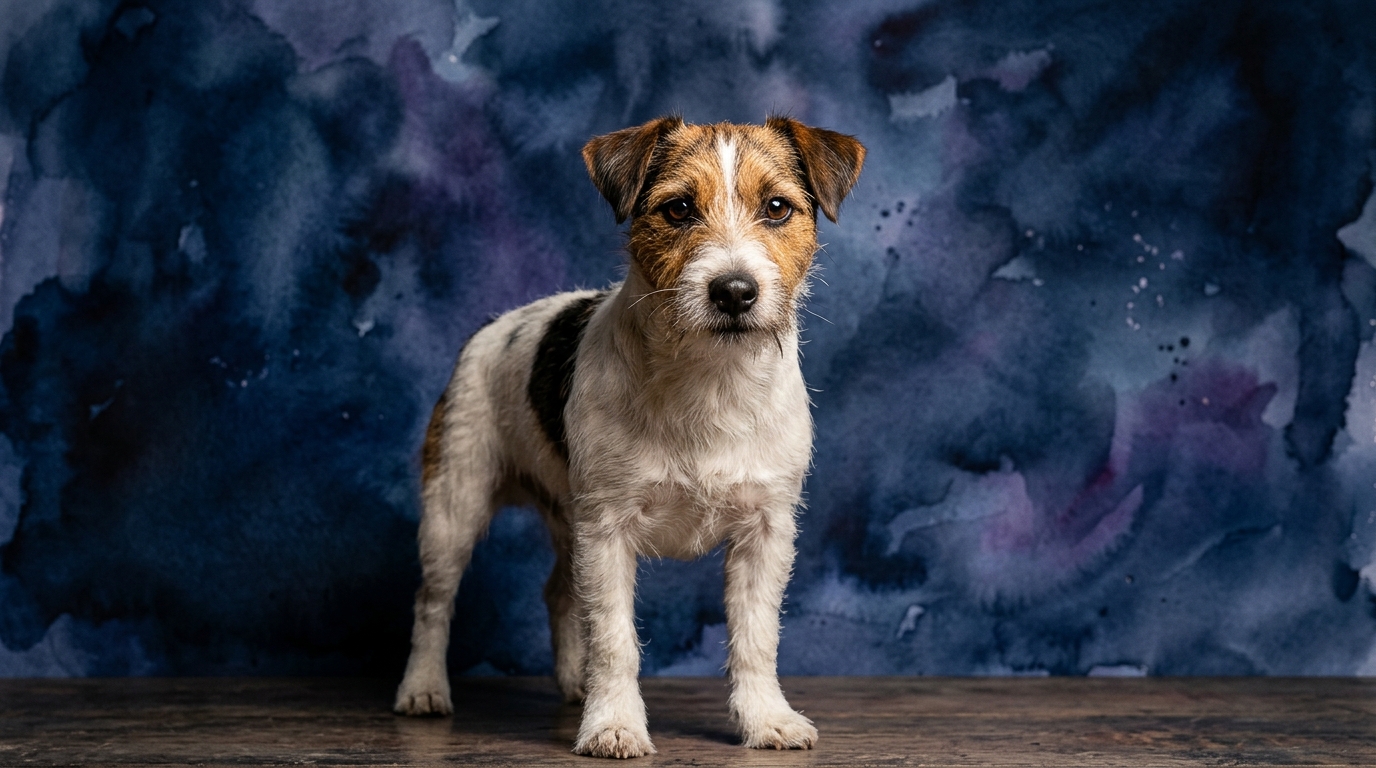
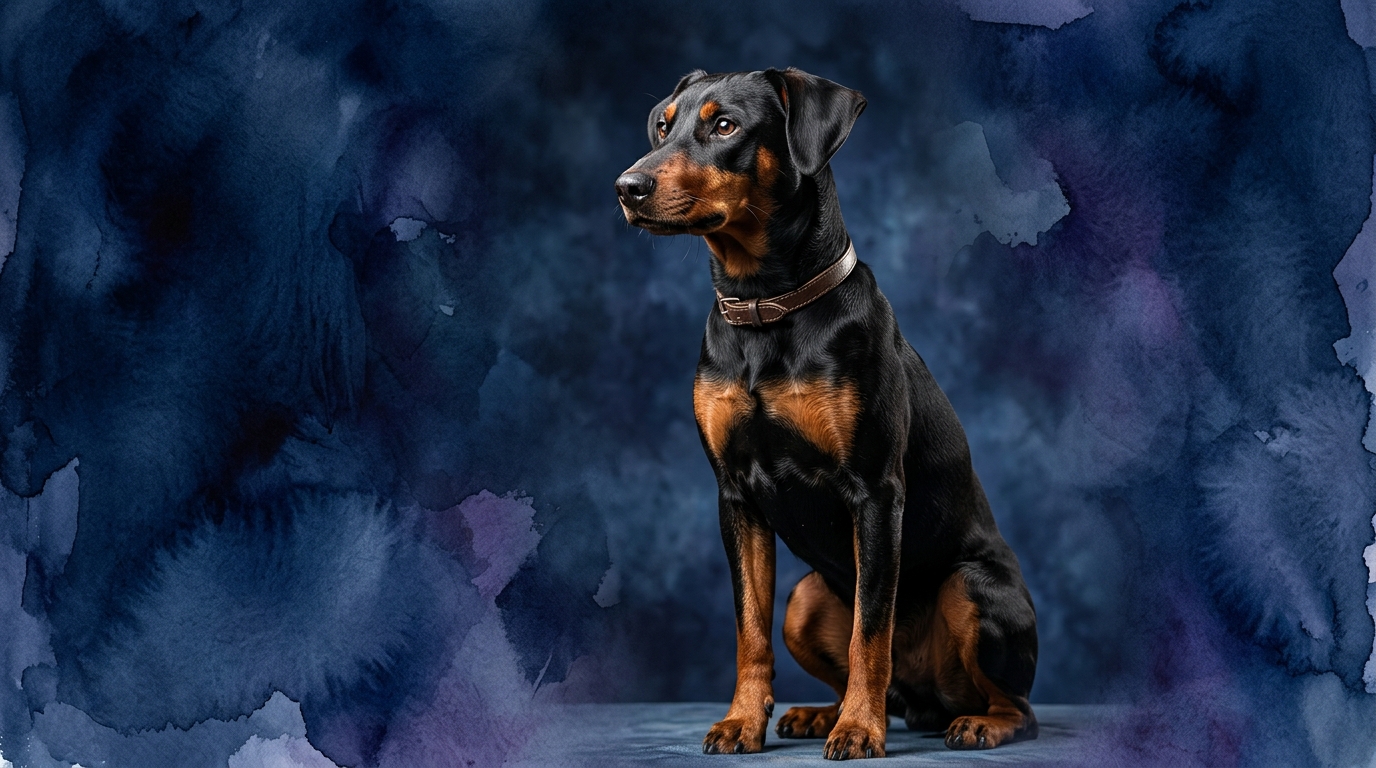
Side-by-Side IQ Profile
The Cosmic Pet Pet IQ Lab provides a unique lens through which to compare the mental architectures of the Jack Russell Terrier and the German Pinscher across five critical dimensions. For the Jack Russell Terrier, problem-solving ability stands at an impressive 5/5, reflecting their independent cunning and resourcefulness in navigating challenges. Their training speed is a moderate 3/5, indicating they grasp new commands at an average pace, while social intelligence also registers 3/5, suggesting a balanced but not overly effusive engagement with others. A powerful instinctive drive, rated 5/5, highlights their unwavering focus on their inherent tasks, complemented by a solid memory score of 4/5, allowing them to retain complex information and experiences effectively. In contrast, the German Pinscher presents a more uniformly balanced cognitive profile. Their problem-solving ability is a respectable 3/5, indicating they can work through puzzles but may require more guidance than a JRT. Training speed also sits at 3/5, meaning they learn at a similar rate, and their social intelligence matches at 3/5, suggesting comparable adaptability in social settings. Their instinctive drive is rated 3/5, a moderate level that allows for focus without intense single-mindedness, and their memory is also 3/5, providing reliable capacity for recall and learning retention.
Where Jack Russell Terrier Wins Cognitively
The Jack Russell Terrier's cognitive strengths are particularly pronounced in areas demanding independent thought and tenacious pursuit. Their 5/5 problem-solving score means they are adept at figuring things out on their own, whether opening a cabinet, escaping an enclosure, or devising strategies to get what they want; this isn't just about learning tricks but applying logic to environmental challenges. This high cognitive flexibility makes them engaging companions for owners who appreciate a dog with a strong mental game. Complementing this is their 5/5 instinctive drive, a powerful engine propelling them to fulfill their breed's historical purpose, often related to hunting and pursuit; this translates into unwavering focus on tasks engaging their prey drive, like chasing squirrels or digging. Furthermore, their 4/5 memory score ensures they retain complex information and experiences, making them quick to remember routes, routines, and who might drop a treat, even if they sometimes choose to 'forget' a command if a more compelling instinct takes over.
Where German Pinscher Wins Cognitively
While the German Pinscher doesn't boast any 5/5 scores, their cognitive 'wins' lie in their well-rounded and often more adaptable profile for a domestic setting. Their consistent 3/5 scores across problem-solving, training speed, social intelligence, instinctive drive, and memory suggest a dog that is generally balanced and less prone to extremes. The German Pinscher's 3/5 instinctive drive, for instance, means they possess sufficient motivation for engagement and play without the overwhelming intensity that can accompany a 5/5 drive, potentially leading to fewer instances of single-minded pursuit. This moderate drive allows them to be versatile companions, willing to participate in various activities without becoming solely fixated. Their 3/5 problem-solving and memory indicate a reliable capacity to learn and adapt to household rules and routines without constantly seeking to outwit their owners or forget established boundaries. This balanced cognitive makeup contributes to a dog that is often more predictable and manageable in day-to-day life, offering a reliable and steady presence.
Which is Easier to Train and Why
Comparing the training ease of the Jack Russell Terrier and the German Pinscher reveals nuances beyond their identical 3/5 training speed scores. While both breeds grasp commands at an average pace, the Jack Russell Terrier's exceptional 5/5 problem-solving and 5/5 instinctive drive can introduce significant training challenges. A JRT might quickly understand 'stay,' but their powerful drive to chase a squirrel or solve the puzzle of escaping the yard can easily override compliance, making consistency and strong motivation crucial. Their independent thinking often means they question 'why' they should obey, requiring an owner with patience and a creative approach to make training more rewarding than their inherent urges. In contrast, the German Pinscher's more moderate 3/5 instinctive drive and problem-solving, coupled with their 3/5 social intelligence, generally translates to a more straightforward training experience. While not lightning-fast learners, they are often more amenable to direction and less likely to be sidetracked by overwhelming instincts or their own clever schemes. Their balanced cognitive profile suggests they are more inclined to work with their handler rather than constantly testing boundaries, making them potentially easier to shape into a well-behaved companion for the average owner, provided clear, consistent methods are used.
Which Suits Active Owners vs Relaxed Owners
The distinct cognitive profiles of the Jack Russell Terrier and the German Pinscher directly influence their suitability for different owner lifestyles. The Jack Russell Terrier, with its 5/5 problem-solving and 5/5 instinctive drive, demands an exceptionally active owner who can provide extensive mental and physical stimulation. These dogs thrive on activities that challenge their intellect and satisfy their intense drive, such as complex obedience, agility, earthdog trials, or consistent, engaging outdoor adventures. An owner who cannot meet these needs will likely find themselves with a bored, destructive, and highly vocal companion. Conversely, the German Pinscher, with its balanced 3/5 scores across the board, suits an active owner who appreciates a robust and engaged companion but perhaps without the same relentless intensity. While still requiring regular exercise and mental engagement, their moderate instinctive drive means they are generally less prone to obsessive pursuits or the constant need to outsmart their environment. They are excellent partners for daily walks, jogs, and family activities, offering vigorous companionship adaptable to a variety of active routines without the extreme demands of a JRT. Neither breed is ideal for truly 'relaxed' owners, as both require consistent engagement, but the German Pinscher offers a slightly more manageable energy level compared to the relentless JRT.
The Verdict
Choose the Jack Russell Terrier if you are an experienced, highly active owner who relishes a cognitive challenge and can dedicate significant time to channeling a sharp, driven intellect into constructive activities. You must be prepared for a dog that thinks independently and requires consistent, creative engagement to thrive.
Opt for the German Pinscher if you are an active owner seeking a robust, engaged companion with a more balanced and predictable cognitive profile. This breed offers a rewarding partnership for those who enjoy regular activity and consistent training, without the intense demands of an extreme problem-solver or instinct-driven dog.
🧠 Find Your Pet's IQ Score
Our Pet IQ Lab assessment covers 25+ tests across 5 cognitive dimensions — personalized to your breed.
Take the Full IQ Test →Frequently Asked Questions
Do Jack Russell Terriers forget commands if they're distracted?
While Jack Russell Terriers have a 4/5 memory, their powerful 5/5 instinctive drive means that in the face of a highly stimulating distraction, their immediate impulse can temporarily override a known command. This isn't forgetting, but rather a prioritization of their innate urges, requiring consistent, high-value reinforcement to maintain focus.
Is a German Pinscher less prone to separation anxiety due to its balanced social intelligence?
A German Pinscher's 3/5 social intelligence suggests they are adaptable in social settings, but this doesn't directly correlate to a lower predisposition for separation anxiety. Like many breeds, their individual temperament, early experiences, and training significantly influence how they cope with being alone. Consistent training and gradual acclimation are still essential.
Can a German Pinscher excel in dog sports despite its 3/5 problem-solving score?
Absolutely. While a 3/5 problem-solving score means they might not figure out complex sequences as quickly as a JRT, their balanced cognitive profile, combined with a 3/5 training speed and drive, makes them very capable in various dog sports. Their willingness to work with handlers and consistent effort can lead to great success in disciplines like obedience, agility, and rally.