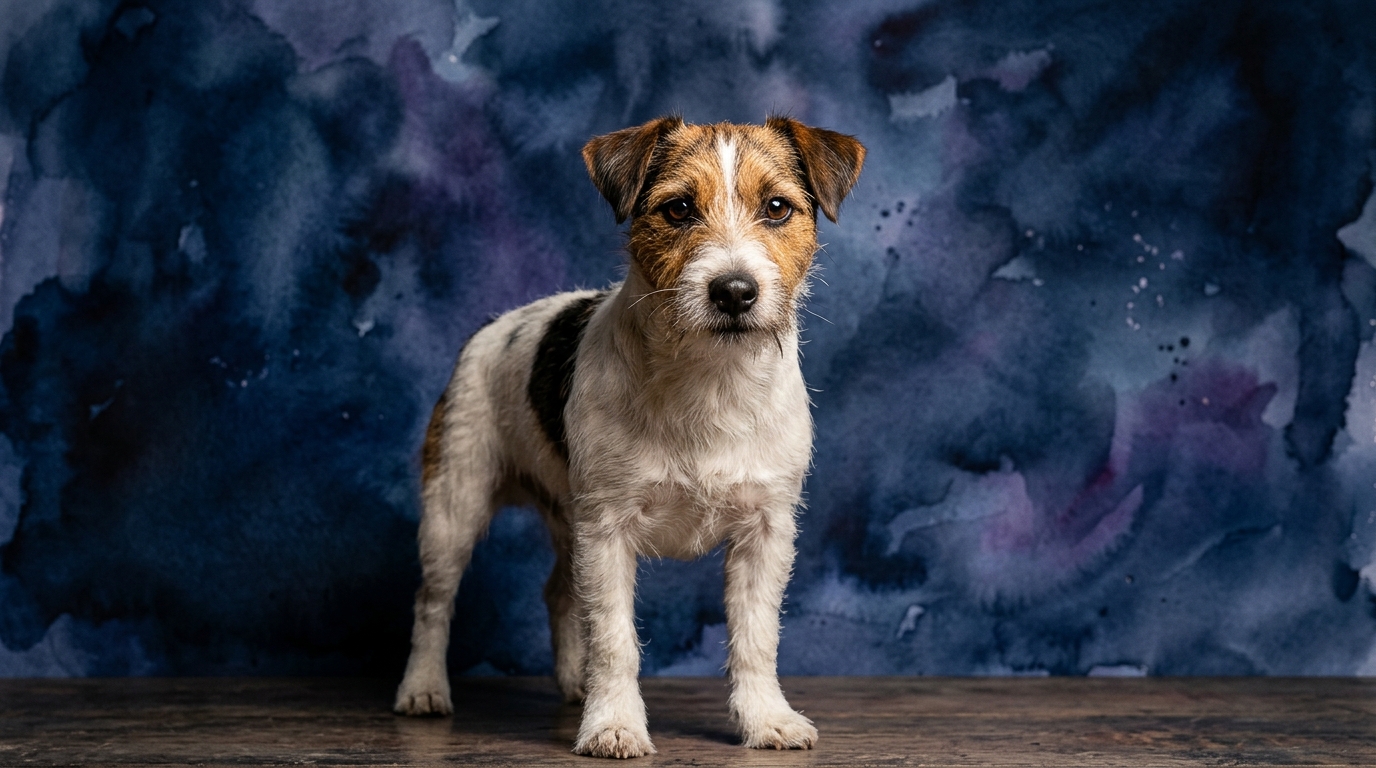
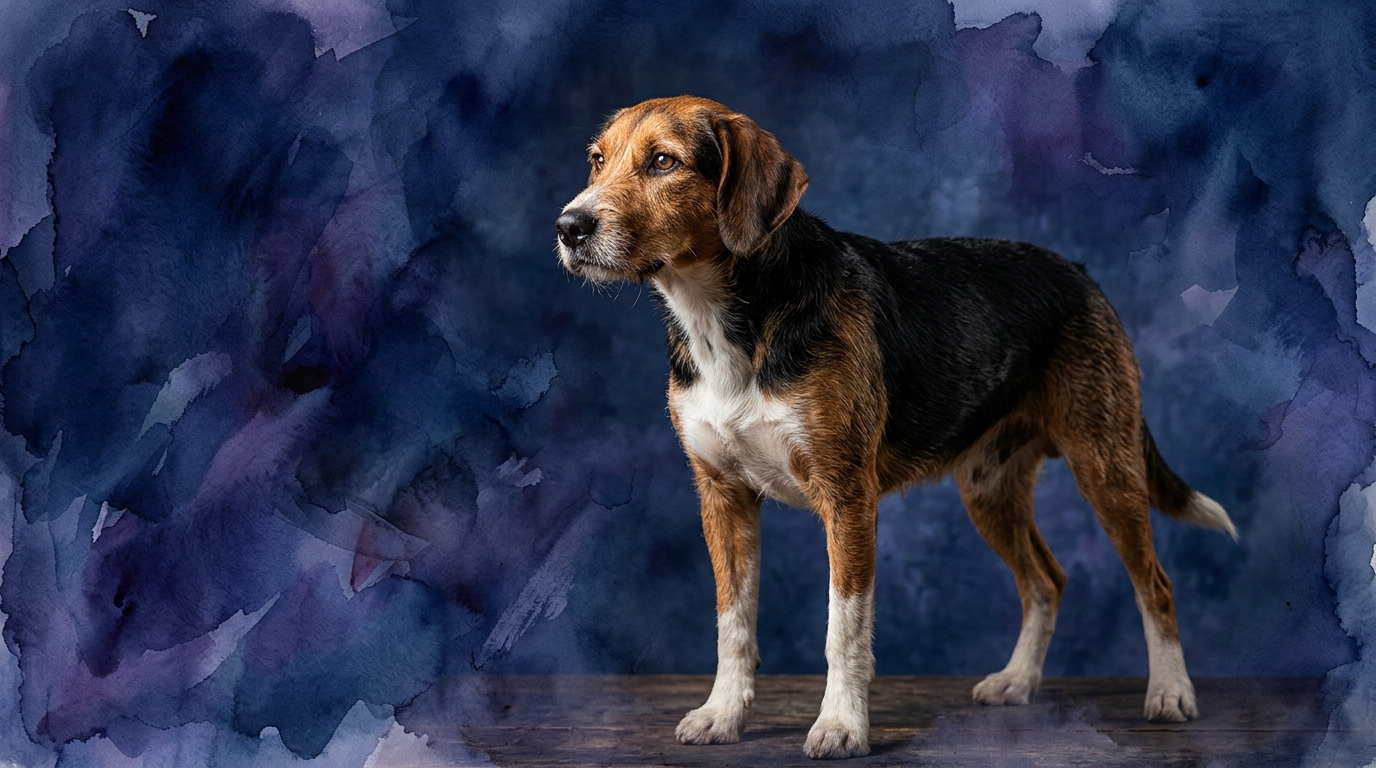
Side-by-Side IQ Profile: Jack Russell Terrier vs. Harrier
The Cosmic Pet Pet IQ Lab provides a unique framework for understanding canine cognition across five key dimensions. Let's break down how the Jack Russell Terrier and the Harrier measure up in each area, offering a clearer picture of their distinct mental landscapes.
**Jack Russell Terrier:** This terrier breed displays a formidable cognitive profile, marked by a high degree of independence and tenacity. Its scores reflect a dog that is constantly assessing its environment and strategizing.
**Problem Solving (5/5):** Jack Russells possess an exceptional capacity for figuring things out independently. They are adept at devising solutions to obstacles, whether it's escaping a yard, opening cabinets, or retrieving a hidden toy, constantly analyzing situations and strategizing.
**Training Speed (3/5):** While capable of learning quickly, their moderate score reflects a strong independent streak. A Jack Russell might understand a command but will often weigh it against its own motivations, potentially making consistent obedience a nuanced challenge requiring highly engaging methods.
**Social Intelligence (3/5):** Their social understanding is solid but often self-directed. They form strong bonds with humans but might not always prioritize human directives over their own drives, especially when prey is involved. They can be good with other dogs but frequently assert their strong personality.
**Instinctive Drive (5/5):** An extremely high score here signifies a profound genetic predisposition for hunting small game. This manifests as intense prey drive, relentless digging, and a boundless need to explore and pursue, making them incredibly tenacious and focused on a task once engaged.
**Memory (4/5):** Their strong memory supports their problem-solving and drive. Jack Russells effectively recall past experiences, learned commands, and the locations of interesting scents or buried treasures, contributing to their overall resourcefulness and ability to navigate their environment.
**Harrier:** As a pack hound, the Harrier's cognitive strengths are rooted in cooperation, endurance, and sensory focus. Its intelligence is geared towards its traditional role of tracking and hunting with a group.
**Problem Solving (3/5):** Harriers exhibit a moderate ability to solve novel problems. Their cognitive strength lies more in following established patterns, such as a scent trail, rather than improvising new solutions. They are practical thinkers, focused on the task at hand as guided by their nose, rather than conceptualizing complex strategies.
**Training Speed (3/5):** Similar to the JRT, Harriers have a moderate training speed. They are capable of learning commands and routines, but their primary focus is often on scent, which can make consistent attention challenging. Patience and positive reinforcement are key to harnessing their attention away from ground-level distractions.
**Social Intelligence (3/5):** As pack hounds, Harriers possess a good understanding of social dynamics within a group, whether canine or human. They tend to be amiable and cooperative within their established 'pack', seeking companionship. Their social interactions are often influenced by their strong group orientation rather than individual human-centric problem-solving.
**Instinctive Drive (3/5):** This moderate score indicates a focused, persistent drive, primarily for scent tracking and hunting in a pack. While strong, it's typically less broad and independently intense than a terrier's general prey drive, making them less prone to spontaneous digging or relentless pursuit of visual targets, instead preferring to follow a trail.
**Memory (3/5):** Harriers have a functional memory, particularly effective for recalling scent patterns, established routes, and the location of their pack members. Their recall of specific commands is adequate but might be overshadowed by their immediate sensory input, especially a compelling scent.
Where the Jack Russell Terrier Wins Cognitively
The Jack Russell Terrier's cognitive prowess truly shines in its exceptional problem-solving ability (5/5) and unparalleled instinctive drive (5/5). This combination makes them master strategists in their own right; they aren't just reacting to stimuli but actively thinking through how to achieve their goals, whether it's outsmarting a squirrel or figuring out how to open a child-proof gate. Their tenacious drive ensures they persist until they succeed, often employing a remarkable degree of ingenuity. This high problem-solving score, supported by a strong memory (4/5), means a JRT can quickly learn from experience, adapting its tactics to overcome new challenges. They excel in environments where independent thought and resourcefulness are required, making them incredibly effective at tasks demanding self-reliance and innovative approaches.
Where the Harrier Wins Cognitively
While the Harrier's individual scores might not reach the JRT's peak in certain areas, its cognitive strengths lie in its specialized hound intelligence, particularly its persistent focus and cooperative nature within a pack. Its moderate instinctive drive (3/5) is highly refined for scent work, allowing it to follow complex trails with unwavering concentration for extended periods, a cognitive feat requiring immense mental endurance and sensory processing. Their social intelligence (3/5), though numerically similar to the JRT, manifests differently; Harriers thrive on group dynamics, exhibiting a cooperative spirit and an ability to work in concert with others, whether human or canine, towards a shared objective like tracking. This makes them less prone to the independent, sometimes defiant, problem-solving of a terrier, instead leveraging their cognitive energy for sustained, collaborative effort.
Which is Easier to Train and Why
Both breeds score a moderate 3/5 in Training Speed, but their other cognitive traits significantly influence the training experience. The Jack Russell Terrier's exceptional problem-solving (5/5) and intense instinctive drive (5/5) can present a unique challenge. While they grasp concepts quickly, their independent nature means they often decide if a command aligns with their immediate goals. They might 'problem-solve' their way around a command if a more appealing distraction, like a scent or movement, presents itself. Training a JRT requires immense consistency, engaging methods, and a strong understanding of their motivations to channel their formidable intelligence.
The Harrier, with its moderate instinctive drive (3/5) and pack-oriented social intelligence (3/5), can be more amenable to training, provided you can manage its potent scent focus. They generally aim to please their 'pack' leader, making them responsive to guidance. However, once a compelling scent is detected, their drive to follow it can temporarily override all other commands. Therefore, while both require patient and consistent approaches, the Harrier might be perceived as slightly easier to train for general obedience in a non-scent-rich environment due to its less independent problem-solving and inclination towards cooperation, whereas the JRT's internal drive for self-direction makes it a more demanding pupil for consistent, precise obedience.
Which Suits Active Owners vs. Relaxed Owners
For an active owner seeking a canine partner for diverse, high-energy pursuits, the Jack Russell Terrier is an excellent match. Its 5/5 instinctive drive and 5/5 problem-solving mean it thrives on constant mental stimulation and vigorous physical activity that taps into its hunting instincts, such as agility, earthdog trials, or complex puzzle games. A relaxed owner would likely find a JRT overwhelming, as its unmet cognitive and physical needs could lead to destructive behaviors born from boredom and a desperate need for engagement.
The Harrier, while also needing consistent activity, leans towards a different kind of active owner. Its moderate instinctive drive (3/5) is best fulfilled through sustained, scent-focused exercise like long hikes, jogging, or participation in scent work and tracking sports. While they appreciate regular walks and playtime, their energy is often more enduring than explosive, making them suitable for owners who enjoy steady, prolonged outdoor activities rather than intense, varied bursts. A relaxed owner might still struggle with a Harrier's need for daily exercise, but its more agreeable nature might make it a slightly less demanding housemate than an under-stimulated JRT, provided its exercise requirements are consistently met.
The Verdict
Opt for a Jack Russell Terrier if you are an experienced, active owner prepared to channel a brilliant, independent mind and intense drive into structured activities like dog sports, complex training, or an adventurous outdoor lifestyle.
Select a Harrier if you appreciate a cooperative, amiable companion for long, steady outdoor adventures, particularly those involving scent work, and are prepared to manage a strong, focused scent drive with consistent, positive reinforcement.
🧠 Find Your Pet's IQ Score
Our Pet IQ Lab assessment covers 25+ tests across 5 cognitive dimensions — personalized to your breed.
Take the Full IQ Test →Frequently Asked Questions
Are Jack Russell Terriers good family dogs given their high drive?
Jack Russell Terriers can be wonderful family dogs, but their high instinctive drive and problem-solving mean they thrive in active households that provide ample mental and physical stimulation. They can be playful and affectionate, but require consistent training and supervision, especially around very young children or other small pets due to their strong prey drive.
How do Harriers typically interact with other dogs?
As pack hounds, Harriers generally possess good social intelligence (3/5) when it comes to interacting with other dogs. They often enjoy canine companionship and can thrive in multi-dog households, showing a cooperative nature. Early socialization is still crucial to ensure positive interactions, but their breed history predisposes them to getting along well in a group.
Can a Harrier live in an apartment?
While Harriers are medium-sized, their need for sustained physical activity and mental engagement, particularly scent work, makes apartment living challenging without significant commitment from their owner. Daily long walks, runs, or dedicated scent games are essential to prevent boredom and restlessness, which can lead to undesirable behaviors.