
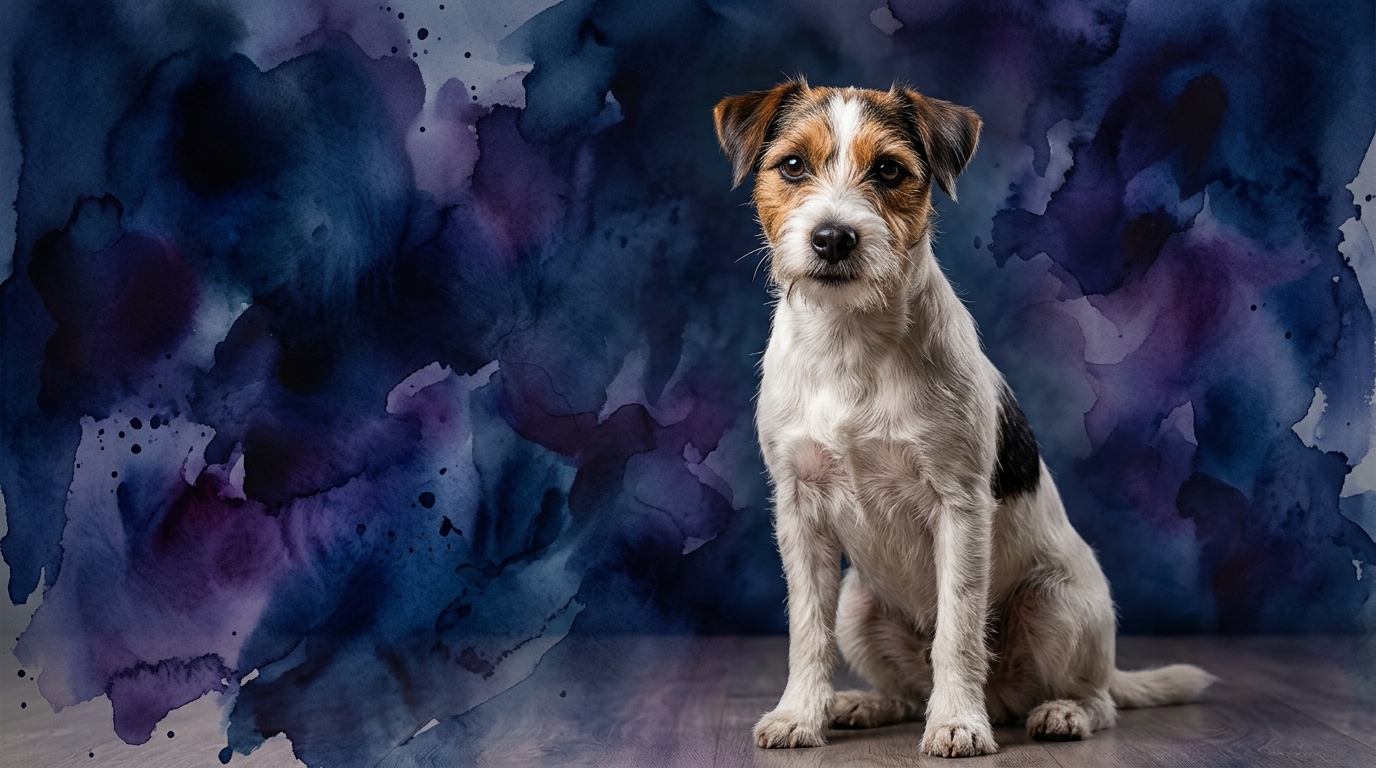
A Side-by-Side Look at Terrier Cognition
The Cosmic Pet Pet IQ Lab assesses canine intelligence across five critical dimensions, providing a granular view of how breeds process information and interact with their world. For the Jack Russell Terrier, we observe a formidable Problem Solving score of 5/5, indicating a dog exceptionally adept at figuring out complex environmental challenges, from opening latches to devising strategies in play. Its Instinctive Drive also scores a perfect 5/5, reflecting an intense, persistent urge to hunt, chase, and explore, fueled by a sharp Memory at 4/5 that helps it recall successful tactics and learned routines. Training Speed and Social Intelligence both register at 3/5, suggesting a capable learner who can interpret human cues, though perhaps with an independent streak that can sometimes overshadow eagerness to please.
In contrast, the Parson Russell Terrier presents a more uniformly balanced, albeit less intense, cognitive blueprint. Its Problem Solving capability stands at 3/5, meaning it is competent at navigating routine challenges but less inclined towards inventive solutions or persistent attempts to outwit its surroundings. Instinctive Drive is also rated at 3/5, indicating a natural drive to explore and pursue, yet with a more moderated intensity compared to its cousin. Similarly, Memory is a functional 3/5, allowing for good recall of commands and experiences without the same level of detail or retention for complex sequences. Like the Jack Russell, its Training Speed and Social Intelligence are both 3/5, signifying an average pace of learning and a reasonable ability to engage socially without being overly compliant.
Where the Jack Russell Terrier Excels Cognitively
The Jack Russell Terrier’s cognitive strengths lie in its exceptional problem-solving acumen and relentless instinctive drive. A 5/5 in Problem Solving means these dogs are natural strategists, often finding novel ways to achieve their goals, whether that's circumventing a fence, accessing a forbidden treat, or manipulating toys to their advantage. This capacity for independent thought requires consistent mental engagement from owners, as an unstimulated JRT might apply its cleverness to less desirable pursuits, like devising escape routes or dismantling household items.
Coupled with its 5/5 Instinctive Drive, the Jack Russell possesses an unparalleled tenacity. This isn't just about chasing squirrels; it's about a dog that will tirelessly pursue a scent, dig relentlessly, or focus intently on a task until it's 'solved.' This high drive, supported by a 4/5 Memory, means they quickly learn and remember what works in their environment, making them highly effective in tasks requiring persistence and self-direction. Owners must channel this powerful drive through structured activities like agility, earthdog trials, or complex puzzle toys to prevent it from becoming a source of frustration.
Where the Parson Russell Terrier Offers a Different Kind of Advantage
While the Parson Russell Terrier's cognitive scores are generally lower or equal to the Jack Russell's, its strengths emerge in its more moderated and balanced temperament, which can translate into greater manageability. A Problem Solving score of 3/5 means the Parson is less likely to constantly test boundaries or invent new ways to challenge its owner, making it a more straightforward companion in many day-to-day scenarios. This isn't a lack of capability, but rather a reduced inclination towards constant cognitive experimentation, which can be a significant advantage for owners seeking a slightly more predictable canine partner.
Similarly, its 3/5 Instinctive Drive, while still present and robust, is less overwhelming than the Jack Russell's. This means a Parson is often less prone to tunnel vision when on a scent or less compulsively driven to dig, making off-leash excursions and cohabitation with other small pets potentially less fraught. The Parson's memory at 3/5 is perfectly functional for learning commands and routines, but without the intense recollection of every successful 'outsmarting' maneuver, it tends to be a more compliant learner in the long run. Its balanced cognitive profile allows it to adapt well to diverse environments without the constant need for intense mental gymnastics, offering a steady and capable presence.
Training Dynamics: Which is Easier to Guide?
Both Jack Russell and Parson Russell Terriers share a Training Speed score of 3/5, indicating they learn new commands at an average pace. However, their distinct cognitive profiles create significant differences in their overall trainability and the effort required from an owner. The Jack Russell's high Problem Solving (5/5) and Instinctive Drive (5/5) mean that while it can grasp concepts quickly, it also possesses a strong will and an inclination to apply its intelligence to circumvent rules or pursue its own agenda. This can make training feel like a constant negotiation, as the JRT might 'problem-solve' ways to avoid compliance or be easily distracted by its powerful prey drive, demanding exceptional consistency and ingenuity from its trainer.
In contrast, the Parson Russell Terrier, with its more moderate Problem Solving (3/5) and Instinctive Drive (3/5), tends to be more biddable despite the same learning speed. While still a lively terrier, the Parson is generally less inclined to challenge authority or get sidetracked by intense urges. This makes the training process, though requiring consistency, often feel less like a battle of wits. Owners typically find the Parson more responsive to guidance and less prone to independent decision-making that conflicts with learned behaviors, making it a potentially easier dog to integrate into a structured routine without constant vigilance.
Matching Terriers to Lifestyles: Active vs. Balanced Owners
The Jack Russell Terrier thrives with highly active and experienced owners who can consistently meet its profound needs for mental and physical engagement. Its 5/5 Problem Solving and 5/5 Instinctive Drive demand an environment rich with complex challenges, structured training, and ample opportunities for vigorous exercise that taps into its natural terrier instincts. Owners who enjoy dog sports like agility, flyball, or earthdog events, and who can provide consistent, stimulating routines, will find the JRT an exhilarating and capable partner. This breed is not for the faint of heart or those seeking a low-maintenance companion; it requires an owner who embraces its relentless curiosity and energy.
The Parson Russell Terrier, while certainly an energetic and athletic dog, suits active owners who appreciate a slightly more balanced and less demanding cognitive profile. Its 3/5 scores across Problem Solving, Instinctive Drive, and Memory mean it still requires regular exercise and mental stimulation, but perhaps not with the same relentless intensity as the JRT. Owners who enjoy daily runs, long hikes, and engaging in obedience or basic trick training will find the Parson a delightful and capable companion. It’s an excellent choice for individuals or families who desire an active terrier without the extreme cognitive challenges that can accompany a Jack Russell, offering a more adaptable and generally compliant presence in the home.
The Verdict
Choose the Jack Russell Terrier if you are a highly engaged, experienced owner ready to channel boundless problem-solving skills and an intense instinctive drive into structured activities and constant mental stimulation.
Opt for the Parson Russell Terrier if you seek an energetic and capable terrier with a more balanced temperament, offering a slightly less intense cognitive challenge and a more biddable nature for an active, yet perhaps less demanding, lifestyle.
🧠 Find Your Pet's IQ Score
Our Pet IQ Lab assessment covers 25+ tests across 5 cognitive dimensions — personalized to your breed.
Take the Full IQ Test →Frequently Asked Questions
Are Jack Russell Terriers more prone to digging than Parson Russell Terriers?
Based on its 5/5 Instinctive Drive score compared to the Parson's 3/5, the Jack Russell Terrier is generally more intensely driven to dig. This powerful urge is an intrinsic part of its cognitive makeup, requiring dedicated training and appropriate outlets.
Which breed is better for a first-time dog owner?
Given its more moderated Problem Solving and Instinctive Drive scores, the Parson Russell Terrier is generally a more manageable choice for a first-time dog owner. While still requiring commitment, its temperament can be less challenging to navigate compared to the Jack Russell's intense cognitive demands.
Do Jack Russells and Parsons differ in how quickly they learn commands?
Both breeds share a Training Speed score of 3/5, suggesting they learn at a similar pace. However, the Jack Russell's higher Problem Solving and Instinctive Drive can make it more prone to independent thought, potentially making consistent obedience more challenging despite its learning capability.