
Side-by-Side Cognitive Profiles
The Cosmic Pet Pet IQ Lab employs a five-dimensional framework to assess canine intelligence, providing a nuanced view of how breeds process information and engage with their environment. For the Jack Russell Terrier, this framework paints a picture of intense mental agility and drive, while the Pumi presents a more balanced, albeit still capable, cognitive makeup.
The Jack Russell Terrier (JRT) stands out with an exceptional Problem Solving score of 5/5. This indicates a breed adept at navigating complex situations, figuring out puzzles, and devising creative solutions to obstacles, often independently. Its Training Speed is rated 3/5, suggesting it can learn new commands at an average pace, but its strong will might sometimes influence compliance. Social Intelligence, at 3/5, implies a moderate ability to interpret human cues and social dynamics. Crucially, its Instinctive Drive is a perfect 5/5, signaling an incredibly high motivation rooted in its terrier heritage – a relentless pursuit of tasks, often with a strong prey drive. Memory for the JRT is 4/5, meaning it retains learned information and experiences quite effectively over time.
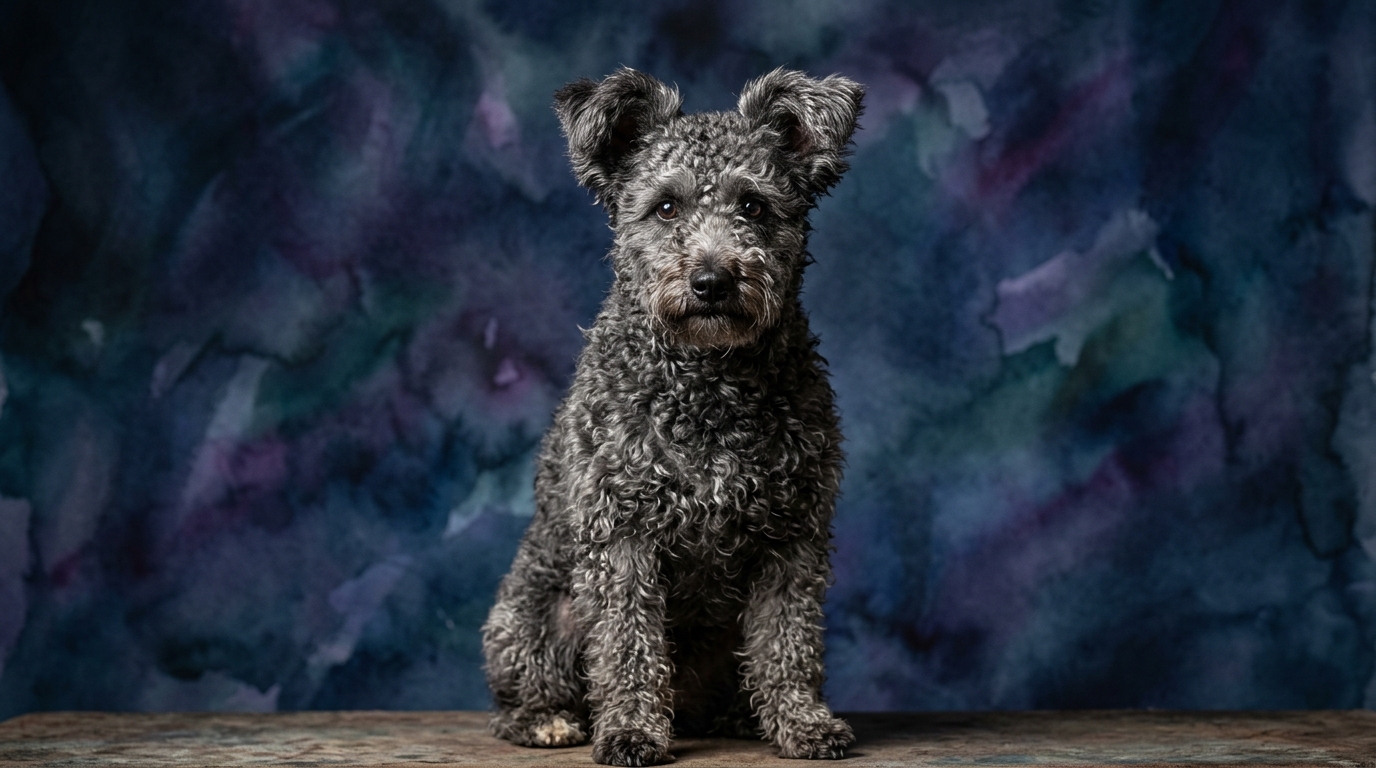
In contrast, the Pumi, a Hungarian Herding dog, exhibits a more uniform cognitive profile. Its Problem Solving is rated 3/5, indicating an average capacity for independent thought and creative problem-solving, typically relying more on learned responses than spontaneous innovation. Training Speed matches the JRT at 3/5, meaning it also learns at an average rate. Social Intelligence is likewise 3/5, suggesting a similar ability to connect with and understand human social signals. The Pumi's Instinctive Drive is 3/5, representing a moderate but present drive, often manifested in its herding tendencies, but without the intense, singular focus seen in the JRT. Its Memory is 3/5, indicating a solid, functional recall of information, though perhaps not as robust as the JRT's.
Where the Jack Russell Terrier Excels Cognitively
The Jack Russell Terrier’s cognitive prowess shines brightest in its unparalleled Problem Solving ability and formidable Instinctive Drive. A 5/5 in Problem Solving means a JRT isn't just following commands; it's actively analyzing its environment, identifying challenges, and formulating strategies to overcome them. This manifests in behaviors like skillfully opening latches, figuring out how to reach a hidden toy, or navigating complex scent trails with remarkable precision. This capacity for independent thought means a JRT is rarely truly stuck; it will find a way, for better or worse.
Complementing this, its 5/5 Instinctive Drive fuels this problem-solving with relentless energy and focus. This isn't just about physical stamina; it's a deep-seated mental tenacity. Whether it's the drive to chase, dig, or explore, a JRT's cognitive resources are constantly engaged in pursuing these inherent urges. This intense drive, coupled with a 4/5 Memory, allows the JRT to recall detailed information about its environment and past successful strategies, making it highly effective in tasks requiring persistence and cunning, such as scent work or agility courses where complex sequences must be remembered and executed with speed.
Where the Pumi's Cognitive Profile Offers Advantages
While the Pumi doesn't outscore the Jack Russell Terrier in individual cognitive dimensions, its more balanced profile offers distinct advantages for specific lifestyles and owner preferences. The Pumi's moderate Instinctive Drive (3/5), compared to the JRT's intense 5/5, means it possesses a strong work ethic typical of herding breeds but without the overwhelming, sometimes single-minded intensity. This translates to a dog that is driven and enthusiastic about tasks, particularly those involving cooperation and movement, but potentially more amenable to redirection and less prone to obsessive behaviors stemming from extreme drive.
Furthermore, the Pumi's 3/5 Problem Solving, while lower than the JRT's, can be an advantage for owners seeking a companion that is less likely to outsmart them in mischievous ways. A Pumi is less prone to devising elaborate escape plans or independently figuring out how to access forbidden areas, making it a more predictable and often easier-to-manage household member. Its balanced cognitive traits across the board – 3/5 in Problem Solving, Training Speed, Social Intelligence, Instinctive Drive, and Memory – create a dog that is consistently capable and adaptable without the extremes that can sometimes be challenging to manage in a JRT. This cognitive consistency makes the Pumi a reliable partner in various activities without demanding the constant mental gymnastics required by a JRT.
Ease of Training: Jack Russell Terrier vs. Pumi
When assessing ease of training, the raw Training Speed score (3/5 for both breeds) only tells part of the story; the interplay with other cognitive dimensions is crucial. Both the Jack Russell Terrier and the Pumi learn new commands at an average pace. However, the JRT’s exceptional Problem Solving (5/5) and immense Instinctive Drive (5/5) introduce complexities. A JRT might quickly understand what you want, but its high drive could mean it prioritizes an innate urge (like chasing a squirrel) over a learned command, or it might creatively find ways to complete a task on its own terms rather than strictly following instructions. This independence requires consistent, engaging, and often creative training methods to maintain focus and compliance, as a bored JRT will quickly find its own, often undesirable, entertainment.
The Pumi, with its moderate Problem Solving (3/5) and Instinctive Drive (3/5), tends to be more straightforward to train. While not necessarily faster at learning, its less extreme drives mean it's generally more willing to defer to its owner and less likely to be sidetracked by powerful internal urges. Its herding background also predisposes it to working cooperatively with humans, making it responsive to guidance. Training a Pumi often involves consistent positive reinforcement and clear communication, without the constant need to outwit or redirect an intensely driven, independently thinking terrier. While both breeds benefit from early socialization and consistent training, the Pumi's cognitive balance often translates to a more predictable and less challenging training journey for the average owner.
Suitability for Active vs. Relaxed Owners
The distinct cognitive profiles of the Jack Russell Terrier and Pumi directly influence their suitability for different owner lifestyles. The Jack Russell Terrier, with its 5/5 Problem Solving and 5/5 Instinctive Drive, is unequivocally a breed for highly active and mentally engaged owners. These dogs require not just physical exercise but also constant mental stimulation to prevent boredom and destructive behaviors. Owners must be prepared to provide extensive outlets for their JRT’s intense drives, whether through advanced obedience, agility, scent work, or robust interactive play that challenges their problem-solving abilities. A JRT thrives with an owner who can match its high energy and cognitive demands, providing structure, boundaries, and endless opportunities for its sharp mind to work.
The Pumi, while still an energetic herding breed, presents a more adaptable profile for owners. Its 3/5 Instinctive Drive and 3/5 Problem Solving mean it requires regular exercise and mental engagement but typically not to the extreme levels of a JRT. Pumis enjoy activities like dog sports, long walks, and interactive games, and they appreciate having a job to do. However, they are generally more content to relax indoors after their needs are met, making them suitable for active owners who may not be able to commit to the relentless demands of a terrier with extreme drives. They fit well with individuals or families who enjoy an active lifestyle but also value periods of calm and predictability in their companion, without constant vigilance against a dog perpetually plotting its next adventure.
The Verdict
Choose a Jack Russell Terrier if you are a highly experienced, active owner ready to channel immense problem-solving skills and relentless drive into structured activities and mental challenges. Be prepared for a fiercely independent and clever companion that demands consistent engagement.
Opt for a Pumi if you seek an active, cooperative, and highly engaged companion with a balanced cognitive profile, offering both a strong work ethic and a more predictable, manageable temperament. It's an excellent choice for active families or individuals who appreciate a dog that is driven but also capable of settling down.
🧠 Find Your Pet's IQ Score
Our Pet IQ Lab assessment covers 25+ tests across 5 cognitive dimensions — personalized to your breed.
Take the Full IQ Test →Frequently Asked Questions
Which breed is generally more independent?
The Jack Russell Terrier, with its 5/5 Problem Solving and 5/5 Instinctive Drive, is significantly more independent. It's wired to think for itself and pursue its innate urges, often making its own decisions rather than waiting for direction.
Are Jack Russell Terriers difficult to live with due to their cognitive traits?
JRTs are not necessarily difficult, but their high Problem Solving and Instinctive Drive mean they require significant mental and physical outlets to prevent boredom and destructive behaviors. For owners unprepared for this intensity, they can certainly present challenges.
Can a Pumi excel in dog sports despite its average cognitive scores?
Absolutely. While its scores are average, the Pumi's balanced cognitive profile, combined with its herding instincts and willingness to work, makes it a highly capable and enthusiastic participant in various dog sports, including agility, obedience, and herding trials.