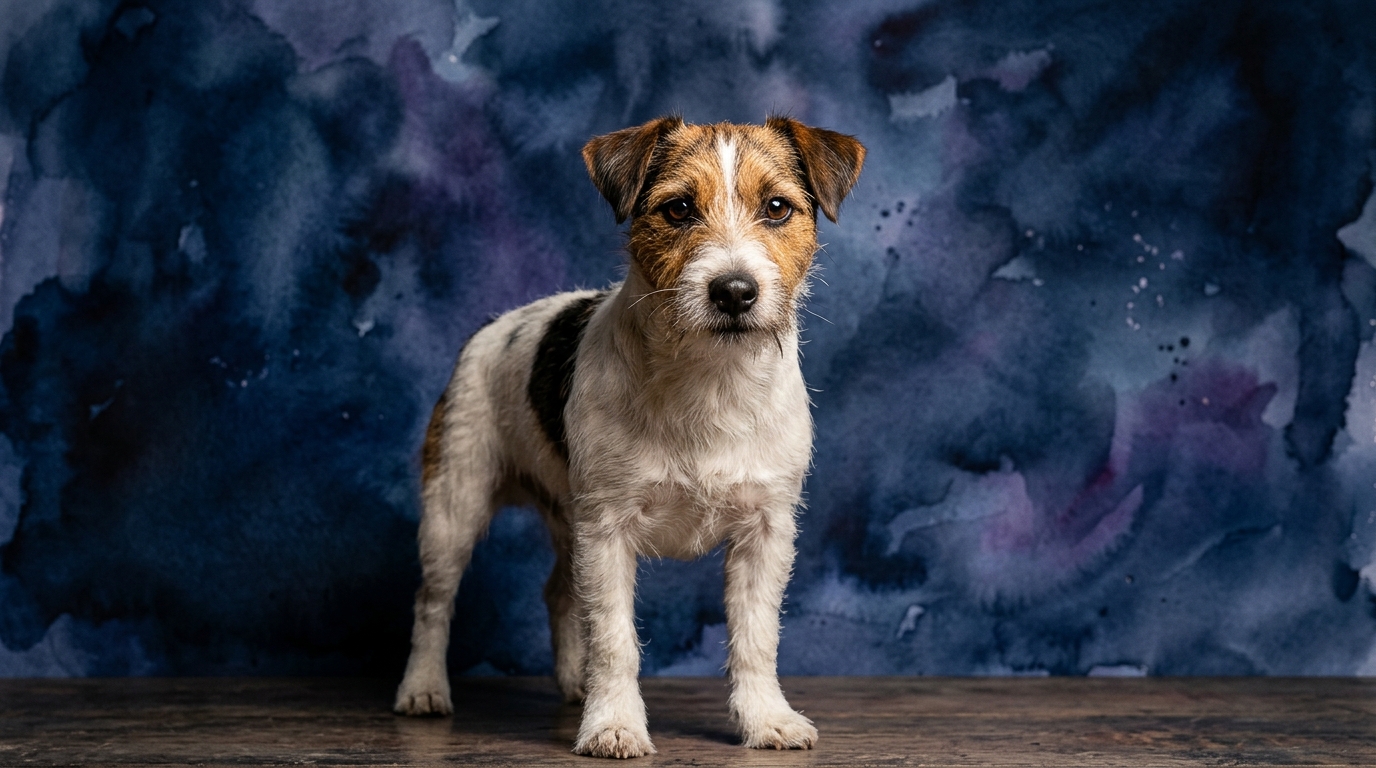

Side-by-Side IQ Profile: Jack Russell Terrier vs. Rat Terrier
The Cosmic Pet Pet IQ Lab provides a detailed breakdown of each breed's cognitive strengths and weaknesses, offering a scientific lens through which to understand their mental aptitudes. These scores are not just numbers; they translate directly into daily behaviors and interactions.
**Jack Russell Terrier (JRT) Cognitive Profile:** Problem Solving 5/5, Training Speed 3/5, Social Intelligence 3/5, Instinctive Drive 5/5, Memory 4/5. This breed exhibits exceptional capacity to independently navigate complex situations, devise solutions to obstacles, and figure out how to achieve desired outcomes, often demonstrating inventive and persistent strategies. While capable of learning new commands, their training speed is moderate, often requiring consistent, engaging, and patient methods to solidify behaviors due to their independent nature. Their understanding of human cues and social dynamics is average, meaning they can interpret basic intentions but may not always be highly attuned to subtle emotional shifts or complex social hierarchies without specific guidance. A profound and unrelenting prey drive defines this breed, fueling their intense desire to hunt, chase, and explore, making them highly motivated by instinctual pursuits. Jack Russell Terriers possess a strong memory, allowing them to recall learned commands, routines, and experiences effectively, which aids in retaining training and navigating familiar environments.
**Rat Terrier (RT) Cognitive Profile:** Problem Solving 3/5, Training Speed 3/5, Social Intelligence 3/5, Instinctive Drive 3/5, Memory 3/5. The Rat Terrier demonstrates a solid, average ability to solve practical problems, capable of figuring out straightforward challenges but less inclined towards intricate, multi-step solutions compared to their more tenacious counterparts. Similar to the Jack Russell, their training speed is moderate, requiring clear communication and consistent repetition to master new skills and integrate them into their behavioral repertoire. Their social understanding is average, enabling them to comprehend basic human interactions and cues, but they typically do not exhibit extraordinary sensitivity to complex emotional states or nuanced social signals. While possessing a clear Terrier drive, the Rat Terrier's instinctive motivation for hunting and chasing is moderate, present but not as intensely overriding as in some other Terrier breeds, making it more manageable. Rat Terriers have an average memory, meaning they can retain training and recall past experiences, though perhaps not with the same depth or long-term recall as breeds with higher scores in this dimension.
Where the Jack Russell Terrier Excels Cognitively
The Jack Russell Terrier clearly outperforms the Rat Terrier in **Problem Solving (5/5 vs. 3/5)**. This isn't merely about obedience; it translates to an innate ability to independently analyze situations, overcome physical barriers, or even outwit human attempts to contain them. Owners will observe them strategizing how to reach a dropped toy under furniture, figuring out complex puzzle feeders quickly, or even opening latches they weren't explicitly taught to manipulate. This keen intellect requires constant mental engagement to prevent them from applying their formidable problem-solving skills to mischief, like escaping yards or raiding pantries.
Their **Instinctive Drive (5/5 vs. 3/5)** is another dominant trait. This powerful drive means a Jack Russell is perpetually alert to movement, scents, and sounds, driven by an unyielding desire to pursue, dig, and investigate. This translates to exceptional focus when engaged in tasks that mimic hunting, but also means a much higher potential for bolting after squirrels or digging up gardens if not properly channeled. Finally, their superior **Memory (4/5 vs. 3/5)** ensures that once a Jack Russell learns something, whether a command or the location of a hidden treat, they tend to retain that information with greater accuracy and for longer periods. This strong recall contributes to their consistency in learned behaviors, but also means they won't easily forget negative associations or past “successful” mischievous acts.
Where the Rat Terrier Holds Its Own Cognitively
While the Rat Terrier's scores are generally balanced at 3/5, this very consistency can be considered a cognitive advantage for certain owners. Their **Problem Solving (3/5)**, while not as explosive as the JRT's, is perfectly adequate for navigating typical household challenges and learning practical tasks without the intense, often relentless, independent strategizing that can sometimes challenge owners of higher-scoring problem-solvers. They are less likely to constantly test boundaries or invent new ways to get into trouble, offering a more predictable mental approach.
The Rat Terrier's **Instinctive Drive (3/5)** is significantly more moderate than the Jack Russell's. This means while they certainly possess a prey drive typical of Terriers, it is less overwhelming and easier to manage in daily life. Owners are less likely to contend with an all-consuming urge to chase or dig, allowing for more relaxed walks and less intensive management of their environment. This reduced intensity can translate to a calmer demeanor overall, making them less prone to the high-strung intensity sometimes seen in breeds with extreme drives. Their average **Memory (3/5)**, while not standout, is sufficient for retaining training and routines without the potential for hyper-fixation on past events that can occur with extremely high memory scores. This balanced cognitive profile means a Rat Terrier often presents a more predictable and less cognitively demanding companion, offering a steady, reliable intelligence without the constant need for advanced mental gymnastics.
Which Breed is Easier to Train and Why?
Both breeds share a **Training Speed of 3/5**, suggesting neither is inherently a quick study, requiring consistent effort. However, the *application* of that training speed differs significantly due to their other cognitive traits. The Jack Russell Terrier’s formidable **Problem Solving (5/5)** and intense **Instinctive Drive (5/5)** mean that while they *can* learn, they often choose *not* to if something more engaging or instinctually rewarding presents itself. Their independence and drive to figure things out for themselves can make them challenging to motivate purely through obedience; training often feels like a negotiation or a redirection of their powerful intellect and drive. Owners must be creative, persistent, and make training feel like a stimulating game, or they risk a Jack Russell outsmarting their efforts.
In contrast, the Rat Terrier, with its more moderate **Problem Solving (3/5)** and **Instinctive Drive (3/5)**, tends to be more straightforward to train, despite the same training speed score. While they still require consistency, their less intense drive means fewer moments where instinct entirely overrides learned commands. They are generally more willing to engage in training as a cooperative activity, less prone to independent “problem-solving” that might conflict with desired behaviors, and their average social intelligence means they respond well to clear, positive reinforcement. Therefore, for an average owner, a Rat Terrier is likely to be perceived as easier to train due to fewer behavioral challenges stemming from extreme cognitive traits.
Cognitive Profiles and Owner Lifestyles: Active vs. Relaxed
The **Jack Russell Terrier** unequivocally suits highly **active owners**. Their 5/5 Problem Solving and 5/5 Instinctive Drive demand constant physical and mental engagement. These are dogs that thrive on purpose-driven activities like agility, earthdog trials, extensive hiking, or complex puzzle games. Owners who can dedicate significant time daily to structured exercise, training, and mental stimulation will find a Jack Russell to be an exhilarating, albeit demanding, companion. A relaxed owner might quickly find themselves overwhelmed by a Jack Russell's relentless energy and ingenuity, which, if not channeled, can manifest as destructive behaviors or incessant barking.
The **Rat Terrier**, with its more balanced 3/5 scores across most dimensions, is better suited for **moderately active owners**. While they certainly enjoy and require daily exercise and mental stimulation, their needs are not as extreme as the Jack Russell's. They enjoy walks, playtime, and learning new tricks, but are generally content with a more varied routine that includes periods of relaxation. Their moderate instinctive drive means they can adapt to a wider range of living situations without the same intensity of behavioral challenges. A Rat Terrier can comfortably fit into a household that enjoys regular activity but doesn't necessarily revolve around intense dog sports or relentless outdoor adventures.
The Verdict
Select a Jack Russell Terrier if you are an experienced, highly active owner eager for a cognitively demanding companion who thrives on complex problem-solving, intense physical challenges, and requires consistent mental engagement.
Opt for a Rat Terrier if you appreciate the Terrier spirit but prefer a more balanced and manageable cognitive profile, seeking a moderately active companion who is generally easier to train and less prone to extreme instinctual behaviors.
🧠 Find Your Pet's IQ Score
Our Pet IQ Lab assessment covers 25+ tests across 5 cognitive dimensions — personalized to your breed.
Take the Full IQ Test →Frequently Asked Questions
Do Jack Russell Terriers ever calm down?
Jack Russell Terriers retain their high energy and intense drive well into adulthood. While consistent training and ample mental/physical stimulation can channel their energy, their fundamental cognitive profile means they are rarely a truly "calm" breed; they remain perpetually alert and engaged.
Are Rat Terriers good apartment dogs?
With adequate daily exercise and mental engagement, a Rat Terrier can adapt well to apartment living. Their moderate instinctive drive and problem-solving skills mean they can be content indoors after their needs are met, unlike some Terriers with more demanding cognitive profiles.
Which breed is better with other pets?
The Rat Terrier, with its moderate instinctive drive (3/5), generally has a more adaptable temperament towards other pets, especially if socialized early. The Jack Russell Terrier's intense instinctive drive (5/5) means they require more careful management and introduction to other animals, particularly small, prey-like pets, due to their strong chase instinct.