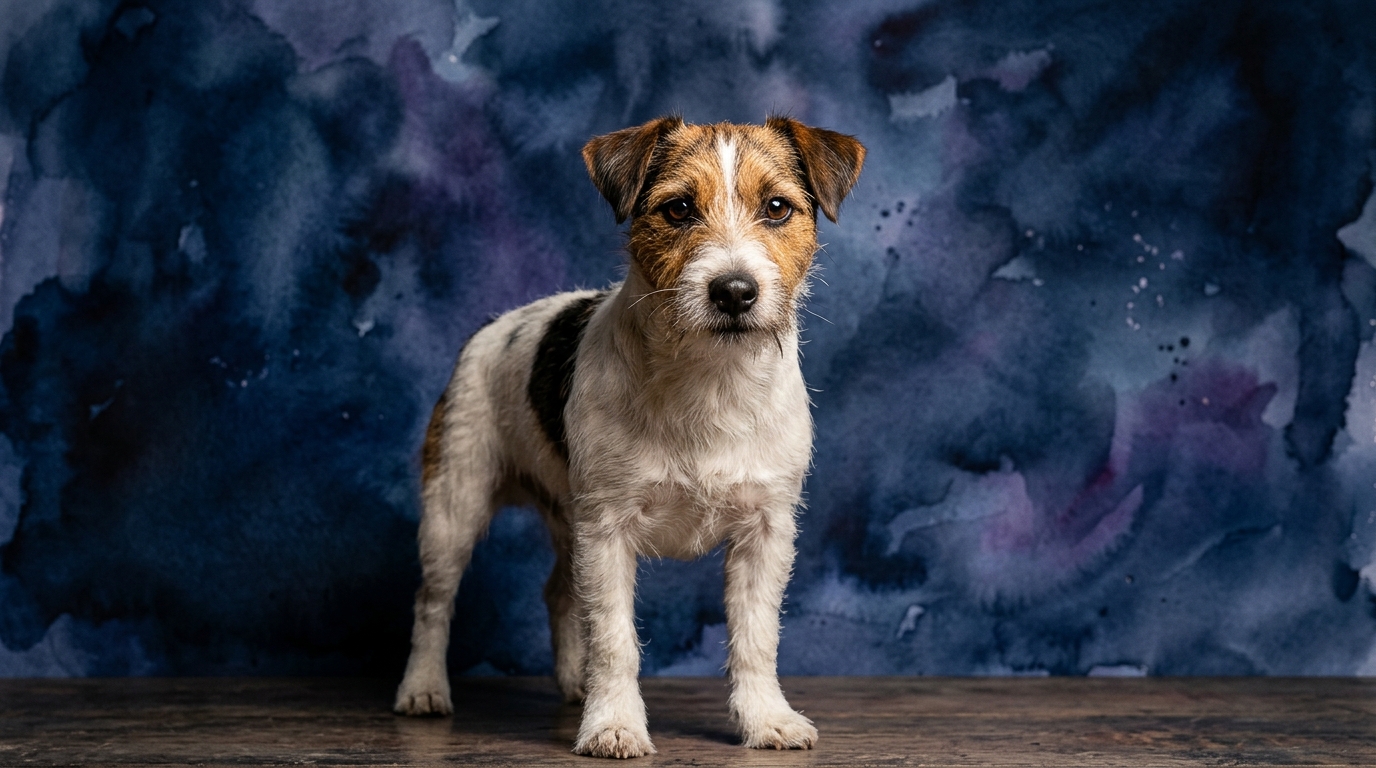
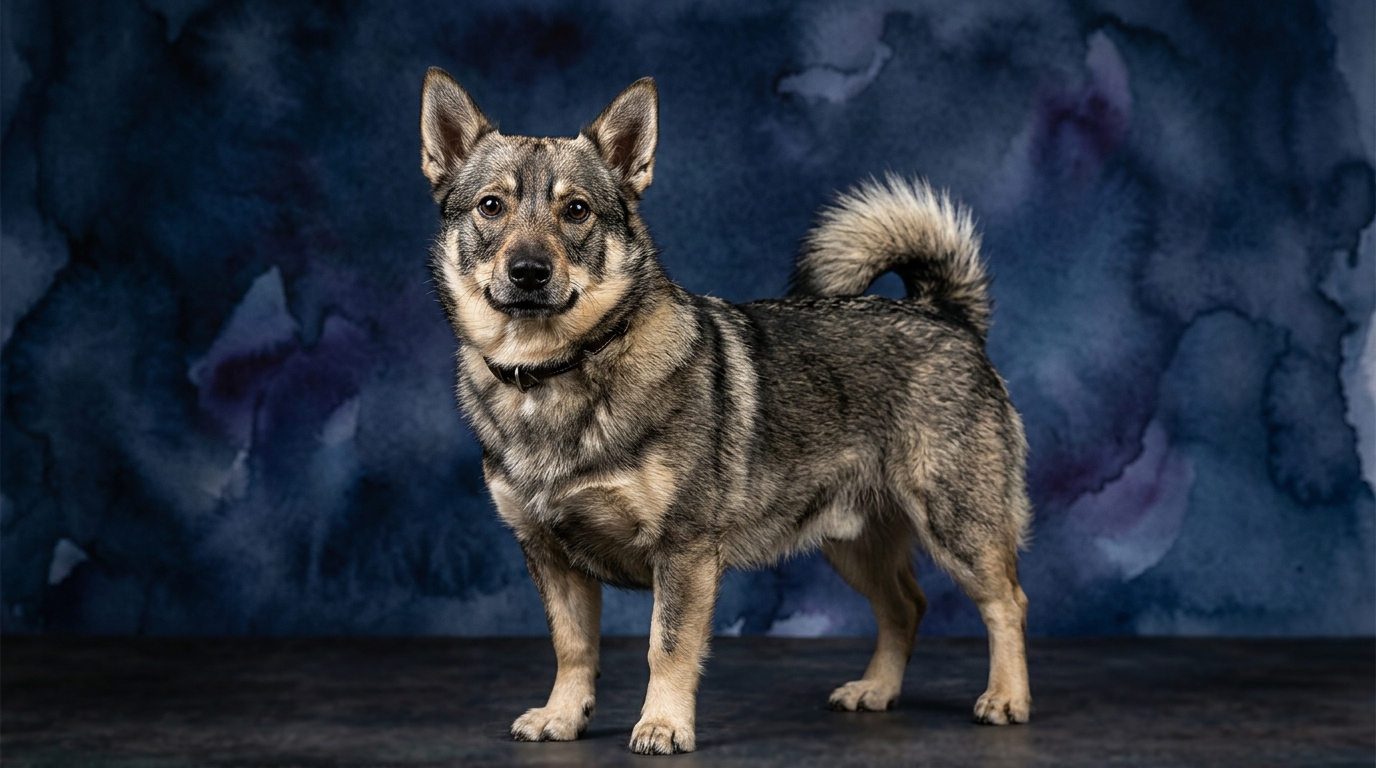
Side-by-Side Cognitive Profiles
The Cosmic Pet Pet IQ Lab employs a five-dimensional framework to assess canine intelligence, offering a nuanced view beyond simple obedience. For the Jack Russell Terrier, we see a profile dominated by intense drive and cunning problem-solving. They score an exceptional 5/5 in Problem Solving, indicating an outstanding ability to strategize and overcome obstacles. Their Training Speed is a moderate 3/5, reflecting a willingness to learn but often on their own terms. Social Intelligence also stands at 3/5, meaning they can interpret human cues but frequently prioritize their independent agenda. Instinctive Drive is a powerful 5/5, manifesting as relentless pursuit, digging, and vocalization. Finally, their Memory is strong at 4/5, allowing them to recall environmental details and successful past strategies effectively.
In contrast, the Swedish Vallhund presents a more balanced cognitive landscape, reflecting their versatile herding heritage. Their Problem Solving is rated 3/5, signifying a competent ability to navigate daily challenges without extreme innovation. Training Speed matches the JRT at 3/5, indicating a steady learning pace. Social Intelligence is also 3/5, showing attentiveness to family and a good grasp of social signals. Their Instinctive Drive is a moderate 3/5, with herding behaviors present but generally manageable, not overwhelming. Similarly, their Memory is 3/5, retaining information adequately for daily life and consistent training.
Where the Jack Russell Terrier Excels Cognitively
The Jack Russell Terrier's cognitive prowess shines brightest in their extraordinary Problem Solving, rated at a perfect 5/5. This isn't merely about understanding simple commands; it's about an unparalleled ability to strategize, manipulate environments, and overcome physical barriers to achieve a goal, often related to their innate prey drive. This translates into impressive feats like figuring out how to open complex latches, escaping seemingly secure enclosures, or devising elaborate plans to obtain a desired treat. Their approach to challenges is active, persistent, and often involves a highly effective, albeit sometimes mischievous, trial-and-error process honed by centuries of hunting small game.
Beyond just problem-solving, their Instinctive Drive, also a formidable 5/5, is a distinct cognitive strength. While it can be a challenge for owners, this intense drive represents an unwavering focus and determination in pursuit. It's a deep-seated, primal motivation that fuels their problem-solving and persistence, allowing them to sustain effort over long periods in pursuit of a perceived reward or objective. This isn't just physical energy; it's a cognitive commitment to a task, making them incredibly tenacious.
Complementing these traits is their robust Memory, scoring 4/5. A strong memory supports their exceptional problem-solving and hunting abilities. They possess an impressive recall for environmental details, remembering the exact location where a squirrel buried its nuts, the weak point in a fence they once exploited, or past successful strategies for obtaining treats. This memory isn't solely for remembering human commands but extends to intricate environmental mapping and the outcomes of their past cognitive efforts, making them highly effective learners within their specific domain.
Where the Swedish Vallhund Shines Cognitively
While the Jack Russell Terrier boasts extreme scores in specific areas, the Swedish Vallhund's cognitive strength lies in its highly adaptable balance. Their consistent 3/5 scores across most dimensions, rather than indicating a deficit, point to a well-rounded and generally competent intellect. They aren't hyper-specialized in one area, which allows them to excel in a wider variety of tasks and adjust more readily to different training demands or social environments without the intense, single-minded focus of a JRT. This balanced cognitive profile means their mental energy is distributed, making them versatile and practical learners in diverse settings.
The Vallhund's moderate Instinctive Drive, rated 3/5, is a significant cognitive advantage for a companion animal. Unlike the JRT's overwhelming drive, the Vallhund's herding instincts are present and can be engaged in structured activities like agility or herding games, but they are typically more amenable to redirection and less likely to be consumed by an overwhelming, difficult-to-satisfy primal urge. This manageable cognitive trait makes them generally more pleasant and less demanding in a home environment, offering engagement without relentless pressure.
Their Practical Problem Solving, at 3/5, further highlights their functional intelligence. While not reaching the JRT's innovative heights, the Vallhund's problem-solving is pragmatic and effective for everyday life. They are perfectly capable of understanding and navigating common challenges efficiently, solving problems related to their environment or routine without resorting to extreme, often destructive, ingenuity. Their cognitive approach is geared towards efficient resolution and understanding, rather than persistent, often disruptive, exploration.
Ease of Training: Behavioral Differences
When considering ease of training, the Jack Russell Terrier's cognitive profile presents a unique challenge. With a Training Speed of 3/5, they are capable of learning commands, but their exceptional Problem Solving (5/5) and intense Instinctive Drive (5/5) often complicate the process. They learn *what* you want quickly, but their independent problem-solving often means they'll find *their own* solution if yours isn't sufficiently rewarding, or if their powerful drive kicks in. Their strong Memory (4/5) means they remember both desired behaviors and undesirable, self-rewarding habits. Training a JRT requires immense consistency, high-value rewards, and creative methods to channel their innate drive into productive outlets, rather than allowing it to lead to self-directed mischief. They aren't unintelligent; they are strong-willed, discerning, and highly motivated by their own cognitive priorities.
The Swedish Vallhund, also rated 3/5 for Training Speed and Social Intelligence, generally proves easier to train for the average owner due to their more balanced cognitive traits. Their moderate Instinctive Drive (3/5) and Problem Solving (3/5) mean they learn at a steady pace and are typically more willing to work collaboratively with their human. Their herding background instills a desire to be part of a team and to have a job to do, making them responsive to direction without the intense, often self-directed, focus seen in JRTs. Vallhunds are less likely to 'outsmart' their owner or get sidetracked by an overwhelming primal urge, making consistent training more straightforward and less of a cognitive battle. They thrive on positive reinforcement and clear communication, generally enjoying the process of learning new skills alongside their family.
Suitability for Active vs. Relaxed Owners
The Jack Russell Terrier is unequivocally suited for highly active owners who thrive on mental and physical engagement. Their 5/5 Problem Solving and 5/5 Instinctive Drive demand constant outlets for their cognitive energy and physical prowess. These dogs require extensive physical exercise, coupled with challenging mental stimulation such as advanced scent work, complex puzzle toys, or earthdog trials to satisfy their hunting instincts. A relaxed or inexperienced owner will quickly find themselves outmaneuvered and potentially dealing with destructive behaviors, excessive barking, or escape attempts born from boredom and unchanneled cognitive drive. They need an owner who can consistently match their intense cognitive and physical demands.
The Swedish Vallhund, while still requiring an active lifestyle, is more adaptable to moderately active owners. Their consistent 3/5 scores across the board indicate a need for regular physical activity and consistent mental stimulation, reflecting their herding heritage. They enjoy activities like agility, obedience, and herding games, thriving on having a purpose. However, their moderate drive means they are generally less likely to become destructive or excessively demanding if an owner has an occasional 'off' day or a slightly less intense routine. They thrive with consistent engagement and a variety of activities but are typically not as relentlessly demanding as a JRT, making them a more forgiving choice for owners who enjoy activity but might not be able to provide extreme, daily high-intensity outlets.
The Verdict
Choose a Jack Russell Terrier if you are an experienced, highly active owner who thrives on a cognitive challenge, enjoys problem-solving alongside your dog, and is prepared to dedicate significant time and creativity to channeling intense instinctive drives into productive activities like advanced dog sports or earthdog trials.
Choose a Swedish Vallhund if you seek a versatile, engaging companion who learns steadily, is generally cooperative, and possesses a balanced cognitive profile that adapts well to various activities, from family life to dog sports, without the extreme, specialized demands of a highly driven working breed.
🧠 Find Your Pet's IQ Score
Our Pet IQ Lab assessment covers 25+ tests across 5 cognitive dimensions — personalized to your breed.
Take the Full IQ Test →Frequently Asked Questions
Are Jack Russell Terriers difficult to train?
Jack Russell Terriers are not unintelligent, but their exceptional problem-solving and intense instinctive drive can make them challenging to train. They learn quickly but often prioritize their own agenda or primal urges, requiring highly consistent, creative training methods and significant commitment from their owner to channel their cognitive energy effectively.
Do Swedish Vallhunds bark a lot?
Swedish Vallhunds do have a tendency to be vocal, a trait stemming from their herding background where barking was used to manage livestock. While their social intelligence is moderate, they often use their voice to communicate excitement, alert to strangers, or express their feelings, requiring owners to manage and direct this vocal tendency through training.
Which breed is better for a first-time dog owner?
For a first-time dog owner, the Swedish Vallhund is generally a more suitable choice due to its balanced cognitive profile and more manageable instinctive drives. While still requiring consistent training and activity, their cooperative nature and less extreme demands make them more forgiving than the highly independent and intensely driven Jack Russell Terrier, which often requires significant experience to manage effectively.