
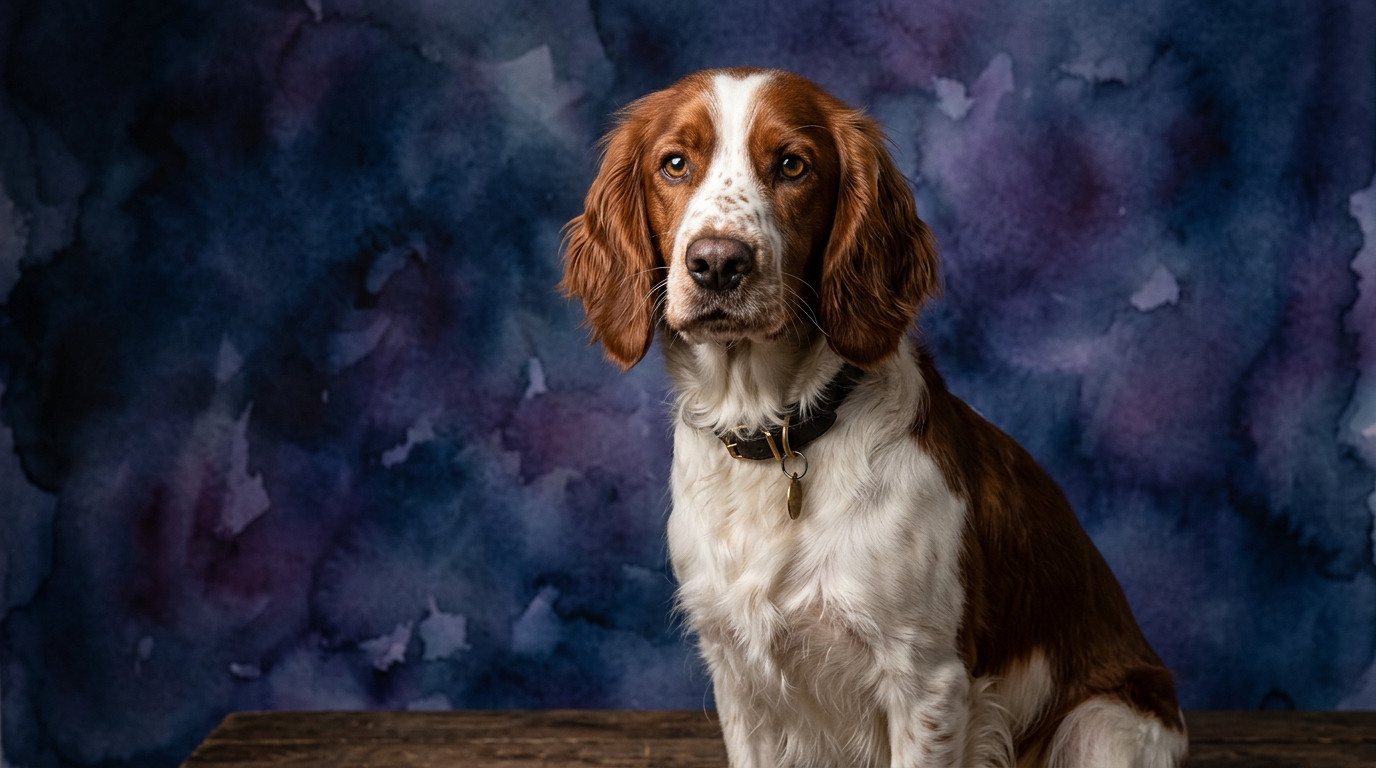
Side-by-Side IQ Profile: Jack Russell Terrier vs. Welsh Springer Spaniel
The Cosmic Pet Pet IQ Lab offers a nuanced look into the cognitive strengths of different breeds, moving beyond general perceptions. For the Jack Russell Terrier, we see a profile built around tenacity and independent action, while the Welsh Springer Spaniel presents as a more cooperative and responsive learner, reflecting their distinct working backgrounds.
The Jack Russell Terrier's IQ profile features: Problem Solving 5/5, indicating an exceptional ability to independently figure out complex situations, often devising novel solutions to reach goals or overcome obstacles. Their Training Speed is rated 3/5; while capable of learning, their strong independent streak and singular focus can sometimes make them less immediately receptive to repetitive instruction, requiring patience and creative methods from their trainers. Social Intelligence stands at 3/5; they generally understand human cues but prioritize their own drives and objectives, which can sometimes overshadow their responsiveness to social signals in high-distraction environments. Their Instinctive Drive is a profound 5/5, with strong hunting instincts for scent and pursuit being a dominant aspect of their cognitive makeup, directing much of their attention and energy towards exploration and interaction with their environment. Finally, their Memory is 4/5, indicating a robust retention of learned behaviors and spatial information, which aids their problem-solving and navigation.
The Welsh Springer Spaniel, a Coren rank #31 breed, presents a slightly different cognitive architecture. Their Problem Solving is rated 4/5, demonstrating a strong capacity for figuring out novel situations, though perhaps with a slightly greater reliance on human guidance compared to the highly independent JRT. Their Training Speed is 4/5; they are generally quick to grasp new commands and respond to consistent training, eager to please and cooperative. Social Intelligence is 3/5, similar to the JRT, meaning they understand social cues, but their focus can be primarily on their task or human interaction rather than complex social dynamics with other dogs or strangers. Instinctive Drive is 3/5; while possessing a distinct flushing and retrieving drive, it is typically more manageable and less singularly intense than that of a terrier, allowing for easier redirection. Their Memory is also 4/5, showing good retention of commands, routines, and spatial layouts, contributing to their trainability and adaptability.
Where the Jack Russell Terrier Wins Cognitively
The Jack Russell Terrier truly shines in its exceptional Problem Solving ability, rated 5/5 by The Cosmic Pet Pet IQ Lab. This means they are masters at independent thought, capable of devising intricate plans to achieve their goals, whether it's outsmarting a squirrel or opening a seemingly secure cabinet. This cognitive strength allows them to navigate complex environments and situations with remarkable ingenuity, often surprising their human companions with their resourcefulness.
Their Instinctive Drive, also rated 5/5, is a powerful cognitive asset for tasks requiring intense focus and persistence. While often channeled into traditional terrier work like earthdog trials, this drive translates into an unwavering determination to pursue an objective, making them relentless in scent work, agility, or any task that taps into their innate drive. This isn't just physical energy; it's a deep cognitive engagement with their environment, driving them to explore and interact with an unparalleled intensity.
Where the Welsh Springer Spaniel Wins Cognitively
The Welsh Springer Spaniel distinguishes itself with a superior Training Speed, rated 4/5 by The Cosmic Pet Pet IQ Lab compared to the JRT's 3/5. This indicates a quicker uptake of new commands and a more consistent willingness to perform learned behaviors. Their Coren rank of #31 further reinforces this, placing them among breeds that understand new commands with fewer repetitions and obey the first command a significant percentage of the time, highlighting their readiness to cooperate and learn from human instruction.
Their balanced Instinctive Drive (3/5) also represents a cognitive advantage in specific contexts. While still possessing the drive for flushing and retrieving, it's typically more amenable to redirection and less all-consuming than a terrier's intense prey drive. This allows for a more focused and less distracted training experience, as their natural inclinations are more easily integrated into cooperative tasks rather than dominating their attention, making them highly adaptable partners in various dog sports and activities.
Which Is Easier to Train and Why?
The Welsh Springer Spaniel is generally considered easier to train due to its higher Training Speed (4/5) and its position within the top 50 Coren-ranked breeds. Their eagerness to please and cooperative nature mean they are typically more receptive to instruction and form associations between commands and actions more readily. For instance, a Welsh Springer is more likely to consistently recall on the first command, a direct reflection of their cognitive processing of human directives and their desire to engage cooperatively.
In contrast, the Jack Russell Terrier, with a Training Speed of 3/5, requires a different training approach. Their exceptional Problem Solving (5/5) and intense Instinctive Drive (5/5) mean they are often busy figuring things out for themselves or pursuing an interesting scent, rather than focusing solely on human commands. While they certainly learn, their independent nature can lead them to 'selectively hear' or find loopholes in commands, making consistency a greater challenge. Training a JRT often involves creatively channeling their drive and outsmarting their problem-solving mind, rather than simple repetition, demanding a more experienced and patient trainer.
Suitability for Active vs. Relaxed Owners
The Jack Russell Terrier, with its 5/5 Instinctive Drive and 5/5 Problem Solving, is undeniably suited for active owners who can provide consistent, engaging mental and physical stimulation. These dogs thrive when given 'jobs' that challenge their intellect and allow them to express their natural drive, such as advanced agility, earthdog trials, or complex scent work. A more relaxed owner might find their energetic problem-solving and persistent drive overwhelming, potentially leading to the dog creating its own (undesirable) activities if not adequately stimulated.
The Welsh Springer Spaniel, while still an active breed, aligns well with owners who appreciate regular exercise but also value a more cooperative and less intensely driven companion. Their 3/5 Instinctive Drive means they enjoy activities like hiking, retrieving, and dog sports, but their energy is often more easily managed and channeled through training due to their 4/5 Training Speed. They are active partners rather than independent forces, making them a good fit for families seeking an engaged but biddable companion for outdoor adventures who can also settle down comfortably indoors.
The Verdict
Opt for a Jack Russell Terrier if you are an experienced, active owner ready to channel an exceptional problem-solver with relentless drive into structured activities, appreciating their independent and tenacious spirit.
Select a Welsh Springer Spaniel if you desire a cooperative, trainable companion for an active lifestyle, valuing their eagerness to please and balanced instinctive drives for family adventures.
🧠 Find Your Pet's IQ Score
Our Pet IQ Lab assessment covers 25+ tests across 5 cognitive dimensions — personalized to your breed.
Take the Full IQ Test →Frequently Asked Questions
Do Jack Russell Terriers get along with other pets?
Jack Russell Terriers, with their strong instinctive drive, may see smaller pets as prey, especially if not socialized from a young age. Their social intelligence of 3/5 means they can coexist, but careful introductions and supervision are crucial, particularly with cats or rodents.
How much exercise does a Welsh Springer Spaniel need daily?
A Welsh Springer Spaniel, possessing a 3/5 instinctive drive, requires at least an hour of vigorous exercise daily, such as long walks, runs, or retrieving games. This helps manage their energy and keeps their memory and problem-solving skills sharp.
Are Welsh Springer Spaniels good for first-time dog owners?
Yes, Welsh Springer Spaniels can be suitable for first-time owners due to their 4/5 training speed and cooperative nature. Their eagerness to learn makes them responsive to consistent, positive reinforcement methods, making the training process more rewarding for newcomers.