
Side-by-Side Cognitive Profiles: Decoding Terrier Minds
**Jack Russell Terrier:** The Jack Russell Terrier, not formally Coren-ranked, presents a unique cognitive makeup tailored for its historical working role. Their **Problem Solving (5/5)** is truly exceptional; these dogs demonstrate remarkable ingenuity, often devising novel solutions to reach desired outcomes or overcome complex obstacles. Their minds are constantly active, seeking ways to achieve goals, whether it's outsmarting a critter or figuring out how to open a cabinet. Their **Training Speed (3/5)** is moderate; while capable of learning quickly, their independent nature and strong will can make consistent training a balancing act, as they may prioritize their own agenda. **Social Intelligence (3/5)** for JRTs means they possess a moderate understanding of human social cues and form strong family bonds, but their primary focus often remains on their environment and tasks. Their **Instinctive Drive (5/5)** is incredibly powerful, manifesting as an intense desire to chase, dig, and explore, fueling much of their behavior and cognitive effort. Finally, their **Memory (4/5)** is robust, allowing strong recall for learned commands, routines, and experiences, informing future problem-solving strategies.
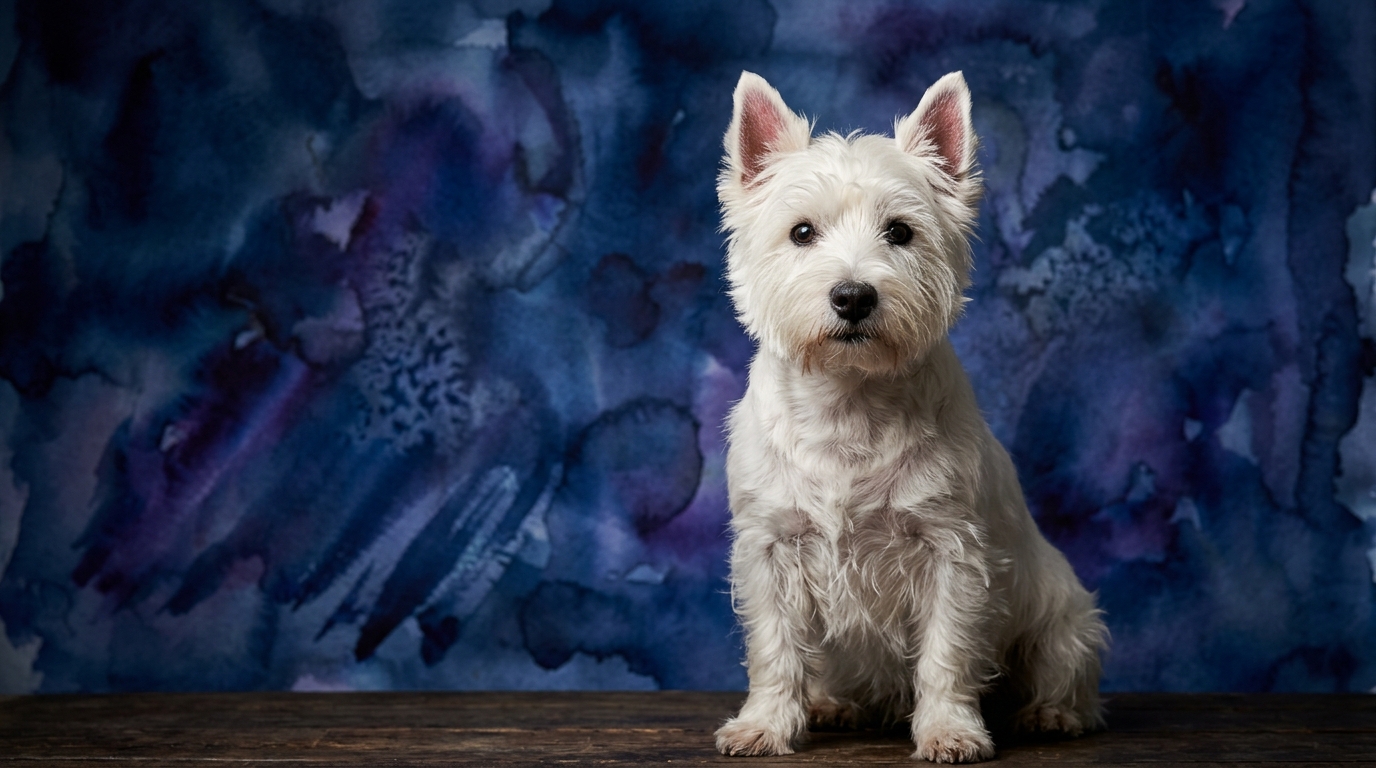
**West Highland White Terrier:** The West Highland White Terrier holds a respectable Coren rank of #47, indicating a solid foundation in adaptive intelligence and obedience. Their **Problem Solving (3/5)** reflects a practical, methodical approach; Westies rely more on learned strategies than rapid, innovative solutions, capable of figuring things out but often taking a more direct path. Similar to JRTs, their **Training Speed (3/5)** is reasonable, but they display characteristic terrier stubbornness, requiring consistent positive reinforcement to ensure compliance. **Social Intelligence (3/5)** in Westies means they are generally sociable and attuned to their human companions, enjoying interaction and companionship, though they maintain a self-assured demeanor. Their **Instinctive Drive (3/5)**, while present for chasing and digging, is typically more moderate than a Jack Russell's, allowing for a broader focus beyond pure prey pursuit. Like the JRT, their **Memory (4/5)** is solid, aiding their ability to learn and adapt to various situations and contributing to consistent behavior within established boundaries.
Where the Jack Russell Terrier's Cognition Shines
The Jack Russell Terrier truly excels in dynamic problem-solving, a trait deeply ingrained in their historical role as tenacious hunters. Their 5/5 score in this dimension reflects an unparalleled ability to analyze new situations and quickly devise strategies, whether it's navigating a complex obstacle course or finding a way to access a favorite toy hidden under furniture. This isn't just about brute force; it's about mental agility and an almost experimental approach to challenges, often trying multiple solutions until one works, showcasing a high degree of cognitive flexibility.
Their formidable instinctive drive (5/5) means they are profoundly motivated by the chase and the hunt, channeling immense cognitive energy into these pursuits. A JRT's mind is always 'on,' actively scanning for opportunities to engage their natural talents, making them exceptionally focused and relentless when pursuing a scent or a perceived quarry. This intense focus, while sometimes challenging for owners, is a testament to their specialized cognitive function, enabling them to persevere where other breeds might give up, demonstrating a tenacious dedication to their goals.
Where the West Highland White Terrier's Cognition Excels
While not scoring as high in raw problem-solving innovation, the West Highland White Terrier's cognitive strengths lie in their balanced and consistent application of their terrier traits. Their 3/5 in problem-solving combined with a 3/5 in instinctive drive means they are less likely to become hyper-focused on a single task to the exclusion of all else, offering a more adaptable and less demanding cognitive presence in a home environment. They are capable of learning and adapting, but often prefer to follow established patterns rather than constantly inventing new ones, which can lead to a more predictable companion.
A key cognitive advantage for the Westie is their Coren rank of #47, indicating a solid foundation in obedience and adaptive intelligence. While a JRT isn't Coren-ranked, the Westie's placement suggests a generally good capacity for understanding and executing commands reliably within a structured environment. Their equally strong memory (4/5) ensures that once a lesson is learned or a routine established, it sticks, leading to a predictable and stable companion who remembers what is expected of them and maintains consistent behavior over time.
Training Dynamics: Navigating the Terrier Will
Determining which breed is 'easier' to train isn't solely about learning speed, but also about willingness to comply and manageability of inherent drives. Both breeds share a 3/5 training speed, indicating they can grasp commands but their independent terrier spirit can make consistent execution a challenge. The Jack Russell Terrier's extreme problem-solving (5/5) and instinctive drive (5/5) can translate into a dog that uses its intellect to outmaneuver its trainer or prioritize its own strong urges over commands. For example, a JRT spotting a squirrel might 'forget' its recall command instantly, not because it doesn't know it, but because its primal drive overrides learned behavior, demanding a higher level of engagement and consistency from the owner.
In contrast, the West Highland White Terrier, with its more moderate instinctive drive (3/5), is often less intensely driven by external stimuli. While they still possess a terrier stubbornness, they are typically more amenable to redirection and less likely to become singularly fixated on a chase or digging project. Their problem-solving is less about innovation and more about applying known solutions, which can make them more predictable in training scenarios. A Westie might test boundaries, but their compliance is often more attainable with consistent positive reinforcement, as they are less likely to be battling an overwhelming internal compulsion to 'do their own thing' compared to a JRT, making them somewhat more straightforward to guide.
Matching Cognitive Profiles to Lifestyles: Active vs. Relaxed Owners
For owners who thrive on high energy and constant mental engagement, the Jack Russell Terrier is often the ideal match. Their 5/5 problem-solving and instinctive drive demand an owner who can provide an outlet for their relentless curiosity and physical prowess. These dogs need structured activities that challenge their intellect, such as advanced obedience, agility, earthdog trials, or complex puzzle toys, alongside extensive physical exercise. A relaxed owner might find themselves overwhelmed by a JRT's need to constantly be doing or figuring something out, as an under-stimulated Jack Russell can channel its ingenuity into destructive behaviors or incessant barking, requiring significant time commitment.
Conversely, the West Highland White Terrier's cognitive profile, characterized by solid memory (4/5) and more moderate drives (3/5), makes them better suited for owners seeking a spirited but generally more manageable companion. While they still require regular exercise and mental stimulation to prevent boredom, their needs are typically less intense than a JRT's. A Westie is content with daily walks, interactive play, and puzzle toys, and will often settle happily for cuddle time on the sofa. They offer a good balance for owners who appreciate a lively dog but prefer a slightly less demanding cognitive commitment, fitting well into a home that values consistency and companionship without constant high-octane activity.
The Verdict
Choose a Jack Russell Terrier if you are an experienced, active owner ready to channel boundless problem-solving skills and intense instinctive drives into constructive outlets. They thrive with consistent mental challenges and physical exertion.
Opt for a West Highland White Terrier if you desire a charming, moderately energetic companion who learns well and offers a more balanced terrier temperament. They fit well with owners seeking a predictable, affectionate dog that still enjoys engaging activities.
🧠 Find Your Pet's IQ Score
Our Pet IQ Lab assessment covers 25+ tests across 5 cognitive dimensions — personalized to your breed.
Take the Full IQ Test →Frequently Asked Questions
Do Jack Russell Terriers really try to outsmart their owners?
Jack Russell Terriers possess a 5/5 problem-solving ability and a strong independent streak, which can certainly feel like they are 'outsmarting' you. They are adept at finding creative solutions to get what they want, often requiring owners to be equally clever and consistent in their training and management strategies.
Is a West Highland White Terrier's Coren rank indicative of superior intelligence?
The West Highland White Terrier's Coren rank of #47 suggests a good capacity for understanding and obeying commands in a structured environment. While not a measure of all cognitive dimensions, it indicates a solid foundation for trainability and adaptive intelligence, making them generally responsive companions who learn well.
How do their memory scores (4/5 for both) impact daily life?
Both breeds having a 4/5 memory score means they effectively retain learned behaviors, routines, and experiences. This ensures consistency in training and allows them to navigate their environment confidently, remembering boundaries, commands, and the location of favorite items or people, contributing to stable household integration.