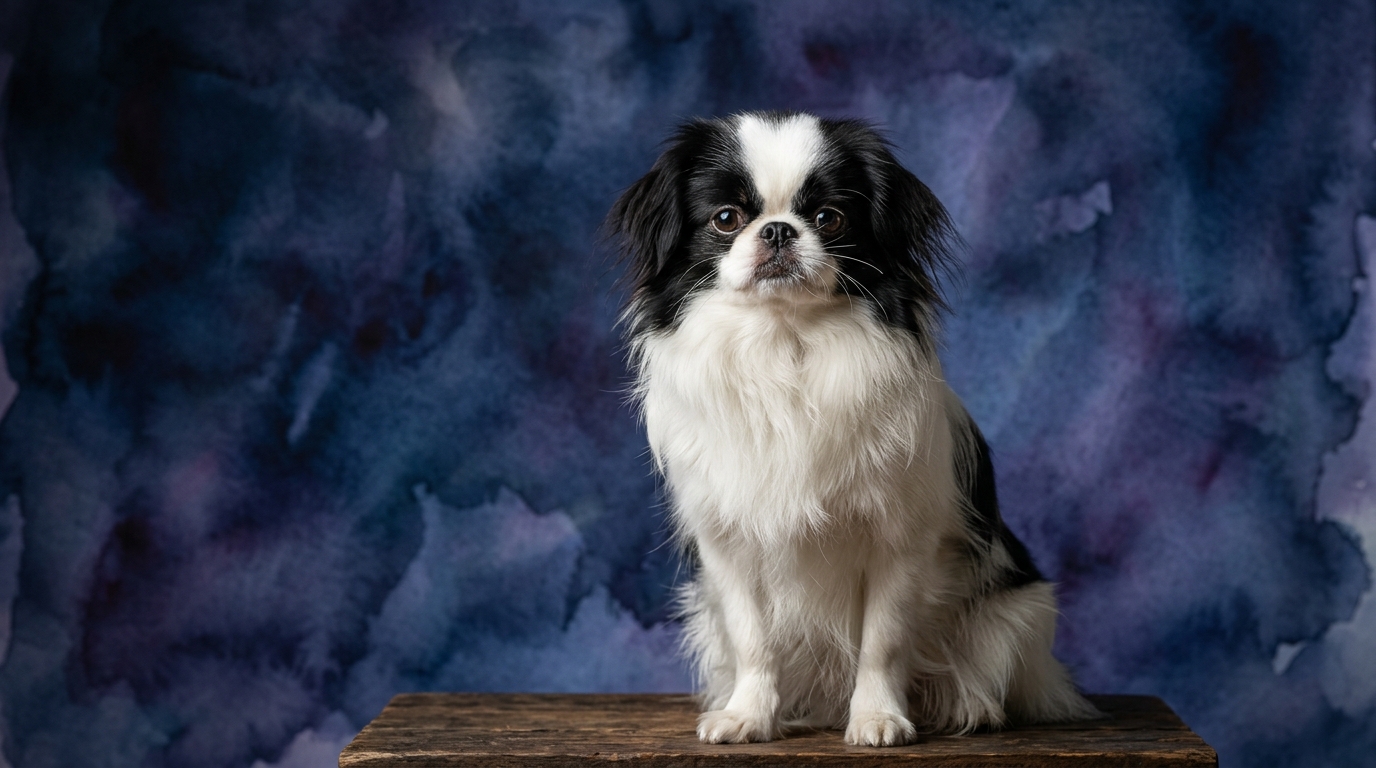

Side-by-Side IQ Profile: Unpacking Identical Scores
Both the Japanese Chin and English Toy Spaniel register consistent 3/5 scores across all five cognitive dimensions, suggesting a balanced, mid-range aptitude that is neither exceptionally challenging nor remarkably quick. This uniform scoring indicates that both breeds possess a moderate capacity for learning and adaptation, typical for many companion animals, but the *way* they express these capacities differs significantly due to their inherent breed characteristics.
For Problem Solving (3/5), both breeds demonstrate an average ability to navigate novel situations or overcome obstacles, often through trial and error or by observing their environment. The Japanese Chin might approach a puzzle with a more independent, observational strategy, sometimes trying unique, cat-like solutions, while the English Toy Spaniel might rely more on human cues or a gentler, persistent approach. Neither breed is likely to invent complex solutions, but they will generally figure things out given time and appropriate motivation.
Training Speed (3/5) for both indicates they learn new commands at a moderate pace, requiring consistency and patience from their trainers. They are not the fastest learners, nor are they particularly stubborn; they simply absorb information at an average rate. The Chin's training might require more creative engagement to maintain interest, whereas the English Toy Spaniel's desire for connection can make them more amenable to gentle, reward-based methods, even if the speed of acquisition is similar.
Social Intelligence (3/5) suggests both breeds can read and respond to human emotions and social cues reasonably well, forming strong bonds with their families. The Japanese Chin's social intelligence often manifests as a discerning affection, sometimes reserved with strangers but deeply devoted to its chosen people, understanding nuances of family dynamics. The English Toy Spaniel, conversely, typically displays a more overt and consistent desire for companionship, often seeking out interaction and comfort, making them highly attuned to their owner's mood and presence.
Instinctive Drive (3/5) points to a moderate level of inherent behaviors, such as chasing, guarding, or exploring, which are present but not overwhelming. For the Chin, this might appear as playful pouncing or a curious exploration of high perches, rooted in their historical role as companion animals in noble courts. The English Toy Spaniel’s instinctive drive is often channeled into their desire for comfort and closeness, perhaps with a gentle curiosity about their immediate surroundings, rather than a strong urge for independent hunting or patrolling. Memory (3/5) for both breeds implies a solid, average ability to recall learned commands, routines, and experiences over time. They won't forget their basic training or their favorite people, but they might not retain complex sequences of commands with perfect recall over long periods without reinforcement. Both will remember positive and negative experiences, shaping their future interactions and learning processes.
Where Japanese Chin Wins Cognitively
Despite identical scores, the Japanese Chin often exhibits a subtle cognitive edge in independent observation and self-directed problem-solving, particularly in navigating their domestic environment. Their reputation for being 'cat-like' isn't just about agility; it extends to a quiet, observant intelligence that allows them to assess situations from a slight distance before engaging. This manifests as a knack for finding the warmest sunbeam, the highest perch, or the most comfortable spot without direct human instruction, suggesting a focused internal mapping ability. Their independence means they might be more adept at entertaining themselves or finding novel ways to achieve a personal goal, like retrieving a hidden toy, without constant human prompting or encouragement, relying more on their own initiative within their 3/5 problem-solving capacity.
Where English Toy Spaniel Wins Cognitively
The English Toy Spaniel, while scoring identically, often shines in areas related to cooperative social intelligence and emotional attunement. Their strong desire for companionship and inherent gentleness means their 3/5 social intelligence is often directed towards understanding and responding to human emotional states with remarkable sensitivity. They might be quicker to pick up on subtle changes in an owner's mood or tone, adjusting their behavior to offer comfort or solicit attention. This makes them particularly adept at forming deep, empathetic bonds, and their problem-solving, within their 3/5 capacity, might lean towards figuring out how to best provide comfort or solicit affection, rather than purely independent tasks. Their cognitive strengths are deeply intertwined with their role as devoted, affectionate companions.
Which is Easier to Train and Why
While both breeds share a 3/5 Training Speed, their underlying motivations make one subtly 'easier' to train for certain owners. The English Toy Spaniel's inherent desire to please their beloved human often translates into a more eager and compliant attitude during training sessions. They thrive on positive reinforcement and praise, viewing training as an opportunity to strengthen their bond and receive affection. Their gentle nature means they typically respond well to soft voices and consistent, reward-based methods, making them quite receptive to learning basic obedience and house manners, provided the trainer is patient and encouraging. They are generally less likely to push boundaries or be overtly stubborn.
The Japanese Chin, conversely, with its more independent and discerning personality, requires a different approach. While equally capable of learning at a 3/5 speed, they are less driven by an overwhelming desire to please and more by what's personally rewarding or engaging. Training a Chin often feels more like a collaborative game or a negotiation, requiring creative methods, high-value treats, and short, fun sessions to maintain their interest. They can be quite clever in figuring out how to get what *they* want, which can sometimes be mistaken for stubbornness. An owner who understands their independent streak and makes training consistently enjoyable and stimulating will find success, but those expecting blind obedience might face more challenges.
Which Suits Active Owners vs. Relaxed Owners
When considering 'active' versus 'relaxed' owners for toy breeds, the definition shifts from long hikes to consistent engagement and playful interaction. The Japanese Chin, with its bursts of playful energy and independent curiosity, can suit owners who enjoy intermittent, engaging play sessions and appreciate a dog that can also entertain itself. While not requiring extensive outdoor exercise, they do enjoy short, spirited play indoors or in a secure yard, and their observational nature means they appreciate being involved in household activities. They are ideal for owners who enjoy a dog with personality and a certain 'cat-like' aloofness that still craves affection on its own terms.
The English Toy Spaniel is generally a better fit for more relaxed owners who prioritize calm companionship and consistent closeness. Their lower instinctive drive and strong social bond mean they are happiest snuggled on a lap or quietly observing their human's activities. While they enjoy gentle walks and garden exploration, their primary need is for human presence and affection. They thrive in environments where they receive consistent attention and can be a constant, gentle presence. They are perfect for individuals or families seeking a devoted, quiet, and affectionate lap dog that is content with a more sedate lifestyle.
The Verdict
Choose the Japanese Chin if you appreciate an independent, observant companion with charming bursts of play, and are willing to engage their clever mind with stimulating, positive training methods.
Opt for the English Toy Spaniel if you seek a consistently affectionate, gentle, and highly devoted companion who thrives on close human interaction and responds well to patient, praise-based training.
🧠 Find Your Pet's IQ Score
Our Pet IQ Lab assessment covers 25+ tests across 5 cognitive dimensions — personalized to your breed.
Take the Full IQ Test →Frequently Asked Questions
Do identical IQ scores mean these breeds behave identically?
No, identical IQ scores indicate similar cognitive *capacities*, but breed-specific temperaments and historical roles mean these capacities manifest in distinct behaviors. The underlying motivations and expressions of their 3/5 scores vary significantly between the Chin's independence and the Spaniel's devotion.
Which breed is better for first-time dog owners?
The English Toy Spaniel is generally more forgiving and easier for first-time owners due to their eager-to-please nature and strong desire for companionship, making training and bonding more straightforward. The Japanese Chin's independence might require a bit more understanding and patience from a novice owner.
Are these breeds good with children?
Both can be good with older, respectful children. The English Toy Spaniel's gentle and affectionate nature often makes them a more natural fit for families, while the Japanese Chin, though devoted, might prefer a quieter environment and can be sensitive to rough handling, requiring careful supervision.