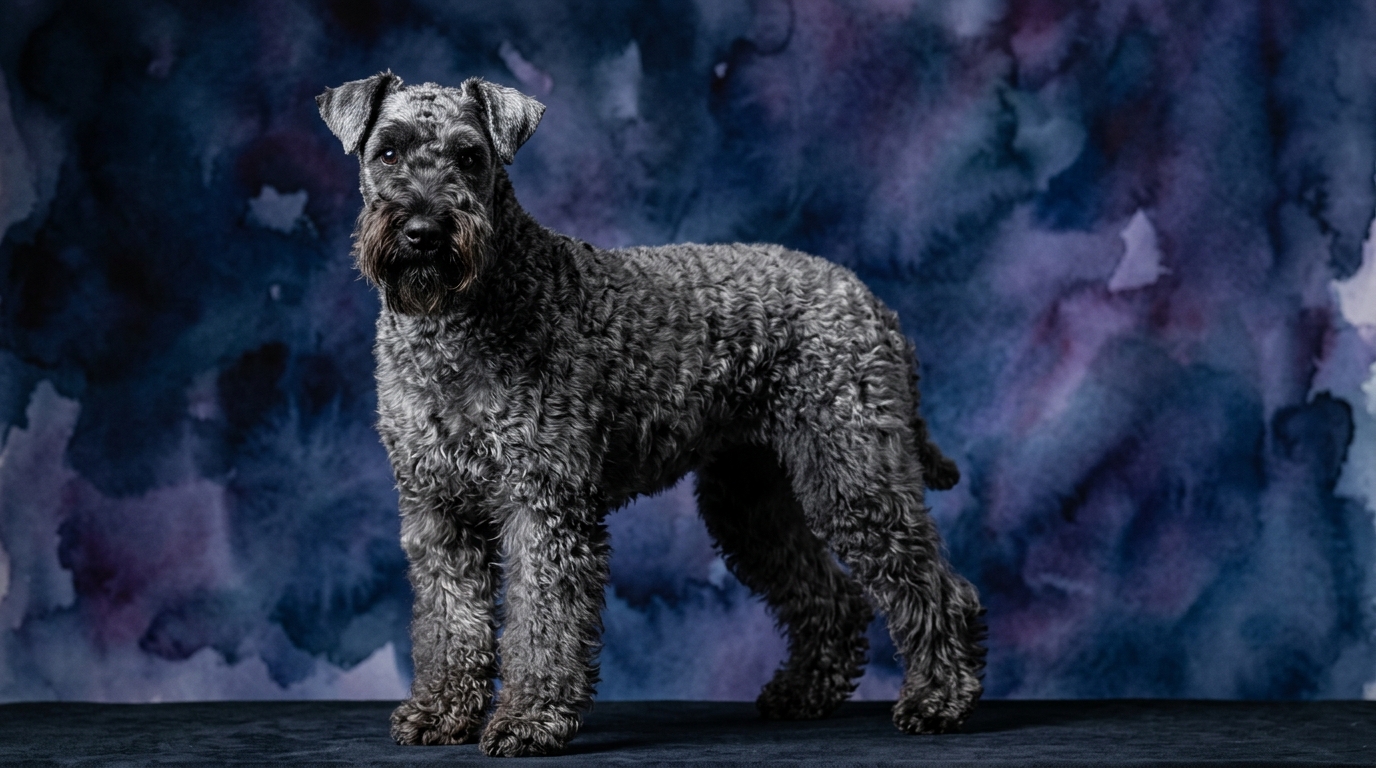
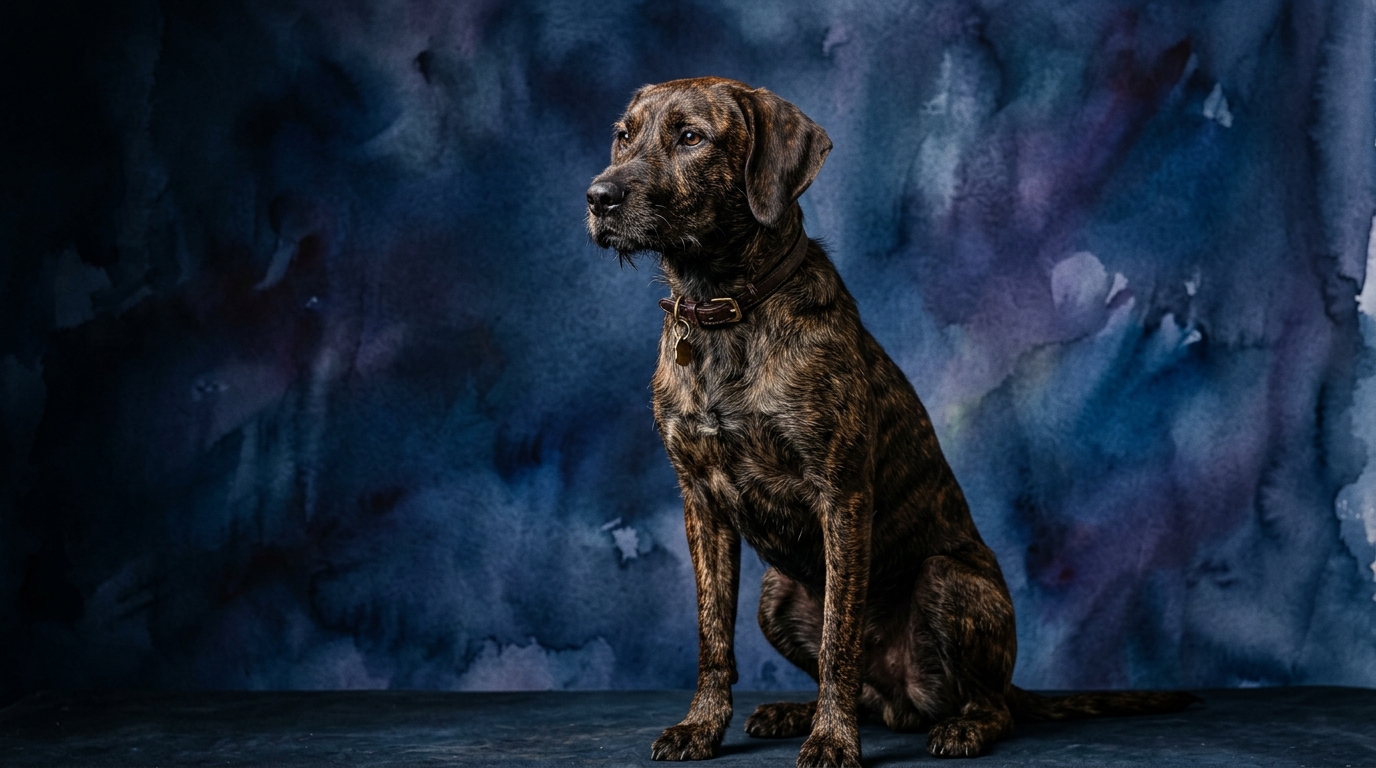
Side-by-Side IQ Profile: Nuances in Identical Scores
On paper, the Kerry Blue Terrier and the Plott Hound both achieve a 3 out of 5 across all five cognitive dimensions measured by The Cosmic Pet Pet IQ Lab. This suggests a moderate aptitude in each area, but the *way* these aptitudes manifest is profoundly shaped by their breed-specific roles and temperaments.
For the Kerry Blue Terrier, a breed historically engaged in pest control and herding, a Problem Solving score of 3/5 often means an tenacious ability to figure out how to access a perceived 'prey' item, navigate a complex environment to reach a goal, or outwit a handler in a game. Their solutions can be direct and persistent, sometimes showing a clever wiliness. Training Speed at 3/5 indicates they learn new commands at a steady pace, but their independent terrier spirit can mean they choose *when* to demonstrate that learning. Social Intelligence at 3/5 in a Kerry Blue often involves a keen awareness of their family's dynamics and moods, coupled with a confident, sometimes assertive, approach to other canines. Their Instinctive Drive, also 3/5, is strongly rooted in a robust prey drive, a desire to dig, and a protective instinct. Memory at 3/5 for a Kerry Blue means they retain learned commands and routines adequately, often remembering past successful strategies for obtaining desired outcomes.
The Plott Hound, a breed developed for tracking and baying large game, expresses its 3/5 Problem Solving capacity through its exceptional ability to decipher complex scent trails, navigate vast and varied terrains, and overcome natural obstacles while maintaining focus on a quarry. Their problem-solving is often sensory-driven and spatially intelligent. Their Training Speed of 3/5 suggests they can learn commands and routines steadily, yet their powerful, all-consuming scent drive can often override human instruction, making consistent focus a training challenge. Social Intelligence at 3/5 for a Plott typically manifests in their ability to work cooperatively within a 'pack' (human or canine) during a hunt, understanding roles and signals, though they may be less attuned to subtle human social cues when a compelling scent is present. Their Instinctive Drive, also 3/5, is dominated by an unparalleled scenting ability, a strong desire to track, and a distinctive baying vocalization. Memory at 3/5 means a Plott Hound can recall scent patterns, successful hunting grounds, and learned commands, though a fresh trail can easily divert their attention from prior lessons.
Where the Kerry Blue Terrier Excels Cognitively
The Kerry Blue Terrier often demonstrates an edge in cognitive resilience and adaptable application of their problem-solving skills. While both breeds score 3/5, the Kerry Blue's terrier tenacity means they are less likely to abandon a cognitive challenge due to external distractions that aren't directly related to their immediate, perceived 'task.' Their problem-solving is often more generalized, applying to a wider range of household situations or novel puzzles, rather than being primarily scent-driven. This breed frequently displays a cleverness in manipulating objects or situations to their advantage, showcasing an inventive streak that can be both endearing and challenging.
Their social intelligence, while rated the same, tends to be more outwardly expressive and communicative in a family setting. Kerry Blues often seem to 'read' their human companions with a nuanced understanding of emotional states, making them highly responsive to their owners' moods and intentions. This allows for a deeper, more reciprocal cognitive bond in a domestic environment, where their 3/5 social intelligence translates into a perceptive companion who can adapt their behavior based on subtle human cues.
Where the Plott Hound Excels Cognitively
The Plott Hound's cognitive strengths lie profoundly in areas demanding sustained, single-minded focus and exceptional sensory processing. Their 3/5 problem-solving ability, while numerically identical to the Kerry Blue's, is unmatched when it comes to intricate scent discrimination and navigation. A Plott can process a myriad of olfactory data, filtering out irrelevant smells to pinpoint a specific target, a cognitive feat requiring immense mental stamina and analytical skill. Their memory, also 3/5, is particularly robust for spatial information and scent patterns, allowing them to effectively 'map' their environment through smell and recall complex routes.
Furthermore, their instinctive drive, rated 3/5, translates into an incredible capacity for endurance in tasks that align with their hunting heritage. This isn't just physical endurance, but cognitive endurance – the ability to maintain intense mental engagement with a tracking task for extended periods, despite fatigue or environmental challenges. This specific, deep-seated drive makes them unparalleled in activities that leverage their natural talents, such as advanced scent work or search and rescue, where their focused intellect shines brightest.
Which is Easier to Train and Why?
Despite both breeds having a 3/5 Training Speed score, the *perceived* ease of training differs significantly due to their behavioral predispositions. The Kerry Blue Terrier, while capable of learning at a moderate pace, often possesses a strong-willed, independent streak typical of terriers. They thrive on engaging, varied training sessions that prevent boredom and appeal to their cleverness. Training a Kerry Blue requires consistency, creativity, and a handler who can make learning feel like a collaborative challenge rather than a strict imposition. If training becomes repetitive or dull, their 3/5 memory might recall the less engaging aspects, leading to selective deafness. Their social intelligence means they are often responsive to their handler's enthusiasm, but their independent problem-solving can lead them to 'think for themselves' rather than simply obey.
The Plott Hound, conversely, presents a different set of training challenges. While they also learn at a 3/5 pace, their overwhelming instinctive drive for scent work often means they are highly susceptible to environmental distractions. A compelling scent can instantly override any command, regardless of how well it's been learned. Training a Plott requires immense patience, consistent positive reinforcement, and often, a dedicated focus on impulse control and recall in highly stimulating environments. Their 3/5 social intelligence might mean they are less inclined to offer eye contact or seek human approval when a fascinating scent trail beckons. Therefore, while both learn at a similar rate, the Plott's powerful, inherent drive often makes them *feel* more challenging to train consistently in everyday scenarios compared to the Kerry Blue, which might be willful but generally more focused on its human family.
Which Suits Active Owners vs. Relaxed Owners
For active owners, both breeds present compelling options, but for different reasons. The Kerry Blue Terrier, with its balanced 3/5 scores across the board, particularly its instinctive drive and problem-solving, thrives with owners who can provide consistent mental and physical stimulation. They excel in dog sports like agility, earthdog trials, or obedience, where their cleverness and athleticism can be channeled. An active owner for a Kerry Blue is someone who enjoys engaging in varied activities, providing mental puzzles, and managing a confident, sometimes assertive, personality. Their physical exercise needs are moderate to high, but their mental needs are equally demanding, requiring an owner who understands their terrier drive.
The Plott Hound is also suited for active owners, but specifically those who are passionate about outdoor activities that leverage their extraordinary scenting abilities. Long hikes, scent work, tracking sports, or even responsible hunting are ideal outlets for a Plott's profound instinctive drive. A relaxed owner would likely find a Plott Hound's boundless energy and single-minded focus on scent overwhelming, as their 3/5 problem-solving and memory are geared towards sustained, goal-oriented tasks. They require substantial physical exercise, but critically, also need opportunities to use their nose and fulfill their natural purpose. An owner who doesn't provide this outlet will likely encounter a restless, potentially destructive dog. Therefore, while both are active, the *type* of activity an owner enjoys is crucial in determining the best fit.
The Verdict: When to Choose Each Breed
The Verdict
Choose the Kerry Blue Terrier if you seek a clever, confident companion who enjoys varied mental challenges and can integrate deeply into family life, offering perceptive social interaction alongside a spirited independence.
Opt for the Plott Hound if you're an active individual passionate about the outdoors and dedicated to channeling a powerful, focused scent drive into activities like tracking, hiking, or scent work, appreciating their enduring cognitive focus.
🧠 Find Your Pet's IQ Score
Our Pet IQ Lab assessment covers 25+ tests across 5 cognitive dimensions — personalized to your breed.
Take the Full IQ Test →Frequently Asked Questions
Do Kerry Blue Terriers and Plott Hounds have similar learning capabilities?
Yes, both breeds received a 3/5 for Training Speed, indicating they learn at a moderate pace. However, their underlying motivations and potential distractions differ significantly, meaning the *experience* of training them can feel quite distinct.
Which breed is better for a first-time dog owner?
Neither breed is typically recommended for first-time owners due to their strong drives and independent natures. Both require experienced handlers who understand their specific breed traits and can provide consistent training and appropriate outlets for their energy and intellect.
How do their social intelligence scores of 3/5 differ in practice?
A Kerry Blue's social intelligence often manifests as perceptiveness to human family dynamics and assertive interactions with other dogs. A Plott's social intelligence is more geared towards cooperative work within a pack context, potentially making them less focused on subtle human social cues when their scent drive is engaged.