
Side-by-Side Cognitive Profiles: Kerry Blue Terrier vs. Tibetan Terrier
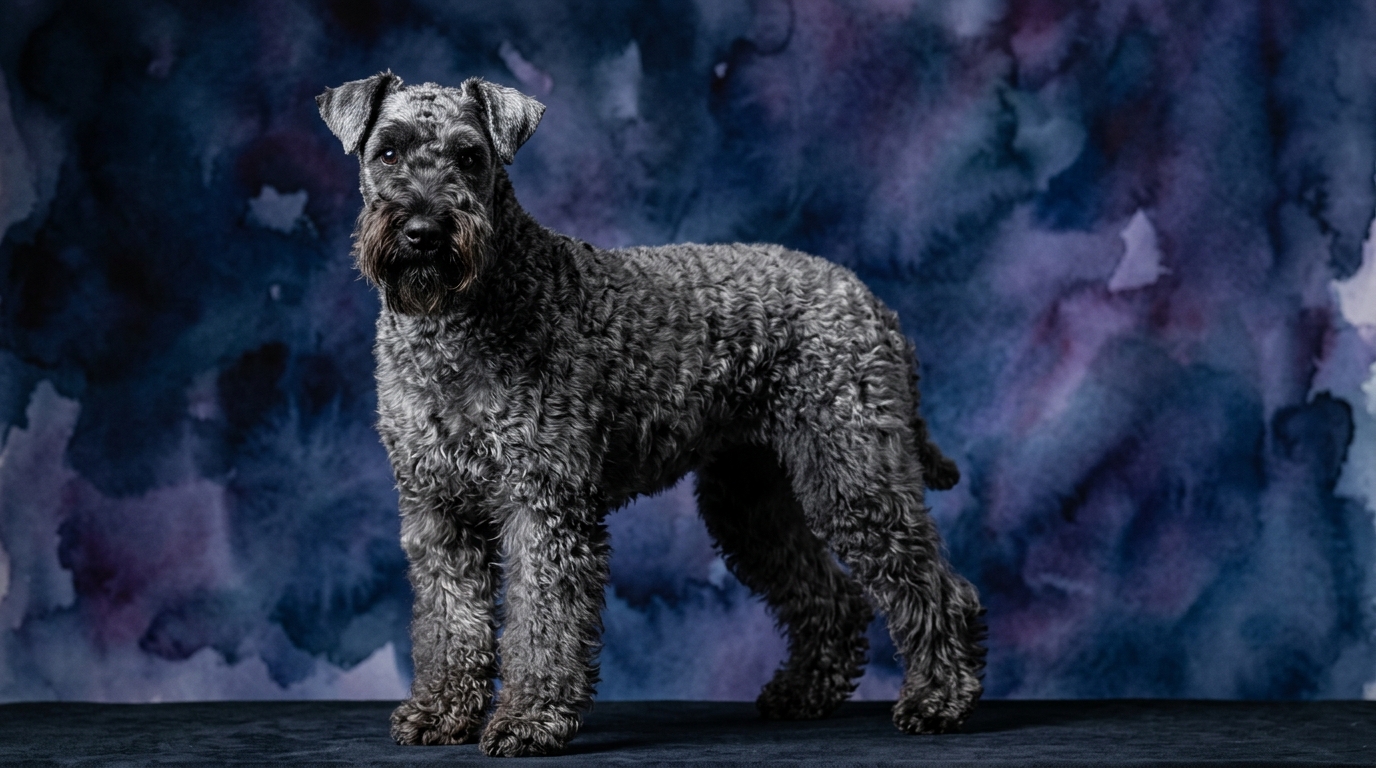
The Kerry Blue Terrier, originating from Ireland, is a robust member of the Terrier group, historically bred for vermin control. Their cognitive makeup, while not fitting into Coren's obedience-focused rankings, reflects a working dog's practicality. Their Problem Solving (3/5) is characterized by tenacity and a direct, often physical, determination, excelling at overcoming obstacles through digging, chasing, or manipulating objects. Training Speed (3/5) is moderate, but their independent terrier spirit means they learn with an assessment of personal benefit; consistency and engaging methods are crucial to combat boredom. Social Intelligence (3/5) sees them forming deep bonds with family, perceptive about household dynamics and human moods, though often reserved with strangers. An Instinctive Drive (3/5) is evident in their moderate but persistent prey drive, manifesting as keen interest in small, moving objects and environmental investigation. Their Memory (3/5) is solid, retaining commands, routines, and experiences, both positive and negative, over time.
The Tibetan Terrier, a Non-Sporting breed from the 'Roof of the World,' served as companions and watchdogs in monasteries, earning a Coren rank of #63, placing them in the average working/obedience intelligence category. Their Problem Solving (3/5) often involves resourcefulness and a thoughtful, observational strategy, sometimes appearing to "think things through" before acting, such as figuring out how to open gates. Training Speed (3/5) is moderate, yet their "mind of their own" means they grasp concepts but might choose to comply only when motivated, requiring patience and positive reinforcement. Social Intelligence (3/5) shows them deeply attuned to family emotions and routines, sensitive observers of human behavior who adapt their actions accordingly, though they can be discerning with strangers. Their Instinctive Drive (3/5) reflects their historical role as guardians, leading to a moderate protective instinct and keen awareness of surroundings, enjoying a "job" even if just watching the home. Memory (3/5) is good for places, people, and routines, contributing to their adaptability and ability to form lasting habits.
Where the Kerry Blue Terrier Wins Cognitively
The Kerry Blue Terrier often demonstrates a more direct and unwavering focus when engaged in a task that aligns with its inherent drives. Their problem-solving, while rated similarly to the Tibetan Terrier, tends to be more about persistent action and physical manipulation, making them particularly effective in scenarios requiring sustained effort against an obstacle. For instance, if a toy is hidden, a Kerry Blue might more readily dig or push relentlessly until it's uncovered, whereas a Tibetan Terrier might observe longer before committing to a physical solution. Their determination translates into a distinct cognitive advantage when sheer willpower and physical engagement are required to achieve a goal, reflecting their tenacious terrier heritage.
Where the Tibetan Terrier Wins Cognitively
The Tibetan Terrier often exhibits a more nuanced and observational approach to their environment, which can be a cognitive strength in social and adaptive situations. Their problem-solving frequently involves a period of assessment, allowing them to devise solutions that are less about brute force and more about strategic manipulation or understanding cause-and-effect relationships. This breed's social intelligence, while also rated 3/5, often manifests as a subtle attunement to human emotional states and complex household dynamics, potentially allowing them to anticipate needs or react more delicately to changes in mood or routine. Their thoughtful rather than impulsive nature, sometimes attributed to the "veil" of hair over their eyes, reflects a keen observational capacity.
Which is Easier to Train and Why: Behavioral Differences
Neither breed is inherently "easy" in the conventional sense, as both possess a 3/5 training speed score, indicating they learn at a moderate pace but with caveats. The Kerry Blue Terrier's independent terrier spirit often means training can feel like a negotiation; they understand commands but might test boundaries or choose to comply only if the reward is compelling enough. Their high energy and drive can be channeled into training, but without firm, consistent, and engaging methods, they can become distracted or stubborn, requiring an owner who can match their spirited determination.
The Tibetan Terrier, while equally capable of learning, presents a different challenge. Their "mind of their own" means they might grasp a concept quickly but then decide it's not worth their effort, or they might offer an alternative behavior they deem more appropriate. They respond best to positive reinforcement, patience, and handlers who appreciate their subtle humor and independent streak. While less prone to the boisterousness of the Kerry Blue, their quiet refusal can be just as frustrating. Therefore, training ease ultimately depends on the owner's personality and their ability to adapt to each breed's specific brand of independence. For owners who enjoy a spirited challenge and direct engagement, the Kerry Blue might feel more "trainable" in terms of channeling energy. For those who appreciate a more thoughtful, nuanced approach and can motivate with gentle persuasion and positive reinforcement, the Tibetan Terrier might prove more rewarding.
Suitability for Active vs. Relaxed Owners
For active owners, the Kerry Blue Terrier often presents a more suitable match. Their moderate instinctive drive and inherent energy mean they thrive with regular physical activity and mental stimulation. Owners who enjoy agility, earthdog trials, or long, vigorous walks and hikes will find a willing and enthusiastic companion in a Kerry Blue. Their determination and stamina make them excellent partners for owners who appreciate a dog that can keep up and actively participate in outdoor adventures. Their need for consistent engagement extends beyond physical exercise to mental challenges, making them ideal for owners who enjoy structured play and training sessions.
The Tibetan Terrier, while not a couch potato, generally suits owners with a more relaxed, yet still engaged, lifestyle. They enjoy walks and playtime but are often content with a moderate amount of exercise, preferring quality time with their family over constant high-intensity activity. Their observant and thoughtful nature means they appreciate mental enrichment through puzzles, training, and simply being part of family routines. They are well-suited for owners who seek a loyal, companionable dog that is less demanding in terms of sheer physical output but still requires consistent mental stimulation and social interaction. They can adapt to apartment living if their exercise and mental needs are met, making them versatile for various home environments.
The Verdict
Choose a Kerry Blue Terrier if you are an active, experienced owner who enjoys a spirited, determined companion for structured activities and consistent training, appreciating their tenacious drive.
Opt for a Tibetan Terrier if you seek a thoughtful, observant, and subtly independent companion who thrives on family interaction and moderate activity, valuing their unique blend of wisdom and affection.
🧠 Find Your Pet's IQ Score
Our Pet IQ Lab assessment covers 25+ tests across 5 cognitive dimensions — personalized to your breed.
Take the Full IQ Test →Frequently Asked Questions
Do Kerry Blue Terriers and Tibetan Terriers have similar grooming needs given their coats?
Both breeds require significant grooming to maintain their distinctive coats. The Kerry Blue Terrier's soft, wavy, non-shedding blue coat needs regular brushing and professional grooming every 6-8 weeks to prevent matting and maintain its shape. The Tibetan Terrier's long, double coat also requires daily brushing to avoid tangles and mats, along with periodic trims, ensuring their comfort and health.
Are these breeds good with children and other pets?
Both breeds can be good with children and other pets if properly socialized from a young age. Kerry Blue Terriers, with their strong prey drive, might need more careful introduction to smaller pets but are generally loyal to their family. Tibetan Terriers are often patient and playful with children, and can coexist peacefully with other animals, especially when raised together.
How do their protective instincts compare?
Both breeds possess protective instincts, though they manifest differently. The Kerry Blue Terrier's protective nature often stems from their strong loyalty and willingness to defend their family, sometimes with a bold, assertive stance. The Tibetan Terrier, historically a watchdog, exhibits protection more through alertness and vocalization, acting as a vigilant alarm system rather than an aggressive guard, often reserved with strangers.