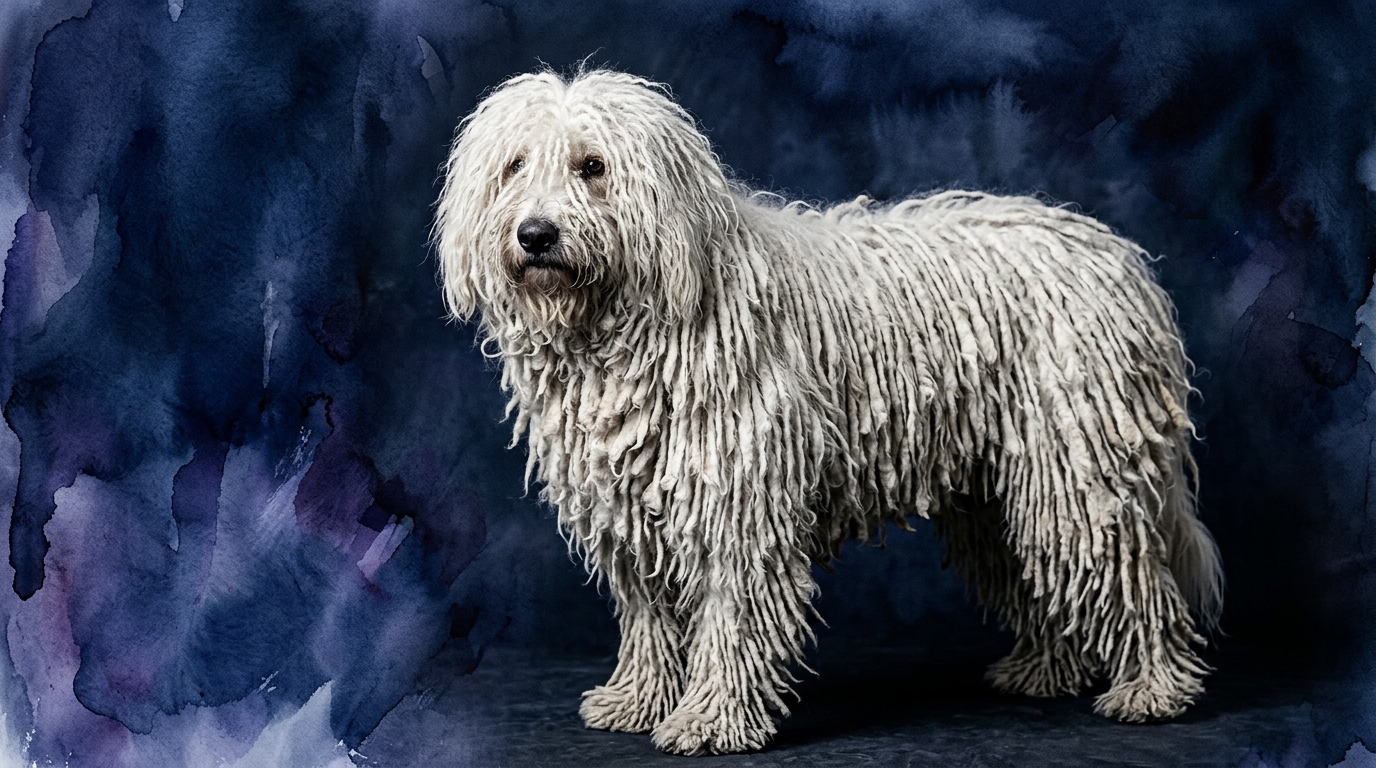
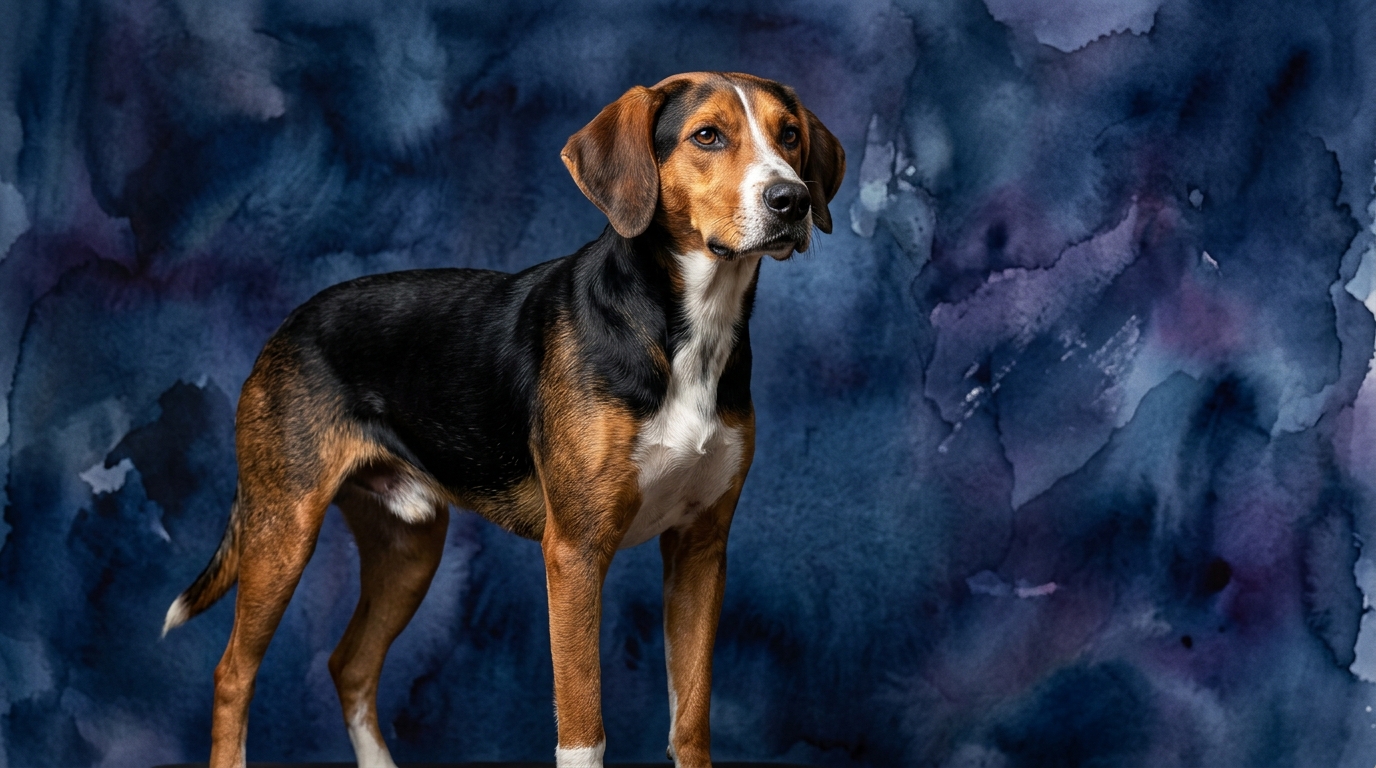
Side-by-Side Cognitive Profiles: Komondor vs. American Foxhound
At first glance, the Komondor and the American Foxhound appear to share identical scores across our five key intelligence dimensions: Problem Solving (3/5), Training Speed (3/5), Social Intelligence (3/5), Instinctive Drive (3/5), and Memory (3/5). However, these identical numerical ratings mask profound differences in how these breeds apply their cognitive capacities, rooted deeply in their ancestry and purpose. The Komondor, a majestic Hungarian livestock guardian, is Coren-ranked at #67, reflecting its capacity for obedience and working intelligence. The American Foxhound, a tireless scent hound, remains unranked by Coren, a common occurrence for breeds whose primary drive is independent scent work rather than direct human-directed obedience.
For the Komondor, a 3/5 in Problem Solving manifests as a nuanced ability to assess threats and strategize defense, often independently. This isn't about solving puzzle toys quickly, but rather evaluating a situation in a pastoral setting and determining the best course of action to protect its flock. Its Training Speed, also 3/5, indicates a moderate pace for learning new commands, often tempered by an inherent independence and a need to understand the 'why' behind a request. Social Intelligence at 3/5 means the Komondor is discerning; it forms strong bonds with its family and livestock but remains wary and reserved with strangers, a crucial trait for a guardian. Its Instinctive Drive of 3/5 is powerfully geared towards protection and territory, a deep-seated impulse to guard rather than hunt or retrieve. Memory at 3/5 for a Komondor is excellent for remembering routines, perceived threats, the layout of its territory, and the identities of its charges and family members.
The American Foxhound, conversely, applies its identical 3/5 scores in a completely different context. Its 3/5 Problem Solving is geared towards navigating complex scent trails, overcoming obstacles in pursuit, and collaborating within a pack to locate quarry. This is a highly specialized form of problem-solving, less about abstract reasoning and more about persistent sensory interpretation. Training Speed, also 3/5, is often challenged by its singular focus on scent; while capable of learning, its attention can be easily diverted by compelling odors, requiring patient, consistent reinforcement. Social Intelligence at 3/5 for a Foxhound means it thrives in a pack environment, forming strong, cooperative bonds with other dogs and its human 'pack.' It is typically friendly and outgoing once it recognizes someone as part of its social circle. Its Instinctive Drive of 3/5 is overwhelmingly focused on scenting, tracking, and the chase, a powerful, unwavering impulse that defines its very being. Memory at 3/5 allows the Foxhound to recall intricate scent patterns, remember effective hunting routes, and recognize its pack mates and familiar humans.
Where the Komondor Excels Cognitively
The Komondor's cognitive strengths truly shine in scenarios demanding independent judgment and protective instincts. Its 3/5 problem-solving isn't about quick tricks, but rather the ability to autonomously assess evolving situations and make decisions for the safety of its charges. For instance, a Komondor might instinctively position itself between a perceived threat and its family without direct command, demonstrating a sophisticated understanding of spatial dynamics and protective strategy. Its social intelligence, while not broadly effusive, is profoundly discerning; it quickly learns who belongs and who doesn't, making it an exceptional judge of character within its established territory. This nuanced social understanding, combined with its memory for individuals and routines, allows it to act as a vigilant, self-reliant sentinel, a cognitive advantage for owners seeking a dedicated guardian.
Where the American Foxhound Excels Cognitively
The American Foxhound's cognitive prowess is undeniable in its specialized domain: scent work and sustained pursuit. Its 3/5 problem-solving is a masterclass in sensory interpretation, allowing it to unravel complex scent puzzles across varied terrains and conditions. This isn't about intellectual contemplation, but an intuitive, persistent drive to follow a trail to its conclusion, demonstrating an incredible capacity for focus and determination. Its instinctive drive, also rated 3/5, is a powerful engine for this; it provides an almost boundless energy and mental fortitude for tracking, making it exceptionally suited for activities like scent work, tracking sports, or even search and rescue. The Foxhound's memory excels in recalling intricate scent patterns and geographical layouts encountered during a hunt, a highly specific and effective form of cognitive recall that few breeds can match.
Training Dynamics: Independence vs. Instinct
When it comes to training, both breeds present distinct challenges stemming from their core cognitive profiles. The Komondor, with its 3/5 training speed and strong independence, requires an owner who understands its working dog mentality. It doesn't inherently seek to please in the same way a retriever might; instead, it assesses commands for their logical purpose. Training a Komondor often involves patient, consistent reinforcement and convincing the dog that the command aligns with its inherent protective duties. Its independence means it might perform a command perfectly one day and then 'decide' it's not necessary the next, particularly if it perceives a more pressing 'guardian' task. This isn't stubbornness in a negative sense, but rather a manifestation of its historical role as a self-sufficient protector.
The American Foxhound, also with a 3/5 training speed, faces a different hurdle: its overwhelming instinctive drive for scenting. While capable of learning, its attention is constantly pulled by the olfactory world. A Foxhound might be perfectly attentive indoors, but once exposed to an interesting scent outdoors, its training 'switches off' as its primal instincts take over. This means training requires immense patience, very high-value rewards, and often specialized techniques to break through the scent-driven tunnel vision. Recall, for instance, is notoriously difficult to instill reliably in a Foxhound because the lure of a fresh trail often overrides any learned command. Its pack-oriented social intelligence means it often responds well to training within a group, but individual focus can be fleeting when a captivating scent is present.
Matching Breeds to Lifestyles: Active Pursuits vs. Vigilant Companionship
Choosing between these two breeds largely depends on the owner's lifestyle and what they seek in a canine companion. The Komondor, despite its large size, can be surprisingly calm indoors once its protective duties are understood and it feels its territory is secure. It suits owners who appreciate a vigilant, independent companion and are prepared for its unique grooming needs and reserved nature with strangers. These owners are often more relaxed in terms of high-energy, structured exercise, but must be active in providing consistent socialization, firm leadership, and mental engagement that taps into its guardian instincts. A Komondor thrives in a home where it has a 'job,' even if that job is simply overseeing the family and property, and where it's not expected to be a constantly playful or overtly social dog with everyone it meets.
The American Foxhound, on the other hand, is unequivocally suited for active owners. Its boundless energy, stemming from its powerful instinctive drive, demands significant daily exercise, ideally involving opportunities to run, explore, and engage its incredible nose. This breed flourishes with owners who enjoy hiking, running, or participating in scent work or tracking sports. A relaxed owner who cannot provide outlets for its physical and mental energy will likely find themselves with a restless, vocal, and potentially destructive dog. Foxhounds thrive in environments where their innate desire to follow a scent trail can be safely and regularly indulged, making them ideal for individuals or families with a passion for outdoor adventures and a willingness to engage with their dog's profound instinctual needs.
The Verdict: When to Choose Each
The Verdict
Choose the Komondor if you seek a fiercely loyal, independent guardian who will vigilantly protect your home and family, and you appreciate a dog with a discerning social intelligence.
Opt for the American Foxhound if you lead a highly active lifestyle, desire a friendly, pack-oriented dog, and are eager to engage with a canine whose world revolves around scent and pursuit.
🧠 Find Your Pet's IQ Score
Our Pet IQ Lab assessment covers 25+ tests across 5 cognitive dimensions — personalized to your breed.
Take the Full IQ Test →Frequently Asked Questions
Are Komondors difficult to train due to their independence?
Komondors have a 3/5 training speed, indicating they are capable learners but require patient, consistent training that respects their independent working dog nature. They respond best when commands make logical sense within their guardian role, rather than simply seeking to please.
How does an American Foxhound's strong instinctive drive impact its behavior?
The American Foxhound's 3/5 instinctive drive is overwhelmingly focused on scenting and pursuit, meaning they possess immense energy and an unwavering focus when on a trail. This necessitates secure yards and leashed walks to prevent them from following a captivating scent, and requires owners to provide outlets for this natural behavior.
Despite similar IQ scores, why are their cognitive expressions so different?
Their identical 3/5 IQ scores are applied within vastly different evolutionary contexts. The Komondor's intelligence is shaped by independent guarding, while the American Foxhound's is specialized for collaborative scent tracking, leading to distinct cognitive strengths and behavioral manifestations in real-world scenarios.