Side-by-Side Cognitive Profiles: Decoding the 3/5 Scores
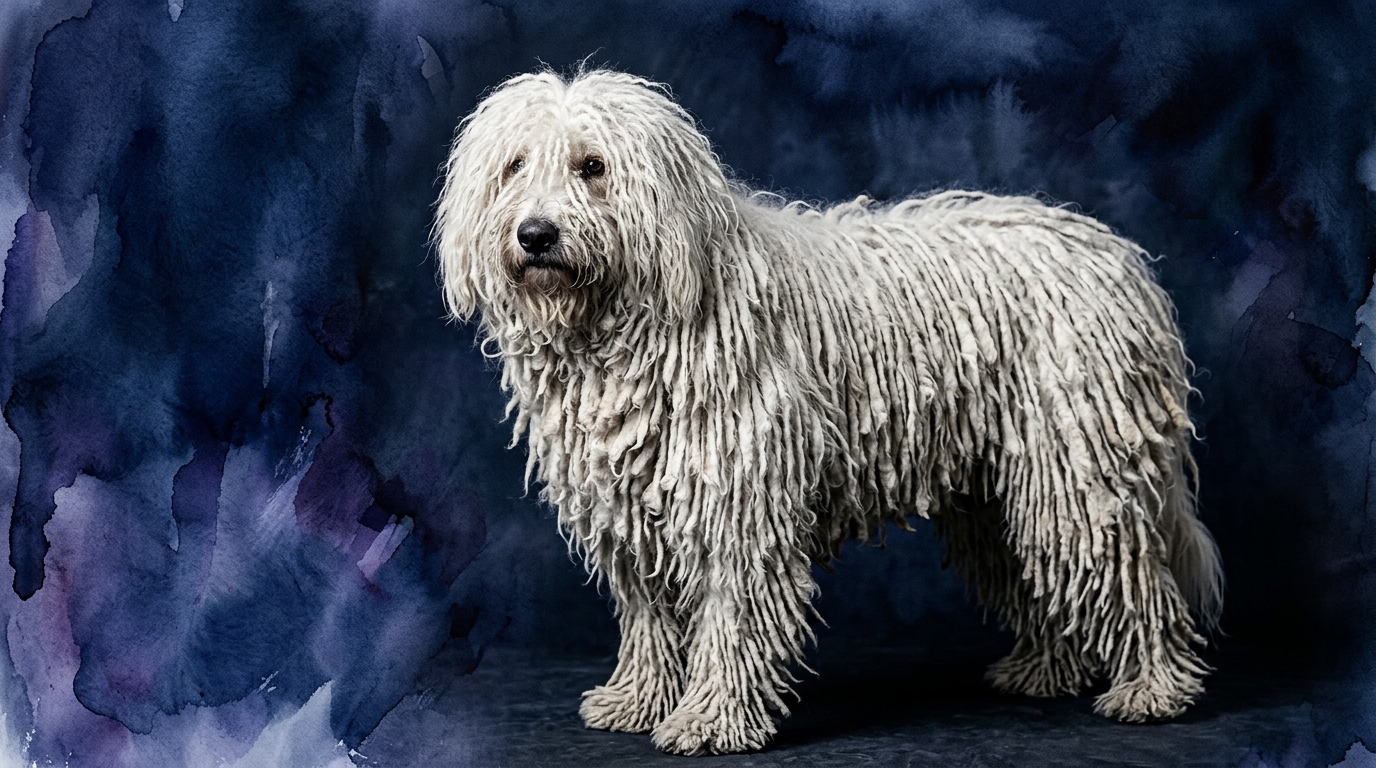
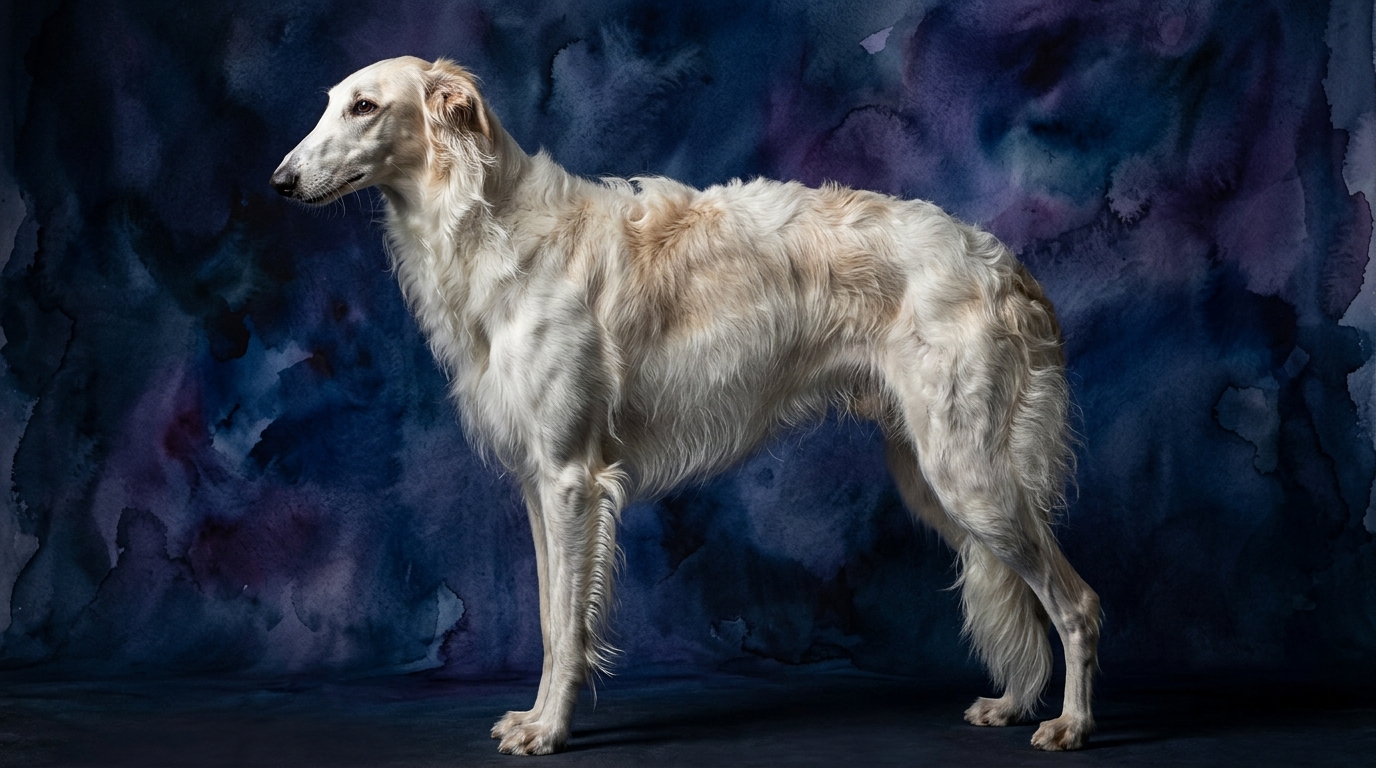
While both the Komondor (Coren rank #67) and the Borzoi (Coren rank #75) register a consistent 3/5 across all five cognitive dimensions in the Pet IQ Lab, the *nature* of these scores is profoundly shaped by their breed groups and historical roles. Understanding these nuances is crucial for appreciating their respective mental landscapes.
For **Problem Solving (3/5)**, the Komondor’s capacity centers on independent, contextual decision-making within its guardian role. This involves assessing threats to livestock or family, strategizing defensive actions, and determining appropriate responses without constant human direction. Their 'problems' are often about maintaining environmental security. In contrast, the Borzoi’s 3/5 in problem-solving manifests as dynamic, rapid adaptation during a chase. This requires split-second judgments to navigate complex terrain, anticipate prey movement, and execute the most efficient pursuit path, a fast-twitch cognitive process rather than a contemplative one.
Regarding **Training Speed (3/5)**, the Komondor's rating reflects its independent spirit as a livestock guardian dog. They are capable of learning, but their inherent drive to think for themselves means they may question commands or require more motivation if a task doesn't align with their perceived purpose. It's not a lack of capacity, but a difference in willingness to comply. The Borzoi’s 3/5 is influenced by its powerful prey drive and sighthound independence. While they can grasp concepts, their attention can be easily diverted by movement, making consistent, engaging training crucial to maintain focus against their instinctual urges.
In **Social Intelligence (3/5)**, the Komondor exhibits a reserved, watchful demeanor focused on discerning friend from potential foe within its established territory. Their bonds are deep and protective towards their immediate family and flock, but they are typically aloof with strangers, relying on observation to assess social cues. The Borzoi also scores 3/5, demonstrating a dignified and often quiet social presence. They are polite but rarely boisterous, forming strong, yet subtle, connections with their human companions, often communicating through gentle presence rather than overt displays.
The **Instinctive Drive (3/5)** for the Komondor is overwhelmingly guarding. This manifests as a strong territorial imperative and an unwavering protective impulse towards their charges, whether livestock or family members. This drive is a constant, deeply ingrained aspect of their being. For the Borzoi, their 3/5 is dominated by the powerful instinct to chase. This sighthound specialty makes them exceptional at running down fast-moving game, a drive that is ever-present and requires careful management in a domestic environment.
Finally, **Memory (3/5)** in a Komondor is robust for recalling routines, established boundaries, and past interactions, especially concerning threats or individuals deemed safe or unsafe. This serves their role as a vigilant protector of a defined space. The Borzoi also possesses a good memory, particularly for spatial layouts, familiar people, and established routines. They can recall the nuances of open spaces which aids their running activities, and remember familiar faces and the comfort of their preferred resting spots.
Where the Komondor Excels Cognitively
The Komondor's cognitive strengths truly shine in scenarios demanding independent vigilance and nuanced threat assessment. Their 3/5 in Problem Solving is less about solving puzzles and more about making complex, real-time decisions in a dynamic, unsupervised environment. They excel at evaluating subtle changes in their surroundings, distinguishing between a harmless visitor and a genuine threat to their charges, a cognitive feat requiring consistent environmental monitoring.
Furthermore, their specialized Social Intelligence, while scoring 3/5, is geared towards long-term, deep bonding with their inner circle and a highly discerning approach to outsiders. This isn't a broad, universally friendly intelligence, but one finely tuned for protection and loyalty, remembering who belongs and who doesn't with remarkable accuracy and consistency. Their memory for routines and territorial boundaries is a testament to this focused cognitive architecture.
Where the Borzoi Excels Cognitively
The Borzoi's cognitive prowess is best observed in its remarkable ability for rapid, fluid decision-making during high-speed pursuits. Their 3/5 in Problem Solving translates into an exceptional capacity for spatial reasoning and predictive analysis in motion, allowing them to anticipate prey movements and navigate obstacles with breathtaking agility and precision. This dynamic problem-solving is a testament to their sighthound heritage.
Their Instinctive Drive, also a 3/5, underpins this unique cognitive strength. It's a highly specialized intelligence focused on the mechanics and strategy of the chase, demanding intense focus and an ability to process visual information at speed. This makes them adept at tasks requiring swift, independent action where speed and visual acuity are paramount, such as lure coursing, where they demonstrate sophisticated route planning and pursuit tactics.
Which is Easier to Train and Why
When considering ease of training, neither the Komondor nor the Borzoi are typically described as 'eager to please' in the manner of many traditional working breeds, both scoring 3/5 for Training Speed. The Komondor's independent nature, a cornerstone of its livestock guardian role, means it often evaluates commands through the lens of its own purpose. They learn, but often at their own pace and with a need for clear justification, making them less inclined towards repetitive drill-based training. Building trust and demonstrating the utility of a command are crucial for success, as they are partners, not merely followers.
The Borzoi presents a different training challenge due to its powerful, inherent prey drive and sighthound independence. While they are sensitive and respond well to positive reinforcement, any moving object can instantly eclipse their focus on a command. Their attention is easily fractured by environmental stimuli, requiring owners to be highly creative with motivation and to train in distraction-free environments before generalizing skills. Both breeds require patient, consistent, and understanding trainers who appreciate their unique cognitive frameworks, rather than expecting immediate, unquestioning obedience.
Suitability for Active vs. Relaxed Owners
The Komondor, despite its watchful nature, might surprise some by being suitable for a more 'relaxed' owner in terms of structured activity, provided that owner understands its deep need for purpose and space. They are not high-energy dogs requiring constant stimulation, but rather prefer to patrol their territory and observe. However, their protective instincts demand an owner who is proactive in socialization and confident in managing a large, independent guardian. They thrive in environments with a clear 'flock' to oversee, even if that 'flock' is just the family.
The Borzoi, while appearing calm and graceful indoors, is undeniably suited for active owners, or at least owners who can provide ample opportunity for bursts of high-speed running in a safe, enclosed area. Their innate sighthound drive means they need to run freely and stretch their legs regularly. They are not suitable for sedentary lifestyles where their need for speed is unmet, though they are content to be quiet and elegant companions when their exercise needs are met. Owners must be prepared to manage a strong prey drive and ensure secure environments for off-leash activity.
The Verdict: When to Choose Each Breed
The Verdict
Choose the Komondor if you seek an independent, vigilant guardian for your home and family, appreciating a dog that thinks for itself and forms deep, protective bonds. They thrive with owners who understand their LGD heritage and provide ample space and clear boundaries.
Opt for the Borzoi if you admire elegance, a dignified temperament, and can provide regular opportunities for exhilarating, safe running in a securely fenced area. They suit owners who appreciate a quiet, affectionate companion indoors but are prepared to manage a powerful prey drive outdoors.
🧠 Find Your Pet's IQ Score
Our Pet IQ Lab assessment covers 25+ tests across 5 cognitive dimensions — personalized to your breed.
Take the Full IQ Test →Frequently Asked Questions
Do Komondors and Borzois get along with other pets?
Komondors, due to their guarding instincts, can be good with 'their' livestock or pets if raised with them, viewing them as part of their flock. However, they may be wary of unfamiliar animals. Borzois have a strong prey drive, so careful introductions and supervision are essential with smaller pets, although they generally coexist peacefully with other sighthounds.
Are Komondors or Borzois better for first-time dog owners?
Neither Komondors nor Borzois are typically recommended for first-time dog owners due to their independent natures, size, and specific breed-related needs. Both require experienced handling, consistent training, and an understanding of their unique temperaments and drives to ensure a harmonious household.
What are the key exercise differences between the two breeds?
Komondors require moderate exercise, primarily patrolling their territory and engaging in walks, valuing purpose over intense activity. Borzois, while calm indoors, have an intense need for short, high-speed bursts of running in a securely fenced area, needing daily opportunities to stretch their long legs and satisfy their chase instinct.