
Side-by-Side Cognitive Profiles
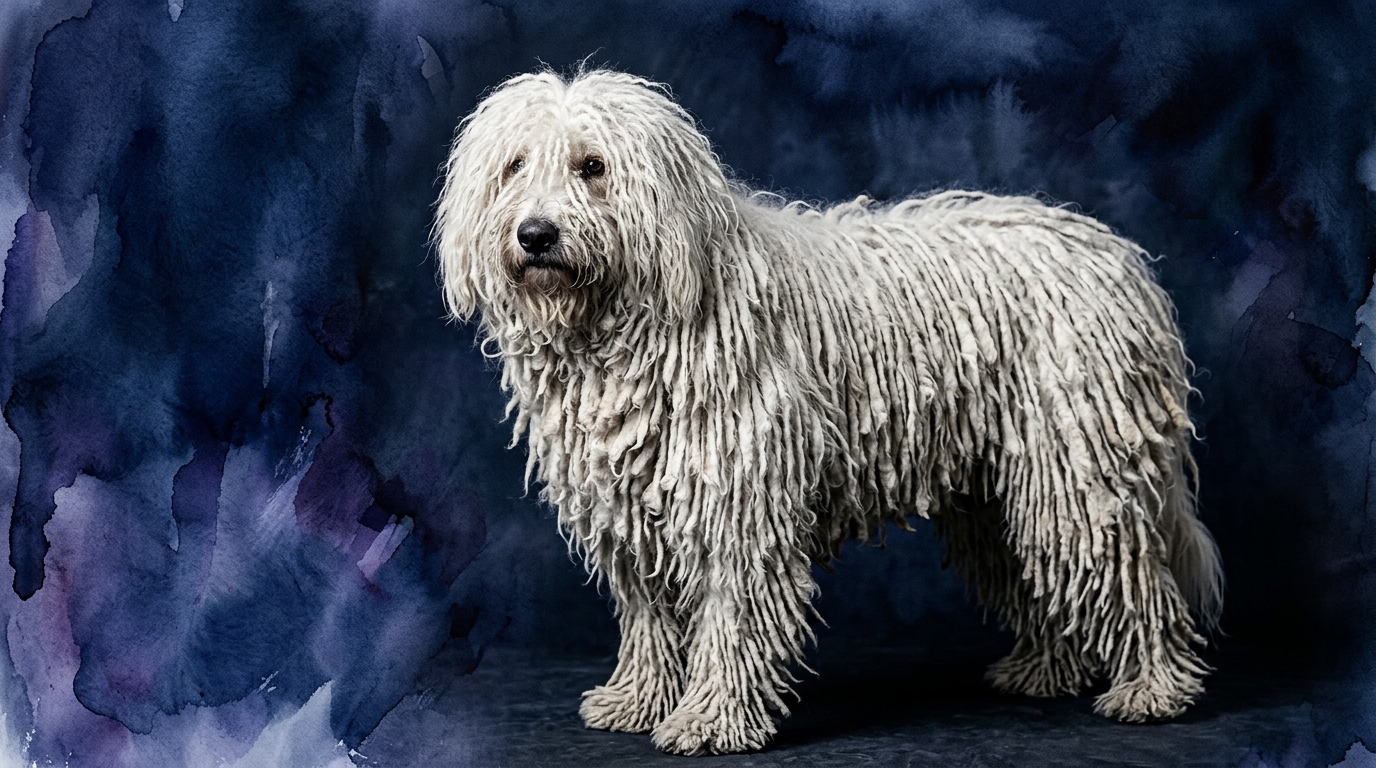
Delving into the specifics, a 3/5 rating across the board indicates a moderate but capable cognitive capacity for both breeds, yet the nuances of their historical roles shape how these scores manifest. For the Komondor, a majestic livestock guardian from Hungary, its 3/5 Problem Solving likely revolves around assessing environmental threats and strategizing protective measures for its flock, often requiring independent thought and minimal human intervention. Its Training Speed at 3/5 reflects a willingness to learn but often on its own terms, particularly if tasks don't align with its inherent guarding instincts. Social Intelligence at 3/5 suggests a reserved nature, deeply bonded with its family but wary of outsiders, demanding discernment. An Instinctive Drive of 3/5 points to a strong, inherent motivation for vigilance and protection. Finally, Memory at 3/5 indicates a solid capacity to recall territories, routines, and perceived threats.
The Bull Terrier, originating from England as a sporting and companion dog, applies its identical 3/5 scores quite differently. Its Problem Solving at 3/5 often manifests as tenacious determination to achieve a desired outcome, whether it's figuring out how to retrieve a hidden toy or manipulate a situation to gain attention. The 3/5 Training Speed indicates they are capable learners, but their energetic and sometimes stubborn personality means consistency and engaging methods are crucial to maintain focus. Social Intelligence at 3/5 reflects a generally outgoing and playful demeanor with their chosen people, though they can be quite robust in their interactions and sometimes selective with other animals. Their Instinctive Drive at 3/5 leans towards engagement, play, and a strong will to participate. Memory at 3/5 suggests good recall for routines, commands, and positive experiences, particularly those involving fun and interaction.
Where the Komondor Excels Cognitively
The Komondor's cognitive strengths are deeply rooted in its heritage as a self-sufficient guardian. Its problem-solving skills, while rated 3/5, shine brightest in scenarios demanding independent judgment and environmental assessment. A Komondor excels at discerning genuine threats from everyday occurrences, making subtle distinctions that an owner might miss. This isn't about solving complex puzzles for human amusement, but rather about strategic observation and protective decision-making. Their social intelligence, though reserved, allows for a profound, almost intuitive understanding of their family's safety and well-being, often anticipating needs or perceived dangers without overt cues. Their memory is particularly keen for the layout of their territory and the identities of those who belong versus those who are strangers, a critical cognitive asset for their protective duties. This breed's unique blend of independence and observational acuity gives it a distinct edge in situational awareness and self-directed protective action.
Where the Bull Terrier Excels Cognitively
The Bull Terrier's cognitive prowess, also rated 3/5, is characterized by its remarkable tenacity and resourcefulness in pursuit of objectives, often driven by a spirited and playful nature. While a Komondor might observe, a Bull Terrier is more likely to actively engage and persist until a 'problem' is solved, whether that problem is accessing a favorite toy or instigating a play session. Their problem-solving strength lies in their determined approach to overcoming physical or mental obstacles, often displaying a cleverness born of stubbornness and a desire for interaction. Their social intelligence allows them to form incredibly strong, often boisterous bonds with their human family, understanding cues for play and affection with a straightforward, enthusiastic approach. This breed's memory is particularly adept at recalling positive reinforcement cues and routines that lead to rewarding interactions, making them eager participants in activities they enjoy. Their cognitive profile is geared towards active engagement and a spirited, sometimes mischievous, pursuit of fun and companionship.
Training Dynamics: Komondor vs. Bull Terrier
When considering ease of training, the identical 3/5 Training Speed scores for both breeds are deceptive, as their underlying motivations and temperaments dictate very different approaches. The Komondor, with its profound independence, requires an owner who understands that its willingness to comply often stems from respect and a perceived purpose rather than sheer eagerness to please. Repetitive drill-style training might be met with disinterest or even stubborn refusal if the Komondor doesn't see the value. Consistency, patience, and establishing clear boundaries from a young age are paramount. Training a Komondor is less about commanding and more about guiding a naturally self-assured animal. Their strong protective instincts need to be channeled appropriately, requiring an owner who can effectively socialize them to discern true threats from everyday life.
The Bull Terrier, while equally stubborn at times, possesses a different training dynamic. Their energetic and playful nature, coupled with a strong desire for engagement, means they respond well to positive reinforcement and training that feels like a game. Their challenge isn't a lack of willingness to learn, but rather a propensity for distraction and a strong will that requires an owner to be more clever and persistent than they are. If a Bull Terrier doesn't find the training engaging or if they perceive an easier, more fun alternative, they will often opt for the latter. Early socialization and consistent training are critical to curb their boisterousness and strong prey drive. While neither breed is for the faint of heart in training, the Komondor demands a partner who understands its independent mind, whereas the Bull Terrier requires an engaging leader who can channel its spirited energy and determination.
Matching Breeds to Lifestyles: Active vs. Relaxed Owners
The Komondor, despite its large size, might surprise some with its activity requirements. While it needs ample space and opportunities to patrol its territory, it's not typically a high-energy dog in the sense of needing constant vigorous exercise like a marathon runner. Its activity is more about vigilance and purposeful movement. This breed suits an owner who values a watchful, independent companion and understands the mental stimulation required for a guardian dog. Relaxed owners, perhaps those living in a more rural setting with a large, fenced property, who appreciate a dog that is content to observe and protect, might find the Komondor a good fit. They need an owner who can provide consistent, firm leadership without being overbearing, respecting the Komondor's inherent self-reliance.
The Bull Terrier, in contrast, is undeniably suited for more active owners. Their robust energy, playful spirit, and strong drive mean they thrive with consistent physical exercise and engaging mental challenges. They need daily opportunities to run, play, and interact, whether through structured games, long walks, or dog sports. A relaxed owner who cannot commit to channeling this energy will likely find themselves with a bored, potentially destructive Bull Terrier. This breed thrives in homes where they are an integral part of family activities, receiving plenty of attention and engagement. Owners who enjoy an active lifestyle, appreciate a dog with a strong personality, and are prepared for a dog that demands both physical and mental stimulation will find a loyal and spirited companion in the Bull Terrier.
The Verdict
Choose the Komondor if you seek an independent, watchful guardian for a spacious property, appreciating a dog whose cognitive strengths lie in self-reliant protection and quiet vigilance, and you are prepared for a training journey built on mutual respect.
Opt for the Bull Terrier if you lead an active lifestyle and desire a tenacious, playful, and highly interactive companion, ready to engage in consistent physical and mental stimulation, and you thrive on their spirited determination.
🧠 Find Your Pet's IQ Score
Our Pet IQ Lab assessment covers 25+ tests across 5 cognitive dimensions — personalized to your breed.
Take the Full IQ Test →Frequently Asked Questions
Do Komondors require extensive grooming?
Yes, Komondors have a unique corded coat that requires significant maintenance to prevent matting and keep it clean. Owners must be prepared for regular, specialized grooming routines to maintain the health and appearance of their distinctive coat.
Are Bull Terriers good with children?
Bull Terriers can be excellent family dogs and are often very tolerant and playful with children, but their robust and boisterous nature means supervision is always necessary, especially with very young children, to prevent accidental bumps or knocks.
How do their protective instincts differ?
A Komondor's protective instinct is primarily directed at guarding its territory and family from perceived threats, often with a reserved and watchful demeanor. A Bull Terrier's protectiveness, while present, is typically more tied to its family members and can manifest as a tenacious defense rather than independent vigilance.