
A Side-by-Side Look at Canine Cognition
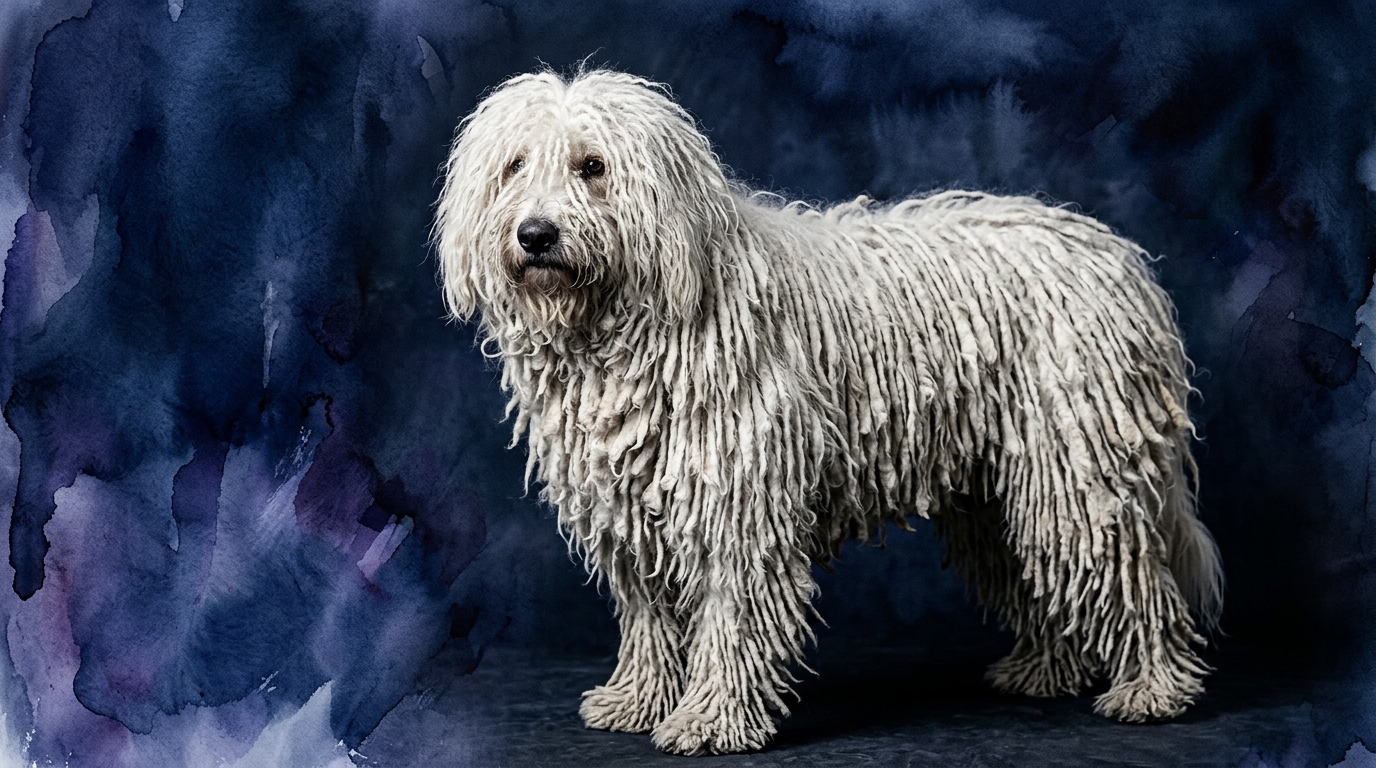
The Komondor, a breed steeped in centuries of guarding livestock, displays a unique cognitive architecture, with a Coren rank of #67. Their Problem Solving is rated 3/5, reflecting a capacity for independent, practical solutions within their guardian role, rather than abstract puzzle-solving. Training Speed, also 3/5, indicates a deliberate learning pace, where compliance is often weighed against their own judgment of a command's necessity. Social Intelligence at 3/5 signifies a perceptive nature regarding their immediate family and territory, though they remain reserved with outsiders. Their Instinctive Drive, a strong 3/5, is almost entirely dedicated to protection and vigilance. Finally, their Memory, rated 3/5, is robust for routines, boundaries, and individuals, but perhaps not for extensive complex sequences.
In stark contrast, the Miniature Poodle, with its distinguished Coren rank of #2, showcases a highly adaptable and human-centric intelligence. Their Problem Solving scores a perfect 5/5, demonstrating a profound capacity for abstract thought and creative solutions to novel challenges. Training Speed, also 5/5, highlights their remarkable ability to absorb and execute new commands with minimal repetition, driven by an eagerness to engage. Their Social Intelligence, rated 3/5, means they are generally responsive and connected to human emotions, thriving on interaction and cooperation. Instinctive Drive at 3/5, while present, is often channeled into structured activities like agility or obedience, rather than a singular protective role. Their Memory is an exceptional 5/5, allowing them to recall a vast repertoire of learned behaviors and past experiences with precision.
Komondor's Cognitive Edge: Independent Judgment and Vigilance
While the Komondor may not top the charts in conventional obedience, their cognitive strengths lie in areas often overlooked by standardized tests. They possess an unparalleled capacity for independent judgment and self-reliance, a critical trait developed over centuries of solitary guardianship. This isn't about solving human-devised puzzles, but rather about making critical decisions in dynamic, real-world situations, like assessing threats to a flock without needing direct human instruction. Their problem-solving (3/5) is deeply rooted in practical application, such as strategically positioning themselves or evaluating the intent of a potential intruder.
Furthermore, the Komondor excels in situational awareness and sustained vigilance, a specific form of contextual intelligence. Their ability to constantly monitor their environment, discern subtle changes, and react appropriately without human intervention is a cognitive marvel. This involves a sophisticated perception of their territory and its inhabitants, enabling them to maintain a steadfast watch for extended periods. Their instinctive drive (3/5) for guardianship translates into an enduring mental fortitude, allowing them to remain focused on their primary role with remarkable consistency and resistance to distraction.
Miniature Poodle's Cognitive Prowess: Rapid Learning and Abstract Thought
The Miniature Poodle's cognitive strengths shine brightly in areas demanding quick comprehension and abstract reasoning, fundamentally different from the Komondor's. Their perfect 5/5 score in Problem Solving underscores an exceptional ability to grasp complex concepts, solve novel puzzles, and navigate multi-step challenges. They don't just react to their environment; they actively engage with it, often demonstrating an intrinsic desire to understand and manipulate it through trial and error or insightful observation. This makes them highly suitable for intricate training tasks and mental games that require more than rote memorization.
Their superior learning efficiency (Training Speed 5/5) and remarkable memory (5/5) are interconnected, allowing them to acquire and retain new information at an accelerated pace. Miniature Poodles quickly form associations between commands and actions, often requiring fewer repetitions than most breeds to master a new skill. This rapid acquisition of knowledge, combined with their excellent recall, enables them to build a vast behavioral repertoire and adapt swiftly to new routines or environments. Their cognitive structure is inherently geared towards understanding and cooperating with human directives, making them exceptional partners in structured learning and performance-based activities.
Training Dynamics: Independence vs. Cooperation
The ease of training presents a significant divergence between these two breeds, stemming directly from their core cognitive profiles and historical roles. The Miniature Poodle, with its high scores in training speed, memory, and problem-solving, is generally considered far easier to train. They possess an innate eagerness to please and a strong focus on human cues, which translates into rapid learning and a high degree of compliance. Their social intelligence (3/5), while numerically similar to the Komondor, manifests as a desire for cooperative engagement, making them highly responsive to positive reinforcement and clear instruction. They thrive on the mental stimulation that comes with structured training sessions, viewing it as an enjoyable partnership.
Conversely, training a Komondor requires a fundamentally different approach, often perceived as more challenging due to their independent nature and lower training speed (3/5). These dogs were bred to make autonomous decisions in the field, not to blindly follow human commands. While they are capable of learning, their compliance is frequently contingent upon their own assessment of a command's utility or necessity. Their social intelligence (3/5) means they understand human intent, but their strong instinctive drive (3/5) for guardianship often takes precedence over immediate obedience. Successful training relies on building profound trust, consistent reinforcement, and demonstrating the value of a command from the Komondor's perspective, rather than simply expecting immediate, eager cooperation.
Lifestyle Compatibility: Active Engagement vs. Steadfast Vigilance
The cognitive profiles of the Komondor and Miniature Poodle dictate vastly different ideal lifestyles and owner types. The Miniature Poodle, with its exceptional problem-solving, rapid training speed, and strong memory, thrives with active owners who enjoy consistent mental engagement and structured activities. These dogs excel in dog sports like agility, obedience, and rally, where their cognitive agility and desire to cooperate are fully utilized. They require regular opportunities to learn new tasks, solve puzzles, and interact meaningfully with their human companions to prevent boredom and channel their mental energy constructively. A relaxed owner who provides minimal mental stimulation may find a Miniature Poodle becomes restless or destructive, as their minds crave challenge.
The Komondor, on the other hand, suits owners who appreciate a more independent and self-reliant companion, and who are prepared to provide ample space and understand their breed-specific needs. They are not a dog for casual obedience classes or daily agility runs; their mental stimulation comes from surveying their territory and fulfilling their guardian role. While they are not 'relaxed' in their vigilance, their owners can be more relaxed in terms of constant active instruction or complex training demands. They need a secure environment where they can exercise their natural instincts, making them ideal for owners with large properties or those seeking a steadfast, watchful presence rather than a constantly interactive, high-performance canine athlete.
The Verdict
Choose the Komondor if you seek an independent, steadfast guardian with an ancient protective instinct, valuing self-reliance and territorial vigilance over eager obedience and complex tricks.
Opt for the Miniature Poodle if you desire a highly engaged, cooperative companion who excels in structured learning, enjoys mental challenges, and thrives on active participation in diverse activities.
🧠 Find Your Pet's IQ Score
Our Pet IQ Lab assessment covers 25+ tests across 5 cognitive dimensions — personalized to your breed.
Take the Full IQ Test →Frequently Asked Questions
Can a Komondor be trained for complex tasks like a Miniature Poodle?
While Komondors can learn a wide array of commands, their independent nature and deliberate training speed mean they typically won't achieve the same level of complex, rapid obedience and trick mastery as a Miniature Poodle. Their cognitive strengths lie in autonomous decision-making and practical guardianship, not elaborate routines.
Do Miniature Poodles need constant mental stimulation to prevent boredom?
Absolutely, their high problem-solving and memory scores indicate a profound need for regular mental challenges and engagement. Without sufficient intellectual outlets, Miniature Poodles can easily become bored, potentially leading to anxiety, destructive behaviors, or excessive vocalization as they seek ways to occupy their active minds.
How does the Komondor's 'instinctive drive' affect its daily life compared to the Miniature Poodle?
The Komondor's strong guarding drive means they are naturally vigilant, territorial, and prone to making independent decisions regarding perceived threats, requiring a secure environment. The Miniature Poodle's instinctive drives are more often channeled into cooperative activities, play, and human interaction, making them generally more adaptable to varied domestic settings and less inclined to autonomous patrolling.