
Side-by-Side IQ Profile
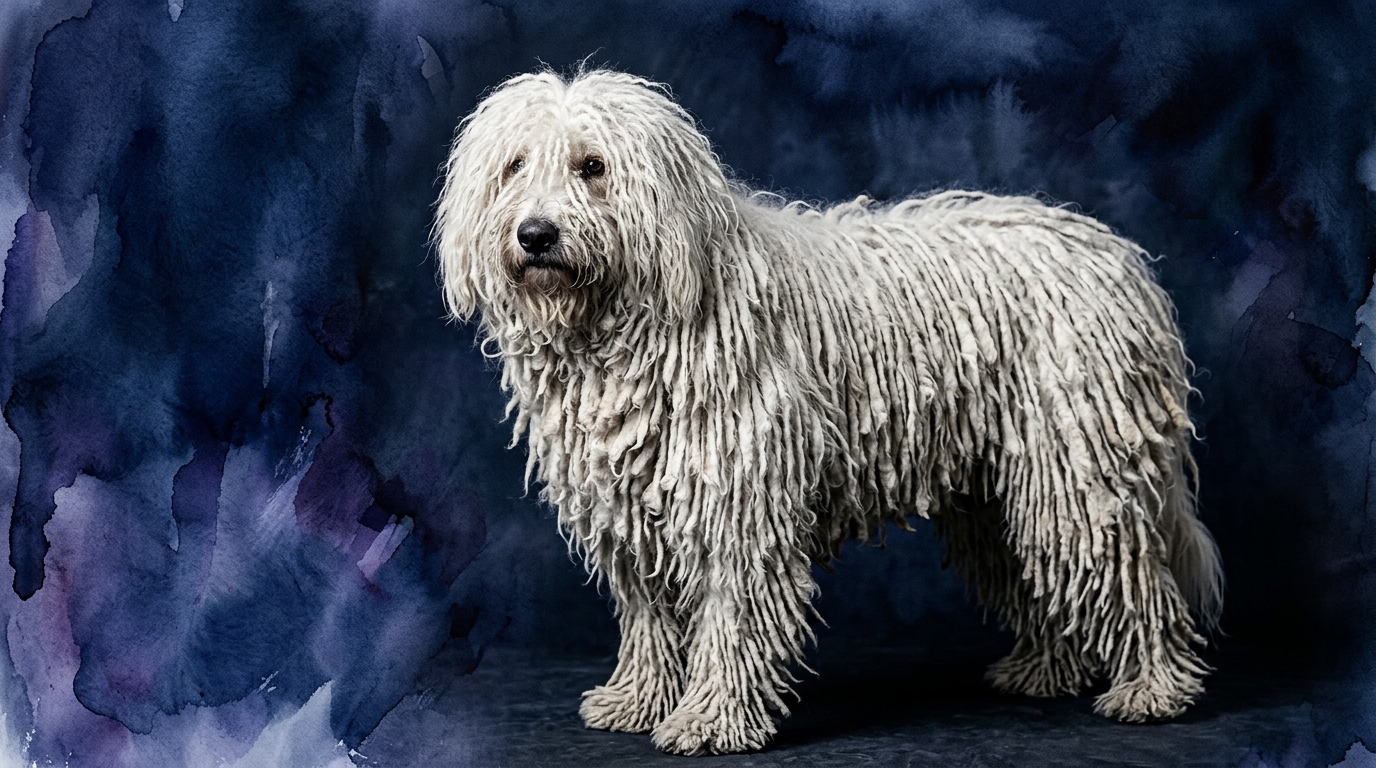
**Komondor:** The Komondor, a majestic livestock guardian, exhibits a unique cognitive profile shaped by centuries of independent work.
**Problem Solving (3/5):** This score reflects the Komondor's capacity for independent, situational problem-solving. They excel at autonomously assessing threats to their charges and devising strategies to deter predators without direct human command, relying on keen observation and learned experiences.
**Training Speed (3/5):** Komondors learn at a moderate pace, but their pronounced independence means they often question commands that don't align with their guardian instincts. Consistent repetition and patience are crucial, as their learning is often tied to understanding the *purpose* behind a task rather than simple rote memorization.
**Social Intelligence (3/5):** Their social intelligence is highly selective; deeply bonded with their family and 'flock,' they display a reserved wariness towards strangers. This isn't a cognitive deficit, but rather a discerning social filter, essential for their protective duties, where they must identify friend from potential foe.
**Instinctive Drive (3/5):** The Komondor's instinctive drive is overwhelmingly geared towards protection and vigilance. This manifests as a constant awareness of their surroundings, a strong territorial instinct, and a readiness to intercede if perceived threats arise, often acting on their own initiative.
**Memory (3/5):** Komondors possess a solid memory for past events, particularly concerning perceived threats or safe boundaries. They recall individuals who have been introduced properly and remember areas that require their watchful attention, contributing to their consistent guardian role.
**Rhodesian Ridgeback:** The Rhodesian Ridgeback, a powerful hound, demonstrates cognitive traits developed for hunting dangerous game and acting as a devoted companion.
**Problem Solving (3/5):** The Rhodesian Ridgeback's problem-solving score points to an ability to navigate complex environments and situations, originally developed for tracking and cornering dangerous game. They can adapt quickly to changing circumstances, using their senses and wit to overcome obstacles, whether in the hunt or during daily life.
**Training Speed (3/5):** Ridgebacks learn at a moderate rate, capable of grasping new concepts with consistency. While capable, they possess a characteristic hound independence and can be selective about compliance if they don't perceive a clear benefit or if their strong prey drive is engaged elsewhere.
**Social Intelligence (3/5):** Ridgebacks exhibit a devoted social intelligence within their immediate family, often forming strong, affectionate bonds. Outside this circle, they tend to be reserved and observant, not necessarily aloof, but discerning about whom they engage with, a trait stemming from their protective instincts.
**Instinctive Drive (3/5):** Their instinctive drive is a powerful combination of prey drive, protective instincts, and a desire for companionship. This manifests as a keen interest in scent work, a vigilant awareness of their territory, and a strong bond with their human family, whom they are naturally inclined to guard.
**Memory (3/5):** Ridgebacks have a good memory, retaining commands, routines, and experiences effectively. This aids them in complex tracking tasks and helps them remember specific training cues and boundaries, contributing to their reliability once a behavior is consistently established.
Where Komondor Wins Cognitively
The Komondor's cognitive strengths truly shine in scenarios demanding independent judgment and unwavering vigilance. Their problem-solving isn't about fetching a ball, but about autonomously assessing and managing threats to their charges, often without human direction. This nuanced ability to discern genuine danger from benign activity, coupled with a deep-seated protective drive, gives them an edge in roles requiring a self-sufficient guardian. Their social intelligence is finely tuned to identifying 'insiders' versus 'outsiders,' a critical cognitive function for their historical purpose.
Where Rhodesian Ridgeback Wins Cognitively
The Rhodesian Ridgeback demonstrates superior cognitive agility in dynamic, pursuit-oriented tasks and environmental navigation. Their problem-solving excels in situations requiring strategic thinking to overcome physical obstacles or outmaneuver a target, a legacy of their hunting background. They often exhibit a quicker ability to generalize learned behaviors across different environments, and their keen senses contribute to a sophisticated understanding of their surroundings, making them adept at complex scent work and tracking. This breed's cognitive prowess is best observed when engaging in collaborative, goal-directed activities.
Which Is Easier to Train and Why
While both breeds share a similar 'Training Speed' score, the Rhodesian Ridgeback generally presents as easier to train for structured obedience and complex tasks due to their inherent desire to work *with* their human companions. Their social intelligence, though discerning, often translates into a stronger motivation for positive reinforcement from their family. Ridgebacks respond well to clear, consistent commands and enjoy the mental stimulation of learning new cues, provided the training is engaging and fair. The Komondor, by contrast, views the world through the lens of independent guardianship; they learn, but their compliance is often contingent on whether a command aligns with their protective instincts or perceived logical necessity. Training a Komondor requires a deeper understanding of their independent nature, focusing on building trust and respect, and accepting that rote obedience might be secondary to their self-directed duties. Their 'training speed' score reflects that they *can* learn, but their *willingness* to perform a command on cue might be more selective than a Ridgeback's.
Which Suits Active Owners vs. Relaxed Owners
The Rhodesian Ridgeback is undoubtedly better suited for active owners. Their strong instinctive drive and problem-solving abilities thrive with regular physical exercise and mental engagement, such as hiking, running, dog sports, or challenging scent work. A relaxed owner might find a Ridgeback's energy and need for stimulation overwhelming, potentially leading to behavioral issues stemming from boredom. The Komondor, while requiring space and regular walks, aligns more with a relaxed owner who appreciates a vigilant, independent presence rather than a constant companion for high-intensity activities. Their 'active' nature is primarily watchfulness and patrolling, not necessarily high-speed exertion. They are content to observe and guard, making them a better fit for those seeking a more sedate, yet deeply protective, canine partner.
The Verdict
Choose the Komondor if you seek an independent, self-reliant guardian with a deep, discerning loyalty, valuing calm vigilance over eager obedience.
Choose the Rhodesian Ridgeback if you desire an active, engaging partner for adventures and structured training, who thrives on engagement and offers protective companionship.
🧠 Find Your Pet's IQ Score
Our Pet IQ Lab assessment covers 25+ tests across 5 cognitive dimensions — personalized to your breed.
Take the Full IQ Test →Frequently Asked Questions
Do Komondors and Rhodesian Ridgebacks require different training approaches?
Absolutely. Komondors benefit from patient, trust-based training that respects their independent guardian nature, focusing on cooperation rather than strict compliance. Ridgebacks respond well to positive reinforcement, consistency, and engaging, structured tasks that channel their intellect and drive.
How does their social intelligence impact their family life?
Both breeds form strong bonds with their immediate family. The Komondor's social intelligence makes them reserved with strangers, offering deep loyalty to their inner circle. The Rhodesian Ridgeback is similarly devoted but can be more outwardly affectionate with family, while maintaining a dignified aloofness towards outsiders.
Can a Komondor or Rhodesian Ridgeback live in an apartment?
Neither breed is ideally suited for apartment living due to their size, energy levels, and inherent drives. Komondors require space to patrol and guard, while Ridgebacks need ample room for exercise and mental stimulation to prevent boredom and destructive behaviors.