
Side-by-Side Cognitive Profile
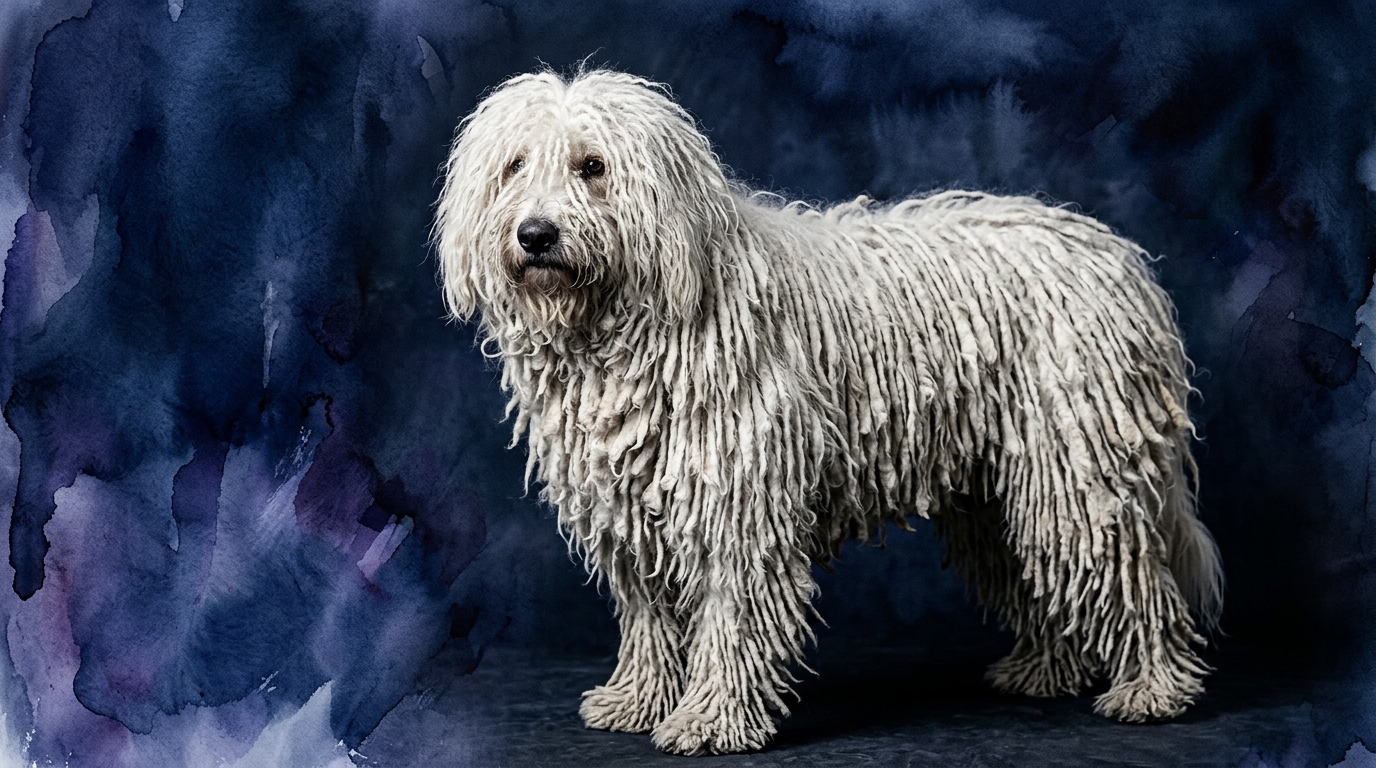
The Komondor, a majestic dog from the Working group with a Coren rank of #67, possesses a distinctive cognitive makeup shaped by centuries of livestock guardianship. Its Problem Solving at 3/5 reflects a capacity for independent, strategic thinking, crucial for assessing environmental threats and making autonomous decisions to protect its charges, rather than solving puzzle toys for human amusement. Training Speed, also 3/5, indicates that while they learn, their independent nature means they often weigh commands against their own judgment or perceived priorities, learning best with patience and a clear understanding of purpose. Their Social Intelligence, rated 3/5, is deeply attuned to their family or flock dynamics, displaying a nuanced understanding of their environment, yet often manifesting as wariness towards strangers, reading intentions with a protective lens. An Instinctive Drive of 3/5 is dominated by a powerful guarding instinct, territoriality, and an innate sense of responsibility for their family or property, forming the core of their being. Finally, their Memory at 3/5 ensures reliable recall for routines, boundaries, and past interactions, especially concerning perceived threats or the safety of their charges, allowing them to remember patterns and individuals with precision.
In stark contrast, the Smooth Fox Terrier, a spirited member of the Terrier group and not Coren-ranked, brings a different flavor to its 3/5 cognitive scores. Their Problem Solving at 3/5 signifies a clever, resourceful mind, adept at figuring out how to achieve goals, particularly those related to their prey drive; they excel at navigating obstacles and outsmarting small critters, often with a mischievous flair. Training Speed, also 3/5, means they are capable of learning quickly, but their spirited, independent, and sometimes stubborn terrier temperament can make training a dynamic challenge; they learn rapidly when motivated, but distraction is a constant possibility. Their Social Intelligence at 3/5 shows keen engagement with their human family, often displaying a playful and discerning understanding of social cues, being alert and communicative, quick to react to changes in their environment or social interactions. An Instinctive Drive of 3/5 is marked by an intense prey drive, a strong desire to dig, and an insatiable curiosity for exploration, fueling their energetic and persistent nature. Their Memory, also 3/5, exhibits excellent recall for locations where prey might be found, learned routes during walks, and the outcomes of past actions, especially those involving rewards or exciting discoveries.
Where the Komondor Wins Cognitively
The Komondor's cognitive strengths shine in areas demanding independent judgment and unwavering dedication to a specific task. Their problem-solving, while rated 3/5, is geared towards complex, real-world scenarios of protection; they excel at assessing potential threats and acting autonomously, a nuanced form of intelligence distinct from simply following commands. Their social intelligence, also 3/5, is profoundly tuned to the well-being of their family or flock, allowing them to interpret subtle shifts in their environment that might signal danger, making them exceptional guardians who operate with a deep, intuitive understanding of their charges' needs. This isn't about quick obedience, but about strategic, self-directed guardianship, showcasing a profound cognitive capacity for vigilance and protective decision-making.
Where the Smooth Fox Terrier Wins Cognitively
The Smooth Fox Terrier's cognitive advantages are rooted in their terrier tenacity and quick-witted resourcefulness. Their 3/5 problem-solving manifests as an agile mind capable of devising ingenious ways to pursue perceived “prey” or explore their surroundings; they are often quicker to adapt to novel situations that pique their interest, exhibiting a sharp, opportunistic intelligence. Their instinctive drive, also 3/5, translates into a relentless focus and persistence in tasks that align with their natural inclinations, such as scent work or agility challenges. This drive, combined with their memory, allows them to recall intricate pathways or successful strategies for acquiring rewards or engaging in stimulating activities, making them adept at learning through discovery and repetition, particularly when self-motivated and allowed to engage their natural hunting instincts.
Which Is Easier to Train and Why
Despite both breeds holding a 3/5 training speed rating, the practical experience of training them differs significantly due to their inherent temperaments and historical roles. The Komondor, a livestock guardian, was bred for independent decision-making rather than immediate compliance. This means while they can learn, their “training speed” reflects their tendency to deliberate on commands, often prioritizing their own judgment in protective scenarios. They require patient, consistent training with a clear purpose, understanding that their cooperation is earned through respect and trust, not just repetition. In contrast, the Smooth Fox Terrier's 3/5 training speed is influenced by their spirited, independent, and sometimes mischievous terrier nature. They learn rapidly when engaged and motivated, but their strong prey drive and curiosity mean they can be easily distracted or choose to pursue their own interests over a trainer's directive. Training a Smooth Fox Terrier often requires creativity, high-value rewards, and a firm, consistent approach to channel their boundless energy and focus their sharp minds. Therefore, while both require dedication, the Smooth Fox Terrier might appear “easier” to train in tasks that align with their drive and are presented as engaging games, whereas the Komondor demands a deeper understanding of their guardian mindset to achieve cooperation.
Which Suits Active Owners vs. Relaxed Owners
The Komondor, despite its calm demeanor once mature, is not a breed for truly relaxed owners. They require substantial space, often a securely fenced yard, and owners who understand their independent, protective nature. Their mental stimulation comes from observing their domain and family, and while they don't demand constant vigorous exercise, they need consistent engagement and clear leadership to manage their guardian instincts. Owners must be prepared for their watchful nature and the responsibility that comes with it. Conversely, the Smooth Fox Terrier is unequivocally suited for active owners. This breed possesses abundant energy, a relentless curiosity, and a powerful drive that necessitates daily vigorous exercise and consistent mental challenges. They thrive on activities like agility, earthdog trials, long walks, and interactive play sessions. A relaxed owner might find themselves overwhelmed by the terrier's need for activity and engagement, which if unmet, can lead to destructive behaviors born of boredom and pent-up energy. Therefore, the Komondor fits an owner who is present, consistent, and appreciates a watchful companion, while the Smooth Fox Terrier is ideal for an owner who embraces an active, adventurous lifestyle.
The Verdict
Opt for a Komondor if you are an experienced owner seeking a dedicated, independent guardian with a calm presence, prepared to manage their protective instincts and provide ample space.
Select a Smooth Fox Terrier if you lead an active, adventurous life and desire a spirited, tenacious companion eager for mental and physical challenges, and are ready to channel their boundless terrier energy.
🧠 Find Your Pet's IQ Score
Our Pet IQ Lab assessment covers 25+ tests across 5 cognitive dimensions — personalized to your breed.
Take the Full IQ Test →Frequently Asked Questions
Do Komondors get along well with other pets?
Komondors can coexist with other pets if properly socialized from a young age, often viewing them as part of their flock to protect. However, their strong guarding instincts mean careful introductions and supervision are always important, especially with smaller, unfamiliar animals.
Are Smooth Fox Terriers good with children?
Smooth Fox Terriers can be excellent companions for older, respectful children who understand how to interact with an energetic dog. Their playful nature can be a joy, but their high energy and potential for nipping during enthusiastic play might be too much for very young children without constant supervision.
How much grooming does a Komondor require?
Komondors have a unique corded coat that requires specialized grooming to prevent matting and maintain hygiene, which is a significant commitment. This isn't a simple brush-and-go coat; it needs regular attention to ensure its health and cleanliness.