
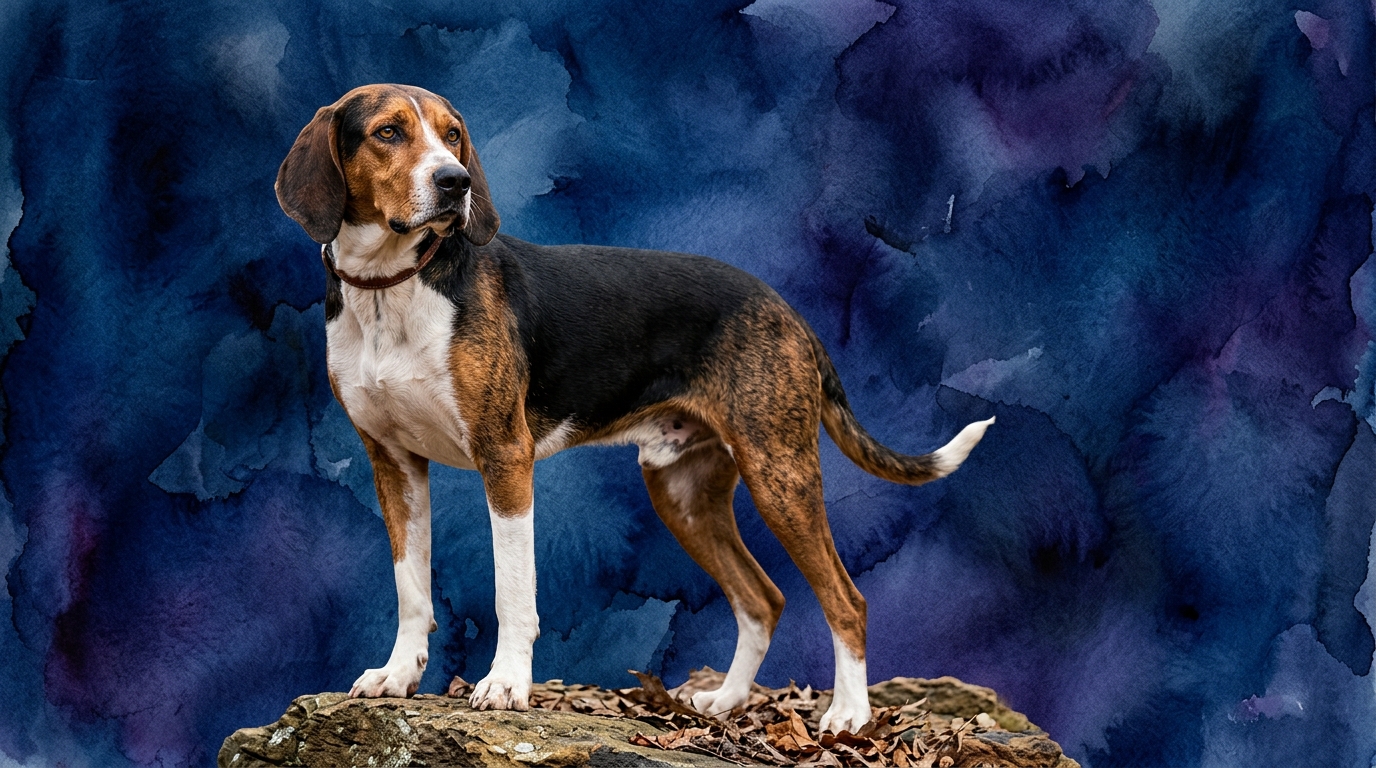
Side-by-Side IQ Profile: Diving Deeper into 3/5
While both the Kooikerhondje and the Treeing Walker Coonhound register a 3/5 across our five cognitive dimensions, their expressions of these scores diverge significantly due to their distinct breed functions and temperaments. Understanding these underlying differences is key to appreciating their individual cognitive strengths.
For Problem Solving (3/5), the Kooikerhondje, with its duck-luring heritage, often approaches tasks with a methodical, observant strategy. They might excel at figuring out a puzzle toy through patient manipulation or remembering a sequence of actions. Their problem-solving is often tied to resourcefulness and a thoughtful approach to their environment. The Treeing Walker Coonhound's 3/5 in problem-solving, conversely, is deeply rooted in their hunting lineage. Their cognitive efforts are typically directed at navigating complex scent trails, determining the quickest path to a treed animal, or overcoming obstacles in pursuit. Their solutions are often instinct-driven, persistent, and less about abstract conceptualization.
In Training Speed (3/5), the Kooikerhondje generally learns new commands at a moderate pace, often eager to please but capable of an independent streak. They respond well to positive reinforcement and consistency, understanding the connection between action and reward, especially if the task involves retrieving or engaging with their person. The Treeing Walker Coonhound's 3/5 training speed is often tempered by their powerful prey drive and independent nature. They can grasp commands, but their focus can be fleeting if a compelling scent or chase opportunity presents itself. Training requires immense patience, high-value motivation, and an understanding that their primary cognitive engagement is often outdoors, following their nose.
Social Intelligence (3/5) in the Kooikerhondje manifests as a discerning sensitivity to human emotions and family dynamics. They typically form strong bonds with their immediate family, reading subtle cues and adapting their behavior accordingly, though they can be reserved or wary with strangers. Their social cognition is often about connection and understanding their place within a trusted group. The Treeing Walker Coonhound's 3/5 social intelligence often centers on understanding pack structure and clear communication. They are typically affectionate and loyal within their family unit, but their social interactions might be more direct and less concerned with nuanced emotional expressions, focusing instead on establishing relationships and boundaries within their chosen 'pack'.
Instinctive Drive (3/5) for the Kooikerhondje is tied to their historical role as luring and retrieving dogs. This translates into a natural desire to chase and retrieve thrown objects, work alongside their human, and explore their surroundings with curiosity. While present, this drive is generally manageable and can be channeled into constructive play and activities. The Treeing Walker Coonhound's 3/5 instinctive drive is overwhelmingly dominated by their scent hound heritage. This includes an intense drive to trail, a remarkable ability to follow a scent over long distances, and the characteristic 'treeing' behavior. This deep-seated drive is a core part of their cognitive makeup, often overriding other impulses when a promising scent is detected.
Finally, Memory (3/5) in the Kooikerhondje involves retaining learned commands, routines, and experiences, both positive and negative, which informs their future interactions. They often remember specific locations of toys or preferred routes during walks. The Treeing Walker Coonhound's 3/5 memory is particularly adept at recalling complex scent trails, geographical layouts pertinent to hunting, and the successful strategies used in pursuit. Their memory is finely tuned to information relevant to their primary instinctive drive, allowing them to navigate familiar territories and remember the 'lay of the land' with remarkable precision.
Where the Kooikerhondje Wins Cognitively
Despite identical scores, the Kooikerhondje often demonstrates a more nuanced approach to abstract problem-solving. Their historical role as luring dogs required observation, patience, and a degree of strategic thinking to guide ducks. This translates into an ability to engage with puzzle toys, learn complex trick sequences, or adapt to novel situations that require more than just brute force or scent following. Their social intelligence also gives them an edge in interpreting subtle human cues, making them highly responsive to their owner's moods and intentions, fostering a deeper, more empathetic connection that relies on mutual understanding beyond simple commands. They tend to integrate new information across different contexts more readily, making them versatile learners.
Where the Treeing Walker Coonhound Wins Cognitively
The Treeing Walker Coonhound's cognitive strengths are profoundly specialized. They exhibit superior scent-based problem-solving and navigation, an unparalleled ability to analyze and follow complex olfactory trails, often over vast and challenging terrains. Their memory is exceptional when it comes to recalling these intricate routes and the location of game, a testament to their evolutionary purpose. This unwavering focus when engaged in their instinctive drive is a cognitive 'win' in itself; once a scent is locked, their determination and single-mindedness are remarkable. They possess an incredible capacity for endurance and sustained mental effort when pursuing a goal dictated by their nose, making them masters of their specialized domain.
Which is Easier to Train and Why
Assessing 'easier to train' depends heavily on the type of training desired. For general obedience, varied tricks, and adapting to a wide range of household rules, the Kooikerhondje generally presents as more amenable. Their moderate training speed is complemented by a desire to please their family and a less overwhelming singular drive, allowing them to focus on human instruction. They are often more motivated by praise, play, and food rewards, making them responsive to diverse positive reinforcement methods. Their problem-solving and social intelligence allow them to grasp the 'why' behind commands more readily, even if repetition is needed to solidify behaviors.
The Treeing Walker Coonhound, while capable of learning, faces a significant 'challenge' in traditional obedience due to their profound instinctive drive. Their independent nature and all-consuming scent focus mean that a compelling trail can instantly override any learned command. Training them requires immense consistency, high-value rewards, and often needs to be integrated with their natural drives. For instance, 'come' might be more effective if it means a chance to track. Without carefully structured motivation that speaks to their hound heritage, their attention can be easily diverted, making sustained, non-instinct-driven training a more arduous and patient endeavor.
Suited for Active vs. Relaxed Owners
The Kooikerhondje is well-suited for active owners who enjoy engaging their dog in a variety of activities beyond just physical exercise. They thrive with moderate daily walks, engaging retrieving games, agility, and mental stimulation through puzzle toys or learning new tricks. Their thoughtful nature means they appreciate consistent interaction and a stimulating environment, making them an excellent fit for owners who want an intelligent, interactive companion but do not require extreme endurance athletes. While not couch potatoes, their energy levels are manageable for owners with a balanced, active lifestyle.
Conversely, the Treeing Walker Coonhound demands exceptionally active owners who can provide substantial and consistent outlets for their profound instinctive drive. This breed is not for the faint of heart or the relaxed owner. They require extensive daily exercise—long runs, hikes, or dedicated scent work activities—to prevent boredom and destructive behaviors. Their relentless energy and unwavering focus on a scent mean they need opportunities to use their nose and legs for hours. Owners must be prepared for a dog whose primary joy and cognitive engagement lie in exploring the world through scent, making them unsuitable for those seeking a low-maintenance, sedentary companion.
The Verdict
Choose a Kooikerhondje if you seek a thoughtful, interactive companion eager for varied mental and physical engagement, appreciating their nuanced problem-solving and sensitive social nature within a family setting. They thrive with owners who enjoy consistent, positive training and interactive play that taps into their retrieving instincts.
Opt for a Treeing Walker Coonhound if you are an exceptionally active owner prepared to channel a powerful scent drive and provide extensive outdoor exploration or dedicated tracking activities. Their independent spirit and unwavering focus on a trail require an owner who understands and embraces their hound heritage.
🧠 Find Your Pet's IQ Score
Our Pet IQ Lab assessment covers 25+ tests across 5 cognitive dimensions — personalized to your breed.
Take the Full IQ Test →Frequently Asked Questions
Can a Kooikerhondje live in an apartment?
A Kooikerhondje can adapt to apartment living if provided with sufficient daily exercise and mental stimulation. Their moderate energy levels mean regular walks, play sessions, and puzzle toys are crucial to prevent boredom and maintain their well-being in smaller spaces.
How much exercise does a Treeing Walker Coonhound need daily?
A Treeing Walker Coonhound requires significant daily exercise, typically an hour or more of vigorous activity, such as running, hiking, or dedicated scent work. Their high instinctive drive necessitates outlets for their energy and powerful nose to remain content and well-behaved.
Are Kooikerhondjes good with children?
Kooikerhondjes can be excellent with children, especially when properly socialized from a young age and raised with respectful interactions. Their social intelligence helps them understand family dynamics, though their sensitive nature means they appreciate calm, gentle play.