
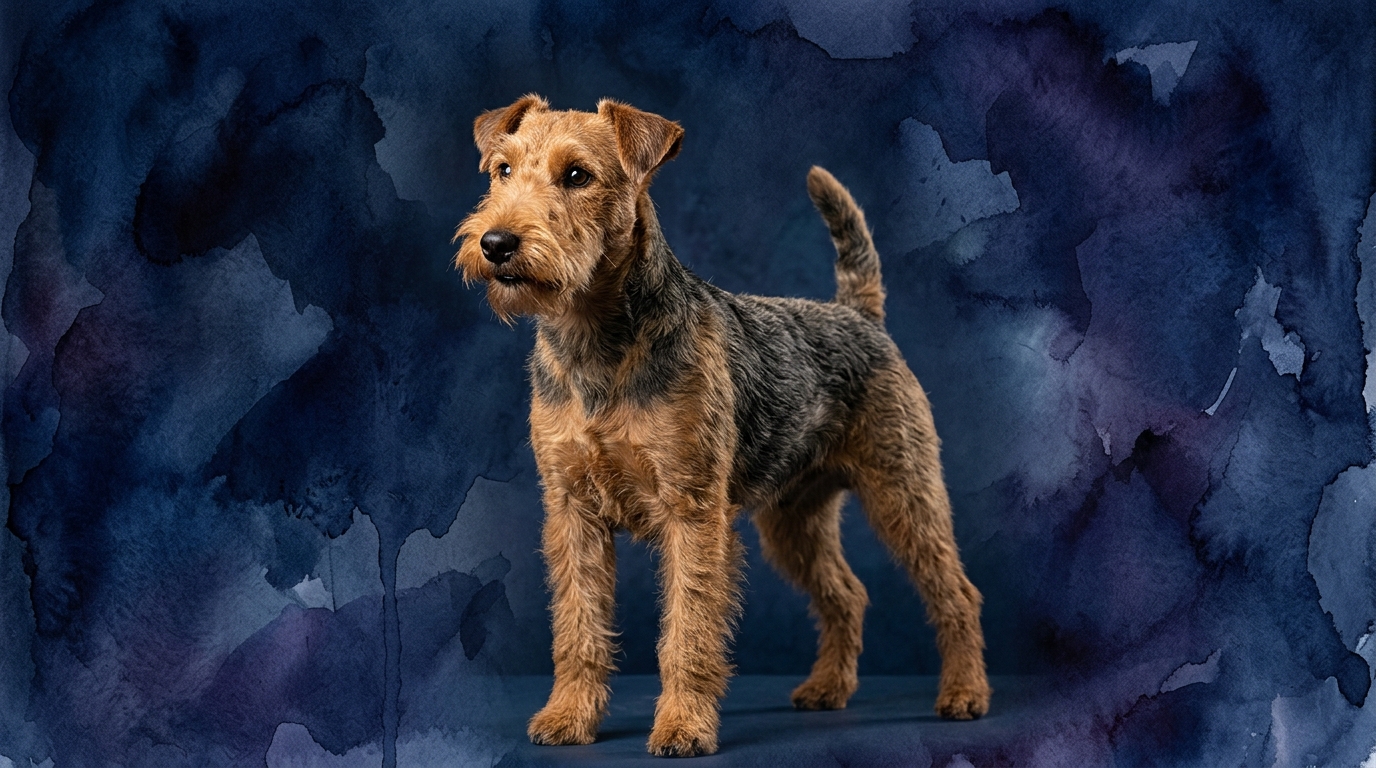
Side-by-Side IQ Profile: Kooikerhondje vs. Welsh Terrier
For Problem Solving, both breeds score 3 out of 5. For the Kooikerhondje, this often manifests in their historical role as decoy dogs, requiring them to outwit waterfowl with subtle movements and lure them into nets. They demonstrate an ability to adapt strategies in dynamic environments, learning from observations. The Welsh Terrier's 3/5 problem-solving skill, conversely, is rooted in their vermin-hunting past, where they needed to independently navigate complex underground tunnels and strategize to corner prey. This often translates into figuring out how to bypass obstacles or access forbidden areas in a home environment.
In Training Speed, both also receive a 3 out of 5. The Kooikerhondje's 3/5 suggests a moderate pace of learning new commands, often coupled with a desire to please their handler, making them receptive to positive reinforcement methods. They grasp concepts steadily but may require consistency to solidify behaviors. The Welsh Terrier, also at 3/5 for training speed, learns new tasks competently, but their independent terrier spirit means they evaluate the utility of a command from their own perspective, sometimes leading to a perceived slower response if they don't see the immediate benefit or if distractions abound.
Regarding Social Intelligence, both breeds score 3 out of 5. A Kooikerhondje with a 3/5 typically reads human cues well, often forming strong bonds with their primary family and showing sensitivity to emotional shifts. They can be reserved with strangers but are generally attuned to their social environment. The Welsh Terrier's 3/5 social intelligence often means they are observant of their human pack dynamics, capable of forming deep attachments, but their independent nature can make them less overtly solicitous than some breeds. They understand social hierarchies and can be quite assertive within them.
Their Instinctive Drive is also rated at 3 out of 5 for both. The Kooikerhondje’s 3/5 is primarily expressed through their retrieving and luring instincts, with a moderate prey drive focused on feathered game. They possess a natural inclination for cooperative work, often enjoying activities that mimic their historical tasks. For the Welsh Terrier, a 3/5 instinctive drive is a powerful engine for their terrier duties – a strong prey drive, an urge to dig, and a tenacious pursuit of small animals. This drive is fundamental to their identity and requires consistent management.
Finally, for Memory, both breeds achieve a 3 out of 5. This indicates a solid capacity to retain learned behaviors, routines, and experiences over time. A Kooikerhondje will remember training cues and household rules with good consistency, and can recall past interactions, both positive and negative. Similarly, a Welsh Terrier will retain commands and spatial information effectively, remembering where toys are hidden or specific routes taken on walks, but they might also remember perceived injustices or negative experiences with equal clarity.
Where the Kooikerhondje Wins Cognitively
Despite identical numerical scores, the Kooikerhondje’s cognitive strengths often shine in tasks requiring sustained focus and a cooperative spirit, reflecting their sporting dog heritage. Their problem-solving, rated at 3/5, is often applied to more nuanced, adaptive challenges, such as figuring out how to manipulate a puzzle toy with multiple steps or patiently working through a scent trail. This patience and methodical approach, combined with their 3/5 memory, allows them to excel in sequential learning and complex obedience routines where understanding the 'why' behind the action is valued. Their 3/5 social intelligence manifests as a desire to collaborate, making them particularly adept at reading and responding to human body language and subtle commands during activities like agility or rally obedience. The Kooiker's 3/5 instinctive drive, channeled into retrieving and luring, means they find satisfaction in working alongside their human partners to achieve a shared goal, rather than operating completely independently. This makes them particularly responsive to guidance when navigating new cognitive challenges, leveraging their memory for past successes within a team dynamic.
Where the Welsh Terrier Wins Cognitively
The Welsh Terrier, despite mirroring the Kooikerhondje with 3/5 across the board, excels in a different spectrum of cognitive challenges, embodying the tenacious independence of the terrier group. Their 3/5 problem-solving prowess is often characterized by a determined, sometimes stubborn, ingenuity. They are adept at finding novel solutions to perceived obstacles, whether it's figuring out how to open a gate or outsmarting a food dispenser, driven by their strong internal motivation rather than a desire to please. This persistence, combined with their 3/5 memory, means that once a Welsh Terrier learns a strategy, especially one that yields a reward or satisfies an instinct, they are highly likely to recall and repeat it. Their 3/5 instinctive drive, geared towards hunting and digging, fuels a remarkable focus and resilience when pursuing a target, making them exceptionally effective in tasks requiring independent initiative and resourcefulness. While their 3/5 social intelligence allows them to connect deeply with their family, their cognitive strength lies in their ability to operate autonomously, making decisions and executing plans without constant human direction, a trait invaluable for their original working role.
Which is Easier to Train and Why
When considering ease of training, the Kooikerhondje, with its 3/5 training speed, generally presents a smoother experience for many owners due to its inherent biddability and desire to work cooperatively. Their background as a luring and retrieving dog means they are often more inclined to follow human direction and find satisfaction in pleasing their handler. While they learn at a moderate pace, their 3/5 social intelligence helps them attune to their owner's expectations, making them responsive to positive reinforcement and consistency. They are less likely to question a command’s purpose and more inclined to comply once they understand what is being asked.
The Welsh Terrier, also scoring 3/5 in training speed, offers a different training dynamic. While capable of learning just as quickly, their robust 3/5 instinctive drive and independent nature often mean they require a more engaging and persistent approach. A Welsh Terrier might understand a command perfectly but choose not to execute it if a more compelling distraction, such as a scent or a perceived 'job,' presents itself. Their 3/5 problem-solving often means they're figuring out how to get *their* way, which can challenge a trainer. Therefore, training a Welsh Terrier often involves significant patience, creativity, and a strong understanding of their terrier motivations, making them potentially more challenging for a novice handler seeking immediate, unwavering compliance.
Which Suits Active Owners vs. Relaxed Owners
For active owners seeking a dynamic companion, both breeds offer considerable engagement, but with different nuances. The Kooikerhondje, while possessing a 3/5 instinctive drive and needing regular exercise, thrives on activities that involve teamwork and mental stimulation, such as agility, scent work, or retrieving games. They enjoy long walks, hikes, and can be excellent companions for owners who appreciate a dog that is ready for adventure but also content to settle down afterwards, leveraging their 3/5 social intelligence to be a calm presence indoors. They suit owners who want an active partner but also value a dog that integrates smoothly into family routines.
The Welsh Terrier, with its powerful 3/5 instinctive drive and independent spirit, is also an excellent fit for highly active owners, but ones who understand and embrace a dog with a strong, self-directed personality. They excel in activities like earthdog trials, extensive hiking, and vigorous play, requiring outlets for their digging and chasing instincts. A Welsh Terrier needs consistent physical and mental challenges to prevent boredom, which their 3/5 problem-solving skills might otherwise channel into less desirable behaviors. They are less suited for truly 'relaxed' owners who prefer minimal engagement, as their drive and need for purpose demand an owner who can consistently provide structure and outlets for their robust energy.
The Verdict
Choosing a Kooikerhondje is ideal for owners who appreciate a cooperative, sensitive companion that excels in team-oriented activities and integrates smoothly into family life, offering a moderate energy level with a keen desire to please.
Opt for a Welsh Terrier if you are an experienced, active owner ready to embrace a tenacious, independent spirit with a strong drive for adventure and a willingness to engage in persistent, creative training to channel their robust terrier instincts.
🧠 Find Your Pet's IQ Score
Our Pet IQ Lab assessment covers 25+ tests across 5 cognitive dimensions — personalized to your breed.
Take the Full IQ Test →Frequently Asked Questions
Do Kooikerhondjes bark a lot?
Kooikerhondjes, with their 3/5 social intelligence, are generally not excessive barkers, often using their voice to alert or communicate rather than out of boredom. However, like any dog, individual temperament and environmental factors can influence their vocal habits, requiring consistent training to manage if necessary.
Are Welsh Terriers good with children?
Welsh Terriers can be good with respectful children, especially if raised with them, as their 3/5 social intelligence allows them to form strong family bonds. However, their independent nature and strong prey drive mean they require supervision with very young children and proper introductions to ensure positive interactions.
How much exercise does a Kooikerhondje need daily?
A Kooikerhondje, with its 3/5 instinctive drive, typically requires at least 45-60 minutes of moderate to vigorous exercise daily, which can include walks, fetching, or mentally stimulating games. This helps satisfy their natural sporting instincts and keeps their 3/5 problem-solving minds engaged.