Side-by-Side Cognitive Profiles
The Cosmic Pet Pet IQ Lab employs five key dimensions to evaluate canine intelligence: Problem Solving, Training Speed, Social Intelligence, Instinctive Drive, and Memory. These metrics offer a nuanced view beyond simplistic notions of 'smartness,' reflecting how a dog's mind functions in practical scenarios.
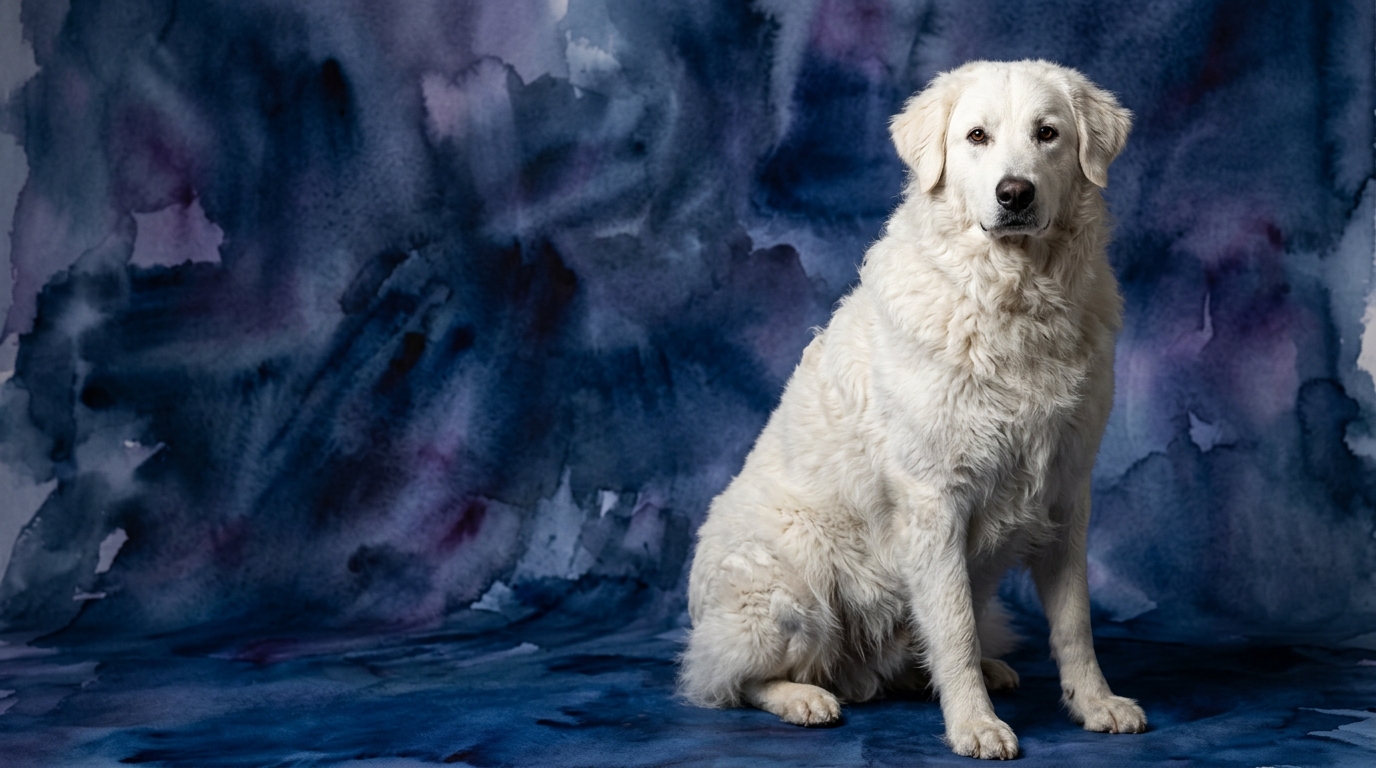
The Kuvasz, a majestic Working breed, registers a Problem Solving score of 3/5, indicating a moderate capacity for independent thought in novel situations. Its Training Speed stands at 3/5, suggesting a steady learning pace that often requires patient reinforcement. Social Intelligence is 3/5, reflecting a balanced engagement with both humans and other animals, neither overly dependent nor entirely aloof. Instinctive Drive, at 3/5, speaks to a moderate inherent impulse for its guarding duties, while its Memory shines at a robust 4/5, crucial for recalling territory and charges.
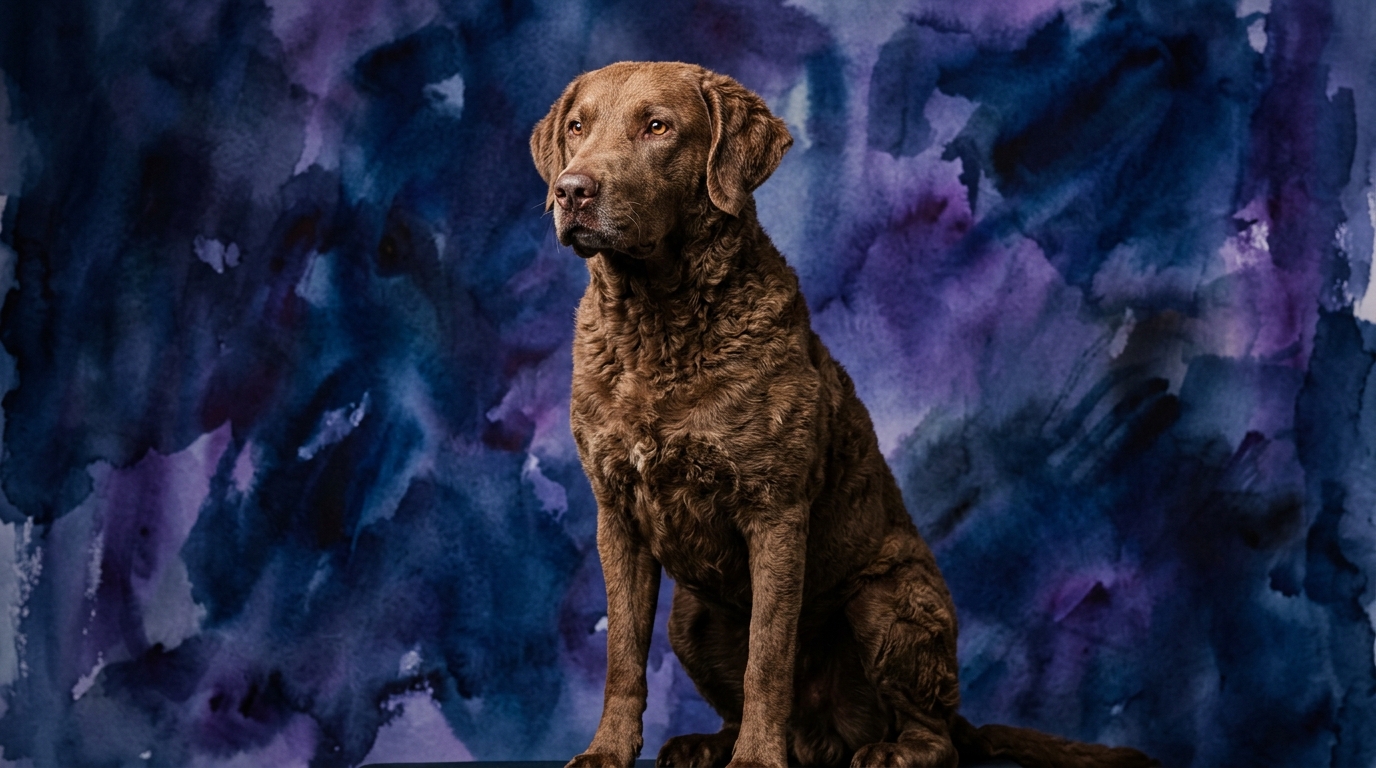
In contrast, the Chesapeake Bay Retriever, a robust Sporting breed, demonstrates a stronger Problem Solving ability at 4/5, showcasing a knack for navigating complex environments or tasks. Its Training Speed is also higher at 4/5, indicating a quicker grasp of commands and a greater eagerness to cooperate in structured learning. Social Intelligence matches the Kuvasz at 3/5, suggesting a companionable but not overly clingy disposition. Instinctive Drive is also 3/5, providing a focused, task-oriented energy for retrieving. Like the Kuvasz, its Memory is 4/5, essential for marking falls and remembering multi-step retrieves.
Where the Kuvasz Shines Cognitively
The Kuvasz's cognitive strengths are deeply rooted in its heritage as a livestock guardian. Its 4/5 Memory score is a profound asset, enabling it to maintain an extensive mental map of its territory, remember its flock, and recall the subtle patterns of its environment. This memory isn't just for tricks; it's a critical component of its vigilant presence, allowing it to discern normal routines from potential threats. While its Problem Solving is 3/5, this score reflects a breed designed for autonomous decision-making rather than constant human direction. A Kuvasz's problem-solving often involves assessing situations independently, determining the best course of action to protect its charges without waiting for a command, such as strategically positioning itself to deter predators.
Its 3/5 Social Intelligence, combined with its moderate Instinctive Drive (3/5), results in a dog that is deeply bonded to its family but not overly reliant on constant human interaction for its sense of purpose. This allows the Kuvasz to maintain a watchful, self-sufficient presence, observing its surroundings with a quiet confidence. The Kuvasz's cognitive profile is less about quick, directed responses and more about sustained, thoughtful vigilance and independent judgment, making it an effective, self-regulating guardian.
Chesapeake Bay Retriever's Cognitive Edge
The Chesapeake Bay Retriever's cognitive profile is tailored for its demanding role as a water retriever, where quick thinking and responsiveness are paramount. Its 4/5 Problem Solving ability allows it to efficiently navigate challenging terrain, break through ice, or strategize the retrieval of downed game, often adapting on the fly to changing conditions. This isn't just about brute force; it's about making intelligent choices in high-pressure situations, such as figuring out the easiest path through a marsh or how to retrieve a bird from a tricky spot. Coupled with a 4/5 Training Speed, the Chessie demonstrates an impressive capacity for rapidly learning and executing complex tasks.
The Chessie's excellent 4/5 Memory is equally crucial, enabling it to precisely mark multiple 'falls' of game and remember the order in which to retrieve them, even over long distances or through distracting environments. This highly functional memory allows for efficient and effective fieldwork. Its 3/5 Instinctive Drive ensures it possesses the necessary motivation for its work without becoming overly impulsive, allowing for better handler control. The combination of strong problem-solving, rapid training assimilation, and robust memory makes the Chesapeake Bay Retriever a highly capable and adaptable working partner, excelling in scenarios that demand both mental agility and physical prowess.
Training Dynamics: Biddability vs. Independence
When it comes to training, the core difference between these two breeds lies in their inherent biddability versus their independence. The Chesapeake Bay Retriever's 4/5 Training Speed and 4/5 Problem Solving scores point to a dog that generally grasps new commands with enthusiasm and a desire to cooperate. They are bred to work in close partnership with a handler, finding satisfaction in successful collaboration. A Chessie typically enjoys structured training sessions, viewing them as an engaging mental exercise and an opportunity to fulfill its purpose. Their strong retrieving drive provides a natural motivator for many tasks, making them receptive to positive reinforcement methods.
The Kuvasz, with its 3/5 Training Speed and 3/5 Social Intelligence, approaches training from a more independent perspective. While certainly capable of learning, a Kuvasz is more likely to evaluate a command based on its own assessment of the situation rather than simply complying instantly. This isn't stubbornness in a negative sense, but rather a manifestation of its guardian instinct to think for itself. They require consistent, patient training built on mutual respect, often responding best to methods that acknowledge their thoughtful nature. For example, a Kuvasz might pause before coming when called if it perceives a need to continue surveying its territory, whereas a Chessie would likely respond with more immediate focus on the handler's request. Understanding this fundamental difference is key to successful training with either breed.
Lifestyle Match: Active Engagement vs. Watchful Presence
Matching these breeds to an owner's lifestyle requires understanding their distinct cognitive needs and how they express their intelligence. The Chesapeake Bay Retriever, with its higher Problem Solving and Training Speed, thrives with active owners who can provide consistent mental and physical engagement. These dogs excel in activities like hunting, competitive obedience, agility, or other dog sports that demand quick learning, strategic thinking, and a strong partnership with their handler. They need a job to do and will benefit from owners who enjoy directing their cognitive and physical energies towards productive, shared endeavors.
The Kuvasz, while also requiring significant exercise and mental stimulation, finds fulfillment in a different manner. Its cognitive profile suits owners who appreciate a dog that operates with a watchful, independent presence. Their mental engagement often comes from observing, patrolling, and assessing their environment, fulfilling their inherent guardian role. Owners valuing a dog that makes autonomous decisions in its domain, and who can provide ample space and a sense of purpose (even if that purpose is simply guarding the family and home), will find the Kuvasz a deeply rewarding companion. They are not suited for highly structured, constant 'work' in the same way a retriever is, but require mental exercise through their natural instincts.
The Verdict
When an owner seeks a thoughtful, independent guardian with a strong memory for its domain, who values a dog's autonomous judgment in protection over eager obedience, the Kuvasz is a fitting companion.
For those desiring a highly trainable, problem-solving partner for active pursuits, field work, or dog sports, who thrives on collaborative tasks and quick learning, the Chesapeake Bay Retriever offers an engaging partnership.
🧠 Find Your Pet's IQ Score
Our Pet IQ Lab assessment covers 25+ tests across 5 cognitive dimensions — personalized to your breed.
Take the Full IQ Test →Frequently Asked Questions
Are Kuvasz difficult to train?
Kuvasz are not difficult, but they require a different approach due to their independent nature. Their 3/5 training speed means they learn at a moderate pace, often evaluating commands rather than simply complying, necessitating patience and consistent, respectful methods.
How does the Chesapeake Bay Retriever's problem-solving manifest?
Their 4/5 problem-solving is evident in their ability to strategize retrieves, navigate complex terrain, or figure out how to access a desired object, often with minimal human direction once the task is understood, making them highly effective in field work.
Do both breeds have good memory?
Yes, both breeds score 4/5 in memory. For the Kuvasz, this is vital for remembering territory and charges; for the Chessie, it's crucial for marking falls and executing multi-step retrieves, showcasing its importance across different working roles.