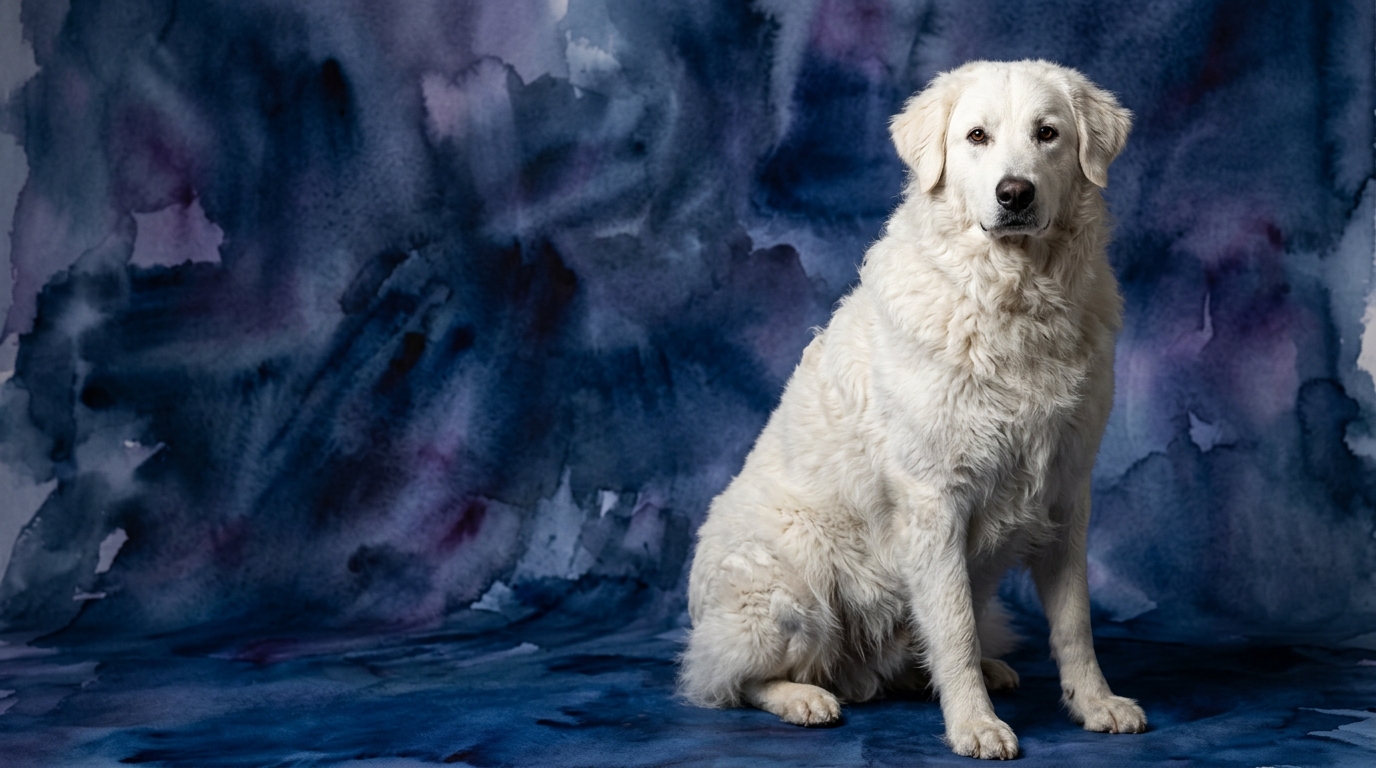
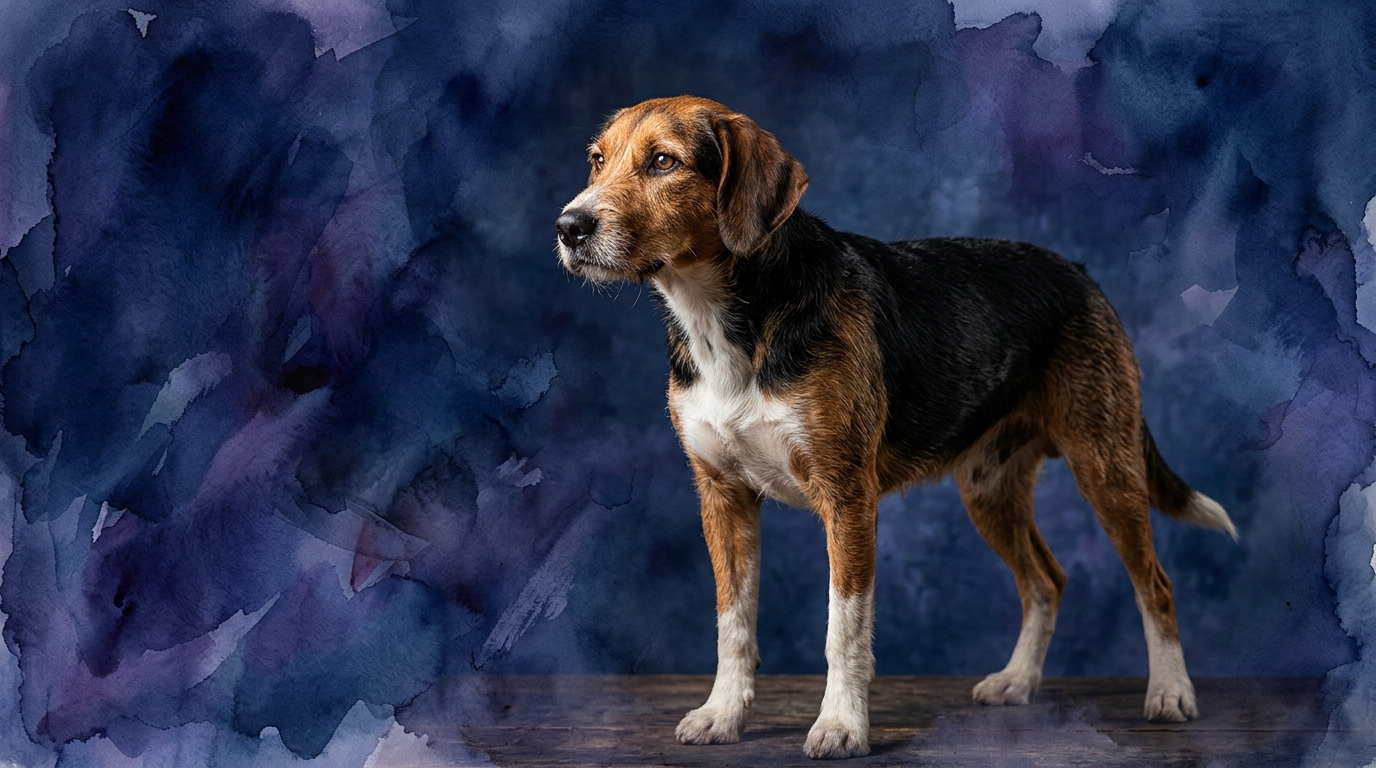
Side-by-Side Cognitive Profile: Kuvasz vs. Harrier
At The Cosmic Pet Pet IQ Lab, we evaluate canine intelligence across five key dimensions, providing a granular view of how breeds process their world. For the Kuvasz, a Working group breed Coren-ranked at #42, its scores are Problem Solving 3/5, Training Speed 3/5, Social Intelligence 3/5, Instinctive Drive 3/5, and Memory 4/5. The Harrier, a Hound breed not Coren-ranked, shows scores of Problem Solving 3/5, Training Speed 3/5, Social Intelligence 3/5, Instinctive Drive 3/5, and Memory 3/5.
Both breeds register a 3/5 for Problem Solving, but its application differs. The Kuvasz’s problem-solving manifests in its capacity to independently assess threats and strategize protective actions for its flock, often without direct human command, yielding practical, observation-based solutions. The Harrier, also at 3/5, demonstrates its prowess primarily in the field, navigating complex scent trails, overcoming obstacles, and working collaboratively within a pack to locate quarry. Its solutions are often driven by sensory input and persistent pursuit.
Training Speed, at 3/5 for both, highlights their moderate learning pace. The Kuvasz, with its inherent independence crucial for a guardian, might question the necessity of a task before complying, requiring repetition and consistent, fair leadership. The Harrier’s training can be significantly challenged by its powerful scent drive; once a captivating scent is encountered, its focus can narrow intensely, making it less receptive to human direction until the scent quest is resolved.
Social Intelligence, again 3/5 for both, is expressed through distinct lenses. The Kuvasz exhibits social intelligence via its deep bond with its human family and protective instincts towards its charges, understanding social hierarchies and responding to subtle cues from its trusted circle while being reserved with strangers. The Harrier, as a pack animal, displays its social intelligence through cooperative hunting behaviors and clear communication within its canine group. With humans, it is generally amiable but can prioritize its pack dynamics or scent work over individual human requests.
Instinctive Drive, rated 3/5 for both, represents core motivators. The Kuvasz's drive is predominantly that of a protector and guardian, with a strong territorial imperative and an innate ability to discern threats, fueling vigilance and defense. The Harrier's instinctive drive is overwhelmingly tied to its heritage as a hunting hound, characterized by an insatiable desire to follow a scent trail, persistent pursuit, and a robust prey drive, fueling its boundless energy and determination in the field.
Memory is where a clear cognitive distinction emerges. The Kuvasz boasts a 4/5, indicating a strong capacity to recall past experiences, learned commands, and established routines over extended periods, aiding its consistency in guarding duties and its ability to remember specific individuals or situations. The Harrier, with a 3/5 for memory, retains information adequately for its hunting tasks and social interactions but may not exhibit the same level of detailed recall for complex sequences or subtle nuances, its memory being functional and task-oriented, serving its primary drive.
Where the Kuvasz Exhibits Cognitive Strengths
The Kuvasz’s standout cognitive advantage lies squarely in its superior memory, scoring a 4/5 compared to the Harrier’s 3/5. This enhanced recall isn't merely about remembering commands; it profoundly impacts its reliability as a guardian. A Kuvasz can vividly remember past threats, the faces of infrequent visitors, or the specific boundaries of its territory, allowing it to maintain consistent vigilance and apply learned protective strategies effectively. This robust memory also means that once a training lesson or behavioral expectation is firmly established, it is likely to persist over time, making it a dependable long-term companion for an owner who values consistency in a guardian.
Furthermore, the Kuvasz's background in the Working group, distinct from the Harrier's Hound lineage, suggests a cognitive framework designed for more direct, purposeful partnership with humans in complex tasks beyond simple pursuit. While its training speed is moderate, its superior memory allows it to build upon a vast repertoire of experiences and learned responses, contributing to a nuanced understanding of its role. This cognitive architecture supports its ability to make independent judgments based on remembered patterns and past interactions, a critical trait for a breed whose historical role involved autonomous decision-making in protecting livestock.
Where the Harrier Exhibits Cognitive Strengths
While not scoring higher in any specific dimension, the Harrier’s cognitive strengths are uniquely tailored to its purpose, particularly its instinctive drive and problem-solving within its specialized domain. Its 3/5 in instinctive drive, while numerically equivalent to the Kuvasz, represents a profoundly different manifestation: an unparalleled, unwavering focus on scent. This isn't just a physical attribute; it's a cognitive superpower, allowing the Harrier to meticulously process and discriminate between countless olfactory inputs, follow the faintest trail with relentless determination, and effectively “read” a landscape through its nose. This focused sensory intelligence is a cognitive win for any task requiring extreme persistence and sensory discrimination.
The Harrier's 3/5 in problem-solving shines brightest when faced with the complexities of a hunt. Its ability to navigate challenging terrains, bypass obstacles, and work cooperatively with its pack to corner quarry demonstrates a practical, in-the-moment cognitive agility driven by its primary instinct. Unlike the Kuvasz's thoughtful, often independent guardian problem-solving, the Harrier's is a dynamic, collaborative, and sensory-led process, where the immediate environment and the pursuit of a goal dictate rapid, adaptive cognitive responses. Its intelligence is less about abstract reasoning and more about efficient, persistent execution within a highly specific, instinct-driven context, which for a scent hound, is the ultimate cognitive victory.
Training Dynamics: Kuvasz vs. Harrier
Assessing which breed is “easier” to train, given both score 3/5 for Training Speed, requires looking beyond the raw number to their underlying motivations and cognitive biases. The Kuvasz, despite its moderate training speed, can present challenges due to its independent nature and guardian instincts. It doesn't inherently seek to please in the same way some other working breeds might; instead, it evaluates commands based on its perceived utility and its own judgment. Owners might find that while the Kuvasz can learn complex sequences due to its superior memory (4/5), it might not always comply if it deems the command unnecessary or conflicting with its guardian duties. Training a Kuvasz demands patience, consistency, and establishing a clear, respectful leadership role, focusing on motivation that aligns with its protective drive.
The Harrier, also at 3/5 for Training Speed, presents a different set of training hurdles, primarily centered around its potent instinctive drive. While amiable and eager to engage, a Harrier's nose is its master. Once it locks onto a scent, its focus on human commands can diminish significantly, making recall or attention-based training particularly challenging in stimulating environments. Its moderate memory (3/5) means that while it learns, it might require more consistent reinforcement than the Kuvasz for certain behaviors, especially those that conflict with its primal hunting instincts. Therefore, while both require dedicated training, the Kuvasz demands respect for its independence, whereas the Harrier requires strategies to manage and redirect its powerful sensory focus. Neither is “easy” in a conventional sense, but their training difficulties stem from distinct cognitive roots.
Lifestyle Suitability: Active vs. Relaxed Owners
The cognitive profiles of the Kuvasz and Harrier offer clear distinctions for different owner lifestyles. The Kuvasz, with its strong guardian instincts and Working group heritage, is best suited for active owners who understand the need for purposeful engagement, even if it’s not always high-intensity physical exertion. Its cognitive needs lean towards having a “job”—whether it's guarding the home, supervising children, or participating in structured activities that stimulate its problem-solving and memory. A Kuvasz thrives on routine and a sense of responsibility, requiring owners who are prepared to provide consistent mental stimulation and clear boundaries. While not requiring constant frantic activity, its independent mind needs direction and engagement to prevent it from finding its own (potentially undesirable) “work.” Relaxed owners who prefer a low-maintenance mental companion might find the Kuvasz's deep-seated need for purpose and vigilance overwhelming.
Conversely, the Harrier, driven by its powerful hunting instincts and boundless energy, is unequivocally a match for highly active owners. Its entire cognitive framework is geared towards persistent pursuit and physical exertion, making it an unsuitable companion for a relaxed, sedentary lifestyle. Harriers need extensive daily exercise, ideally involving opportunities to engage their scenting abilities through long walks, trail running, or scent work games. Their social intelligence, geared towards pack dynamics, means they often enjoy the company of other dogs or a very engaged human “pack leader” in their adventures. A relaxed owner would quickly find a Harrier's unmet physical and mental needs manifesting in destructive behaviors or relentless energy, as its cognitive drive for activity is paramount.
The Verdict
Choose the Kuvasz if you seek a dedicated, independent guardian with a remarkable memory and a thoughtful approach to its duties, and you are prepared to engage its mind with a sense of purpose and consistent leadership.
Opt for the Harrier if your life is defined by high-energy outdoor activities and you appreciate a tenacious, scent-driven companion whose cognitive world revolves around exhilarating pursuit and engaging its powerful instincts.
🧠 Find Your Pet's IQ Score
Our Pet IQ Lab assessment covers 25+ tests across 5 cognitive dimensions — personalized to your breed.
Take the Full IQ Test →Frequently Asked Questions
Does the Kuvasz's higher memory make it easier to house-train than a Harrier?
The Kuvasz's superior memory (4/5) can certainly aid in house-training, as it quickly remembers where it's supposed to relieve itself and the routine associated with it. However, consistency from the owner is still paramount. The Harrier's adequate memory (3/5) also allows for successful house-training, but its powerful outdoor drives might make it more prone to distraction during crucial learning moments.
How does the 'Instinctive Drive' score of 3/5 differ between these two breeds despite being the same number?
While both score 3/5 for Instinctive Drive, the nature of that drive is vastly different. For the Kuvasz, it's primarily a protective and guardian instinct, motivating vigilance and defense of its territory and family. For the Harrier, it's an overwhelming prey and scent drive, compelling it to relentlessly track and pursue, often overriding other impulses. The score reflects the strength of the drive, not its specific manifestation.
Can a Harrier learn complex commands even with its lower memory score compared to the Kuvasz?
Yes, a Harrier can absolutely learn complex commands, as its 3/5 memory score indicates a functional capacity for recall. The challenge isn't necessarily its ability to learn, but rather its powerful scent drive which can make it difficult for the dog to focus on human commands when a compelling scent is present. Consistent, engaging training in low-distraction environments can be very effective for a Harrier.