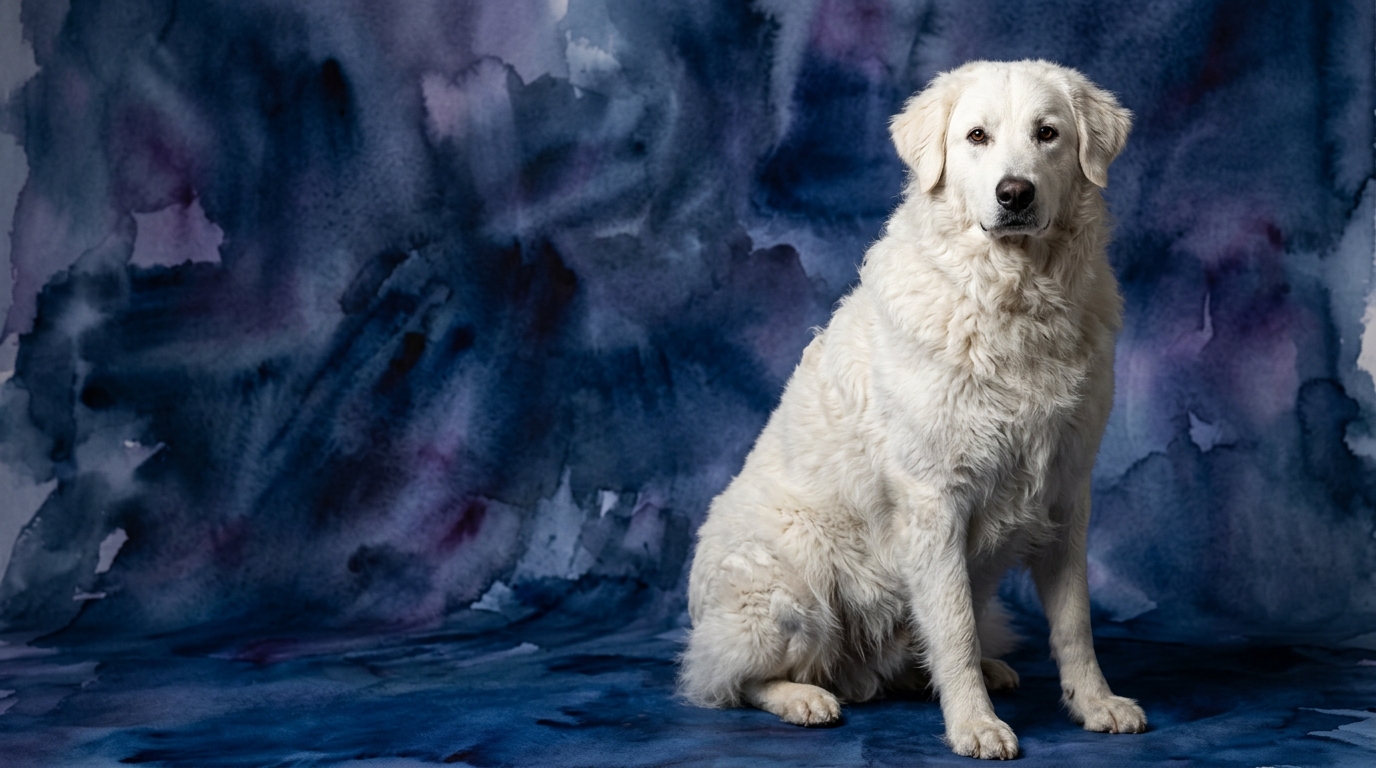

Side-by-Side Cognitive Profile
The Cosmic Pet Pet IQ Lab assesses canine intelligence across five key dimensions, providing a nuanced view of how breeds process information and interact with their world. For the Kuvasz, a Working Group breed with a Coren ranking of #42, and the Lhasa Apso, a Non-Sporting breed ranked #68, these profiles illuminate their unique cognitive landscapes. Both breeds register a 3/5 in Problem Solving, indicating a moderate capacity for navigating novel situations and independently figuring out solutions. For the Kuvasz, this manifests in their historical role of autonomously assessing threats and protecting livestock, often requiring on-the-spot decisions without human direction. The Lhasa Apso's 3/5 in Problem Solving is typically applied to their domestic environment, such as determining the best vantage point for observation or subtly manipulating family members for attention.
Training Speed also registers at 3/5 for both, suggesting neither is inherently quick to pick up new commands. The Kuvasz's moderate score here reflects its independent nature; they learn, but often deliberate on the utility of a command before compliance. Similarly, the Lhasa Apso's strong-willed disposition means they absorb information at their own pace, often requiring consistent, patient reinforcement. Social Intelligence, at 3/5 for both, describes their understanding of social cues and interactions. The Kuvasz exhibits this through discerning interactions within its 'flock,' distinguishing friend from foe and understanding pack dynamics, albeit often from a position of detached observation. The Lhasa Apso’s social intelligence is intensely focused on its immediate human family, showing an acute awareness of their moods and routines, while often maintaining a reserved stance with strangers. Instinctive Drive, also 3/5 for both, highlights their inherent predispositions. The Kuvasz's strong guarding instinct is paramount, driving its protective behaviors and territorial awareness. The Lhasa Apso's drive is primarily that of a vigilant watchdog, with a keen sense of territory and an ingrained alert system. Finally, Memory presents a key distinction: the Kuvasz scores 4/5, while the Lhasa Apso scores 3/5. The Kuvasz's superior memory underpins its ability to recall complex routines, recognize specific threats over long periods, and maintain intricate knowledge of its territory and charges. The Lhasa Apso's 3/5 memory score indicates a solid recall for routines and family members, but perhaps less capacity for the multi-layered, long-term strategic recall seen in the guardian breed.
Where the Kuvasz Wins Cognitively
The Kuvasz’s cognitive strengths are deeply rooted in its heritage as a livestock guardian, where independent decision-making and robust recall are paramount. Its 4/5 score in Memory is a significant cognitive advantage, allowing a Kuvasz to retain an extensive mental map of its territory, remember the faces and behaviors of specific individuals (both welcome and unwelcome), and recall complex sequences of events that might indicate a threat. This superior memory enables them to learn from past experiences and apply that knowledge to future situations, making them exceptionally reliable in their protective duties over time.
Furthermore, while both breeds score 3/5 in Problem Solving, the Kuvasz's application of this skill is unique. Their problem-solving is often geared towards real-world, dynamic scenarios involving potential predators or intruders, requiring them to assess situations, strategize, and act without direct human command. This capacity for autonomous, situation-specific problem-solving in a high-stakes environment underscores a distinct cognitive edge, allowing them to adapt and respond effectively to unpredictable challenges that demand more than rote obedience.
Where the Lhasa Apso Wins Cognitively
While the Lhasa Apso shares many 3/5 scores with the Kuvasz, its cognitive strengths are refined for a different purpose: that of a compact, vigilant companion and sentinel. The Lhasa Apso's 3/5 in Social Intelligence, though not numerically higher, manifests as an intense, focused loyalty and an acute ability to 'read' its immediate human family. They excel at understanding subtle shifts in household dynamics, anticipating routines, and providing comfort or warning as needed, making them exceptionally tuned to their domestic environment. This focused social acumen allows them to integrate seamlessly into a family unit, often becoming the emotional barometer of the home.
Their 3/5 in Problem Solving, while not for guarding livestock, is adeptly applied to navigating their human-centric world. This includes figuring out how to gain attention, locate the most comfortable sunbeam, or outsmart a child for a dropped treat. These 'wins' are specific to their role as a domestic companion, where keen observation and persistent, clever manipulation of their environment and human companions are valuable assets. Their instinctive drive, also 3/5, is a powerful motivator for their watchdog role, giving them an unparalleled ability to detect and alert to unusual sounds or presences, making them highly effective small guardians of the home.
Which is Easier to Train and Why
Neither the Kuvasz nor the Lhasa Apso are typically described as 'easy' to train in the conventional sense, both scoring 3/5 in Training Speed, but the challenges stem from different aspects of their cognitive makeup. The Kuvasz, with its history of independent guardian work, often questions the necessity of commands. They possess a discerning mind and are less inclined to perform tasks they perceive as pointless or contradictory to their protective instincts. Training a Kuvasz requires immense patience, consistency, and positive reinforcement from a very young age. Owners must establish themselves as benevolent leaders through fair and clear communication, understanding that a Kuvasz expects respect and logic, not just blind obedience. Harsh methods are counterproductive and can lead to distrust or withdrawal.
In contrast, the Lhasa Apso's training challenges often arise from its strong-willed, sometimes stubborn, and self-assured nature. Their independence, while not for complex guardian tasks, means they decide what they want to do. They can be highly motivated by treats and praise, but their selective hearing might kick in if they are not consistently engaged or perceive a command as optional. Early and consistent socialization is crucial for both breeds to mitigate potential issues like territoriality in the Lhasa Apso or overly protective behaviors in the Kuvasz. Ultimately, neither breed is for the faint of heart in training; both demand an owner committed to understanding their distinct cognitive styles and applying patient, positive methods.
Which Suits Active Owners vs. Relaxed Owners
The choice between a Kuvasz and a Lhasa Apso also hinges significantly on an owner's lifestyle, particularly regarding activity levels and hands-on engagement. The Kuvasz, while not a high-energy breed in the sense of needing to run for miles, absolutely requires owners who are 'active' in their commitment to management, training, and providing a purpose. Their large size and guardian instincts mean they need ample space, secure boundaries, and consistent, structured interaction. An owner must be prepared for regular, supervised outdoor time, not just for physical exercise but for mental stimulation and 'patrolling' their territory. They thrive with owners who can integrate them into a 'working' role, even if it's just overseeing the family property. This breed is not suited for relaxed, hands-off owners or those seeking a low-maintenance companion.
Conversely, the Lhasa Apso can be a suitable companion for more 'relaxed' owners, provided that relaxation doesn't extend to their training and mental engagement. While they are content with shorter daily walks and indoor play, their keen minds and watchdog instincts still require consistent mental stimulation through training, puzzle toys, and ample companionship. They are less demanding physically than a Kuvasz but require an owner who is actively engaged in their domestic life, offering clear rules and abundant affection. A relaxed owner for a Lhasa Apso is one who appreciates a low-impact exercise routine but is firm and consistent in providing structure and social interaction.
The Verdict
For those seeking a large, independent, and profoundly loyal guardian with a remarkable long-term memory for protecting property and family, the Kuvasz is an unparalleled choice, provided the owner is experienced, patient, and committed to extensive socialization and training from puppyhood.
If your lifestyle calls for a vigilant, discerning, and devoted companion who thrives in a stable home environment, offering acute awareness and steadfast loyalty without requiring vast physical exercise, the Lhasa Apso will be an excellent, albeit strong-willed, addition to your family.
🧠 Find Your Pet's IQ Score
Our Pet IQ Lab assessment covers 25+ tests across 5 cognitive dimensions — personalized to your breed.
Take the Full IQ Test →Frequently Asked Questions
Are Kuvasz and Lhasa Apso good with children?
A well-socialized Kuvasz can be tolerant and protective of children within its family, viewing them as part of its 'flock,' but supervision is always necessary due to their size and independent nature. Lhasa Apsos, while loyal to their family, can be less tolerant of boisterous young children and prefer respectful interactions, often doing better with older, more considerate children.
Do Kuvasz or Lhasa Apso bark a lot?
Both breeds can be prone to barking, though for different reasons. Kuvasz bark to alert or deter perceived threats to their territory or charges, a key part of their guardian role. Lhasa Apsos are natural watchdogs and will bark to alert their family to anything unusual, making them effective, if sometimes vocal, household sentinels.
What kind of mental stimulation do these breeds need?
Kuvasz thrive on having a 'job,' whether it's guarding or consistent training that engages their problem-solving skills, along with exploration of their territory. Lhasa Apsos benefit from consistent training, puzzle toys, and interactive play that taps into their problem-solving and social intelligence, keeping their keen minds engaged within the home environment.