Side-by-Side Cognitive Profiles
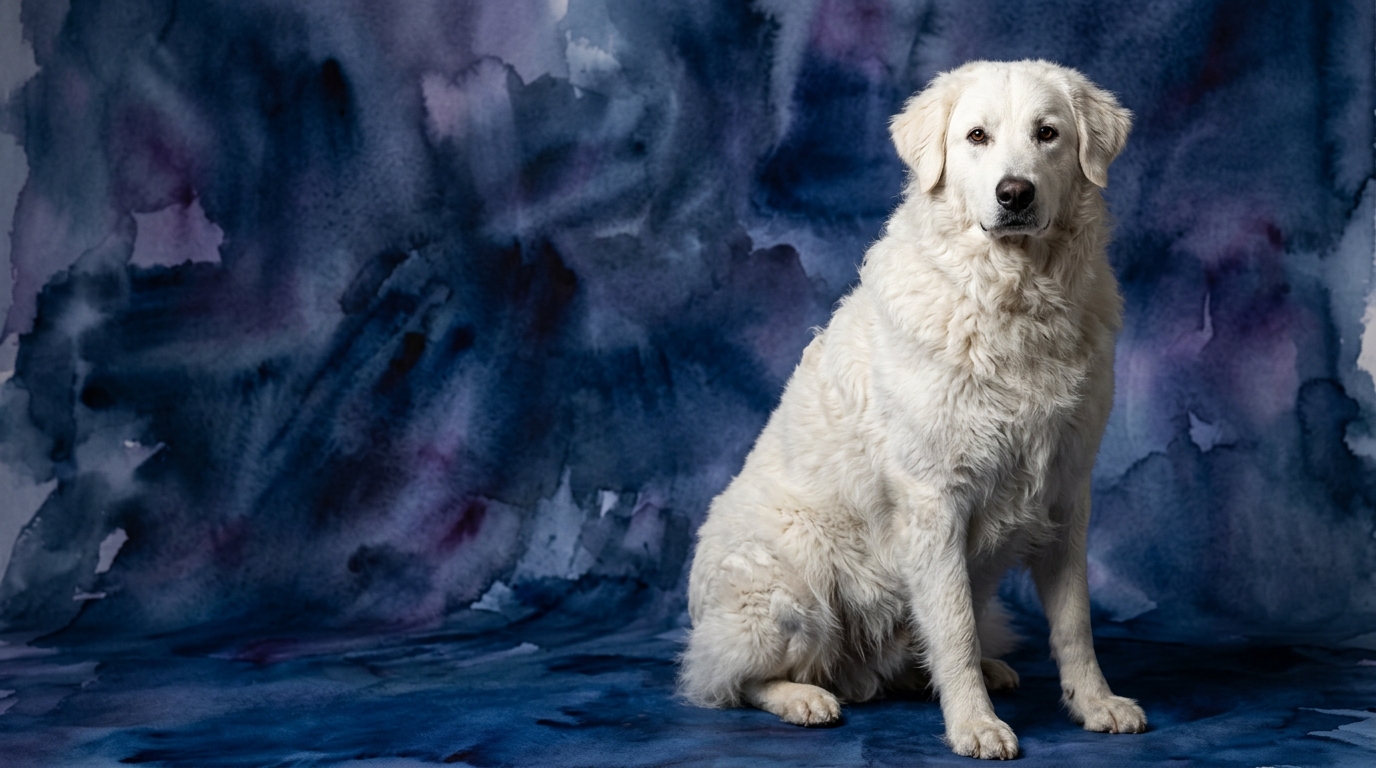
At The Cosmic Pet Pet IQ Lab, we evaluate canine intelligence across five key dimensions. For the Kuvasz, a dog from the Working group, its cognitive profile reflects its guardian heritage, earning it a Coren rank of #42. Its Problem Solving is rated 3/5, demonstrating practical decision-making in protective scenarios. Training Speed is 3/5, indicating a thoughtful, often independent learning process. Social Intelligence also scores 3/5, reflecting deep family bonds alongside wariness towards strangers. Its Instinctive Drive is 3/5, primarily focused on protection and vigilance. A notable strength is its Memory, rated 4/5, which underpins its consistent, long-term guardianship.
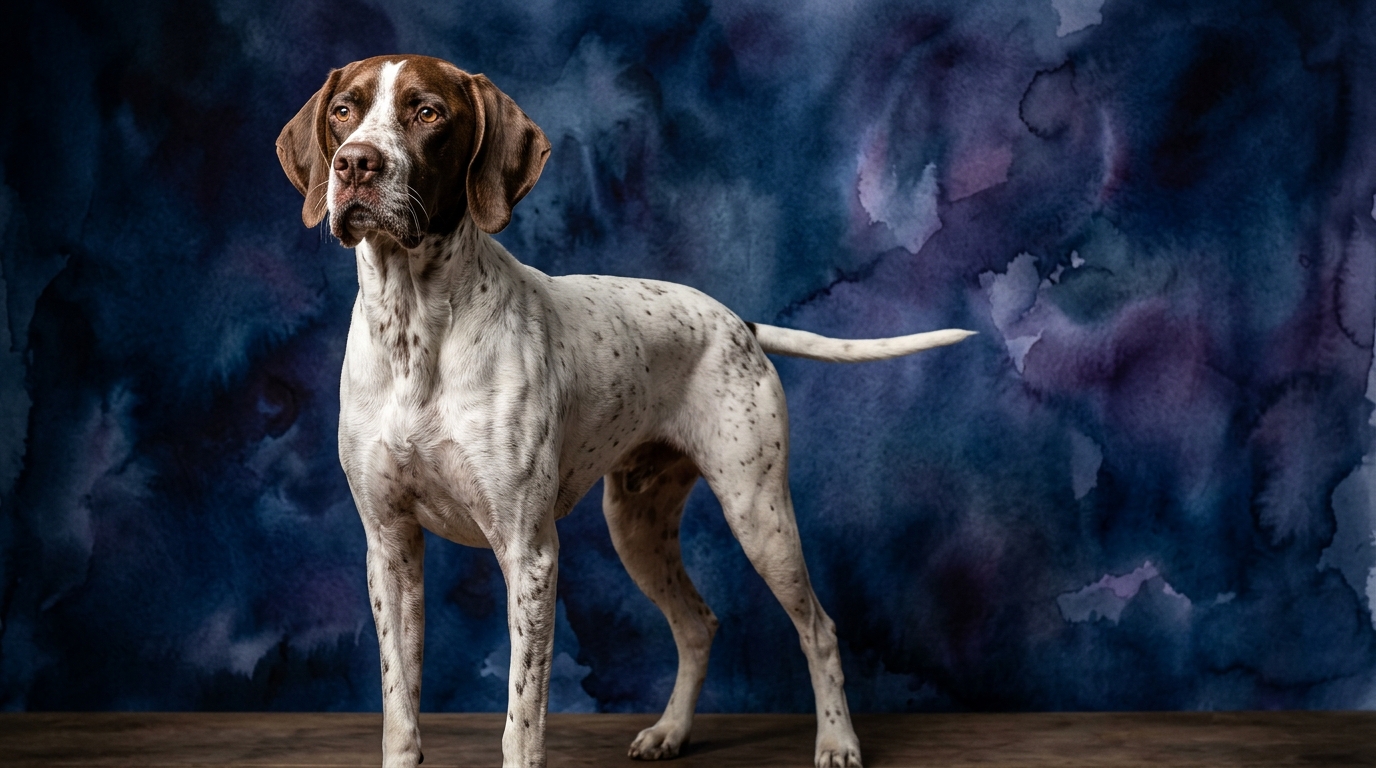
The Pointer, a member of the Sporting group, while not Coren-ranked, presents a cognitive profile finely tuned for its field work. Its Problem Solving is 3/5, specialized for navigating terrain and interpreting scents during a hunt. Training Speed is 3/5, often driven by a desire to cooperate in engaging activities, though distractions can play a role. Social Intelligence is 3/5, fostering strong working partnerships with handlers. Its Instinctive Drive, also 3/5, is powerfully oriented towards hunting birds, including a strong prey drive and the characteristic pointing behavior. The Pointer’s Memory is 3/5, functional for recalling commands and field patterns, but less focused on broad environmental recall than the Kuvasz.
Comparing these dimensions highlights how similar raw scores can manifest in vastly different cognitive applications, shaped by each breed's evolutionary purpose. Both possess cognitive strengths, but they are deployed in service of distinct, deeply ingrained roles.
Where the Kuvasz Excels Cognitively
The Kuvasz truly distinguishes itself in the realm of memory, scoring a 4/5 compared to the Pointer's 3/5. This isn't merely about remembering simple commands; it's about a profound capacity for long-term recall of environmental details, social dynamics within its family unit, and historical interactions. A Kuvasz will remember the specific car that once lingered too long on the street or the subtle shift in a neighbor's routine, using this information to inform its ongoing protective duties. This robust recall underpins its consistent vigilance and ability to learn from past experiences, making it an exceptionally reliable guardian over time.
Furthermore, while both breeds score 3/5 in problem-solving, the *nature* of that problem-solving differs significantly. The Kuvasz's problem-solving is inherently independent and strategic, focused on assessing threats and making decisions to protect its charges without constant human intervention. For instance, if a gate is left ajar, a Kuvasz might independently decide to herd its family back inside or position itself to block the opening, demonstrating a self-directed cognitive process vital for its historical role as a solitary protector, rather than relying on direct handler cues.
Where the Pointer Excels Cognitively
While the raw IQ scores might suggest parity or even a slight deficit in some areas compared to the Kuvasz, the Pointer's cognitive strengths lie in the highly specialized application of its traits, particularly its instinctive drive (3/5) and social intelligence (3/5) within its sporting domain. The Pointer’s instinctive drive is a masterclass in focused, sensory-driven cognition. Their ability to process and interpret complex scent information, pinpointing game birds with incredible accuracy and then holding a steady point, showcases a unique cognitive specialization. This isn't just instinct; it's instinct combined with an acute sensory processing and the cognitive discipline to 'freeze' in a highly stimulating environment.
The Pointer's social intelligence, when combined with its drive, enables a level of cooperative partnership that is central to its utility. While a Kuvasz uses social intelligence for discernment and protection, the Pointer uses it for seamless communication and teamwork with its handler. Its problem-solving (3/5), though equal in score, is geared towards navigating field challenges, adapting to changing wind conditions, and efficiently covering ground in pursuit of game, all while remaining highly responsive to human direction. This collaborative cognitive style is where the Pointer truly excels, making it an unparalleled partner in the field.
Training Dynamics: Independence vs. Cooperation
Both the Kuvasz and the Pointer are rated 3/5 for Training Speed, indicating that neither is inherently 'easier' or 'harder' to train in an absolute sense, but rather that their training dynamics differ significantly based on their intrinsic motivations and historical roles. The Kuvasz, with its independent problem-solving and strong guardian instincts, often requires a trainer who understands its self-sufficient mindset. They learn best when they perceive a command as logical, beneficial to their 'flock,' or reinforcing their protective role. Training a Kuvasz often involves convincing them of the *value* of a behavior, rather than simply demanding compliance. Their memory (4/5) aids in retention once they grasp the purpose, but their independence can make initial teaching a test of patience and consistent, positive reinforcement.
The Pointer, conversely, often approaches training with a different eagerness, driven by its desire for activity, mental stimulation, and a strong partnership with its handler. While also rated 3/5 for training speed, their enthusiasm for tasks that align with their sporting drives can make them appear more tractable, particularly in field-related commands. However, their powerful instinctive drive (3/5) towards scent and prey can also be a significant distraction. A Pointer might quickly learn a 'stay' command in a quiet room, but executing it flawlessly when a bird scent wafts by requires immense consistency and a deep understanding of their innate focus-pullers. Therefore, 'easier' depends heavily on the context and the trainer's ability to harness or redirect each breed's specific cognitive strengths and challenges.
Matching Canine Cognition to Lifestyle
For owners seeking a companion, the distinction between 'active' and 'relaxed' takes on different meanings for these two breeds. A Kuvasz, while not requiring the relentless, high-speed exercise of a Pointer, still demands an owner who is cognitively active in managing their protective instincts and providing consistent, thoughtful training. Their large size and guardian mentality mean they thrive with owners who are active in establishing clear boundaries, socializing them thoughtfully, and offering daily mental engagement through 'patrols' of the yard or focused training sessions. A truly 'relaxed' owner who neglects their cognitive needs or doesn't understand their independent nature might find themselves with an unmanageable guardian, as their intelligence is geared toward purposeful, autonomous action.
The Pointer, by contrast, unequivocally suits an owner who is physically active and prepared to channel its high stamina and intense sporting drive. These dogs are built for endurance and thrive on vigorous exercise, such as long runs, hikes, or dedicated field work. A Pointer needs to run, to use its nose, and to engage in activities that mimic its ancestral purpose. A 'relaxed' owner who cannot provide several hours of meaningful physical and mental stimulation daily will likely find a Pointer to be restless, bored, and potentially destructive. Their need for a 'job' that involves movement and sensory input is profound, and their cognitive focus is on executing these tasks with precision.
The Verdict
Choose a Kuvasz if you seek a dedicated, independent guardian with an exceptional memory for its family and territory, and are prepared to engage with a thoughtful, self-sufficient canine mind.
Opt for a Pointer if you are an active individual who can provide extensive physical exercise and thrive on a cooperative partnership with a focused, driven sporting dog for field activities.
🧠 Find Your Pet's IQ Score
Our Pet IQ Lab assessment covers 25+ tests across 5 cognitive dimensions — personalized to your breed.
Take the Full IQ Test →Frequently Asked Questions
Do Kuvasz and Pointers learn at the same rate?
Both breeds score 3/5 for training speed, suggesting similar overall learning potential. However, the Kuvasz's independent nature means it learns best when it understands the purpose of a command, while the Pointer's enthusiasm for handler-led tasks can make it appear quicker in certain contexts.
Which breed is better at problem-solving?
Both are rated 3/5 for problem-solving, but they apply it differently. The Kuvasz excels at independent, strategic problem-solving for protection, whereas the Pointer's problem-solving is highly specialized for navigating hunting scenarios and interpreting scent.
How do their social intelligence scores impact their suitability as family pets?
Both score 3/5 for social intelligence. The Kuvasz is deeply loyal to its family but wary of strangers, requiring careful socialization. The Pointer is generally more outgoing and forms strong, cooperative bonds with its human partners, making it a sociable, active family member.