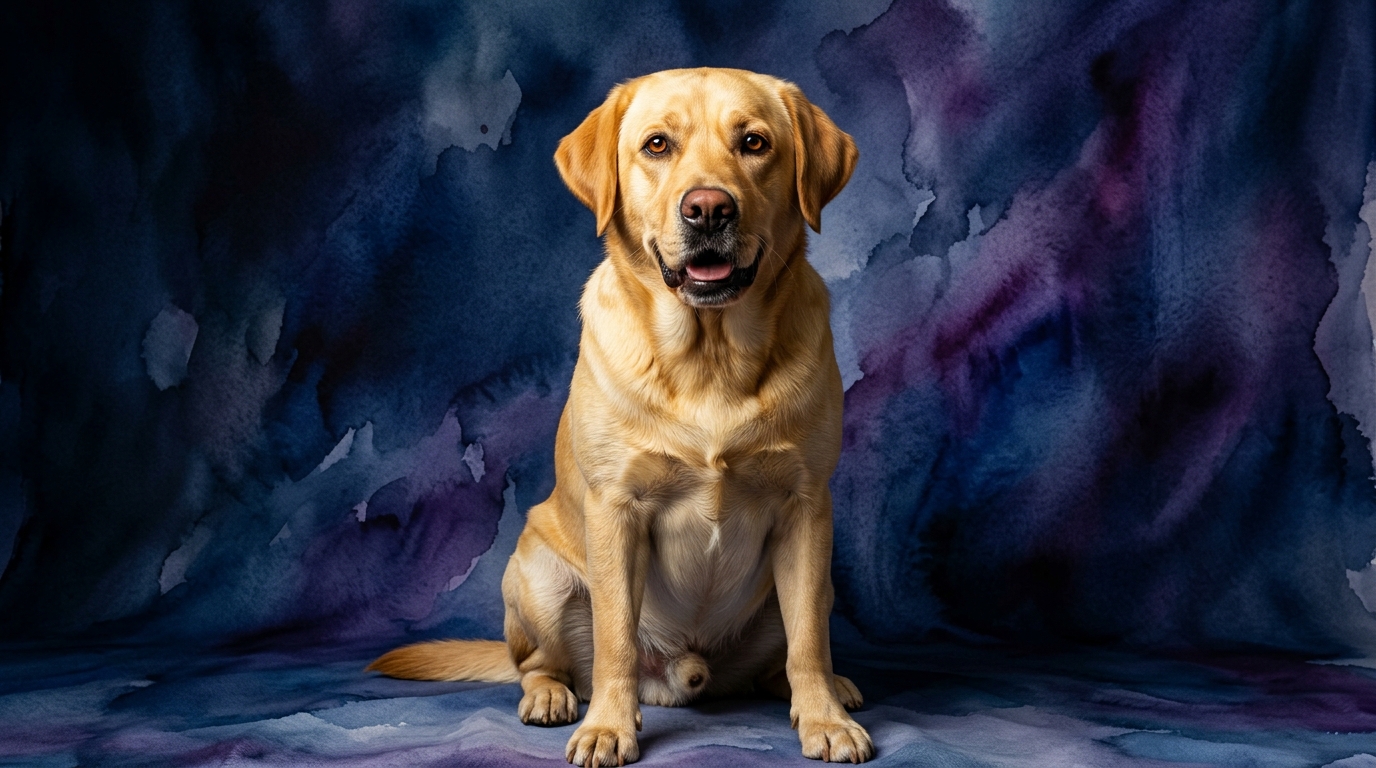
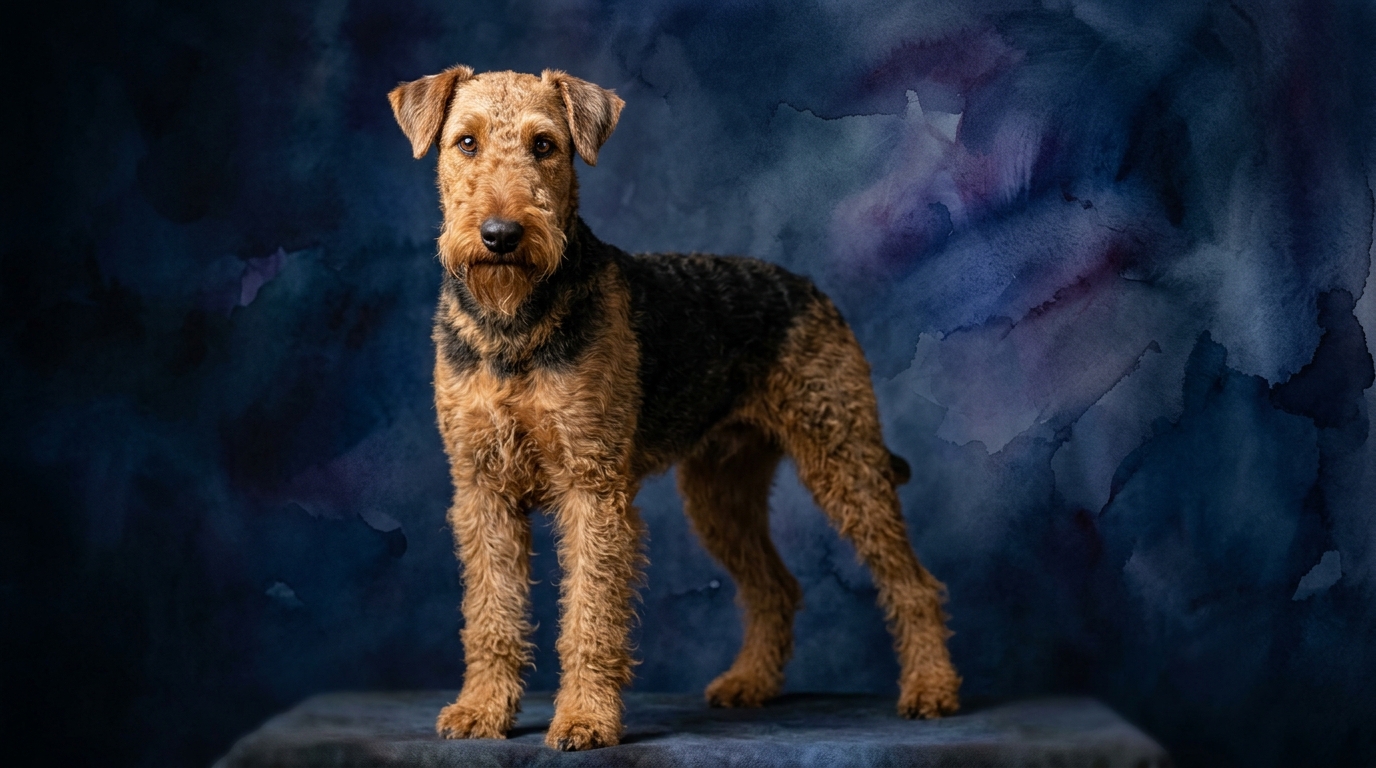
Side-by-Side Cognitive Profile: Labrador Retriever vs. Airedale Terrier
The Cosmic Pet Pet IQ Lab provides a nuanced framework for understanding canine intelligence across five critical dimensions. Examining the Labrador Retriever and Airedale Terrier through this lens highlights their distinct cognitive architectures.
The Labrador Retriever, ranked #7 by Coren, presents a profile geared towards cooperation and social engagement. Its Problem Solving is rated 4/5, demonstrating practical intelligence often directed towards human-centric goals. Training Speed receives a perfect 5/5, reflecting an exceptional ability to learn and retain commands with minimal repetition. Social Intelligence is also a standout at 5/5, indicating a profound capacity to interpret and respond to human cues and emotions. Instinctive Drive scores 4/5, typically manifesting as a strong desire for retrieving and working alongside people. Finally, its Memory is robust at 4/5, supporting consistent performance and recall of complex routines.
The Airedale Terrier, holding Coren rank #29, offers a more independent and tenacious cognitive makeup. Its Problem Solving ability is also 4/5, but often expresses itself through resourceful, self-directed strategies. Training Speed is a commendable 4/5, though it may require more engaging and varied methods due to its independent streak. Social Intelligence is rated 3/5, suggesting a more selective or reserved approach to social interactions compared to the Labrador. The Airedale's Instinctive Drive is 3/5, rooted in its terrier heritage for hunting and independent exploration rather than direct human collaboration. Its Memory aligns with the Labrador's at 4/5, allowing for strong recall of learned experiences and effective strategies.
Where the Labrador Retriever Excels Cognitively
The Labrador Retriever's cognitive strengths distinctly shine in areas requiring cooperation and social attunement, making it a quintessential partner. Their perfect 5/5 score in Training Speed is not merely about quick learning, but about an intrinsic desire to engage with and respond to human instruction. This manifests as a shorter learning curve for new commands and a greater consistency in execution, as their cognitive processing is geared towards understanding and fulfilling human expectations. Their remarkable ability to grasp complex sequences and consistently perform tasks is a testament to this rapid assimilation.
Furthermore, their 5/5 Social Intelligence allows them to pick up on subtle human cues—a change in tone, a shift in body language, even unspoken intentions—with remarkable accuracy. This makes them exceptionally adaptable companions, able to adjust their behavior to suit the mood or needs of their family members, fostering a deeper, more intuitive bond. Their problem-solving, while rated equally at 4/5, often revolves around navigating social situations or tasks that directly involve their people, such as figuring out how to retrieve a dropped item or gently nudge a hand for attention, demonstrating a socially-oriented cognitive approach that prioritizes harmony and interaction.
Where the Airedale Terrier's Cognition Stands Out
The Airedale Terrier, despite a lower Coren rank, presents a unique cognitive profile where its strengths are rooted in independence and resourceful tenacity. While their Problem Solving score of 4/5 matches the Lab, the *nature* of their problem-solving often differs significantly. Airedales excel at independent thought, figuring out complex tasks or obstacles without constant human direction, such as devising a way to access a hidden toy, outsmarting a gate latch, or navigating a tricky scent trail to locate a target. This self-reliance stems directly from their terrier heritage, where they were selectively bred to work autonomously, often far from their human handler, making split-second decisions based on their own assessment.
Their Instinctive Drive, rated 3/5, is geared towards pursuit, investigation, and often, independent action. This fosters a cognitive style that is persistent and focused on individual goals, even if it means bending the rules a bit or employing unconventional methods. An Airedale's memory, also 4/5, coupled with this independent streak, means they remember past successes and failures in their self-directed endeavors with clarity. This allows them to refine their strategies for achieving their own objectives, whether that's escaping a yard, locating a buried treasure, or simply getting their way through clever manipulation of their environment. Their cognitive 'wins' are often in the realm of outwitting challenges on their own terms.
Training Dynamics: Labrador Retriever vs. Airedale Terrier
When assessing ease of training, the Labrador Retriever holds a clear advantage, primarily due to its superior Training Speed (5/5) and Social Intelligence (5/5). Labs are inherently motivated to please and are highly attuned to human feedback, making them eager participants in training sessions. They quickly form associations between commands and actions, often requiring only a few repetitions to master a new skill. Their strong desire for social interaction means they view training as a collaborative activity, reinforcing their bond with the handler and making them highly responsive to praise and positive reinforcement. This inherent cooperativeness translates into a generally smoother and faster training journey for most owners.
Conversely, the Airedale Terrier, with a Training Speed of 4/5 and Social Intelligence of 3/5, requires a different approach. While undeniably capable learners, their independent nature means they often need to be convinced that an exercise is worthwhile from *their* perspective. They may question commands, try to innovate their own solutions, or even display a charming stubbornness, which, while a sign of cognitive agility and self-assurance, can slow down the initial learning process and demand more creative engagement from the trainer. Trainers must be exceptionally patient, consistent, and innovative, using engaging, reward-based methods to harness the Airedale’s intelligence without squashing its spirited independence, whereas a Lab often thrives on more straightforward, repetitive, positive reinforcement exercises.
Matching Cognitive Profiles to Lifestyles: Active vs. Relaxed Owners
The choice between these breeds significantly depends on an owner's lifestyle and their willingness to engage with distinct cognitive needs and behavioral expressions. The Labrador Retriever, with its high Social Intelligence (5/5) and cooperative Instinctive Drive (4/5), thrives with active owners who enjoy shared activities like retrieving, hiking, swimming, or dog sports. Their cognitive makeup makes them excellent partners for structured activities and family outings, as they derive immense satisfaction from working alongside their humans and being an integral part of social experiences. They are well-suited for owners who prioritize constant companionship and a responsive, engaged canine presence in their daily lives, valuing a dog that intuitively seeks connection and collaboration.
In contrast, the Airedale Terrier, with its more independent Social Intelligence (3/5) and hunting-oriented Instinctive Drive (3/5), is better suited for active owners who appreciate a dog with a strong will, a sharp mind, and a penchant for self-directed exploration. They need mental stimulation that genuinely challenges their problem-solving skills and satisfies their drive to investigate, perhaps through advanced obedience, scent work, agility, or secure off-leash adventures where they can investigate and explore. A more relaxed owner, or one seeking a consistently biddable companion, might find the Airedale's cognitive independence and driven nature challenging to manage without sufficient outlets for their unique mental energy and need for engagement. Their intelligence demands a partnership that respects their autonomy while guiding their considerable abilities.
The Verdict
Choose the Labrador Retriever if you seek a highly cooperative companion eager to learn and integrate seamlessly into family life, thriving on shared activities and social engagement.
Opt for the Airedale Terrier if you appreciate an independent, resourceful thinker who excels at self-directed problem-solving and thrives with engaging, mentally stimulating activities.
🧠 Find Your Pet's IQ Score
Our Pet IQ Lab assessment covers 25+ tests across 5 cognitive dimensions — personalized to your breed.
Take the Full IQ Test →Frequently Asked Questions
Do Labrador Retrievers or Airedale Terriers learn faster?
Labrador Retrievers generally learn new commands faster, scoring 5/5 in Training Speed compared to the Airedale's 4/5. This is due to their strong desire to please and high social intelligence, making them very receptive to human instruction and quick to form associations.
How do their problem-solving abilities compare?
Both breeds score 4/5 in Problem Solving, but their approaches differ. Labradors often solve problems in a cooperative, human-centric way, while Airedales tend to employ more independent and resourceful strategies, often for their own self-directed goals and challenges.
Which breed is more socially intelligent?
The Labrador Retriever exhibits superior social intelligence, scoring 5/5 compared to the Airedale Terrier's 3/5. Labs are highly attuned to human emotions and cues, fostering strong, intuitive bonds, whereas Airedales can be more selective and independent in their social interactions.