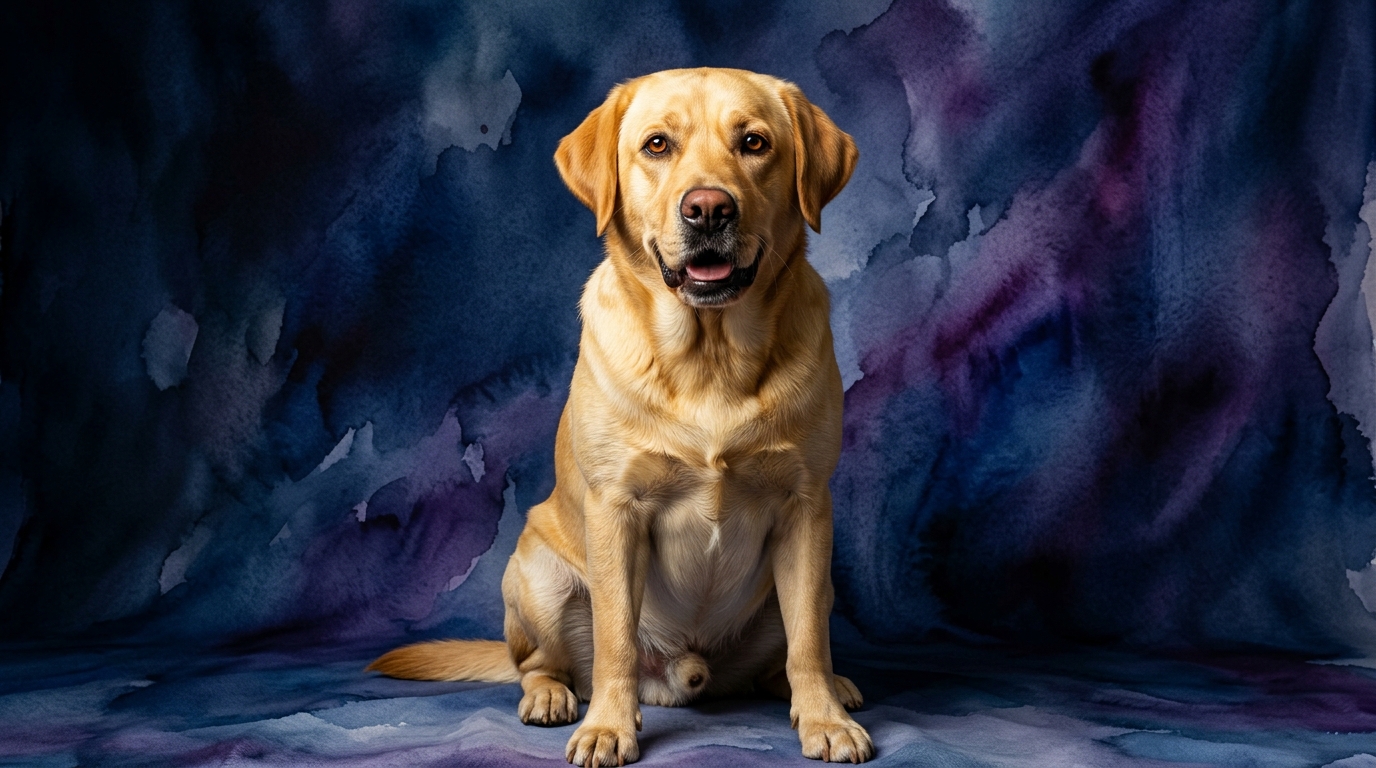
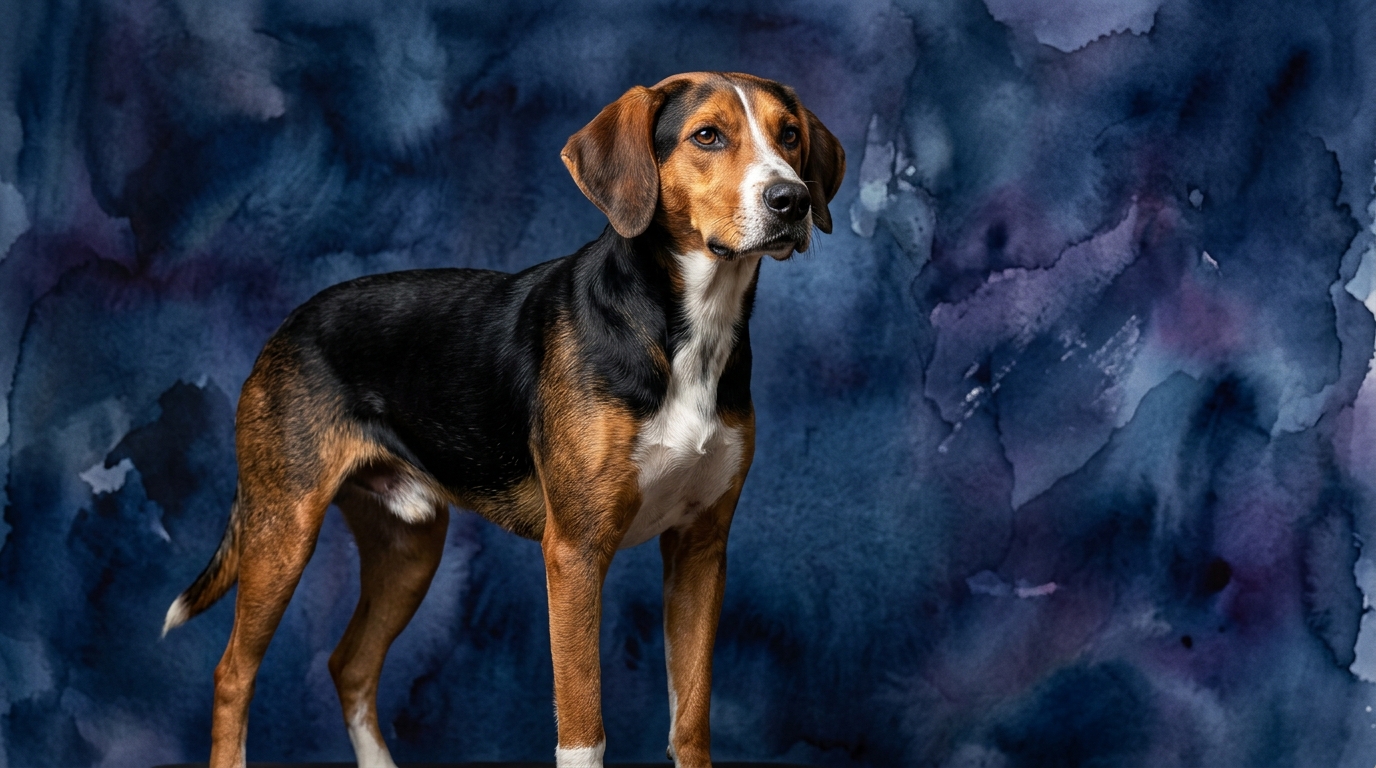
Side-by-Side Cognitive Profile: Labrador Retriever vs. American Foxhound
The Cosmic Pet Pet IQ Lab provides a unique lens through which to evaluate the cognitive dimensions of these two distinct breeds. For the Labrador Retriever, ranked #7 by Coren, we observe a robust all-around mental capacity: Problem Solving at 4/5, Training Speed at 5/5, Social Intelligence at 5/5, Instinctive Drive at 4/5, and Memory at 4/5. This profile paints a picture of a cooperative, adaptable, and highly receptive canine.
In contrast, the American Foxhound, which is not Coren-ranked, presents a different cognitive emphasis. Its scores are: Problem Solving at 3/5, Training Speed at 3/5, Social Intelligence at 3/5, Instinctive Drive at 3/5, and Memory at 3/5. These scores suggest a more independent and instinct-driven intelligence, primarily focused on its ancestral purpose rather than human-directed tasks. Understanding these foundational differences is key to appreciating their unique mental landscapes.
Where the Labrador Retriever Excels Cognitively
The Labrador Retriever's cognitive strengths shine particularly in areas requiring cooperative learning and flexible adaptation. Their 4/5 problem-solving score means they are not just rote learners but can strategize, for instance, figuring out how to open a gate or retrieve a toy from an awkward spot through reasoned action. This cognitive flexibility allows them to adapt strategies effectively to new challenges, demonstrating more than just trial-and-error learning.
Their 5/5 training speed is a testament to their exceptional attentiveness and motivation to engage with human instruction, enabling them to master complex sequences of commands quickly and efficiently. Furthermore, their superior social intelligence (5/5) allows them to pick up on subtle human intentions and emotional cues, making them exceptionally responsive partners in tasks ranging from assistance work to competitive obedience. This deep understanding of human communication fosters a highly collaborative mental state, where they actively seek to understand and fulfill expectations, making them remarkably intuitive companions.
Where the American Foxhound's Cognition Shines
While not excelling in human-centric cooperative tasks, the American Foxhound possesses a unique cognitive prowess rooted in its specialized purpose: scent tracking. Its instinctive drive (3/5), though numerically lower than the Labrador's, represents an unparalleled dedication to following a scent trail for extended periods, often over vast distances and challenging terrains. This isn't just a physical act; it involves intricate cognitive mapping, memory for scent patterns, and an unwavering focus that few other breeds can match.
Their problem-solving (3/5) in this context involves navigating complex olfactory puzzles, differentiating target scents from numerous environmental distractions, and maintaining a mental 'map' of the trail. This specialized form of intelligence, while less about human interaction, is a profound display of sustained cognitive effort and environmental interpretation. It allows them to perform their ancestral task with remarkable autonomy and persistence, demonstrating a deep, functional understanding of their olfactory world that surpasses many other breeds.
Trainability: Labrador Retriever vs. American Foxhound
The Labrador Retriever is demonstrably easier to train, a fact underscored by its perfect 5/5 training speed and Coren rank of #7. This ease stems from a convergence of factors: their high social intelligence (5/5) means they are inherently motivated to please their human companions and readily interpret cues, often anticipating what is desired. Their problem-solving ability (4/5) allows them to quickly understand the *why* behind a command, not just the *how*, leading to faster generalization of learned behaviors.
For example, when teaching 'stay,' a Labrador might quickly associate the command with remaining still due to their focus on the handler and strong desire for positive reinforcement. In contrast, the American Foxhound's training speed of 3/5 and lack of Coren ranking reflect a different cognitive priority. Their strong instinctive drive (3/5) for scent work means they are often less interested in human-directed tasks when a compelling scent is present, leading to a more challenging and often prolonged training process.
Their independence, a hallmark of a hound bred to work autonomously, means they require more patience and consistency. Teaching a Foxhound 'stay' might involve a battle against their natural inclination to follow an interesting smell, requiring more repetition and higher-value rewards to break their focus on the environment. Their training requires understanding and working with their deeply ingrained hunting instincts, rather than expecting immediate compliance driven by social appeasement.
Matching Canine Cognition to Owner Lifestyles
For active owners seeking a highly engaged and cooperative canine partner, the Labrador Retriever is an exceptional fit. Their strong instinctive drive (4/5) for activity, coupled with superior problem-solving (4/5) and training speed (5/5), means they thrive on structured activities like retrieving games, agility, or canine sports. They possess the mental stamina and desire to learn complex tasks, making them ideal companions for hiking, running, or any activity where a dog works alongside its human. Their social intelligence (5/5) means they genuinely enjoy participating in family life and intellectual challenges presented by their owners.
Conversely, the American Foxhound, while requiring significant physical activity to satisfy its profound desire to roam and track, might not be the best match for owners whose 'activity' primarily involves structured, human-led obedience or trick training. Their independent nature and overwhelming drive to follow a scent means they need extensive, secure off-leash opportunities where they can explore with their nose, often with less direct human interaction. A relaxed owner who prefers quiet companionship and minimal training might struggle with a Foxhound's need for consistent mental and physical stimulation, particularly their propensity to vocalize and wander.
However, an active owner who appreciates long, exploratory walks and tolerates a more independent canine spirit, perhaps even engaging in scent work or field trials, could find a rewarding partnership with a Foxhound. Such an owner understands that their dog's activity is often self-directed by their powerful olfactory sense, and they derive satisfaction from enabling this natural behavior rather than imposing rigid human-centric routines.
The Verdict
When choosing a canine companion, the Labrador Retriever is the superior choice for owners seeking a highly trainable, socially attuned partner eager to engage in cooperative activities and learn complex commands. Their cognitive profile makes them adaptable to various roles and family dynamics, thriving on clear communication and shared tasks.
The American Foxhound, however, is best suited for owners who value independence, possess a deep appreciation for a dog's natural instincts, and can provide ample opportunities for scent-driven exploration and physical exertion in secure environments. They are for those who admire a dog's self-reliance and specialized cognitive focus.
🧠 Find Your Pet's IQ Score
Our Pet IQ Lab assessment covers 25+ tests across 5 cognitive dimensions — personalized to your breed.
Take the Full IQ Test →Frequently Asked Questions
Is the American Foxhound a good family dog?
Yes, American Foxhounds are generally amiable and get along well with families, including children and other dogs. However, their independent nature means they might not seek constant human interaction in the same way a Labrador might, often preferring to follow a scent.
Do Labrador Retrievers need a lot of exercise?
Absolutely. Labrador Retrievers are active dogs with a strong drive for physical and mental engagement. They thrive on daily exercise, including walks, runs, swimming, and interactive games that challenge their problem-solving and retrieving instincts.
What is the biggest training challenge with an American Foxhound?
The biggest training challenge with an American Foxhound is their profound instinctive drive to follow a scent, which can make recall difficult and distract them from commands. Consistent, patient training using high-value rewards and managing their environment are crucial to success.