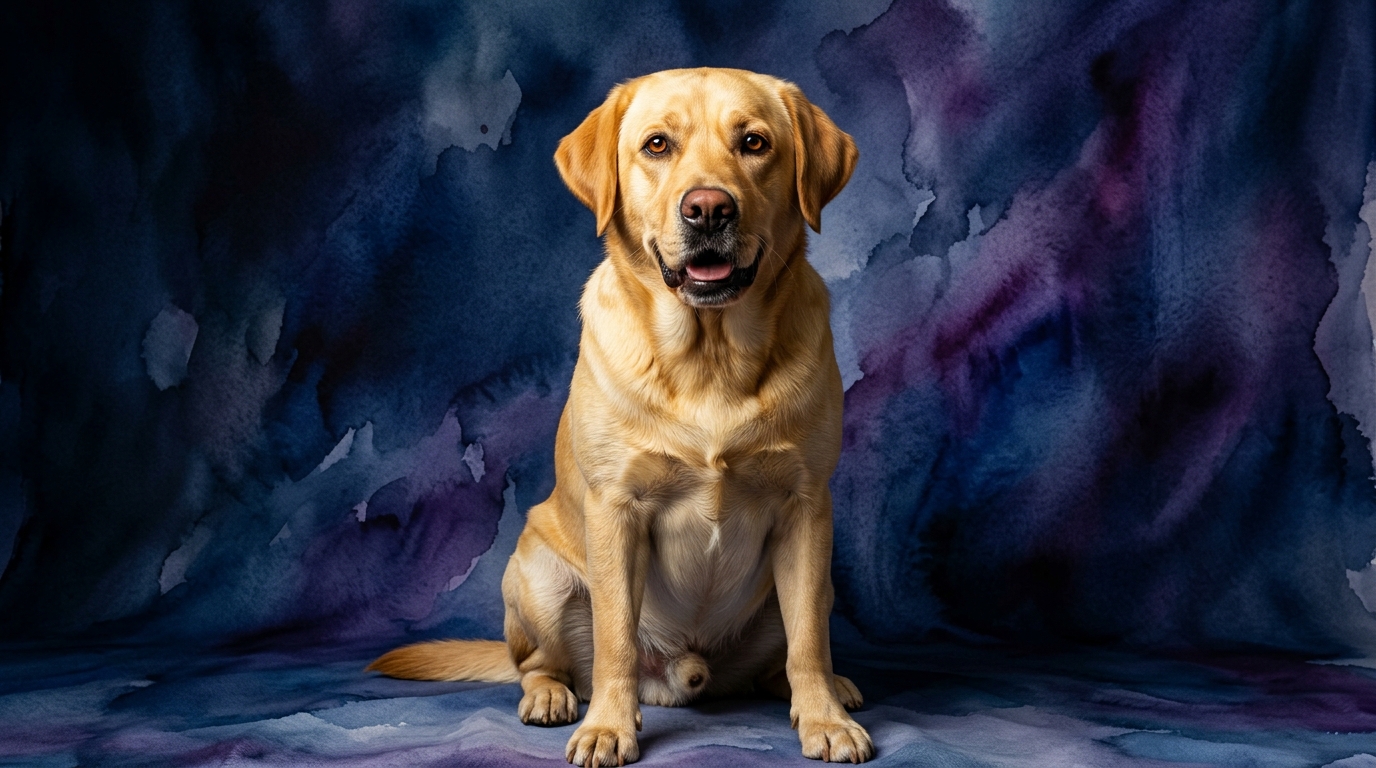

Side-by-Side IQ Profile: Labrador Retriever vs. American Staffordshire Terrier
The Labrador Retriever, ranked #7 by Coren for working intelligence and obedience, presents a cognitive profile indicating high adaptability and responsiveness. Our Pet IQ Lab scores show their problem Solving at 4/5, indicating an aptitude for understanding complex tasks and navigating novel situations. Their training Speed is an impressive 5/5, reflecting a rapid ability to learn and retain commands. Social Intelligence also scores 5/5, highlighting their exceptional capacity for understanding human cues, forming strong bonds, and integrating seamlessly into diverse social settings. An instinctive Drive of 4/5 underscores their strong natural desire to work and retrieve, while their Memory stands at 4/5, allowing for excellent recall of learned behaviors and experiences.
In contrast, the American Staffordshire Terrier, Coren ranked #48, demonstrates a different set of cognitive strengths. Their problem Solving is rated 3/5, suggesting a resourceful yet sometimes independent approach to challenges. Training Speed is 3/5, indicating they require consistent and patient methods to master new skills. Their Social Intelligence is also 3/5, reflecting a deep loyalty to their inner circle but a more discerning approach to strangers and new environments. An instinctive Drive of 3/5 points to a focused determination, often rooted in their terrier heritage, while their Memory matches the Labrador at 4/5, showing a strong capacity for recalling specific events, routines, and individuals.
Where the Labrador Retriever Wins Cognitively
The Labrador Retriever's cognitive edge is most apparent in its superior training speed and social intelligence. With a 5/5 in both categories, they exhibit an unparalleled eagerness to please and an innate ability to grasp new commands rapidly, often requiring fewer repetitions than many other breeds. This makes them exceptionally pliable for various roles, from service work to competitive obedience, where quick learning and consistent performance are paramount.
Their elevated social intelligence allows Labradors to read human emotions and intentions with remarkable accuracy, fostering deep empathetic connections. This cognitive trait enables them to adapt smoothly to diverse social dynamics, making them highly effective therapy dogs and family companions who can intuit the needs of their human counterparts. Furthermore, their 4/5 problem-solving score means they excel in tasks requiring sequential steps and understanding abstract concepts, such as navigating complex agility courses or performing intricate assistance duties.
Where the American Staffordshire Terrier Wins Cognitively
While the AmStaff's overall scores are lower, their cognitive profile reveals specific strengths that are invaluable in the right contexts. Their 4/5 Memory score, matching the Labrador, indicates a robust capacity to recall experiences, routines, and the intricate details of their environment and social interactions. This strong associative memory contributes significantly to their deep loyalty and ability to form lasting bonds, remembering specific positive and negative encounters.
The AmStaff's 3/5 problem-solving ability, coupled with their instinctive drive, manifests as a resourceful determination. They are adept at finding solutions through persistence, often exhibiting a terrier-typical tenacity when faced with a challenge. This isn't about abstract reasoning as much as a focused, practical application of effort to achieve a goal. Their discerning social intelligence, while scoring 3/5, means they are excellent at identifying trusted individuals within their close circle, displaying a protective loyalty that stems from a keen awareness of their social environment.
Which Is Easier to Train and Why
Based on our Pet IQ Lab data, the Labrador Retriever is generally easier to train due to its exceptional 5/5 training Speed and 5/5 social Intelligence. Labradors possess a profound desire to engage with their human companions and respond swiftly to positive reinforcement. They quickly generalize learned behaviors to new situations, meaning a command learned in one context is readily understood in another. Their inherent biddability and focus on their handler make the training process a highly rewarding and efficient experience, even for novice owners.
The American Staffordshire Terrier, with a 3/5 training Speed and 3/5 social Intelligence, requires a more consistent, patient, and engaging approach to training. They are not less capable of learning, but their independent nature and terrier tenacity mean they may take longer to master commands and might test boundaries more frequently. Training an AmStaff benefits from clear, firm, and motivational methods, often focusing on their inherent desire for a strong bond and structured activity. Early and extensive socialization is crucial for channeling their discerning social intelligence into positive interactions with the broader world.
Which Suits Active Owners vs. Relaxed Owners
The Labrador Retriever, with its 4/5 instinctive Drive and high social intelligence, thrives with owners who can provide ample mental stimulation and physical activity. They are suited for active individuals or families who enjoy outdoor adventures, participate in dog sports like retrieving or agility, or require a companion for service or working roles. While adaptable to periods of relaxation, a Labrador will genuinely flourish when given a purpose and regular opportunities to engage both their body and their keen mind. Their social nature means they enjoy being integral to family activities.
The American Staffordshire Terrier, while possessing a 3/5 instinctive Drive, also requires an owner committed to providing structured activity and mental engagement. They are best suited for active owners who understand the importance of consistent training, clear leadership, and engaging play that satisfies their need for focus and determination. These dogs excel in activities like obedience, rally, or even weight pulling, where their physical prowess and mental tenacity are utilized. While they can be calm companions indoors, they are not ideal for purely 'relaxed' owners who cannot commit to their daily needs for purpose-driven exercise and mental challenges.
The Verdict
Choose the Labrador Retriever if you seek a highly adaptable, socially intuitive, and rapidly trainable companion for diverse roles and family life.
Opt for the American Staffordshire Terrier if you're an experienced owner ready for a dedicated, resourceful, and loyal companion who thrives with consistent training and a strong, trusting bond.
🧠 Find Your Pet's IQ Score
Our Pet IQ Lab assessment covers 25+ tests across 5 cognitive dimensions — personalized to your breed.
Take the Full IQ Test →Frequently Asked Questions
Is a Labrador Retriever better for service work?
Yes, a Labrador Retriever's superior social intelligence (5/5), training speed (5/5), and problem-solving (4/5) make them exceptionally suited for complex service tasks. Their innate responsiveness and empathy allow them to excel in public environments and deeply understand human needs.
Do American Staffordshire Terriers have good memories?
Yes, both breeds score 4/5 for memory. American Staffordshire Terriers excel at remembering experiences, routines, and specific people, which contributes significantly to their deep loyalty and ability to learn complex sequences and associate them with their environment.
What's the main cognitive difference for first-time owners?
For first-time owners, the Labrador Retriever's significantly higher training speed and social intelligence generally make them more forgiving and easier to guide through the training process. The American Staffordshire Terrier requires a more consistent, patient, and experienced approach to training and socialization.