
Side-by-Side Cognitive Profiles: Decoding Retriever Minds
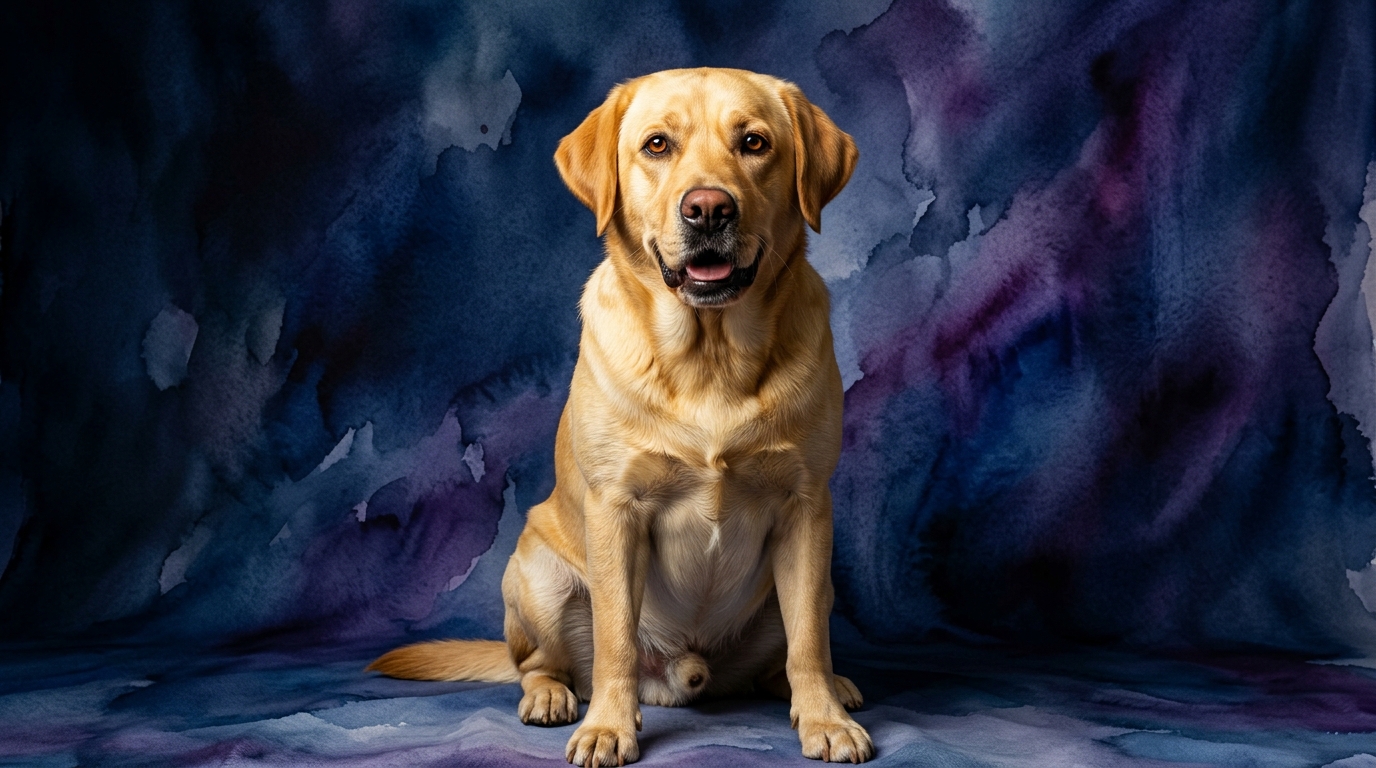
At The Cosmic Pet Pet IQ Lab, we analyze canine cognition across five crucial dimensions, offering a nuanced view beyond simple labels. The Labrador Retriever, a breed widely recognized for its versatility, holds a Coren rank of #7, reflecting a highly adaptable and cooperative mind. Their cognitive breakdown shows problem-solving at 4/5, indicating a strong capacity for independent thought and navigating novel situations. Training speed is exceptional at 5/5, signifying an eagerness and rapid absorption of new commands. Social intelligence also scores a perfect 5/5, highlighting their profound attunement to human cues and emotions, fostering deep cooperative bonds. An instinctive drive of 4/5 underscores their inherent desire for work and retrieving, while memory at 4/5 suggests a reliable ability to recall learned information and experiences.
The Flat-Coated Retriever, while sharing the Sporting Group classification, presents a distinct cognitive signature, reflected in its Coren rank of #17. This breed demonstrates an equally robust problem-solving ability at 4/5, showing they are adept at figuring things out. Their training speed registers at a commendable 4/5, meaning they learn efficiently, though perhaps with a slightly more independent approach than their Labrador cousins. Social intelligence, at 3/5, suggests a more self-reliant or perhaps a more playful and less constantly people-pleasing demeanor. An instinctive drive of 3/5 indicates a solid, yet potentially less intense or more selective, natural inclination for retrieving tasks. Notably, the Flat-Coated Retriever truly shines in memory, scoring a perfect 5/5, pointing to an extraordinary capacity for long-term recall of complex sequences, locations, and learned behaviors.
Where the Labrador Retriever Excels Cognitively
The Labrador Retriever's cognitive strengths are particularly evident in their training speed and social intelligence, both scoring 5/5. This combination translates into a dog that is exceptionally receptive to instruction and profoundly connected to its human companions. A Labrador's high social intelligence means they are often acutely aware of human body language, tone of voice, and emotional states, making them highly responsive and eager to cooperate. This isn't just about 'obedience'; it's about a deep, intuitive understanding of their role within the human-canine partnership.
Their rapid training speed, coupled with this social attunement, means Labradors typically pick up new commands and routines with impressive swiftness. They thrive on positive reinforcement and the opportunity to engage with their owners in structured activities. This cognitive profile makes them particularly adept at roles requiring precise responses and consistent focus, such as assistance work, search and rescue, or competitive obedience. Their 4/5 problem-solving and instinctive drive further ensure they can apply their learned skills effectively in varied, real-world scenarios, often finding creative solutions while remaining focused on the task at hand.
Where the Flat-Coated Retriever Shines Cognitively
The Flat-Coated Retriever's standout cognitive strength lies in its memory, earning a perfect 5/5. This superior recall capability suggests an exceptional ability to store and retrieve detailed information over extended periods. For a retriever, this could manifest as remembering the exact fall location of multiple retrieves, even after a significant delay or distraction, or recalling complex scent trails and patterns with remarkable accuracy. This profound memory allows them to build a vast mental library of experiences and learned behaviors, which can be invaluable in field work or intricate training routines.
While their problem-solving matches the Labrador at 4/5, their slightly lower social intelligence (3/5) and instinctive drive (3/5) suggest that their problem-solving might be applied with a touch more independence or playful ingenuity. They are capable thinkers who can navigate challenges, but their motivation might stem more from the inherent joy of the task or the challenge itself, rather than solely from a desire to please. This memory strength, combined with their problem-solving, equips them to excel in activities that require complex sequencing and the ability to learn and retain intricate patterns, making them formidable partners in specialized retrieving tasks or agility courses.
Training Dynamics: Labrador's Eagerness vs. Flat-Coat's Playful Independence
When it comes to training, the Labrador Retriever's 5/5 training speed and 5/5 social intelligence provide a distinct advantage for many owners. Their eagerness to please and strong desire to cooperate mean they are often highly motivated by praise, treats, and the opportunity to engage with their human. This makes them generally easier to motivate and guide through new commands, resulting in rapid learning and a high degree of responsiveness. Labradors tend to be very attuned to their handler's desires, often anticipating commands and actively seeking to understand what is being asked of them.
The Flat-Coated Retriever, with a 4/5 training speed and 3/5 social intelligence, requires a slightly different approach. While they are certainly capable learners, their lower social intelligence suggests they might be less inherently driven by constant human affirmation and more prone to playful distractions or independent thought. Their training often benefits from an approach that emphasizes engagement, variety, and making learning feel like a fun game. Owners might find they need to be more creative and patient to maintain a Flat-Coat's focus, as their independent streak can sometimes lead them to prioritize their own whims over immediate compliance. Consistency and positive reinforcement are key, but delivered in a way that respects their joyful, sometimes mischievous, spirit.
Lifestyle Match: Active Engagement for Both, But Different Flavors
Both the Labrador Retriever and the Flat-Coated Retriever are Sporting Group dogs, meaning they inherently possess significant energy and a need for physical and mental stimulation. Neither breed is suited for a truly relaxed, sedentary owner. However, their cognitive profiles suggest different flavors of engagement. The Labrador Retriever, with its high social intelligence and training speed, thrives on varied activities that involve close interaction with its owner. They are often content with a mix of structured training, fetching, walks, and family activities, eager to be a part of whatever their people are doing. Their adaptability means they can excel in diverse canine sports, from dock diving to therapy work, as long as they are actively involved and given a purpose.
The Flat-Coated Retriever, while equally energetic, benefits from activities that leverage its exceptional memory and problem-solving skills, often with a touch more independence. They might particularly enjoy complex retrieving games, scent work, or agility courses that challenge their minds and bodies in intricate ways. Their slightly lower social intelligence means they might find constant, repetitive obedience drills less engaging than a Labrador, preferring tasks that allow them to use their intellect more freely. Owners who enjoy long, adventurous hikes, complex training sequences, or field work where the dog must recall multiple marks will find the Flat-Coat to be an incredibly rewarding partner, one who brings a unique blend of joyful energy and thoughtful execution to every task.
The Verdict
Choose a Labrador Retriever if you prioritize a highly cooperative, eager-to-please companion who learns rapidly and thrives on constant social engagement and varied activities.
Opt for a Flat-Coated Retriever if you appreciate a dog with exceptional memory, a joyful and independent spirit, and are prepared to engage their keen intellect with creative, challenging, and often complex tasks.
🧠 Find Your Pet's IQ Score
Our Pet IQ Lab assessment covers 25+ tests across 5 cognitive dimensions — personalized to your breed.
Take the Full IQ Test →Frequently Asked Questions
Do Flat-Coated Retrievers require more mental stimulation than Labradors?
Both breeds require substantial mental stimulation. Flat-Coated Retrievers, with their exceptional memory and strong problem-solving, often benefit from more complex, varied, and independent mental challenges, whereas Labradors thrive on structured tasks and social interaction.
Is a Flat-Coated Retriever harder to train than a Labrador Retriever?
While both are highly trainable, a Flat-Coated Retriever's 4/5 training speed and 3/5 social intelligence mean they might require more patience, creativity, and a game-like approach compared to a Labrador's 5/5 scores in both, which typically make them more consistently eager and responsive.
Which breed is better for a first-time dog owner?
For a first-time owner, the Labrador Retriever's high social intelligence and training speed often make them a more forgiving and easier-to-manage choice due to their strong desire to cooperate. Flat-Coated Retrievers, while delightful, may require an owner more prepared for their independent streak and playful energy.