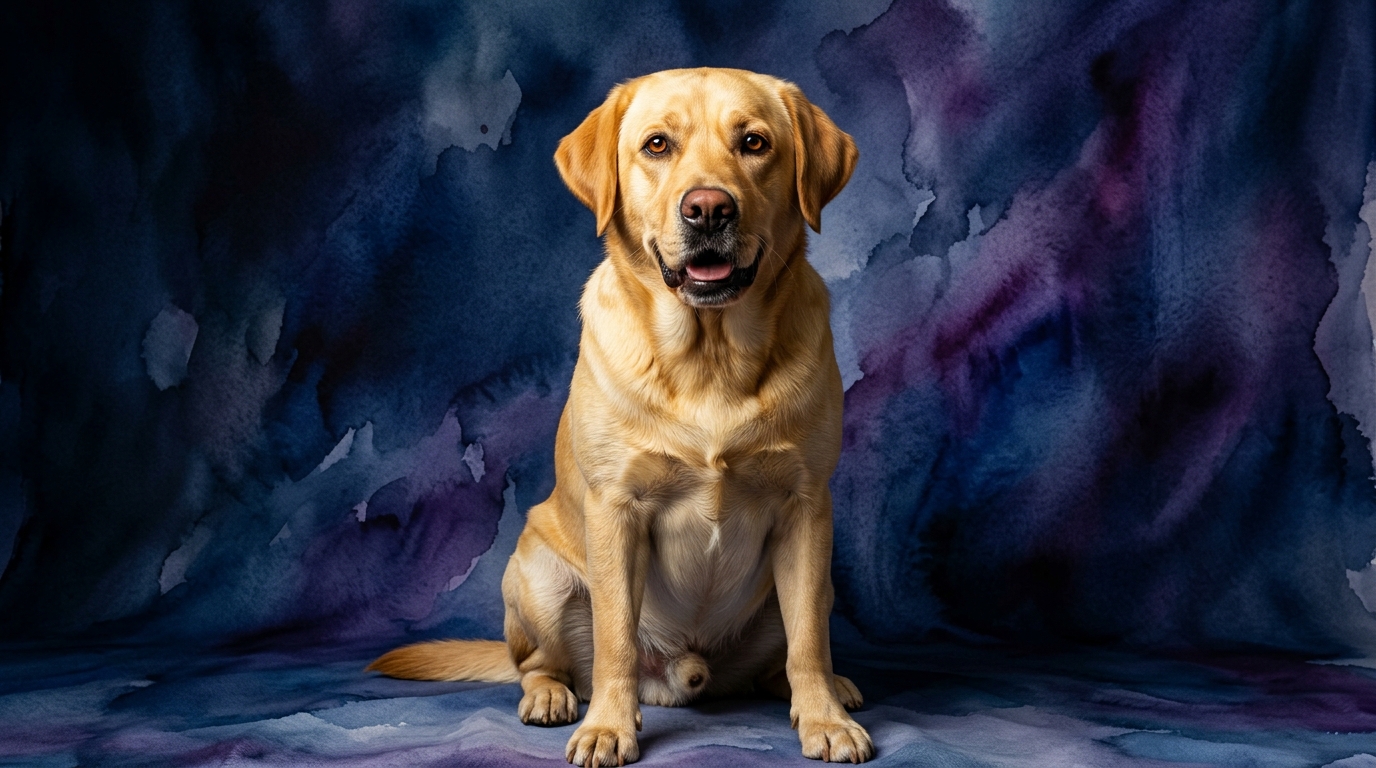

Side-by-Side Cognitive Profile: Labrador Retriever vs. Manchester Terrier
The Cosmic Pet Pet IQ Lab employs a five-dimensional framework to assess canine intelligence, providing a nuanced understanding beyond simple obedience. Let's delve into how the Labrador Retriever and Manchester Terrier measure up across these crucial cognitive traits.
Labrador Retriever (Sporting Group, Coren Rank #7):
Problem Solving (4/5): This score reflects their capacity to methodically navigate complex scenarios, such as learning multi-step routines for assistance work or figuring out how to retrieve a specific item from an array. They often display a patient, analytical approach, observing their environment and consequences of actions to achieve desired outcomes.
Training Speed (5/5): Labradors absorb new commands and routines with remarkable swiftness, often mastering novel cues in just a few repetitions. Their readiness to learn and strong desire to please contribute to this rapid assimilation, making them highly adaptable to diverse training disciplines from obedience to detection work.
Social Intelligence (5/5): Exhibiting an exceptional aptitude for interpreting human emotions, gestures, and vocal tones, Labradors forge deep, cooperative bonds. This intuitive understanding allows them to adapt their behavior effectively in various social settings, making them outstanding therapy and service animals who respond sensitively to human needs.
Instinctive Drive (4/5): Their gundog heritage imbues Labradors with a powerful, focused drive for retrieving, swimming, and working alongside humans. This innate motivation, when appropriately channeled through play and structured activities, becomes a robust asset for engaging them in productive tasks and physical exertion.
Memory (4/5): Labradors possess a robust capacity for recalling commands, learned sequences, and even specific individuals or locations over considerable durations. This enduring memory supports their consistent performance in complex roles, allowing them to retain vast repertoires of learned behaviors without significant degradation.
Manchester Terrier (Terrier Group, Not Coren-Ranked):
Problem Solving (3/5): Manchester Terriers are capable of solving practical problems, especially those related to securing access to desirable items or navigating their immediate surroundings. Their approach is often more independent and driven by curiosity or resourcefulness, sometimes requiring more trial-and-error than the Labrador’s methodical style for abstract challenges.
Training Speed (3/5): They learn at a moderate pace, typically requiring more consistent repetition and highly engaging training methods to solidify new commands. Their independent nature means they can sometimes appear less immediately compliant, needing compelling incentives and a clear purpose to maintain their focus during learning sessions.
Social Intelligence (3/5): While deeply affectionate with their immediate families, Manchester Terriers tend to be more reserved or discerning with strangers and in novel social situations. Their social intelligence is focused on their inner circle, and they may not exhibit the broad adaptability or overt friendliness seen in breeds specifically bred for public interaction.
Instinctive Drive (3/5): Rooted in their rat-catching ancestry, Manchester Terriers possess a strong, focused drive for chasing, exploring, and asserting their presence. This independent drive fuels their adventurous spirit and determination, manifesting as a keen interest in small, fast-moving objects and a desire to patrol their territory.
Memory (3/5): Manchester Terriers retain daily routines, basic commands, and important associations adequately. However, their memory might require more frequent refreshing for complex or less frequently used commands compared to breeds with higher scores, emphasizing the importance of consistent reinforcement for long-term retention.
Where the Labrador Retriever Excels Cognitively
The Labrador Retriever's cognitive strengths distinctly position them as unparalleled partners in cooperative ventures. Their superior scores in Training Speed (5/5) and Social Intelligence (5/5) are a testament to their exceptional capacity for understanding and responding to human direction, absorbing new commands with remarkable swiftness. This aptitude allows them to master intricate multi-step tasks, follow nuanced cues, and perform consistently in roles demanding precise execution and unwavering focus on their handler's intentions, from guiding the visually impaired to detecting specific scents. Their Problem Solving (4/5) is often applied in the context of achieving a shared goal, making them eager collaborators rather than independent strategists.
Where the Manchester Terrier's Cognition Shines
While the Manchester Terrier may not match the Labrador’s cooperative learning pace, its cognitive profile shines in areas demanding independent thought and resourcefulness. Their instinctive drive (3/5), though lower numerically, is intensely focused on observation and self-directed action, particularly in tasks involving agility, scent discrimination, or navigating dynamic environments without constant human input. This breed exhibits a particular flair for figuring out challenges on their own terms, such as manipulating objects to get to a desired treat or devising routes through complex spaces. Their Problem Solving (3/5) is often characterized by a determined, sometimes clever, approach to overcoming obstacles independently, leveraging their innate curiosity and tenacity to achieve their objectives.
Training Dynamics: Effort and Engagement
The Labrador Retriever is demonstrably easier to train, largely due to its stellar Training Speed (5/5) and paramount Social Intelligence (5/5). These traits foster a natural eagerness to engage with and please their human companions, making them exceptionally receptive to instruction. They quickly connect verbal commands with desired actions, often requiring fewer repetitions to solidify new behaviors. Their attentiveness to human body language and vocal tone allows for nuanced communication, facilitating rapid progress in obedience, complex task learning, and specialized roles where precision is crucial.
Conversely, the Manchester Terrier, with its moderate Training Speed (3/5) and Social Intelligence (3/5), presents a more nuanced training experience. Their spirited independence, a hallmark of the terrier group, means they require a trainer who understands their innate drive to explore and make their own decisions. While capable of learning, they can be more selective in their compliance, often weighing a command against their own immediate interests, like the scent of a squirrel. Successful training with a Manchester Terrier necessitates engaging methods, positive reinforcement, and a patient, consistent approach that respects their independent spirit, turning training into a stimulating game rather than a rigid chore.
Matching Canine Cognition to Owner Lifestyles
For active owners who relish outdoor adventures, structured training, and consistent, interactive engagement, the Labrador Retriever is an ideal companion. Their robust instinctive drive (4/5) for retrieving, swimming, and exploring, combined with their eager-to-please nature, means they thrive on having a purposeful role in activities like hiking, running, or dog sports. They require substantial daily physical exercise and mental stimulation to channel their energy constructively. A more relaxed owner would need to commit diligently to providing these outlets, as an under-exercised Labrador can become bored and potentially destructive.
The Manchester Terrier, while smaller, is far from a sedentary lapdog and suits active owners who appreciate a spirited, agile companion for brisk walks, agility courses, or engaging games of fetch. Their energy, though perhaps expressed in shorter bursts than a Labrador's, demands regular outlets to satisfy their keen curiosity and physical needs. For owners who are generally more relaxed but willing to provide focused periods of mental and physical stimulation, the Manchester Terrier can adapt well. They don't typically require the same duration of continuous "work" as a Labrador, but they do need consistent engagement that taps into their quick wit and determined spirit to prevent boredom and ensure a harmonious household.
The Verdict
If you seek a highly cooperative, eager-to-please companion for active family life, extensive training, or roles requiring consistent social interaction and focused problem-solving, the Labrador Retriever is an exceptional choice.
Opt for the Manchester Terrier if you appreciate a spirited, independent companion with a quick wit and a determined streak, suitable for an owner who enjoys engaging their dog with varied activities and values a dog that combines athleticism with a more selective social circle.
🧠 Find Your Pet's IQ Score
Our Pet IQ Lab assessment covers 25+ tests across 5 cognitive dimensions — personalized to your breed.
Take the Full IQ Test →Frequently Asked Questions
Is a Manchester Terrier difficult to train because of its independence?
While Manchester Terriers possess an independent spirit that requires consistent and engaging training methods, they are not inherently difficult. Their problem-solving and drive mean they respond best to positive reinforcement and varied sessions that make learning a stimulating game, rather than a rigid chore. Patience and creativity are key to harnessing their determination effectively.
How does a Labrador Retriever's social intelligence benefit owners?
A Labrador Retriever's high social intelligence allows them to form exceptionally strong bonds and adapt readily to various social situations. They are adept at reading human cues, making them intuitive companions who can respond sensitively to their owner's moods and instructions, excelling as family pets, therapy, or service dogs. This fosters a highly cooperative and harmonious household environment.
Which breed is better for a first-time dog owner concerning cognitive demands?
For a first-time dog owner, the Labrador Retriever often presents an easier learning curve due to its high training speed and social intelligence, making them more forgiving of initial training mistakes. The Manchester Terrier, while capable, requires a more experienced or dedicated owner prepared to navigate their independent streak with consistent, engaging, and positive training techniques.