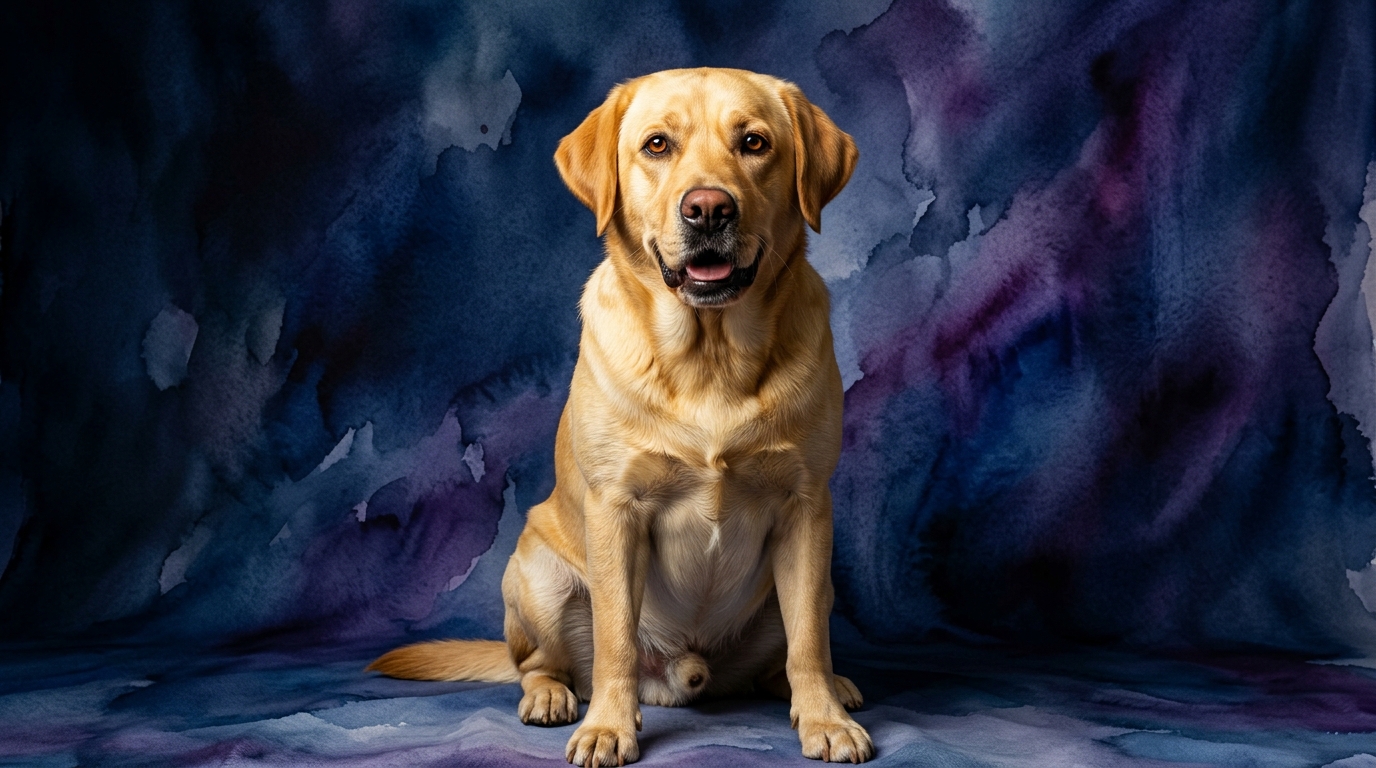

Side-by-Side IQ Profile: Labrador Retriever vs. Norfolk Terrier
At The Cosmic Pet Pet IQ Lab, we evaluate canine intelligence across five key dimensions, offering a nuanced perspective beyond simple rankings. Understanding these profiles helps us appreciate the unique cognitive architecture of each breed.
The Labrador Retriever, a prominent member of the Sporting Group and ranked #7 by Stanley Coren for working/obedience intelligence, exhibits a cognitive profile geared towards cooperative work and rapid skill acquisition. Their Problem Solving is rated 4/5, indicating a strong capacity for figuring out practical solutions to tasks, often involving multi-step processes or environmental manipulation. Training Speed is an outstanding 5/5, meaning they absorb new commands and routines with remarkable rapidity, requiring minimal repetitions. Their Social Intelligence also scores 5/5, reflecting a profound understanding of human cues, intentions, and an innate desire to form deep, cooperative bonds. Instinctive Drive is 4/5, primarily centered around retrieving, swimming, and focused work alongside humans, driven by a cognitive persistence to complete tasks. Finally, their Memory is 4/5, allowing them to retain learned behaviors, routines, and experiences over long periods, making their training durable and reliable.
In contrast, the Norfolk Terrier, a spirited member of the Terrier Group and not formally Coren-ranked, presents a profile reflecting their independent, tenacious heritage. Their Problem Solving is 3/5, signifying a resourceful, self-reliant approach to obstacles, often driven by their inherent terrier instincts rather than cooperative problem-solving with a human. Training Speed is 3/5; they are capable of learning but typically require more patience, consistency, and motivation due to their independent streak. Social Intelligence is 3/5; while affectionate and loyal to their families, they might not possess the same broad capacity for reading subtle human cues or adapting to a wide range of social dynamics as readily as a Labrador, often preferring a more defined social structure. Their Instinctive Drive is 3/5, rooted in hunting small vermin, manifesting as a strong prey drive, a desire to dig, and a persistent focus on anything that resembles a chase. Memory is also 3/5; they retain learned behaviors, but their recall might not be as consistently reliable or long-lasting without regular reinforcement, especially if their independent drives conflict with a remembered command.
Where the Labrador Retriever Wins Cognitively
The Labrador Retriever's cognitive strengths are particularly evident in their aptitude for cooperative tasks and rapid learning, making them exceptional partners in structured environments. Their 5/5 Training Speed means they absorb new information with impressive efficiency, mastering a vast repertoire of commands and complex sequences quickly. This is further amplified by their 5/5 Social Intelligence, enabling them to finely tune into human communication, anticipating cues and responding with remarkable precision. Their 4/5 Problem Solving allows them to apply learned solutions to novel situations, demonstrating adaptability within human-defined objectives. Essentially, Labs excel at understanding and executing human-directed goals, making them quintessential working and family companions who thrive on collaboration.
Where the Norfolk Terrier Wins Cognitively
While the Norfolk Terrier's numerical IQ scores may appear lower in comparison, their cognitive profile represents a distinct set of strengths, particularly valuable in contexts where independence and tenacity are paramount. Their 3/5 Problem Solving, though not always seeking the most elegant or human-preferred solution, reflects a robust, self-reliant approach to overcoming obstacles, driven by their keen instinctive desire (3/5) to explore and manage their environment. This means they are resourceful in their own right, capable of independent thought when pursuing a scent or navigating challenging terrain. Their focused, persistent terrier mindset, even if it translates to a moderate training speed (3/5), provides a unique form of cognitive resilience, allowing them to stick to a task they deem important with unwavering determination.
Which is Easier to Train and Why
The Labrador Retriever is demonstrably easier to train due to their superior Training Speed (5/5) and Social Intelligence (5/5). They possess an inherent desire to please their human companions and quickly understand what is expected of them, often requiring minimal repetitions to solidify a new command. Their high social intelligence means they are highly attuned to human feedback, making them receptive and responsive learners in almost any training scenario. In contrast, the Norfolk Terrier, with a 3/5 in both Training Speed and Social Intelligence, requires a more nuanced and patient approach. While capable of learning, their independent terrier spirit means they often need more consistent reinforcement and might prioritize their own investigative instincts over immediate compliance, especially if a task doesn't align with their inherent drives. Trainers must creatively engage their problem-solving nature and strong instinctive drive for best results, understanding that consistency and positive reinforcement are key to overcoming their independent streak.
Which Suits Active Owners vs. Relaxed Owners
Labrador Retrievers are an excellent match for active owners who seek a canine partner for adventures, sports, or dedicated training. Their high instinctive drive and problem-solving abilities thrive on engagement, requiring consistent mental and physical stimulation to prevent boredom and channel their energy productively. Owners who prefer a highly cooperative and engaged companion will find a Lab fulfilling, but those with a more relaxed lifestyle might find a Lab's energy and need for structured activity overwhelming. Norfolk Terriers, while spirited and requiring regular exercise, can adapt to a slightly less intensive routine, making them suitable for owners who enjoy consistent daily walks and playtime but might not engage in intensive canine sports or demanding obedience work. Their independent nature means they can be content with less constant direct interaction, though they still require mental enrichment to satisfy their curious minds and prevent boredom.
The Verdict
Choose the Labrador Retriever if you desire a highly trainable, cooperative companion eager to participate in structured activities, requiring consistent mental and physical engagement.
Opt for the Norfolk Terrier if you appreciate an independent, spirited companion with a tenacious personality, suitable for owners who enjoy consistent engagement without needing a highly compliant working partner.
🧠 Find Your Pet's IQ Score
Our Pet IQ Lab assessment covers 25+ tests across 5 cognitive dimensions — personalized to your breed.
Take the Full IQ Test →Frequently Asked Questions
Does a lower Coren rank mean a dog isn't intelligent?
Not at all. Stanley Coren's ranking primarily assesses 'working intelligence' or 'obedience intelligence,' measuring a dog's ability to learn and follow human commands quickly. Many breeds excel in other forms of intelligence, like adaptive problem-solving or instinctive intelligence, which are not heavily weighted in this specific ranking.
Can a Norfolk Terrier perform complex tasks like a Labrador?
While a Norfolk Terrier can certainly learn and perform various tasks, their independent nature and moderate training speed mean they may not achieve the same level of rapid, complex task acquisition or consistent, high-stakes compliance as a Labrador Retriever. Their strengths lie more in self-directed problem-solving related to their terrier instincts, rather than complex, cooperative human-directed tasks.
How does 'instinctive drive' impact a dog's daily life?
Instinctive drive significantly shapes a dog's natural behaviors and motivations. For a Labrador, a strong retrieving drive means they will naturally enjoy games of fetch and carrying items, making them eager partners in these activities. For a Norfolk Terrier, their prey drive might lead to chasing small animals or digging, requiring owners to understand and manage these inherent tendencies through appropriate outlets and consistent training.